BRUSSELS (AP) — European Union nations have spent over an extra 100 billion euros ($113.5 billion) on energy imports since the outbreak of the Iran war, pushing politicians to seek alternatives to fossil fuels as prices skyrocket.
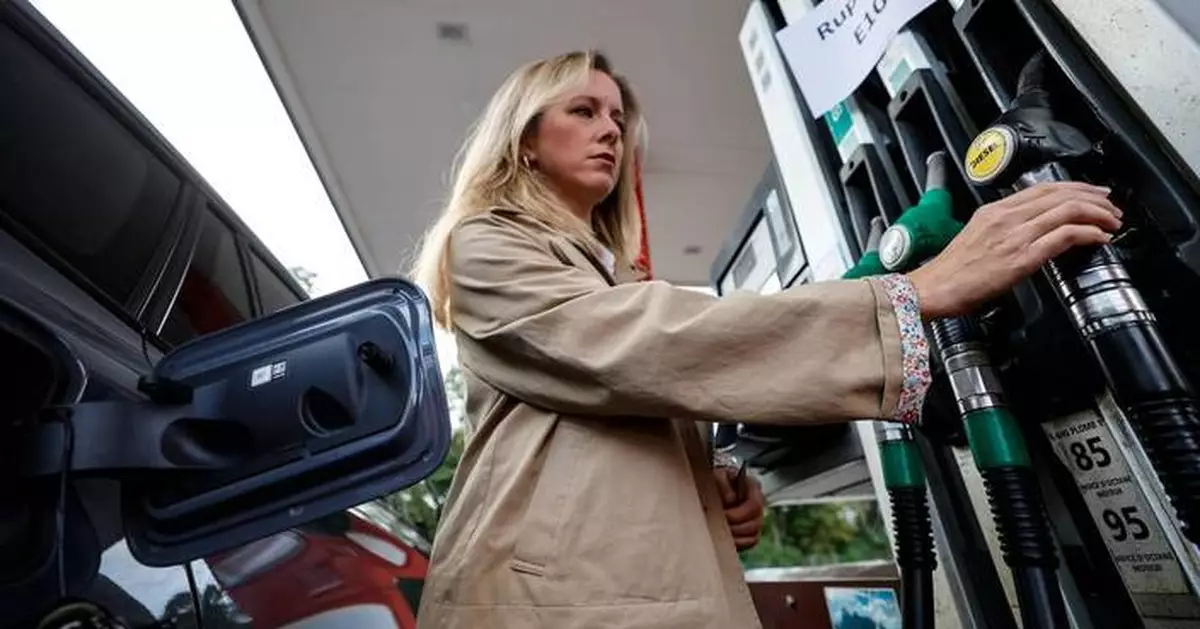
Consumers in some European countries pay nearly 50% more at the pump, equivalent to more than $11 a gallon, following the closure of the Strait of Hormuz, the crucial waterway through which a fifth of the world’s traded oil passed in peacetime.
“Times are serious,” said EU energy commissioner Dan Jørgensen during a gathering in Dublin of energy ministers from across the 27-nation bloc. Despite the additional money spent, the members haven't received "one extra molecule of gas or oil.”
Jørgensen said the ministers would discuss plans to accelerate the shift from fossil fuels to electricity and expand electrical infrastructure across the bloc, which became highly dependent on the U.S. for direct energy imports after ending its historic reliance on Russia following its full-scale invasion of Ukraine in 2022.
“Europe is one of the most exposed regions — if not the most exposed one — when it comes to diesel because Europe imports a huge amount of diesel and we are entering the harsh season, the winter season,” Fatih Birol, executive director of the International Energy Agency, said. About 50% of its diesel supply comes directly from the U.S.
Republicans in key U.S. states have called for a ban on diesel exports to bolster domestic supply ahead of crucial midterm elections, casting some doubt on President Donald Trump’s 2025 deal to sell $750 billion worth of energy to the EU.
Ireland's minister for climate, energy and the environment, Darragh O’Brien, said the ban is “unlikely” because it would harm economies on both sides of the Atlantic, but the EU must prepare for the worst.
“We have to be guarded. We can’t be complacent," O'Brien said.
Jørgensen said he had sent “a very clear signal” to U.S. authorities to scrap the ban while calling on EU ministers to wean the bloc off of outside energy whose supply can be rocked by war and politics.
“This, of course, shows us just how bad it is for us to be dependent, just how unsustainable it is for us to be dependent on energy sources from other places in the world,” Jørgensen said. “We need to get out of that dependency. We need to replace the fossil fuels, the imported, polluting, expensive molecules with homegrown energy: green electrons.”
Sari Multala, the Finnish environment minister, pointed to her country as an example of energy independence.
The rising concern about energy prices as winter approaches "creates a lot of pressure for us politicians to try to help our citizens to cope with the situation,” she said.
Nuclear reactors, turbines, peat bogs, and hydropower dams provide 95% of Finland's electricity, she said, which "creates very reasonable prices for electricity.”
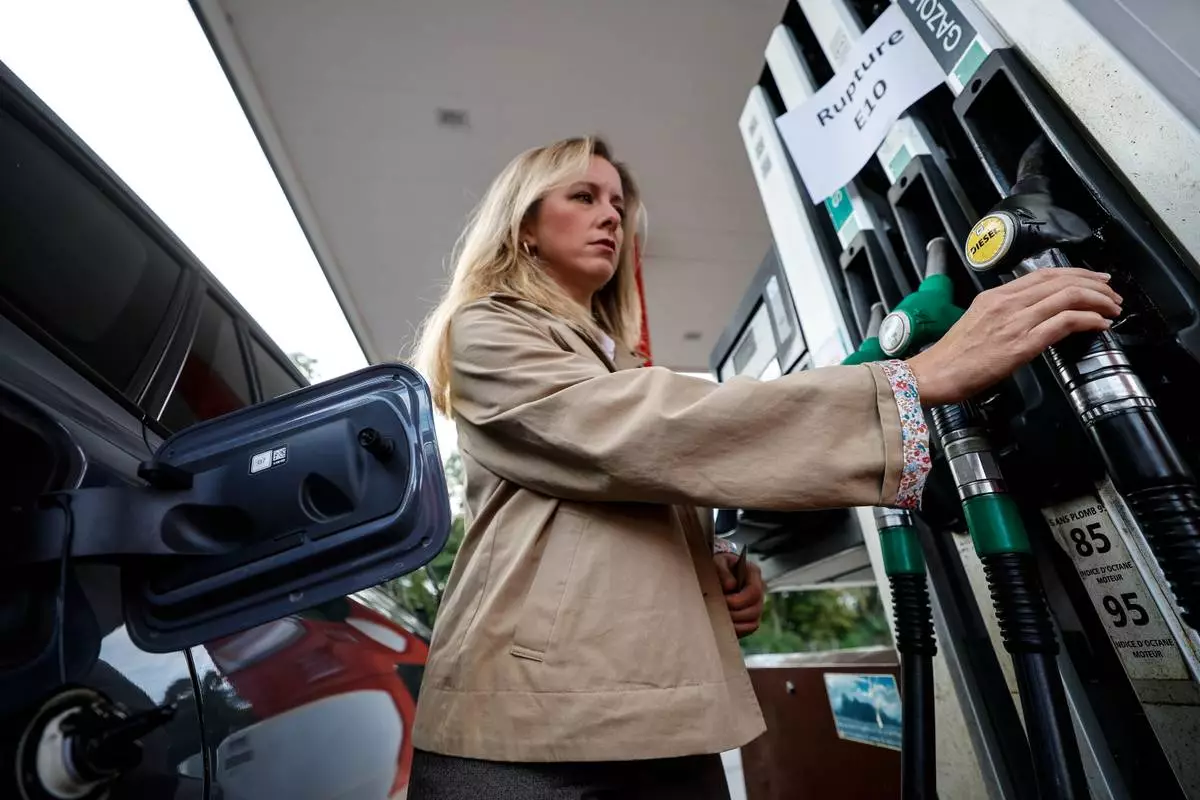
FILE - A customer fills her vehicle at a gas station, in Lille, France, Thursday Sept. 17, 2026. (AP Photo/Jean-Francois Badias, File)
Iran’s currency fell to a new record low on Tuesday, with traders in Tehran exchanging more than 2.5 million rials to the U.S. dollar in a stark reflection of how the war in the Middle East has steadily eroded the Iranian economy.
The latest decline came just 27 days after the rial hit its previous record of 2.2 million to the dollar on Sept. 2. The currency has repeatedly reached new lows since the war began in February.
Meanwhile, Iran’s top diplomat said indirect negotiations with the United States aimed at reopening the critical Strait of Hormuz have become “more serious,” while the Iranian Revolutionary Guard Corps’ chief spokesman spokesman Gen. Hossein Mohebbi on Tuesday called on Americans to take to the streets and protest the conflict.
Foreign Minister Abbas Araghchi told Iranian media late on Monday that the “current focus is solely on the Strait of Hormuz.” Araghchi made the comments shortly before departing New York — where he attended last week’s gathering of world leaders at the U.N. General Assembly — and after meeting with Pakistani and Qatari mediators.
Araghchi said that the Qatari intermediaries were expected to soon engage with the U.S. side.
“They are set to raise the matter with the American side once more, after which the final US response will be conveyed to us”, Araghchi said. “If there is a response, the Qataris will convey it to us and a decision will be made in Tehran on that basis.”
U.S. and regional officials have confirmed to The Associated Press that mediators are working with Iran and the U.S. on trying to broker a deal to end the fighting and open the strait.
The mediation efforts continue even after U.S. President Donald Trump earlier this week spurned an Iranian proposal to reopen the strait in seven days if the U.S. agreed to lift its blockade of Iranian ports, release frozen Iranian assets and waive sanctions on Iranian oil sales, among other conditions.
Meanwhile, the Iranian Revolutionary Guard Corps on Tuesday made an appeal to everyday Americans to push their government to end the U.S. war against Iran, a provocative appeal that comes just weeks before critical midterm elections in the United States.
Mohebbi, the IRGC spokesman, during a news conference in Iran read a letter appealing to Americans to pressure their government and claimed that the only way for the war to end is for Washington to admit defeat and leave the Mideast.
Mohebbi’s remarks Tuesday come as Trump’s Republican party is faces fierce headwinds as it looks to maintain control of Congress. But polling shows the war has darkened the American electorate’s mood ahead of the Nov. 3 election in which elevated gasoline prices, a byproduct of the conflict, loom large.
Mohebbi also accused the U.S. of using Iran’s nuclear program as a ruse to “plunder Iran’s wealth” and to turn the country “back into a colony.”
He added that the U.S. and others failed in their belief that military and economic action would get Tehran to submit and that Washington “has no choice but to acknowledge defeat and leave the region.”
“This is how the war will end,” he said.
Trump and his top aides are insistent that Iran’s economy cannot sustain a conflict much longer and expressed confidence that Tehran will be forced to capitulate.
The U.S. president predicted soon after launching the war that the conflict would last a matter of weeks. More recently, he’s said that the war will likely end after the November elections in the U.S.
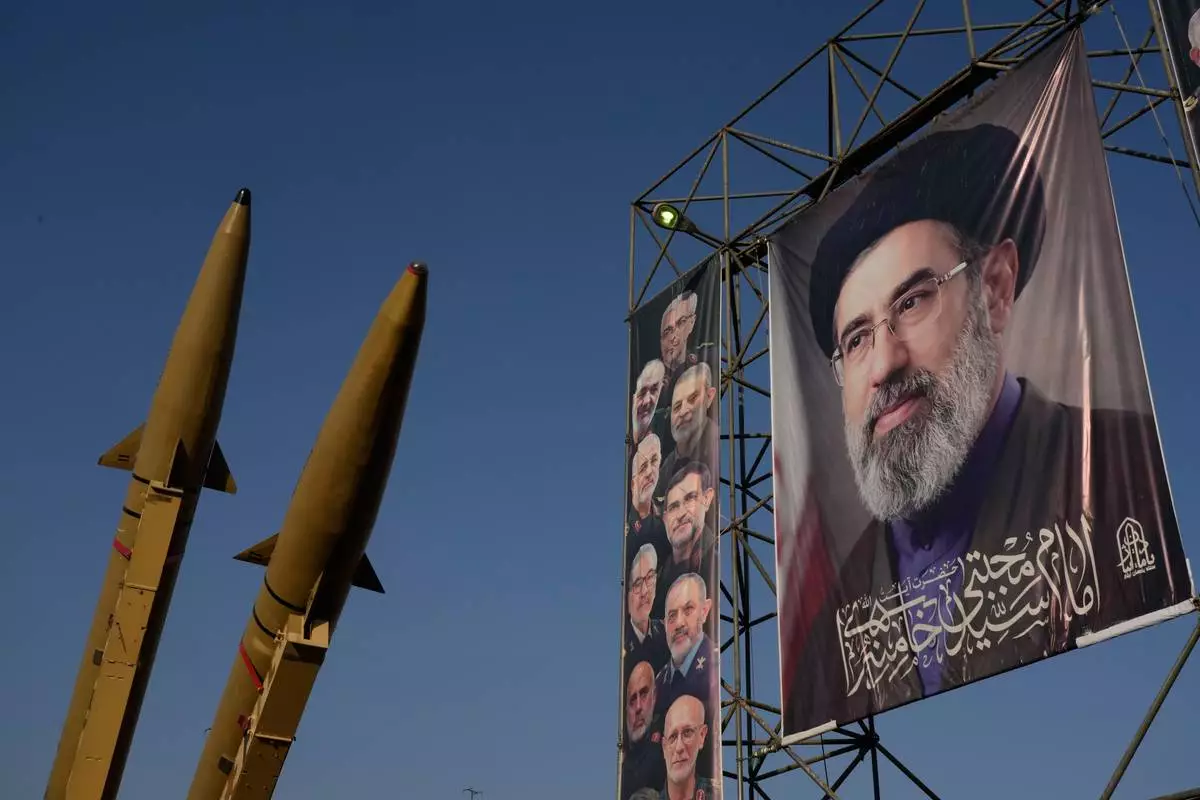
Iranian missiles and banners showing portraits of the Iranian Supreme Leader Ayatollah Mojtaba Khamenei, right, and the late armed forces commanders, who were killed in Israeli and U.S. strikes, are displayed in a military exhibition commemorating the anniversary of the start of the 1980-88 Iraq-Iran war at Baharestan Square, in Tehran, Monday, Sept. 28, 2026. (AP Photo/Vahid Salemi)
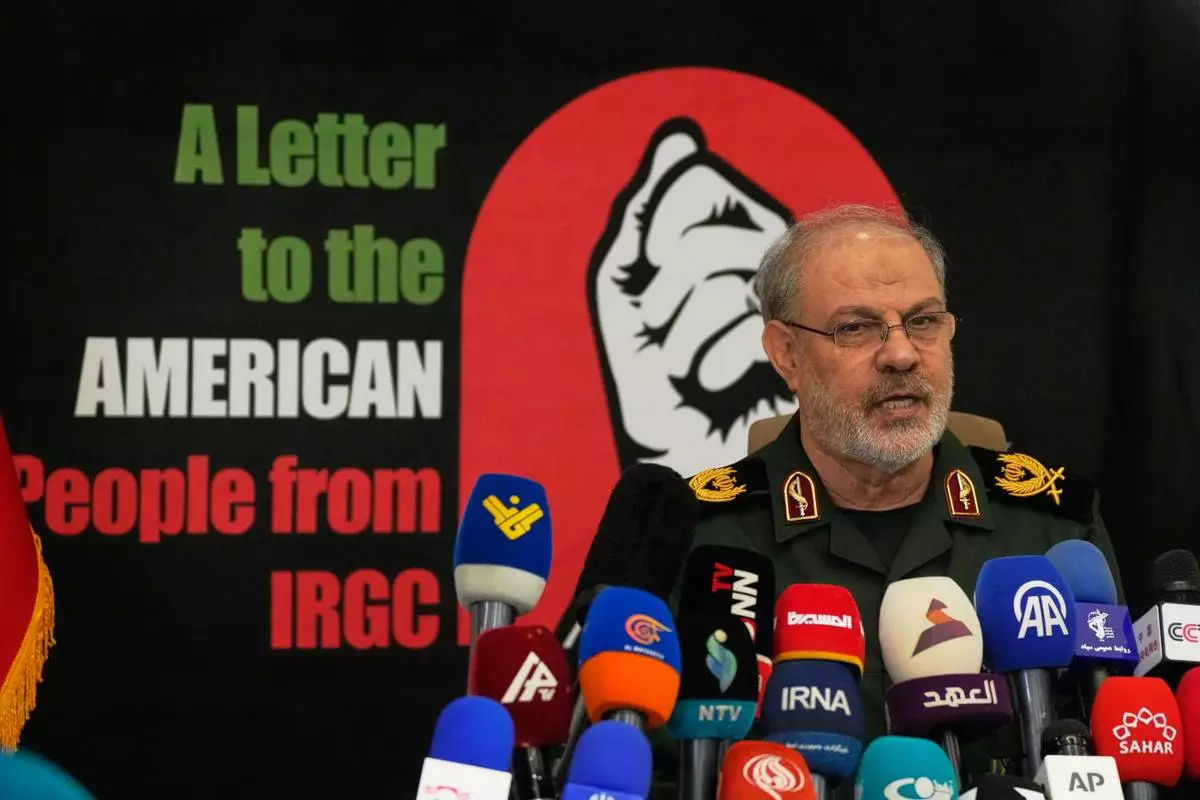
Iran's Revolutionary Guard spokesman Gen. Hossein Mohebbi speaks during a news conference in Tehran, Iran, Tuesday, Sept. 29, 2026. (AP Photo/Vahid Salemi)
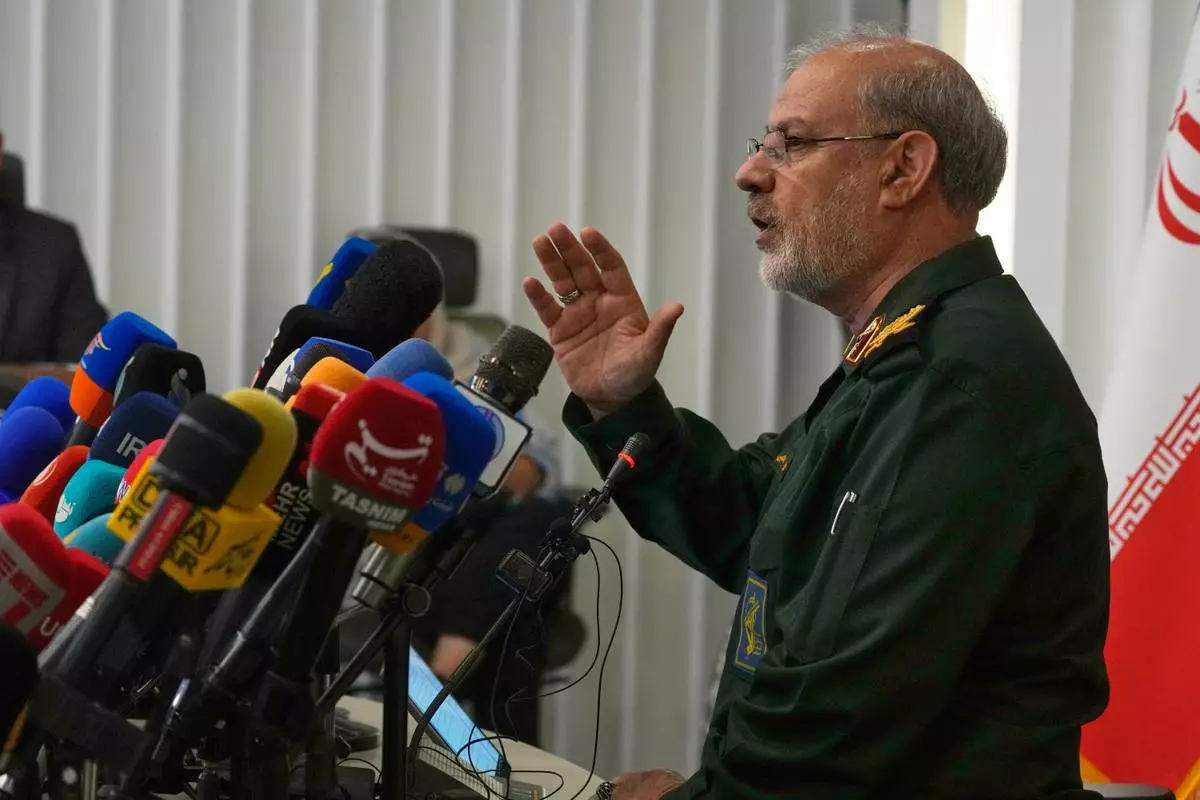
Iran's Revolutionary Guard spokesman Gen. Hossein Mohebbi speaks during a news conference in Tehran, Iran, Tuesday, Sept. 29, 2026. (AP Photo/Vahid Salemi)
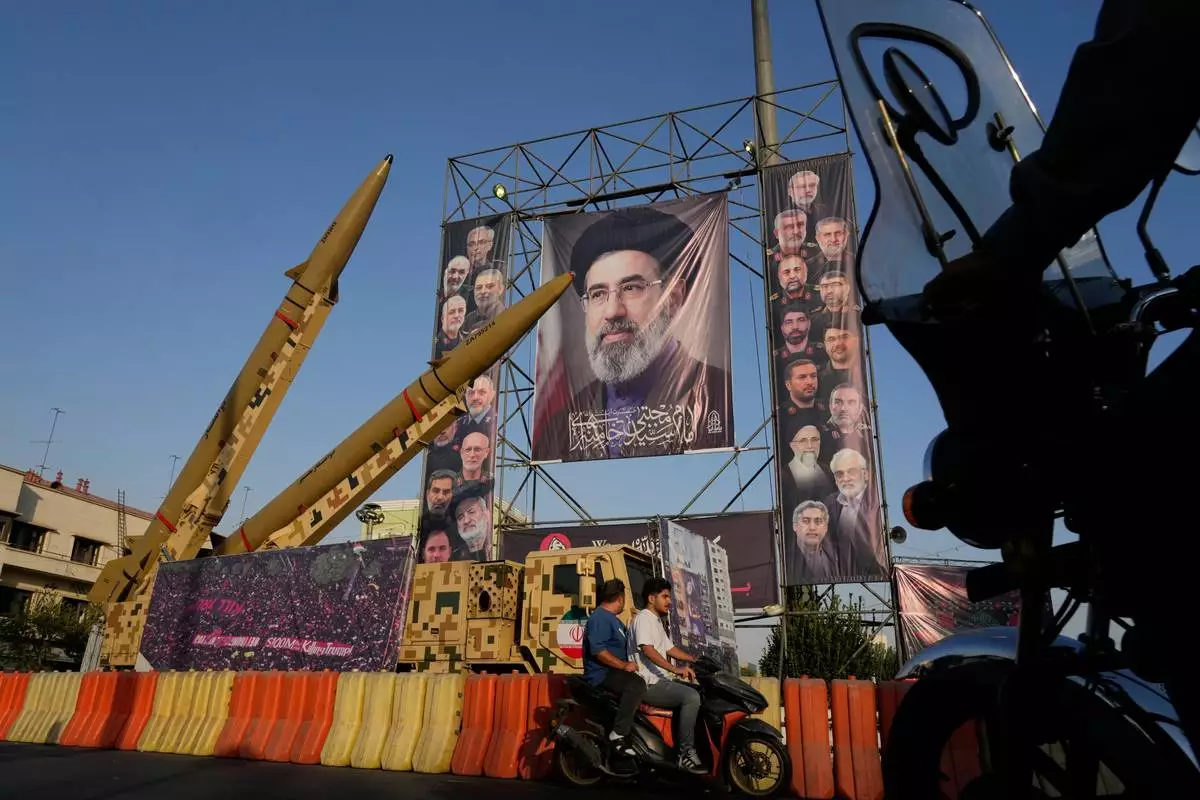
Motorbikes drive past Iranian missiles and banners showing portraits of the Iranian Supreme Leader Ayatollah Mojtaba Khamenei, center, and the late armed forces commanders and nuclear scientists, who were killed in Israeli and U.S. strikes, displayed in a military exhibition commemorating the anniversary of the start of the 1980-88 Iraq-Iran war at Baharestan Square, in Tehran, Monday, Sept. 28, 2026. (AP Photo/Vahid Salemi)