BUFFALO, N.Y. (AP) — Rasmus Dahlin arrived in Buffalo for the start of training camp with a clear head and a refreshed objective following the shortest summer break of his nine-year NHL career.
This is a far different place for the Sabres captain to be than a year ago, when Dahlin was dealing with the emotional weight of his fiancée requiring life-saving heart transplant surgery in Europe and facing familiar questions regarding Buffalo’s NHL-record 14-season playoff drought.
A year later, Carolina Matovac is healthy and rejoined Dahlin in Buffalo in March. The drought is a thing of the past: The Sabres clinched their first Atlantic Division title and won their first playoff series since 2007 before losing to Montreal in Game 7 in the second round.
“Night and day. I can actually focus on hockey and not have to worry every day of what’s going on,” Dahlin said. “I’m ready to go.”
Don’t confuse his readiness for satisfaction. Having enjoyed his first taste of the postseason, the 26-year-old Swede is hungry for more.
“Last year was hard. This year is going to be harder,” Dahlin said. “We have higher expectations on ourselves and higher expectations around the league. We’re not the same old Sabres any more in other teams’ eyes.”
The challenge is to prove last year was no fluke in preparing to open this season at Columbus on Thursday. The Sabres will do so with a young roster that got even younger following a summer in which top-line forward Alex Tuch was traded to Washington and defenseman Bowen Byram to Chicago.
Though both played key roles in Buffalo’s breakthrough season, general manager Jarmo Kekalainen is banking on the promise a brimming crop of youngsters showed last year.
It’s a 24-and-younger forward group that includes Josh Doan, Zach Benson, Noah Ostlund and Konsta Helenius. They’re being counted upon to provide Buffalo a three-line scoring attack alongside veterans Tage Thompson, Josh Norris, Peyton Krebbs and Jason Zucker.
On defense, Buffalo shored up its core of Dahlin, Mattias Samuelsson and Owen Power by acquiring Louis Crevier and Olen Zellweger in trades.
“With the talent that we have internally, I think we need to believe in the work that we’ve put in to develop them, grow with them, and now they’re ready,” said Kekalainen, who is entering his first full season on the job in Buffalo.
He declined to address speculation surrounding Winnipeg Jets goalie Connor Hellebuyck, a three-time Vezina Trophy winner who has gone public with his trade demands. Kekalainen would only say he is confident in Buffalo’s three-goalie rotation headed by Ukko-Pekka Luukkonen and Alex Lyon, both coming off 20-win seasons.
“By no means are we satisfied,” Kekalainen said, in assessing last season’s success. “'Pretty good,' I said to the team. Pretty good’s not good enough.”
His promotion from senior adviser following Kevyn Adams’ firing in mid-December spurred the Sabres’ turnaround. Buffalo went from last in the Eastern Conference standings to its first 50-win season since 2006-07, closing the year on a 39-9-5 run.
The Sabres are counting on a better start to this year, while building on their scrappy identity and consistency in play.
“We’ve been battle-tested,” said Thompson, before cautioning last year’s results don’t count for anything this year. “It doesn’t give us a free ride to the same spot. We’re going to have to earn it.”
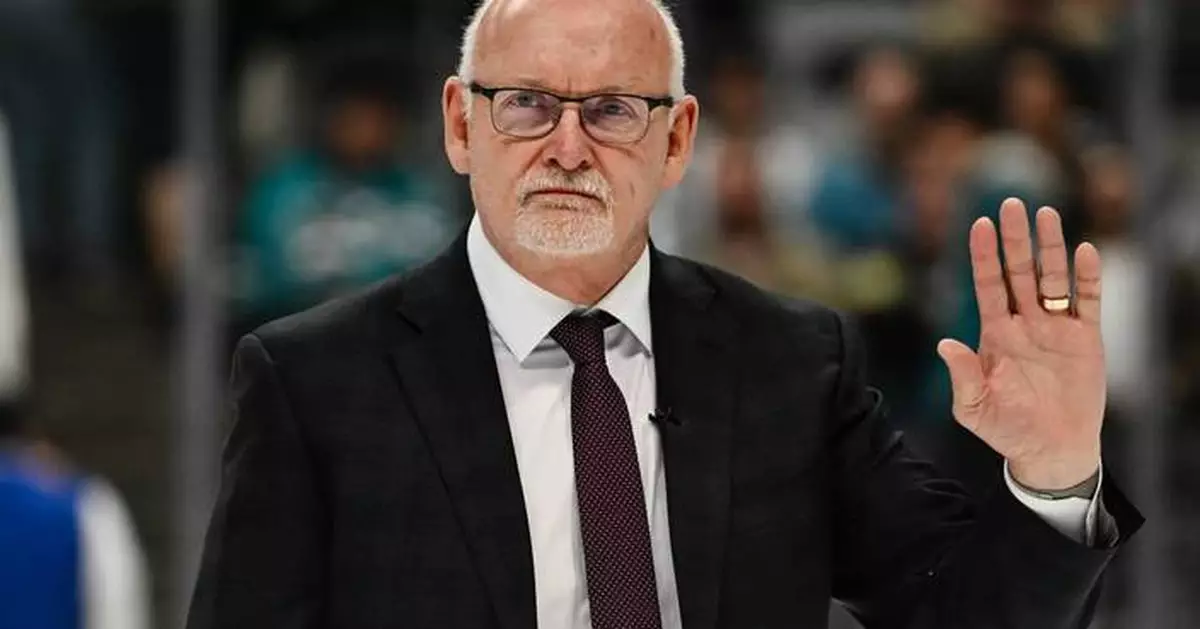
At 66, Sabres coach Lindy Ruff was rewarded with a two-year contract extension in May, and enters his third season in his second stint in Buffalo. He ranks third on the NHL list with 1,938 games coached and fourth with 950 wins. Ruff laughed when reminded a 50-win season would get him to 1,000.
“I’ve been around too long,” Ruff said with a chuckle. “But 50 would be really important for our team, because if you get 50, you’re going to be a playoff team. I think that’s a great goal for us as a group for sure.”
Ruff on Tuesday said Samuelsson (lower body) is “very close” to returning a week after getting hurt blocking a shot. ... Lyon (upper body) is anticipated to resume practicing soon after missing a week. Luukkonen practiced on Tuesday after pulling himself from Buffalo's preseason finale on Saturday. ... Veteran forward Conor Sheary was loaned to AHL Rochester, but must first clear waivers.
See AP’s full NHL coverage here
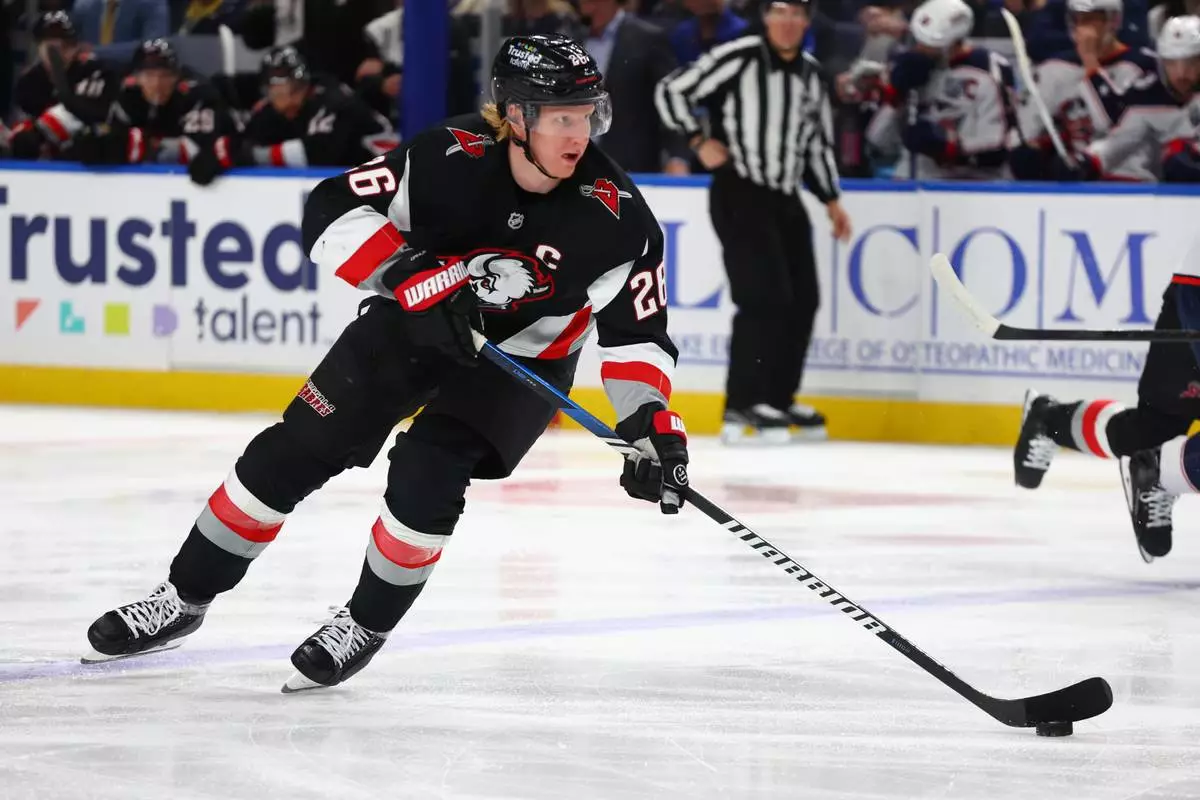
FILE - Buffalo Sabres defenseman Rasmus Dahlin (26) carries the puck over the blue line during the first period of an NHL hockey game against the Columbus Blue Jackets, April 9, 2026, in Buffalo, N.Y. (AP Photo/Jeffrey T. Barnes, File)
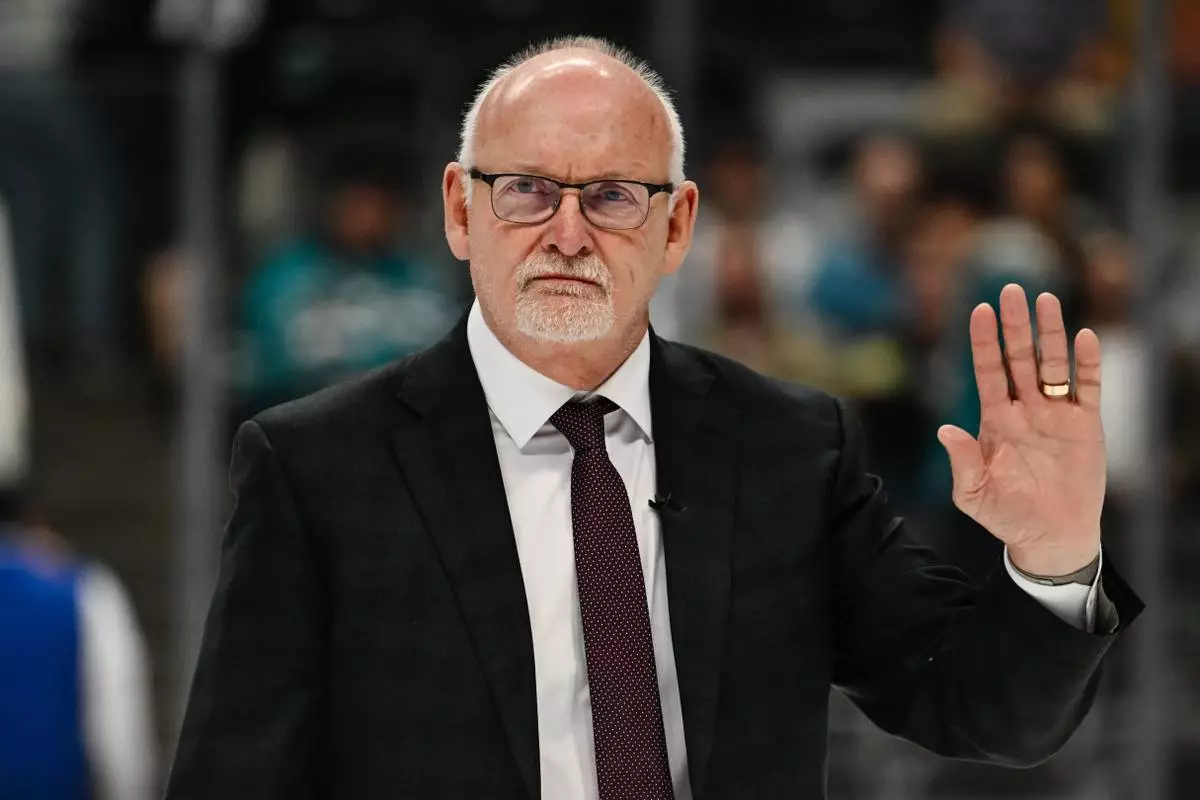
FILE - Buffalo Sabres head coach Lindy Ruff looks on after an NHL hockey game against the San Jose Sharks, March 19, 2026, in San Jose, Calif. (AP Photo/Thien-An Truong, File)
The hats and flags and T-shirts carrying the No. 77 of NASCAR driver Carson Hocevar were flying unapologetically, and almost defiantly, over Kansas Speedway last weekend, days after a pit-road fracas at Bristol in which the up-and-coming Cup Series star traded a few haymakers with popular driver Ryan Blaney.
The two tangled in the closing laps, the contact sending Blaney into the wall and ending his race — and maybe his title hopes. And when Hocevar pulled his car onto pit road after a third-place finish, his foil was standing there waiting for him. Hocevar got the better of the dust-up, leaving Blaney with a shiner under his right eye. Thousands of fans who had stuck around to watch Joey Logano take the checkered flag seemed to roar even louder for the post-race fight.
“I was surprised, and so was everybody else. But luckily, I have a height advantage on Ryan, I guess,” Hocevar said later. "If we were in a running competition, I’m screwed. No matter who it is, I can’t run. So luckily, standing still, I can do OK and defend myself.”
Perhaps even more surprising was what NASCAR did in the aftermath: Nothing.
No penalties. No fines. Not even a slap on the wrist.
“We’re not going to encourage fighting, but what we are going to encourage is passion,” NASCAR CEO Steve O’Donnell said during an appearance on former driver Kevin Harvick’s podcast, before adding: “We’ll watch what happens the rest of the way."
The decision was seen by many as NASCAR embracing a “Boys, have at it” attitude that had been displaced for a generation by a squeaky clean corporate image that somehow seemed out of place. It harkened back to the 1979 Daytona 500, when Cale Yarborough and the Allison brothers, Donnie and Bobby, got into perhaps the most famous fistfight in NASCAR history, and the days when Dale Earnhardt Sr. was using the bumper of his famed black No. 3 to drive rivals out of his way on the way to seven Cup Series championships.
Intentional or not, the Bristol fight was another example of NASCAR turning back to its roots.
“I feel like we've kind of gone that direction quite a bit here recently,” Logano said. “It seems like the American pride is definitely in the game, and I feel like the drivers, the brands they have right now, are more that direction than they have been in the past. It was there for a moment when a lot of drivers were, I don't know, a little more higher society, if you will, right? It seems like everyone is more into their hotrods again, and you know, being a little more blue collar, I guess.”
Many drivers still trace the roots of NASCAR to the short tracks of the South, which the series seemed to abandon during the 1990s and early 2000s, when races moved to purpose-built, almost cookie-cutter tracks amid a northern and westward expansion.
The move may have briefly fed a popularity explosion, but in the long run, it also might have alienated some of its base that treasures NASCAR's historical ties to the moonshine runners of old and the outlaw image the sport has long embraced.
North Wilkesboro is a prime example. The fan-favorite track in rural North Carolina opened in 1947, almost simultaneous to NASCAR's founding, and hosted Cup Series races until 1996, at which point it sat idle for decades. But it has made a comeback in recent years, hosting the All-Star race from 2023-25, and Logano was victorious in July when the series returned with a regular-season race.
“The community just loved having the race there,” driver Michael McDowell said. “You could just feel that when you got there.”
Or take the Clash, which from 1979-97 led into the Daytona 500 every February. NASCAR took the exhibition race from Florida to the Los Angeles Coliseum for a three-year stretch beginning in 2022, but the novelty wore off after just one year. So, the organization took the race to Bowman Gray Stadium in North Carolina for the past couple of years, and will take it back to Daytona in February.
“We've all been very fortunate in the garage area to make it to top-level motorsports,” driver Chris Buescher said. “But we all came from that short-track racing background in some way, shape or form. This is all our background.”
For many, so is dirt-track racing on bullrings scattered across the country.
Those small-town stock car races were once a proving ground for guys like Earnhardt, whose first race car was a 1956 Ford Victoria that “The Intimidator” ran on dirt tracks around North Carolina. Through the early '90s, guys like Clint Bowyer got on the radar of NASCAR teams by slinging mud at places like Lakeside Speedway, just down the road from Kansas Speedway.
Turns out NASCAR is starting to feel dirty again.
Former driver Tony Stewart bought famed Eldora Speedway in Ohio, pouring his support into dirt track and grassroots racing. Hocevar tried his hand in a dirt late model on weeknights this past summer, and often found the going to be tough against those doing it on a nightly basis. And his Cup Series team, Spire Motorsports, has fully embraced the dirt late model business, putting together a full-time touring team and hiring one of the top drivers, Nick Hoffman, for next season.
“Nick has a great family with a proud lineage in our industry,” Spire co-owner Jeff Dickerson said. “At the same time, he is fantastic with partners, has been a great coach to Carson and, most importantly, stands on the gas.”
More than a few expletives were dropped when Hocevar and Blaney tangled two weeks ago at Bristol, the short track nestled in the Appalachian Mountains along the Tennessee-Virginia state line that epitomizes the rubbin'-is-racin' ethos of the early NASCAR days.
While the organization still doesn't condone colorful language, it isn't exactly punishing anyone for it. In fact, it's almost rewarding them for it. At the start of the playoffs, NASCAR unveiled a virtual “swear jar” in which $5 is added every time a curse is uttered over team radios during a race; fans who correctly predict the total number can walk away with the pot.
The total after last week's race at Kansas was 776 swear words, or a prize total of $3,880. (The most popular curse word, by the way, has been the one that Ralphie Parker called the “queen-mother of dirty words” in the film “A Christmas Story.”)
"We were looking for buzzworthy ideas that would build excitement around the Chase (playoffs) and complement the other initiatives launching during this part of the season,” said Jess Smith, NASCAR’s vice president of content. “The swear jar was a natural fit because colorful driver radio is an authentic part of our sport, but it’s never been something we’ve highlighted or turned into a game.”
On the contrary, Dale Earnhardt Jr. was once fined $10,000 and docked 25 points for swearing in victory lane at Talladega.
That was back in 2004, when NASCAR was trying to polish up its image and land new fans. And while the swear jar isn't designed to dirty it up again, it is but one way the sport — and its sanctioning body — are giving new love to its past.
“The sport is always walking a line between some aspects of really high-level professionalism, world-class engineering, training world-class athletes and other aspects that are more entertainment-centric,” veteran driver Brad Keselowski said. “And I think it always has to be careful not to tip its hand one way more than the other at any time, and that's hard to do.”
See AP’s full auto racing coverage here
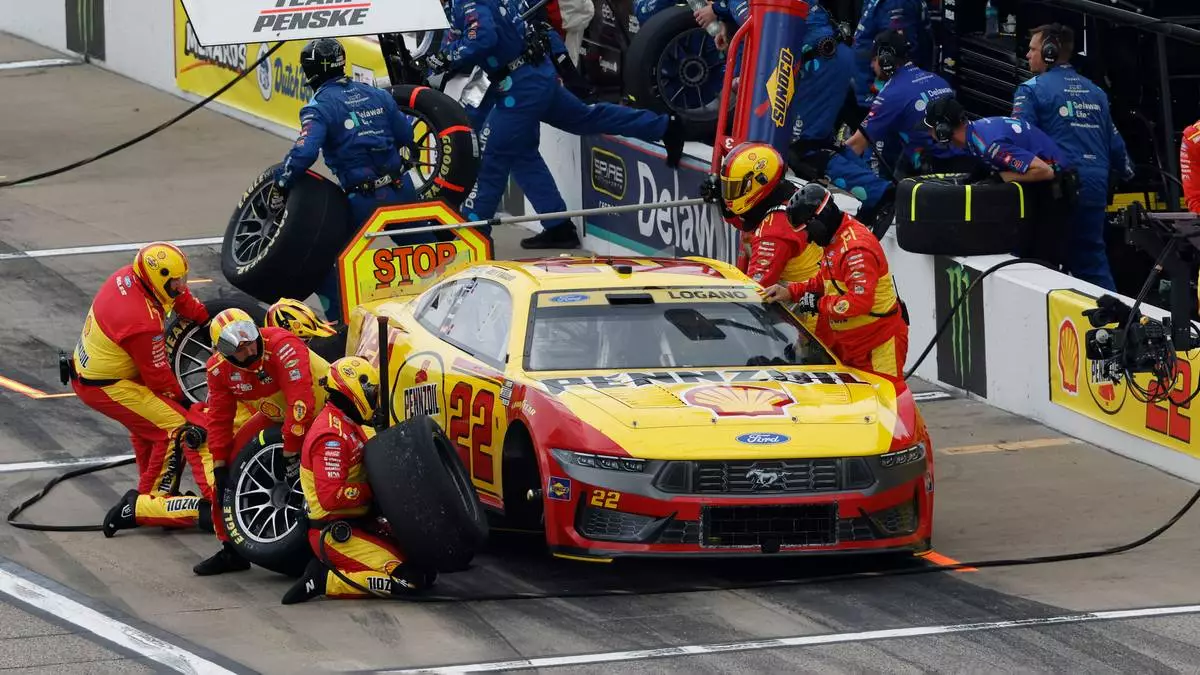
Joey Logano makes a stop on pit road at the end of the first stage during a NASCAR Cup Series auto race in Kansas City, Kan., Sunday, Sept. 27, 2026. (AP Photo/Colin E. Braley)
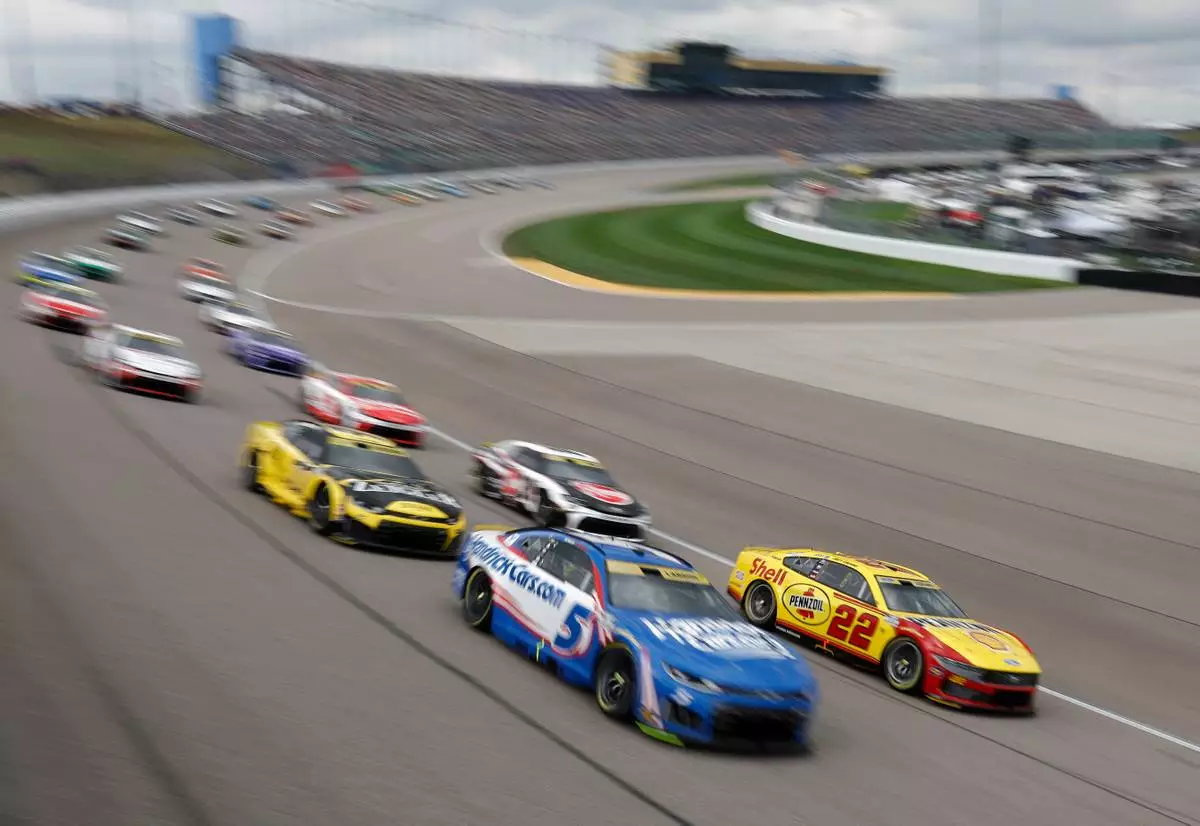
Kyle Larson (5) and Joey Logano (22) lead the field into Turn 1 during the start of a NASCAR Cup Series auto race at Kansas Speedway in Kansas City, Kan., Sunday, Sept. 27, 2026. (AP Photo/Colin E. Braley)
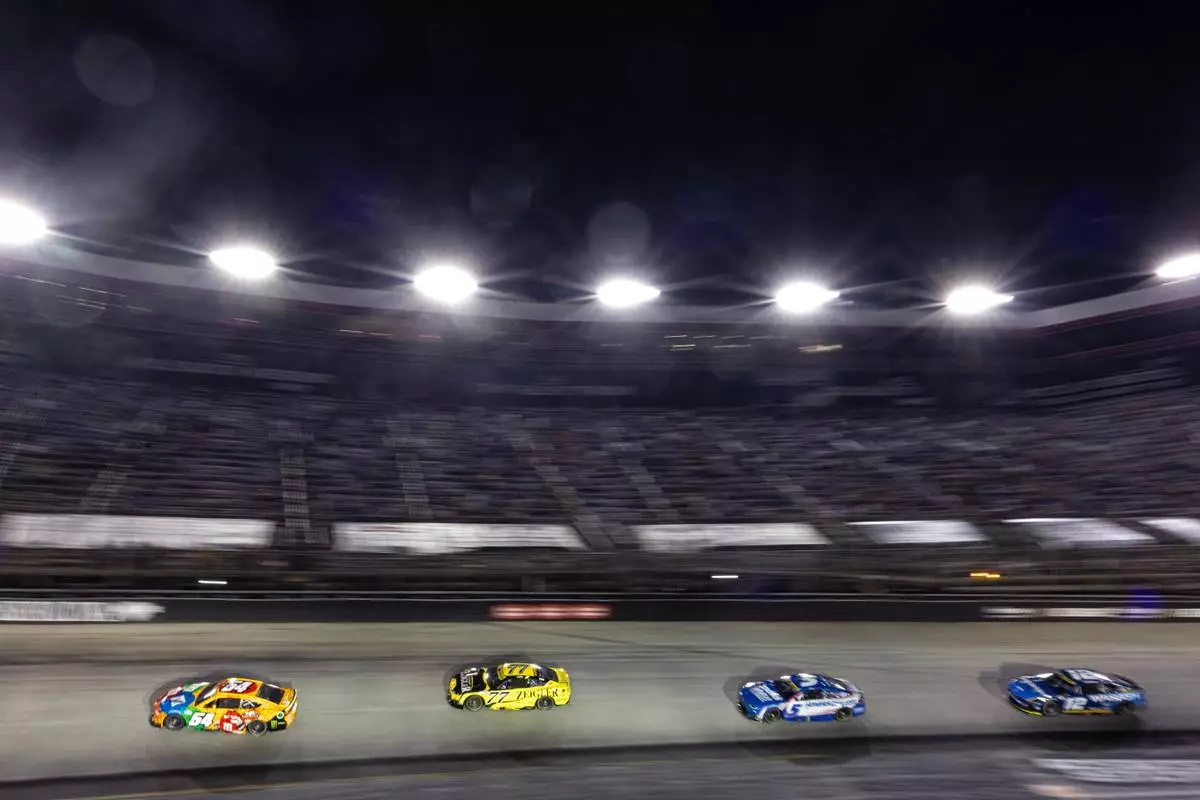
Ty Gibbs (54) leads Carson Hocevar (77), Kyle Larson (5), and Ryan Blaney (12) during a NASCAR Cup Series auto race Saturday, Sept. 19, 2026, in Bristol, Tenn. (AP Photo/Wade Payne)
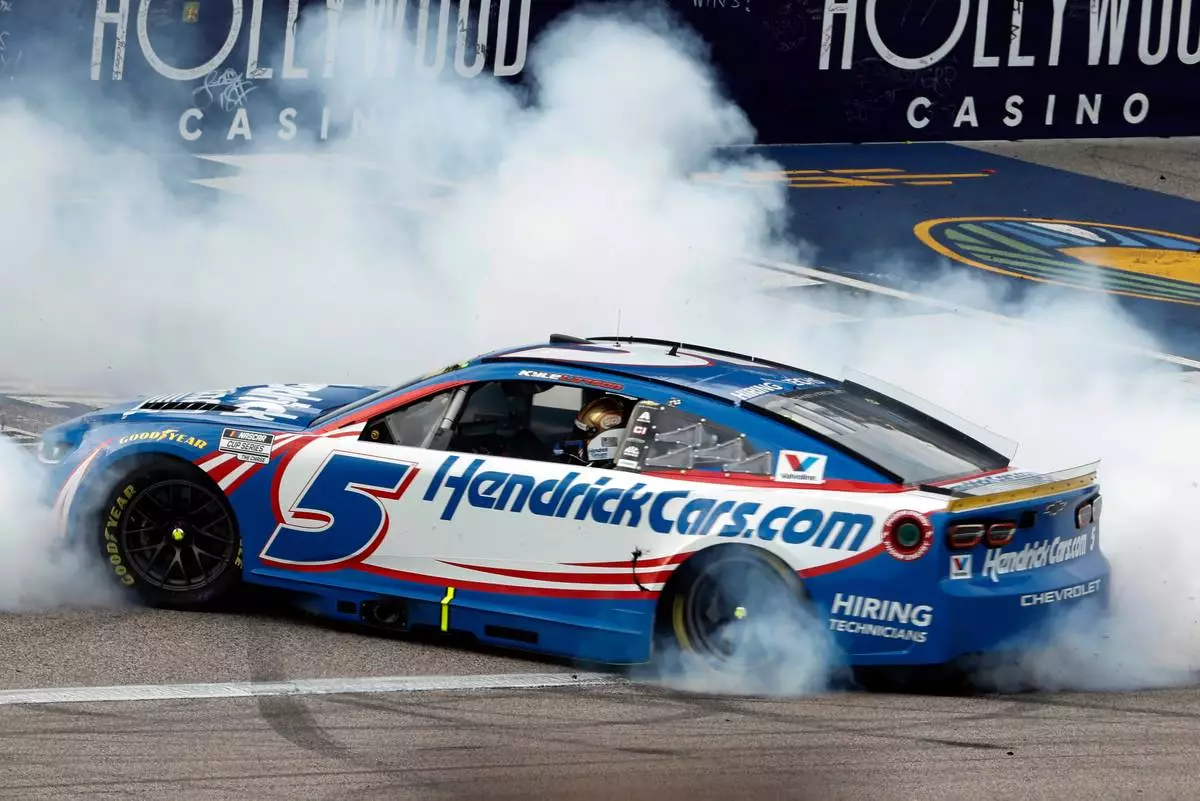
Kyle Larson does a burnout after winning a NASCAR Cup Series auto race in Kansas City, Kan., Sunday, Sept. 27, 2026. (AP Photo/Colin E. Braley)
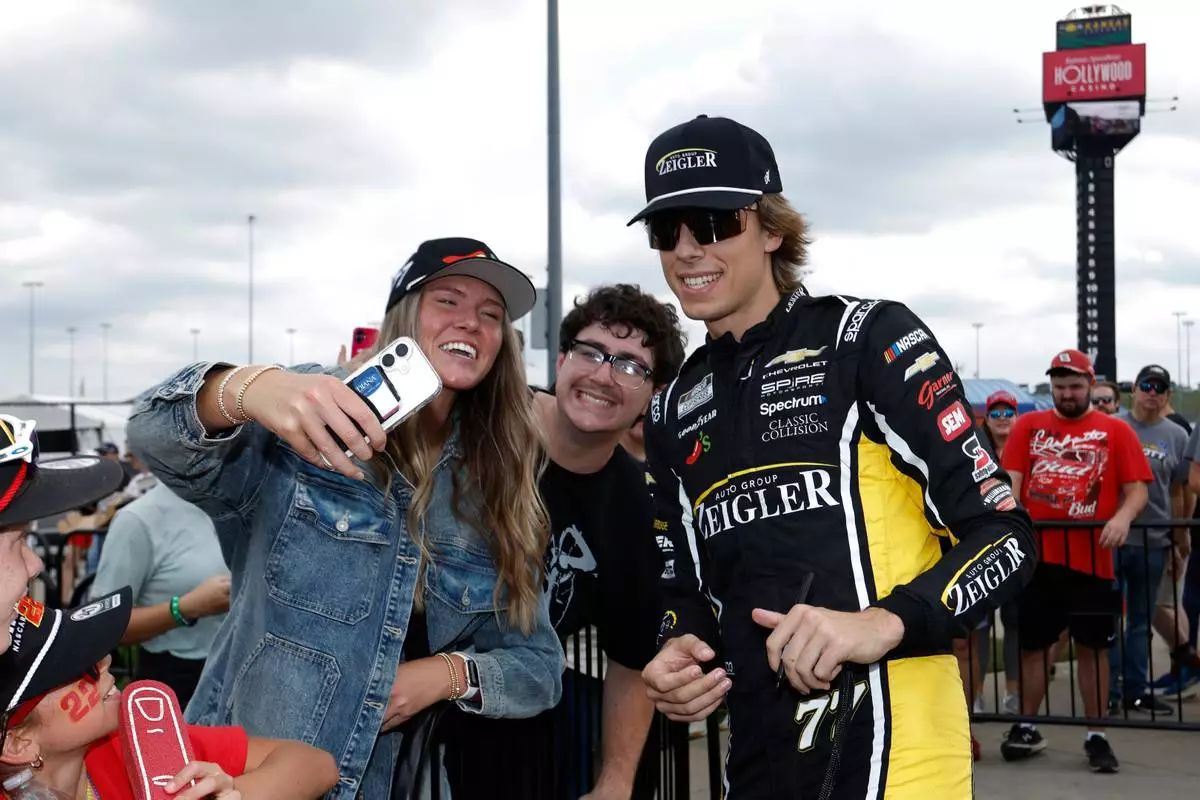
Carson Hocevar, right, interacts with fans before a NASCAR Cup Series auto race in Kansas City, Kan., Sunday, Sept. 27, 2026. (AP Photo/Colin E. Braley)