A joint Chinese-European satellite, the Solar wind Magnetosphere Ionosphere Link Explorer (SMILE), released its first batch of scientific images and data on Wednesday, as it entered regular science operations.
These images include the first continuous panoramic image of the northern lights, showing their fine structure over long periods. Another image reveals the glowing remains of a star that exploded about 160,000 light-years away. The satellite also collected the first high-resolution measurements of magnetic fields and ions in Earth's very high orbit.
Scientists say these early results are very promising. The data will help researchers better understand how the Sun's activity affects Earth's space environment.
SMILE was launched on May 19 from French Guiana. After roughly a month of orbital adjustments, it reached its working orbit on June 20. All instruments were switched on and operated normally. Calibration was then completed and SMILE began collecting valid data.
The SMILE mission is the first mission-level, all-round, in-depth collaborative space science exploration project between China and Europe, aiming to reveal the mysteries of the interaction between the solar wind and Earth's magnetosphere.
The satellite's four scientific instruments collected the newly released images and data.
SMILE carries the world's first spaceborne soft X-ray imager (SXI), which can turn the previously "invisible" magnetospheric boundary into images. It also carries an ultraviolet auroral imager (UVI), a light ion analyzer (LIA) and a magnetometer (MAG).
Together, these instruments allow simultaneous global-scale imaging of magnetospheric changes while also measuring solar wind conditions directly at the satellite. This gives scientists an unprecedented tool for studying space weather events such as magnetic storms and substorms.
Originating from a cooperative initiative jointly launched by the Chinese Academy of Sciences and the European Space Agency in 2015, the SMILE project has established an equal, mutually beneficial and complementary mechanism for cooperation.
In the project, China was fully responsible for satellite platform development, telemetry and control, ground support, and the construction of science application systems, and led the development of the UVI, LIA and MAG payloads. The European side was responsible for the payload module and SXI development, and provided the launch vehicle, launch site, and active-phase telemetry and control support.
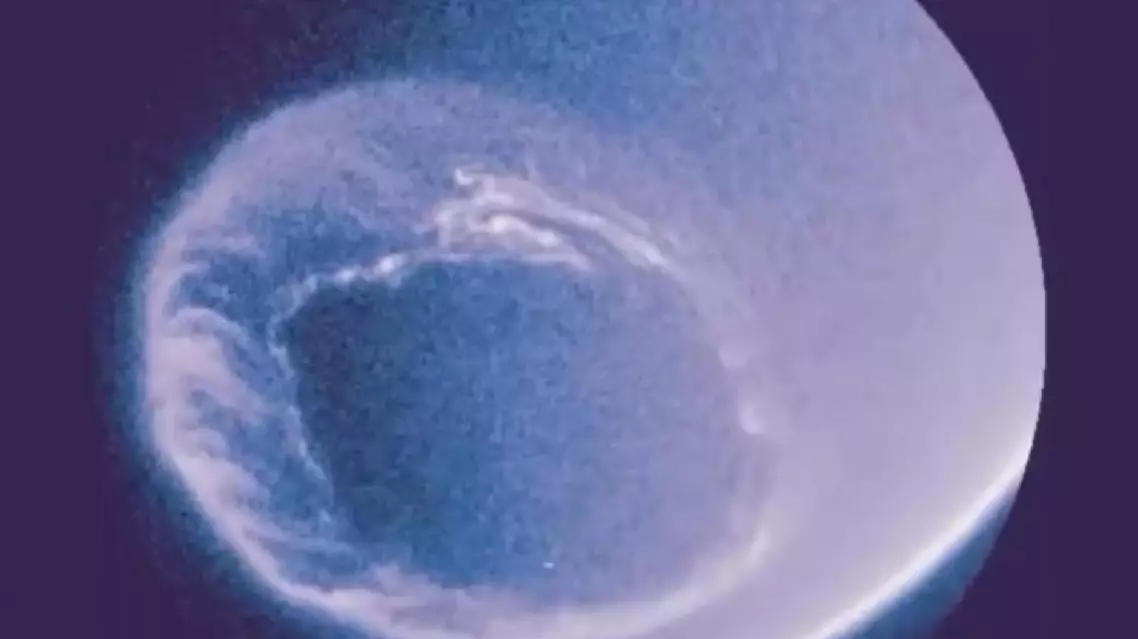
Chinese-European joint satellite SMILE releases first science images, data