Skip to Content Facebook Feature Image

A pulse of warm water hitting the Pacific coast could mean erosion and flooding

News

A pulse of warm water hitting the Pacific coast could mean erosion and flooding
News

News

A pulse of warm water hitting the Pacific coast could mean erosion and flooding

2026-10-03 20:28 Last Updated At:20:30

SEATTLE (AP) — Sea levels along the West Coast will begin to rise by up to a foot this month as a series of pulses of warm water called Kelvin waves hit the shoreline and move north, sparking concerns about beach erosion and flooding in areas already impacted by climate change and El Niño.

Kelvin waves are not like tsunamis, and they don't curl over and crash on the beach. A better image is water sloshing in the bathtub or a swimming pool during an earthquake. In the ocean, they are bulges of water that lift the sea level as they move along the coast. They're common during El Niño events, but this year’s super El Niño could intensify the impacts, experts say.

Over the next week, the 6-inch to foot-tall surge will move north along the California coast at about 6 miles per hour (9.6 kilometers per hour), or 150 miles per day (241 kilometers per day), bringing higher sea levels to Oregon and Washington state. Experts predict the waves will continue to pass through from October until February.

“It’s not that this Kelvin wave is going to come and flood anything on its own,” said Michael Jacox, a research oceanographer with National Oceanic and Atmospheric Administration Fisheries’ Ecosystem Science Division.

Instead, it raises the baseline.

If you start with sea levels that are 6 inches higher than normal, when you have really high tides, big storms or storm surges, the water levels are now 6 inches higher, he said. “The effects can be amplified,” he said.

The waves also increase ocean temperatures and push cold, nutrient-rich waters deeper below the surface, which has an impact on marine life.

Here's what to know about Kelvin waves.

Kelvin waves are a “fact of life” during an El Niño, a naturally occurring climate pattern involving the warming ocean waters, said Dillon Amaya, an assistant professor in the Department of Marine, Earth, and Atmospheric Sciences at North Carolina State University.

They form when the trade winds along the equator change direction.

Winds blowing east to west along the equator push water in the Pacific Ocean west toward Asia, Jacox said. When those winds weaken or reverse direction, that bulge of water gets pushed back toward the east along the equator until it hits South America.

When the surge of water hits the coastline at the equator, it moves north and south along the North and South American coasts.

The wave isn't visible to the naked eye and they won't cause boats to go up and down, Amaya said. It's more like a big pancake. It's wider than it's deep: The bulge extends 12 to 20 miles (19 to 32 kilometers) off the coast and about 200 meters deep, Amaya said.

Many coastal communities are already grappling with the impacts of rising sea levels, like the coastal erosion eating away at the beach in San Clemente, California. Waves are also getting bigger, experts say.

The higher sea levels could exacerbate those problems.

“People are on edge,” Amaya said. “They think about more flooding happening, more beach erosion so when you hear elevated sea states coastal inundation risk, I think that raises a lot of anxiety.”

The higher sea level combined with larger than average waves from North Pacific swell, which are expected during the El Niño, plus large spring tides from October to February, can cause exceptional erosion on the West Coast, said Sean Vitousek, a research oceanographer with the U.S. Geological Survey.

Generally, the largest El Niño events of 1982-83, 1997-98 and 2015-16 caused West Coast beaches to experience their worst erosion on record, Vitousek said.

“The loss of protective beaches also increases wave impacts and coastal flooding on property and infrastructure,” he said.

Things could intensify over time as more waves arrive over the winter.

Typically El Niños are associated with five or six of these waves, Amaya said. During the last major El Niño in 2015-2016 there were five Kelvin waves.

One already came through in May or June and there’s evidence of a third Kelvin wave forming, he said. Experts expect it to continue up the coast over the next month or so.

There's concern the waves could worsen challenges along the Southern California coast, said Alyssa Napuri, deputy chief of staff for Orange County Supervisor Katrina Foley. Already, waves are approaching a seaside rail line and oceanfront homes were damaged during swells last month tied to Hurricane Marie.

Authorities are placing emergency sand on beaches as quickly as possible, Napuri said, adding that forecasts show the Kelvin Wave could send water levels between six to 12 inches higher.

“We’re already struggling as it is,” Napuri said.

California Gov. Gavin Newsom, a Democrat, proclaimed a state of emergency in late September to prepare the state for what will likely be a historic El Niño season. The proclamation will help the state “move faster to protect communities, stage critical resources, and strengthen readiness before severe weather intensifies,” the governor said in a statement.

Experts with the Washington state Department of Natural Resources are ready to respond to any disasters that might come with the Kelvin waves, said spokesperson Courtney James. They regularly coordinate through the state Emergency Management Division but they have not been asked to do any special preparation so far, she said.

Actual damages from the Kelvin waves will depend on the storms and tides magnified by El Niño, and if they're stronger, the damage could be significant, Amaya said.

“It’s too too early to be sure whether this particular winter season will be a record breaker in terms of this El Niño, but this El Niño itself is certainly on that trajectory of being one of the largest if not the largest El Niño we’ve ever seen," he said.

__

Associated Press reporter Amy Taxin contributed to this story from Santa Ana, California.
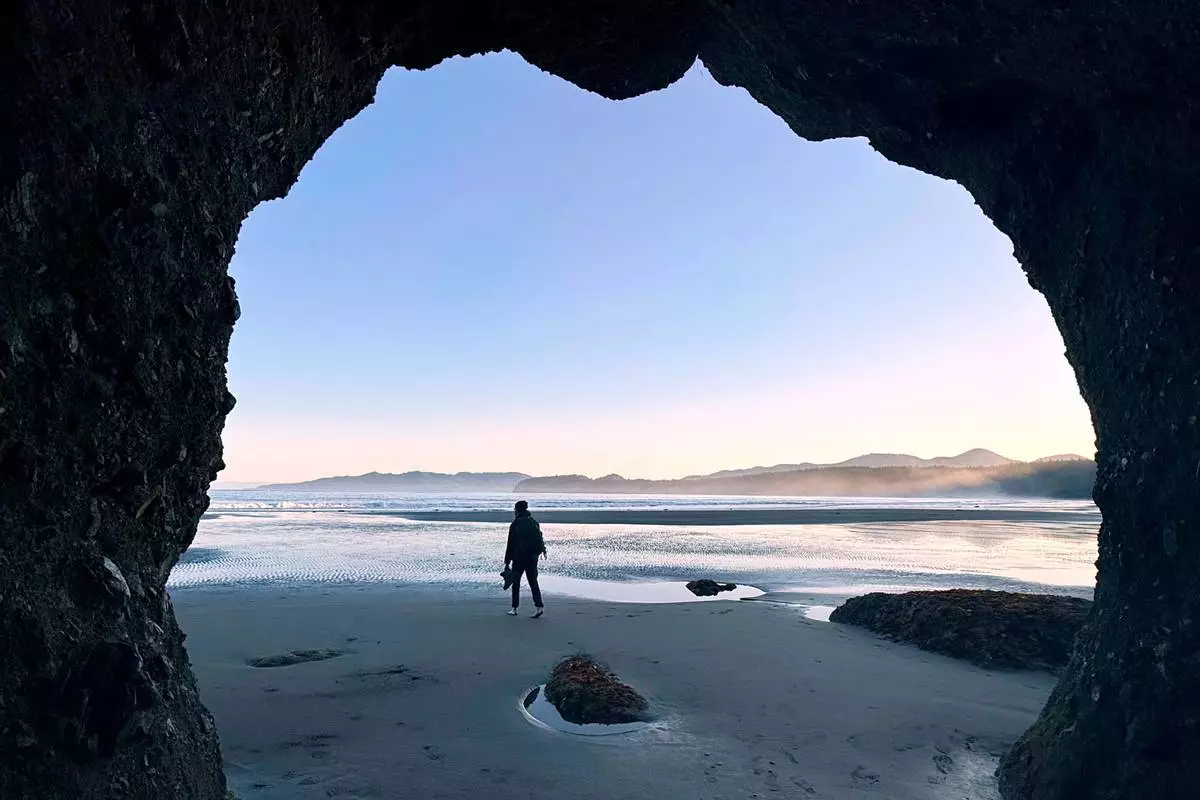
A hiker walks along Shi Shi Beach on Washington's Olympic Peninsula, Sept. 6, 2026. (AP Photo/Annika Hammerschlag)
A hiker walks along Shi Shi Beach on Washington's Olympic Peninsula, Sept. 6, 2026. (AP Photo/Annika Hammerschlag)

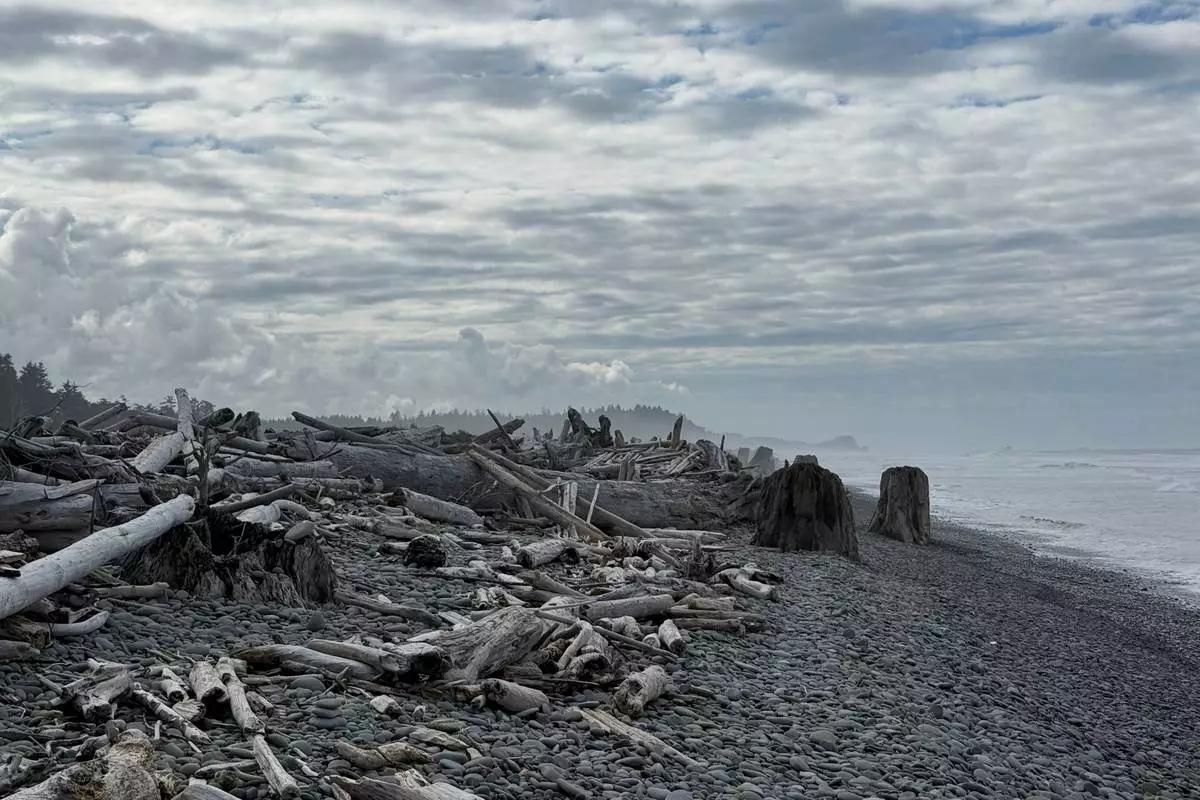
Driftwood sits on a beach beach near Queets on Washington's Olympic Peninsula, Sept. 7, 2026. (AP Photo/Annika Hammerschlag)
Driftwood sits on a beach beach near Queets on Washington's Olympic Peninsula, Sept. 7, 2026. (AP Photo/Annika Hammerschlag)

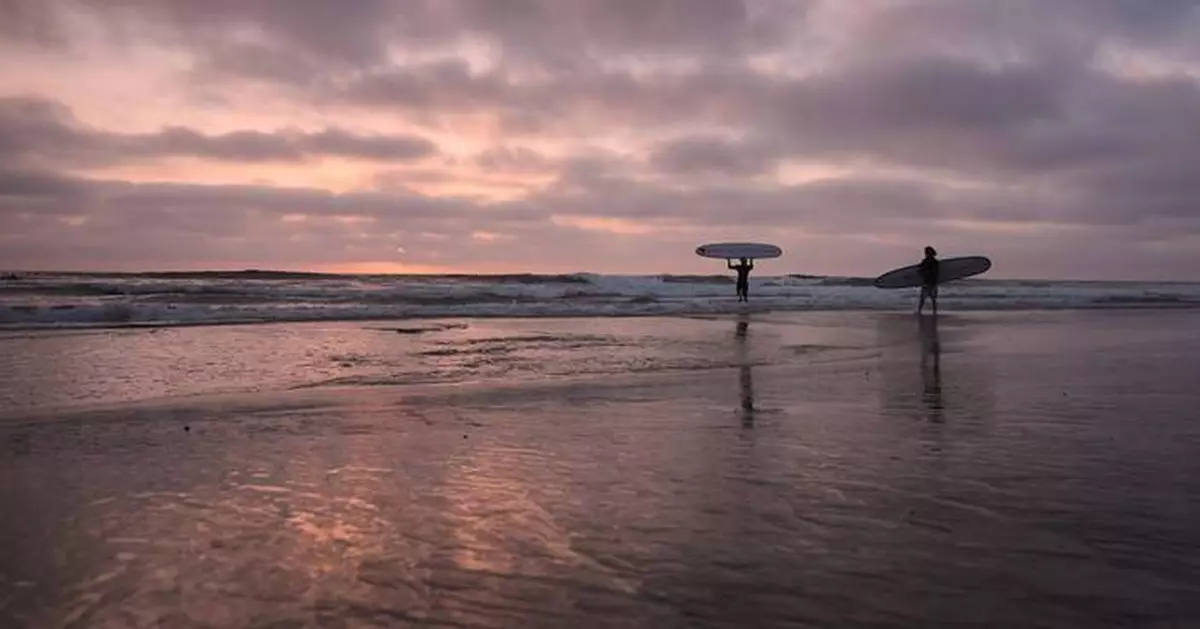
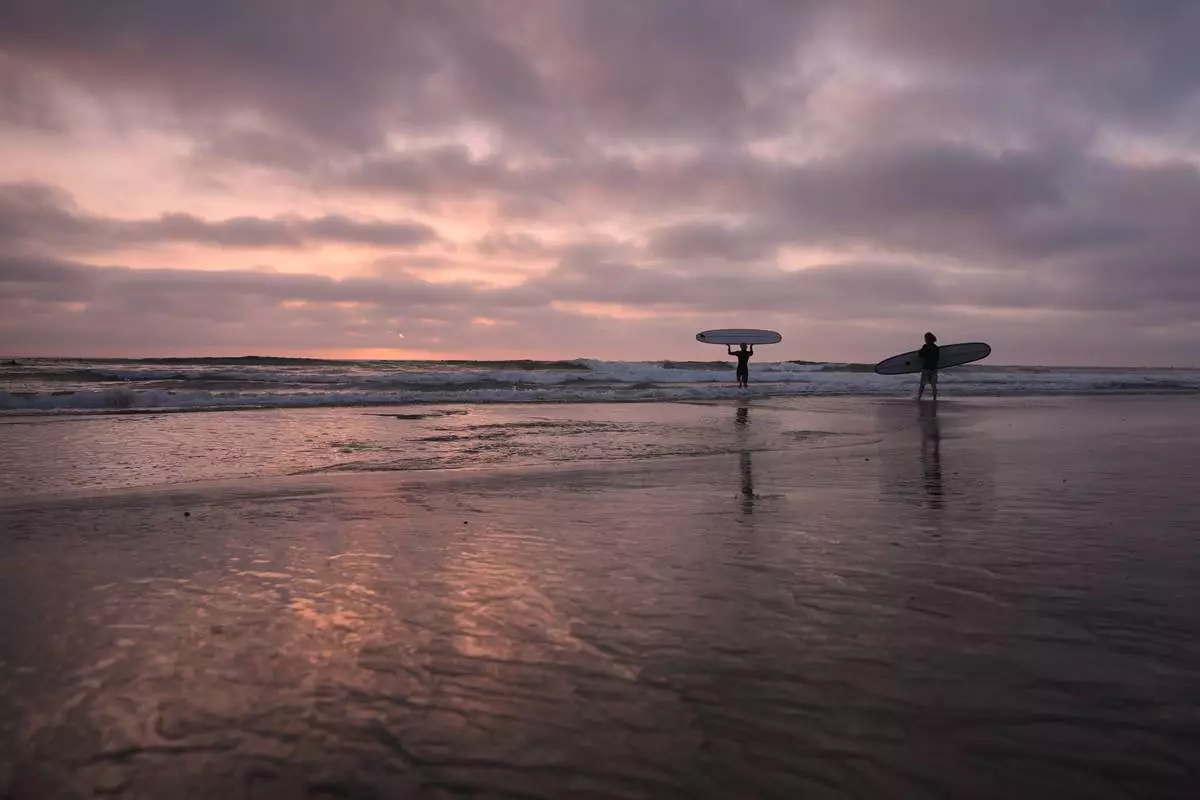
Surfers enter the Pacific Ocean as the sun sets Thursday, Oct. 1, 2026, in Encinitas, Calif. (AP Photo/Gregory Bull)

Surfers enter the Pacific Ocean as the sun sets Thursday, Oct. 1, 2026, in Encinitas, Calif. (AP Photo/Gregory Bull)
The co-pilot suspected in this week's FlyDubai attack has been identified as an Omani national, and the United Arab Emirates says he attacked the captain with the cockpit's crash axe before trying to seize the controls.

Meanwhile, a hospital in Gaza says Israeli strikes have killed five people, including two from the Palestinian territory's Christian minority. And a fire broke out at an oil facility in the Saudi capital, with no details released on the cause.

Here is the latest news from the Middle East on Saturday. Full coverage is available here.

The co-pilot suspected of stabbing the captain of an Israel-bound FlyDubai flight before passengers and others stopped the attack is an Omani national named Hamam al-Hammami, three people with knowledge of the situation, including a Gulf and a Western diplomat, said.

All spoke on condition of anonymity because they were not authorized to speak to the media. The Gulf diplomat said investigations are underway to establish whether he acted alone.

The United Arab Emirates said the co-pilot attacked the captain with the cockpit’s crash axe and tried to take control of the plane in a “terrorist attack.”

The co-pilot, who officials said nearly crashed the sharply plummeting flight with 182 people aboard, was barred from flying by Oman over concerns he had adopted extremist views, a separate person familiar with the matter said, speaking on the condition of anonymity to discuss the ongoing investigation.

— By Samy Magdy, Sam Mednick, Anna Johnson

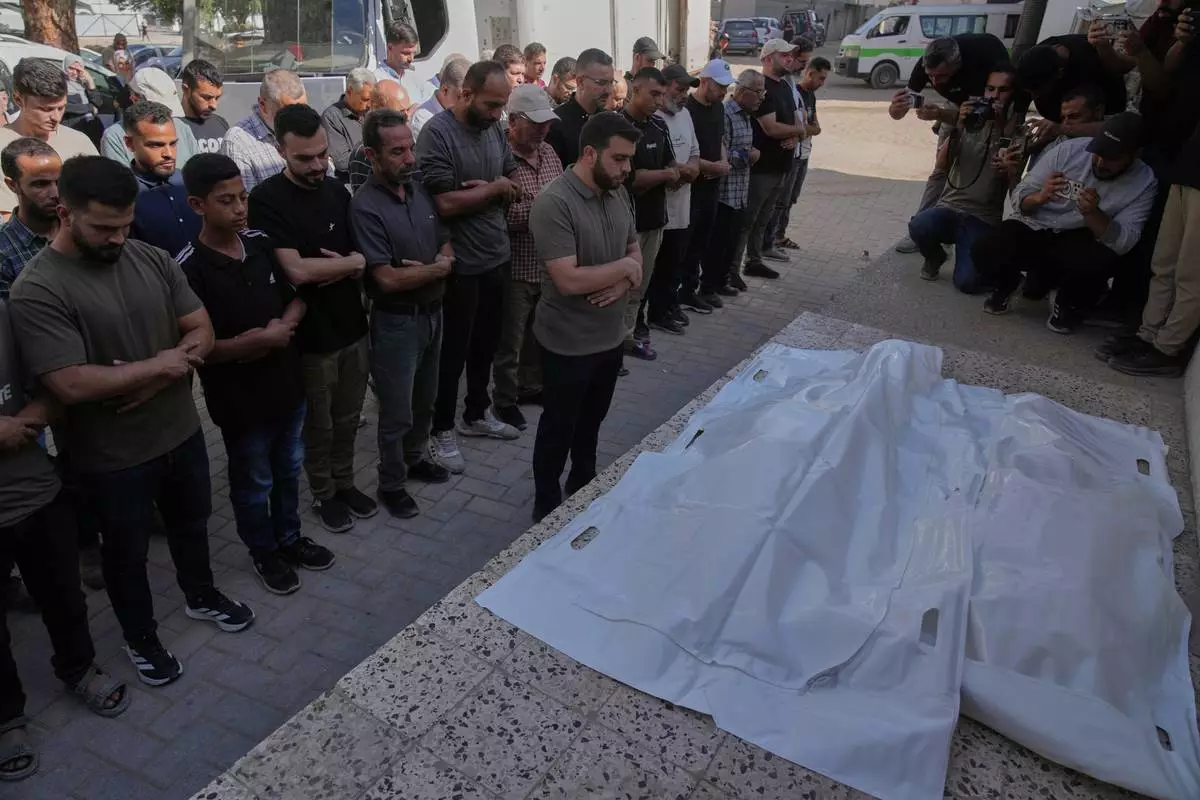
Israeli strikes overnight in Gaza killed five people, according to Shifa Hospital, where the casualties were taken. Four women were among the dead. A mother and daughter among them were Christians, a minority in Gaza, the hospital said, and the Latin patriarch of Jerusalem, Cardinal Pierbattista Pizzaballa, expressed condolences.

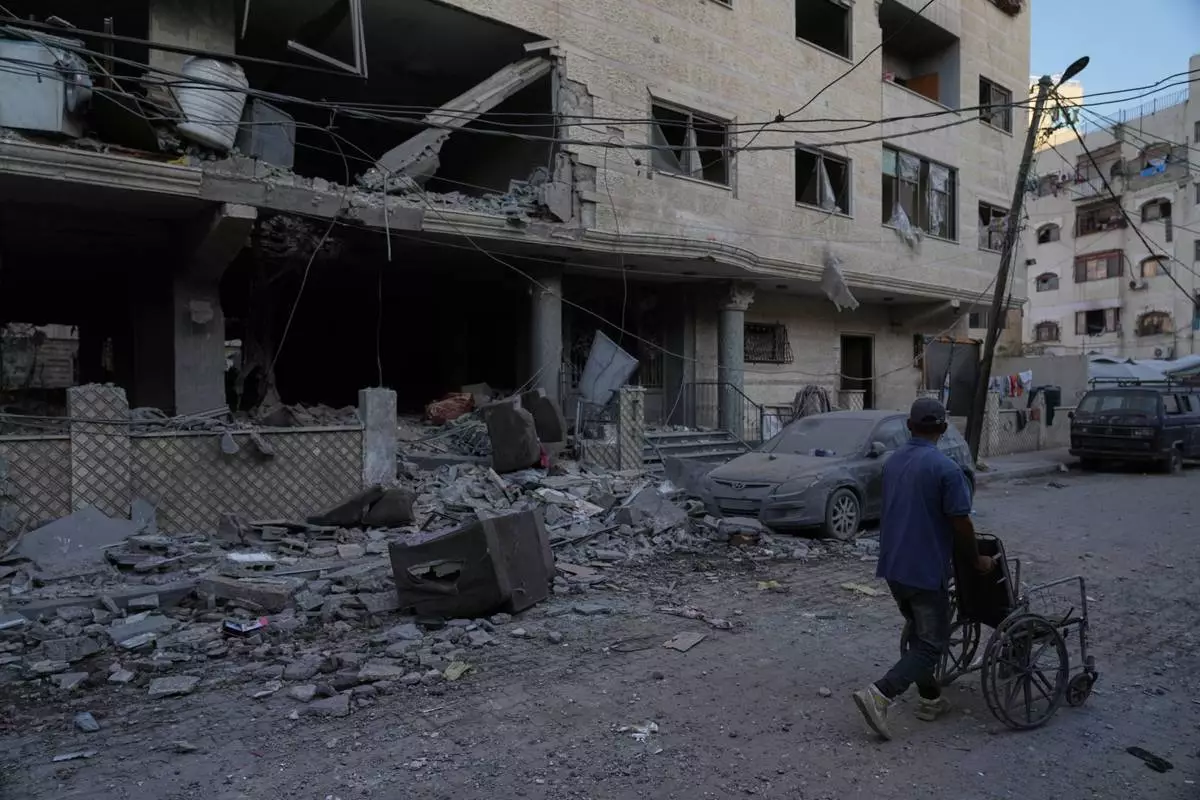
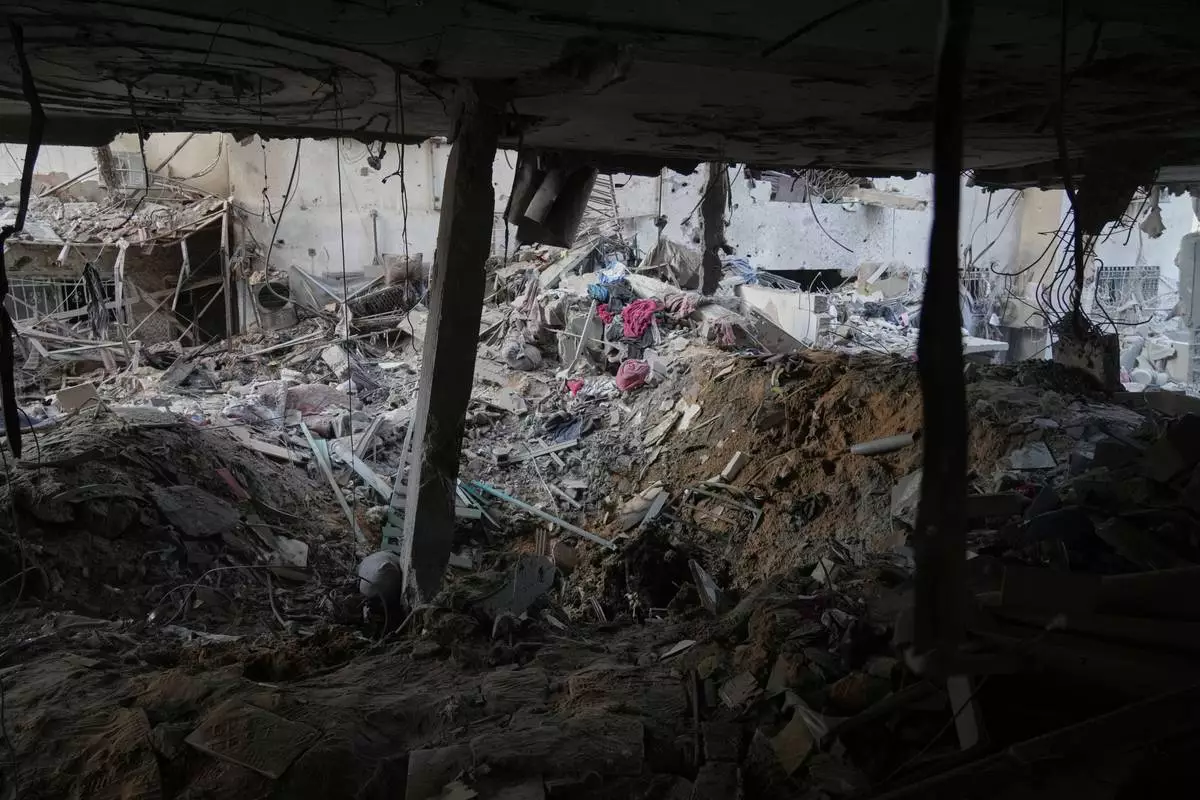
A large fire burned at the site, where the strikes tore a gaping hole in the ground floor of a multistory building. The hospital said people were still reported missing beneath the debris.

Israel's military did not immediately comment, saying it was checking for information.

Israeli strikes have killed at least 1,439 Palestinians in Gaza since a ceasefire was reached with the Hamas militant group nearly a year ago, according to the territory’s Health Ministry. Its figures are seen as generally reliable by U.N. agencies and independent experts. It does not give a breakdown of civilians and militants.

Israel says it is targeting Hamas and other militants who pose a threat, and in response to ceasefire violations, including occasional attacks.

A fire broke out at an oil facility in the Saudi capital, Riyadh, sending dense black smoke into the air, an eyewitness said, speaking on condition of anonymity for their safety.

It wasn’t clear what caused the fire at an Aramco oil refinery. Authorities tightened security in the area and police blocked roads leading to it, the witness said.

The Saudi state-run Aramco oil company and the government-run Center for International Communication, which oversees foreign media in Saudi Arabia, didn’t immediately respond to requests for comment.

Saudi oil facilities have recently been hit in missile and drone attacks by Yemen’s Houthi rebels and Iranian-backed militias in Iraq. A major escalation between Saudi Arabia and the Iran-backed Houthis has revived Yemen’s civil war.

— By Samy Magdy

Iran-backed Houthi rebels in Yemen said airstrikes hit the capital, Sanaa, as renewed fighting raged between the Houthis on one side and Saudi Arabia and Yemen's internationally recognized government on the other. Residents reported hearing three loud explosions.

The Houthi media office accused Saudi Arabia of launching the strikes but didn’t offer evidence. There was no immediate Saudi comment.

Yemen’s military claimed responsibility. In a social media post, a spokesperson, Col. Majed al-Nazili, claimed hitting “legitimate vital military targets.” He didn’t offer details.

Iran executed a man convicted of firing at police during widespread unrest in January, the state-run IRNA news agency reported.

The report identified the man as Siavash Jamshidi Kheirabadi, a resident of Shahrekord in central Iran. It said he confessed to possessing weapons and firing at police, and was convicted on charges including moharebeh, Farsi for "waging war against God."

The report did not say how the execution was carried out, though Iran typically carries out executions by hanging. Earlier this week, IRNA reported that Iran had executed two other men over violence during the January protests.

This report will be updated throughout the day as new developments emerge.

Mourners pray over the bodies of Palestinians who were killed in an early morning Israeli airstrike, during their funeral in Gaza city, Saturday, Oct. 3, 2026. (AP Photo/Jehad Alshrafi)

Mourners pray over the bodies of Palestinians who were killed in an early morning Israeli airstrike, during their funeral in Gaza city, Saturday, Oct. 3, 2026. (AP Photo/Jehad Alshrafi)

A destroyed building is seen at the site of an early morning Israeli airstrike in Gaza city, Saturday, Oct. 3, 2026. (AP Photo/Jehad Alshrafi)

A destroyed building is seen at the site of an early morning Israeli airstrike in Gaza city, Saturday, Oct. 3, 2026. (AP Photo/Jehad Alshrafi)

Palestinians inspect the site of an early morning Israeli airstrike in Gaza city, Saturday, Oct. 3, 2026. (AP Photo/Jehad Alshrafi)

Palestinians inspect the site of an early morning Israeli airstrike in Gaza city, Saturday, Oct. 3, 2026. (AP Photo/Jehad Alshrafi)

Recommended Articles