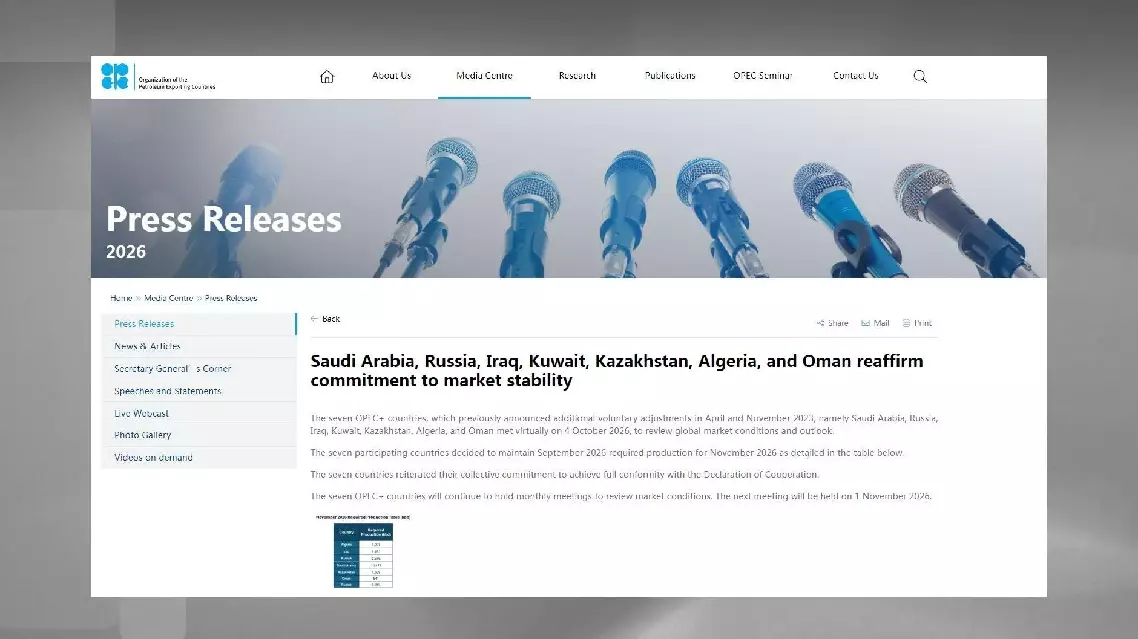
The seven major OPEC+ countries decided to keep oil output quotas for November unchanged from the October levels, said the Organization of the Petroleum Exporting Countries (OPEC) in a statement released on Sunday.
This marks the second consecutive month of maintaining the oil output quotas steady.
Representatives from Saudi Arabia, Russia, Iraq, Kuwait, Kazakhstan, Algeria, and Oman met virtually on Sunday to review global market conditions and outlook, according to the statement.
Participating countries reaffirmed that they will continue to abide by the relevant production arrangements under the OPEC+ cooperation framework and hold monthly meetings to assess subsequent output policies in light of international oil market conditions, said the statement.
The next meeting will take place on Nov 1, according to the statement.
The OPEC+ consists of OPEC member states and non‑OPEC oil‑producing countries such as Russia.
In March last year, the seven countries participating in Sunday's meeting, together with the United Arab Emirates (UAE), which had withdrawn from the OPEC and the OPEC+ on May 1 this year, jointly decided to gradually raise oil output starting from April 1 last year.
The eight countries kept increasing output each month until December.
In the first three months this year, the eight countries put output increase on hold due to seasonal factors. They later announced the resumption of output increases beginning in April.
OPEC+ decides to keep oil output targets steady in November
Yemeni government announced a large-scale military operation on Sunday to retake areas seized by the Houthis, as the Saudi-led coalition pledged continued combat support, marking one of the sharpest escalations in the country's years-long conflict.
Rashad al-Alimi, chairman of Yemen's Presidential Leadership Council, declared the launch of the operation in a televised address broadcast by Yemeni state television from the Saudi capital Riyadh, saying the government was moving "from the preparation phase to the action phase" after weeks of mobilization.
He said he had ordered the armed forces, security forces and all military formations to begin executing the plan, describing its mission as "not merely to restore the land, but to restore the state to it." Houthi fighters who lay down their weapons and stop fighting would be granted amnesty, Al-Alimi said.
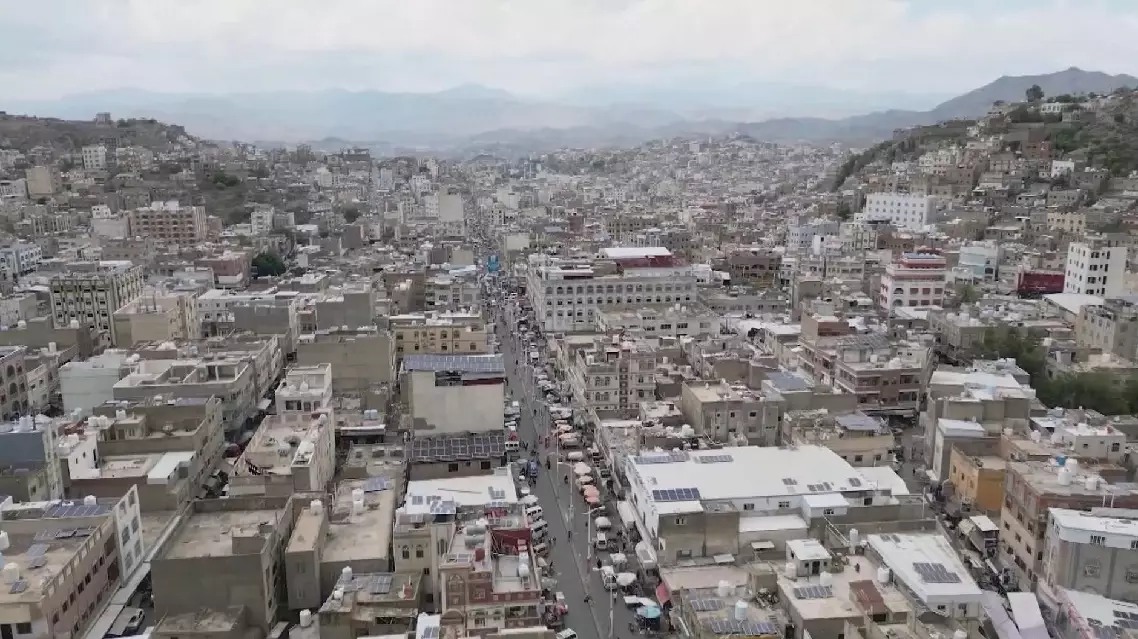
The campaign comes in the wake of an intensified Houthi offensive against government forces that has seen the group capture a string of critical strategic locations, including the Red Sea port city of Mocha and Mayun Island, also known as the Perim Island. On September 11, the Yemeni government reported that Houthi fighters had seized control of the country's entire western coast and pushed their advance into the southern province of Lahj. Local officials said that by Sunday, the group had also secured several vital areas in the southwestern province of Taiz, cutting off a key road linking Taiz with the neighboring province of Lahj and the southern port city of Aden.
The Saudi-led coalition said on the same day that it would continue to provide "full operational support" for the Yemeni government and its armed forces.
In a statement, coalition spokesman Turki al-Maliki accused the Houthis of "deliberate and systematic targeting of civilians and civilian objects" in Riyadh and other Saudi cities, attempting to strike the holy cities of Mecca and Medina, and threatening Saudi vessels in the southern Red Sea and the strategic Bab al-Mandab Strait.
He said the coalition would take necessary measures to curb Houthi hostilities, safeguard Saudi security and sovereignty, and eliminate the threats to freedom of maritime navigation in the southern Red Sea and the Bab al-Mandab Strait. Such threats, he warned, endanger not only regional and international security but also international trade, the global economy and the interests of all nations.
Yemen's conflict has entered one of its sharpest escalations in years, with heavy fighting spreading across southwestern Yemen and renewed missile, drone and air attacks reviving direct hostilities between the Houthis and Saudi Arabia.
Yemen's conflict began in late 2014 when the Houthis seized the capital Sanaa and much of northern Yemen, prompting the Saudi-led coalition to intervene in March 2015 in support of the internationally recognized Yemeni government.
Yemeni government announces military operations to retake Houthi-held areas