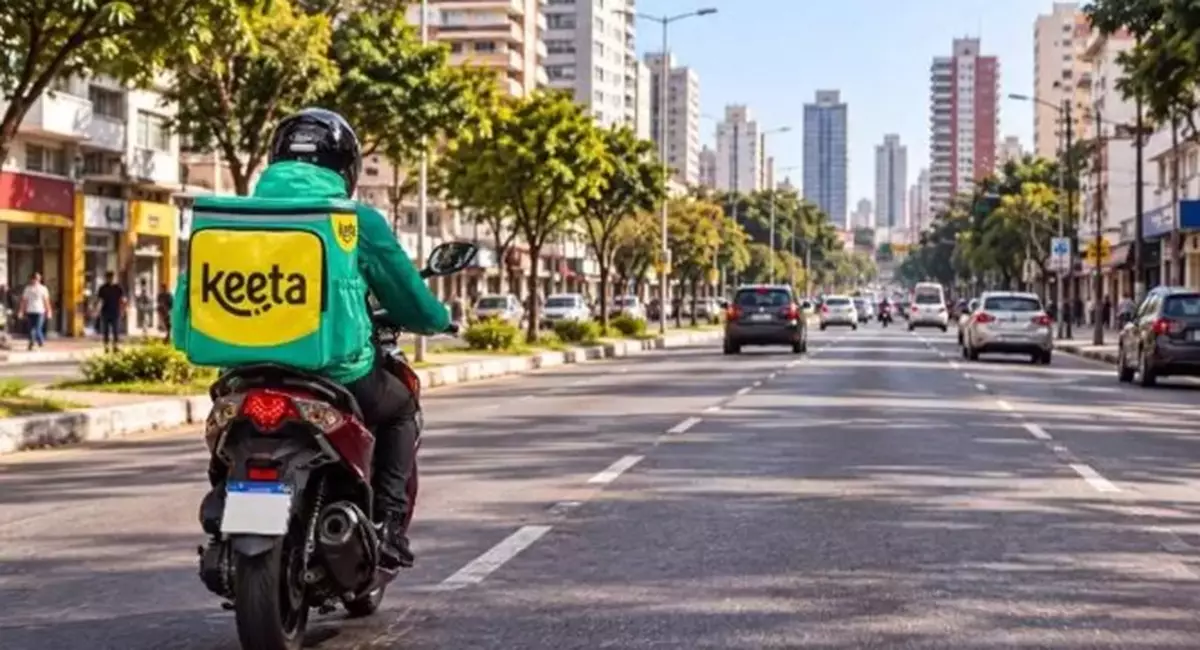
Keeta, the international food delivery brand under Meituan, has announced the expansion of its operations into 21 additional cities in Brazil, extending its footprint beyond São Paulo state into inland areas. The newly covered cities include Sinop and Sorriso in Mato Grosso, Rio Verde in Goiás, Toledo in Paraná, and Governador Valadares in Minas Gerais. With the 11 cities already operating in São Paulo state, Keeta's coverage in Brazil will reach 32 cities. According to Keeta, app downloads in Brazil have now reached 10 million.
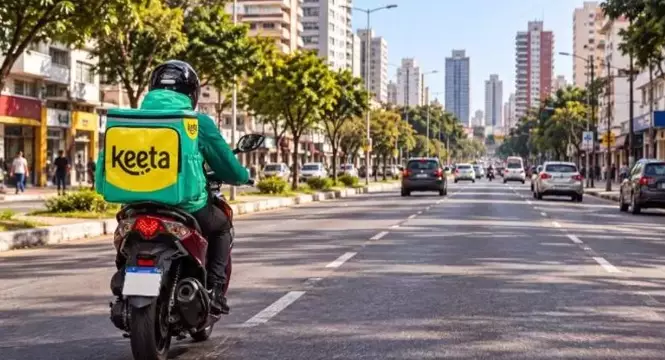
Photo source: reference image
Keeta's entry into Brazil began with an investment agreement signed in May 2025. On May 12 of that year, at the China-Brazil Business Seminar, Meituan signed an investment agreement pledging to invest US$1 billion (approximately R$5.6 billion) in Brazil over the next five years to introduce its food delivery service Keeta to the country.
Before entering Brazil, Keeta had already established and validated its operations across multiple global markets. In Hong Kong, China, the platform achieved profitability in October 2025, 29 months after launch. In Saudi Arabia, Keeta entered the market in September 2024, covered 20 cities by the end of July 2025, and achieved profitability in July 2026, taking 22 months. Keeta also successively entered Middle Eastern markets including Qatar, Kuwait, the UAE and Bahrain in 2025 and early 2026.
During Meituan's second-quarter 2026 earnings call, founder and CEO Wang Xing said the progress in Hong Kong and Saudi Arabia "demonstrates that Keeta's operating model has strong replicability in overseas markets."
Photo source: reference image
Keeta's rollout in Brazil has likewise progressed steadily. According to public information, in October 2025, Keeta began pilot operations in the cities of Santos and São Vicente; in December of the same year, it entered São Paulo, Brazil's core economic hub.
The rapid business development is also creating broader social value locally. Paulo Solmucci, Executive President of the Brazilian Association of Bars and Restaurants, said Keeta's expansion beyond major urban centres helps local restaurants reach new customers and expand their operations, offering consumers more choices and creating income circulation for the Brazilian economy.
In the next phase, Keeta plans to advance delivery service innovations, including a dedicated delivery solution, new packaging, real-time route tracking, and smart helmets for riders.
A Keeta representative said the expansion into more cities reflects the company's long-term confidence in the Brazilian market. Keeta will continue to expand restaurant supply and invest resources in technology, delivery and local operations.
RIO DE JANEIRO (AP) — Thousands of Brazilian students marched in downtown Rio de Janeiro on Wednesday to protest against the possibility of Flávio Bolsonaro winning the presidency, after the far-right candidate received more votes than incumbent and left-leaning Luiz Inácio Lula da Silva in the first round of Brazil’s presidential election.
A sea of red-clad demonstrators made their way between two historical squares in Rio’s center, chanting and holding signs referencing Brazil’s sovereignty and democracy in the South American country, which they said were under threat.
“We’re fighting for Brazil, not for Lula,” said Talita Amaral, a 19-year-old environmental science student at a nearby university. She was wearing Brazil’s yellow and green soccer jersey, often worn by supporters of Bolsonaro, which she said was a gesture aimed at reclaiming the national colors.
“We don’t have time to be sad, we need to be doing this, occupying the streets, sending messages in WhatsApp groups, trying to convince people,” Amaral said, as the chant “Olé olé olé ola, Lula Lula” rang out across Cinelandia square.
Neither Flávio Bolsonaro, the son of former President Jair Bolsonaro who is serving a 27-year sentence for attempting a coup, nor Lula received more than the required 50% of the vote needed to become Brazil’s leader on Sunday. Therefore, they will face each other in an unpredictable runoff on Oct. 25.
But Flávio Bolsonaro has at least two advantages: He received 2 million more votes than Lula on Sunday and the candidates who placed third, fourth and fifth are all on the right of the political spectrum. They gathered more than 8 million votes between them.
Bolsonaro is under investigation for corruption, money laundering and tax evasion because of his ties to the failed Banco Master — a case that many protesters in Rio made reference to on Wednesday.
Some pointed to Jair Bolsonaro's handling of the coronavirus pandemic, during which 700,000 people were reported to have died from the disease, while others held signs emblazoned with messages such as “Brazil isn't anyone's backyard” and “I don't vote for someone who sells Brazil.”
Many on the left fear a Flávio Bolsonaro presidency would fully align the Brazilian government with the United States because of the proximity in ideologies between U.S. President Donald Trump and the Bolsonaro family. Last year, Trump imposed a 50% tariff on Brazilian goods and imposed sanctions on a Brazilian Supreme Court justice, citing Jair Bolsonaro’s trial, which he called a “witch hunt.”
“If Bolsonaro wins, Brazil will become a colony of the United States,” said João Victor Vieira, 20, who studies literature. He said that Bolsonaro represented a threat to minorities such as people of color, women and the LGBTQ+ community. Bolsonaro's father was notorious for homophobic remarks.
Vieira said that while he was initially dispirited following the results on Sunday, he has since regained hope.
“This protest shows that social movements are still very much alive,” he said. “We will resist.”
This story corrects a previous version that stated the candidates who placed third, fourth and fifth gathered 6 million votes. The correct number of votes is more than 8 million.
Follow AP’s coverage of Latin America and the Caribbean at https://apnews.com/hub/latin-america
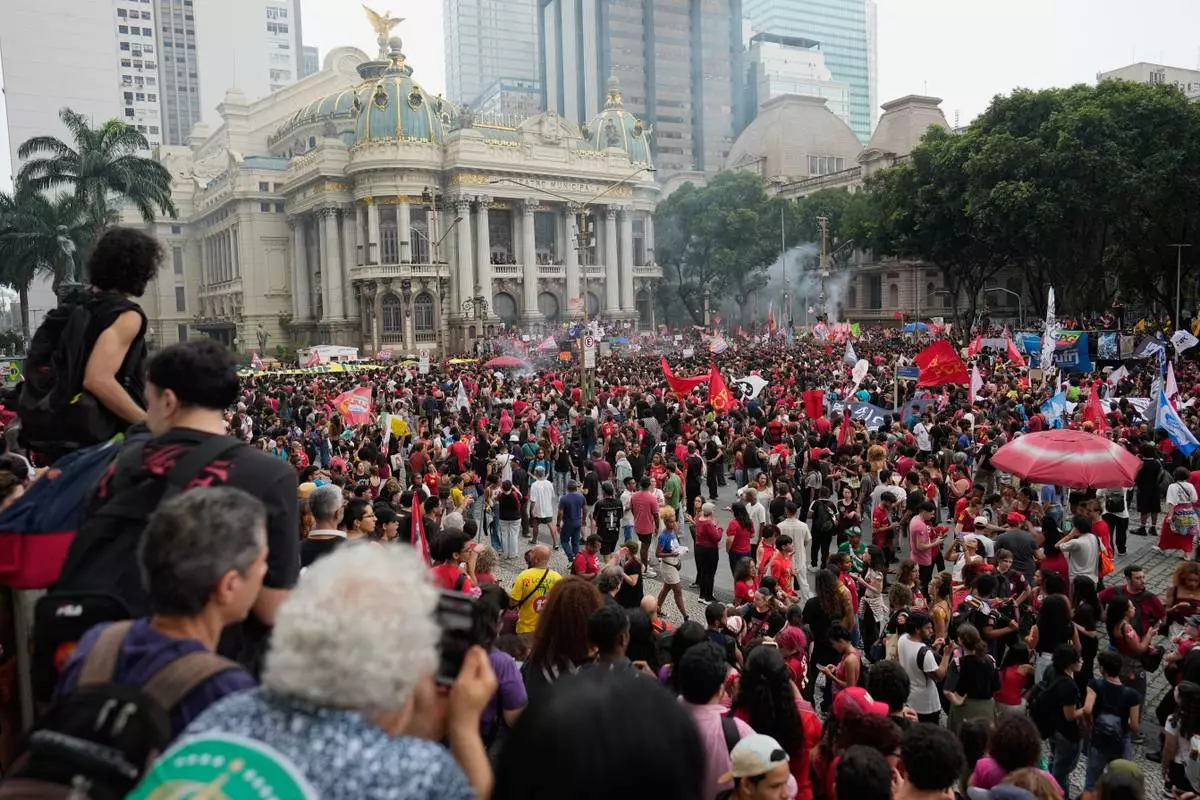
Students march to defend public education and support Brazilian President Luiz Inacio Lula da Silva, who is running for a fourth term, ahead of the presidential runoff election in Rio de Janeiro, Wednesday, Oct. 7, 2026. (AP Photo/Silvia Izquierdo)
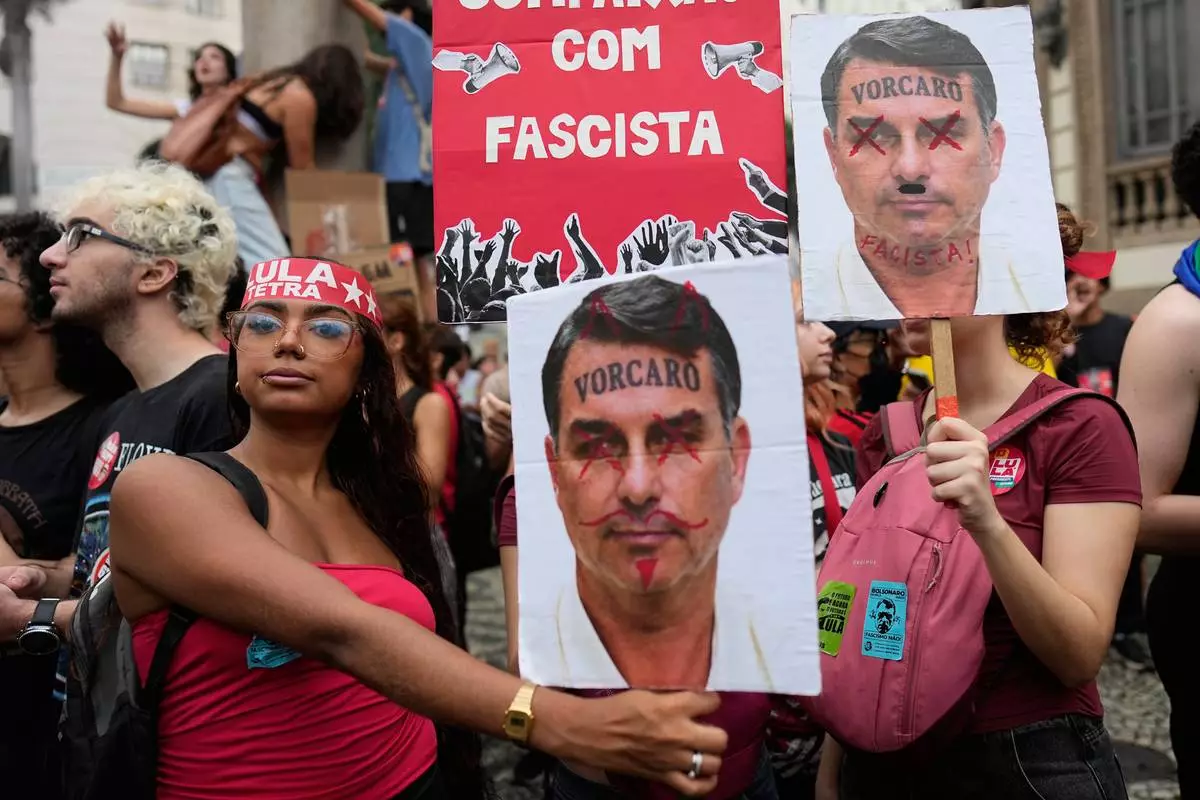
Students hold defaced images of presidential candidate Sen. Flavio Bolsonaro as they march to defend public education and support Brazilian President Luiz Inacio Lula da Silva, who is running for a fourth term, ahead of the presidential runoff election in Rio de Janeiro, Wednesday, Oct. 7, 2026. (AP Photo/Silvia Izquierdo)
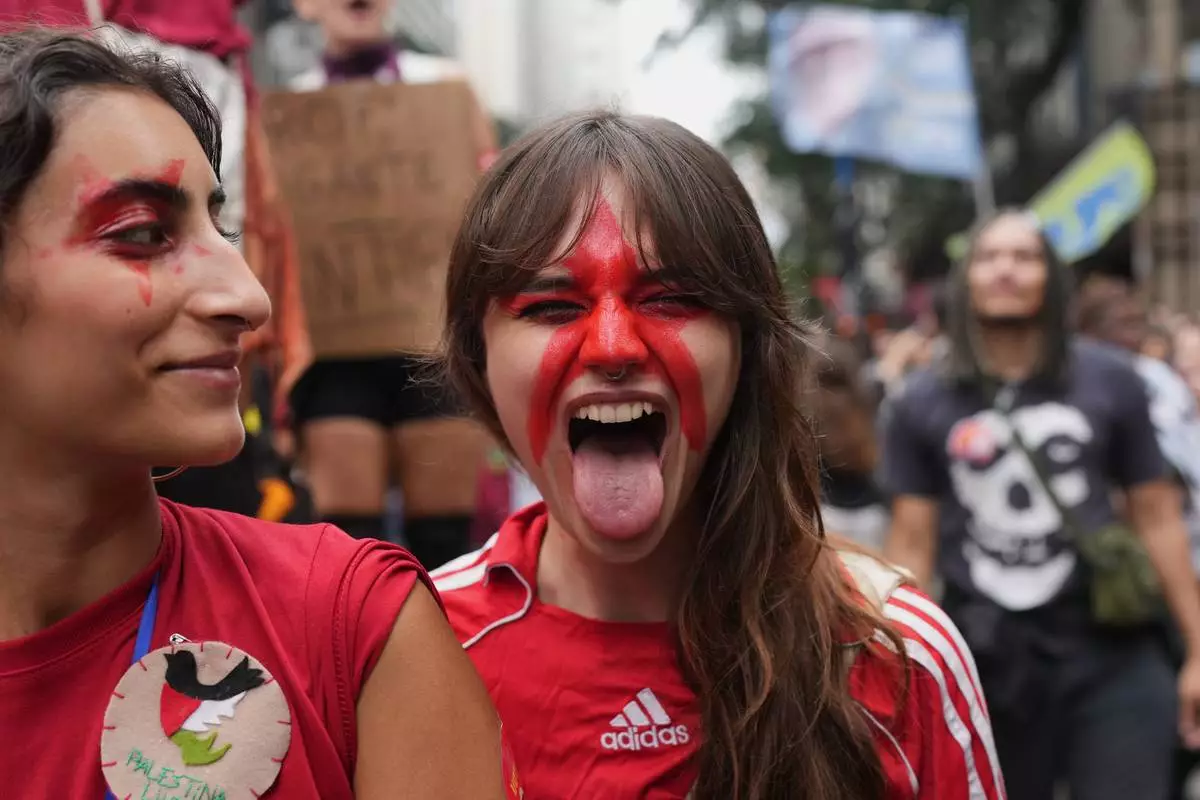
A demonstrator wears the red star of the Worker's Party during a student march to defend public education and support Brazilian President Luiz Inacio Lula da Silva, who is running for a fourth term, ahead of the presidential runoff election in Rio de Janeiro, Wednesday, Oct. 7, 2026. (AP Photo/Silvia Izquierdo)
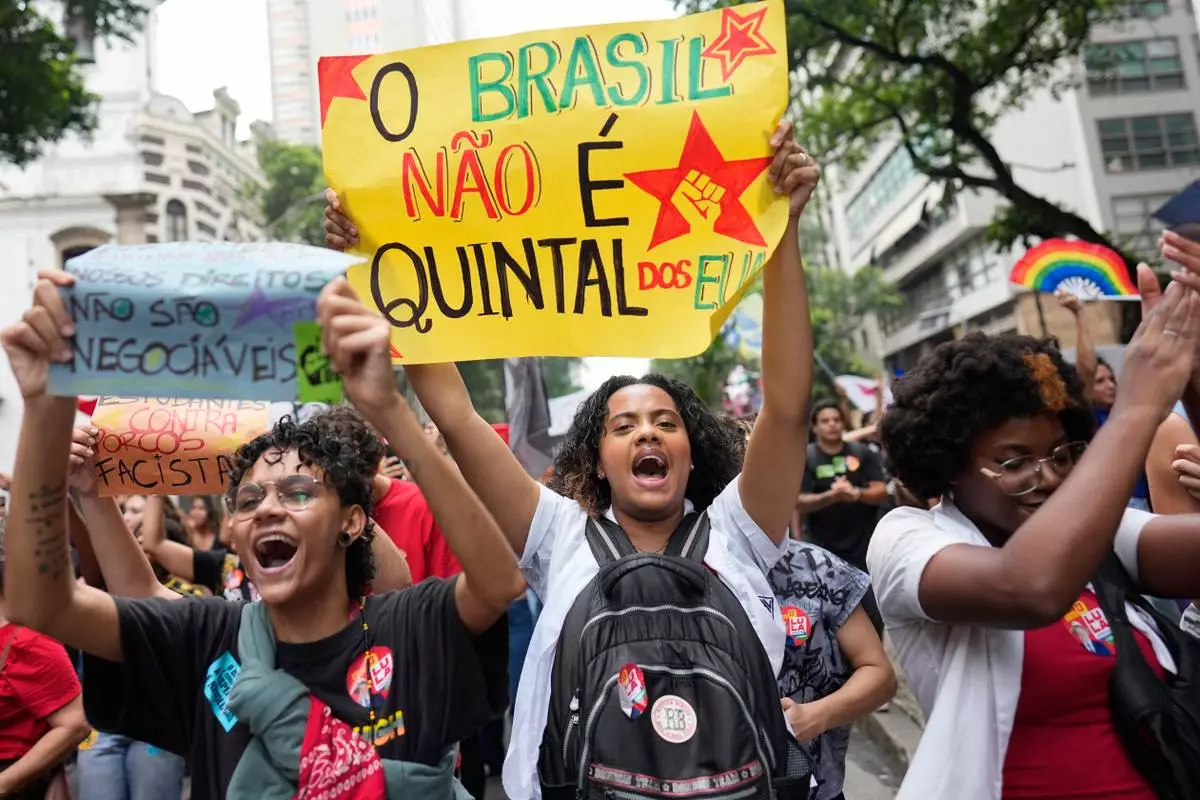
Students carry a sign that reads in Portuguese: "Brazil is not the backyard of the U.S." as they march to defend public education and support Brazilian President Luiz Inacio Lula da Silva, who is running for a fourth term, ahead of the presidential runoff election in Rio de Janeiro, Wednesday, Oct. 7, 2026. (AP Photo/Silvia Izquierdo)
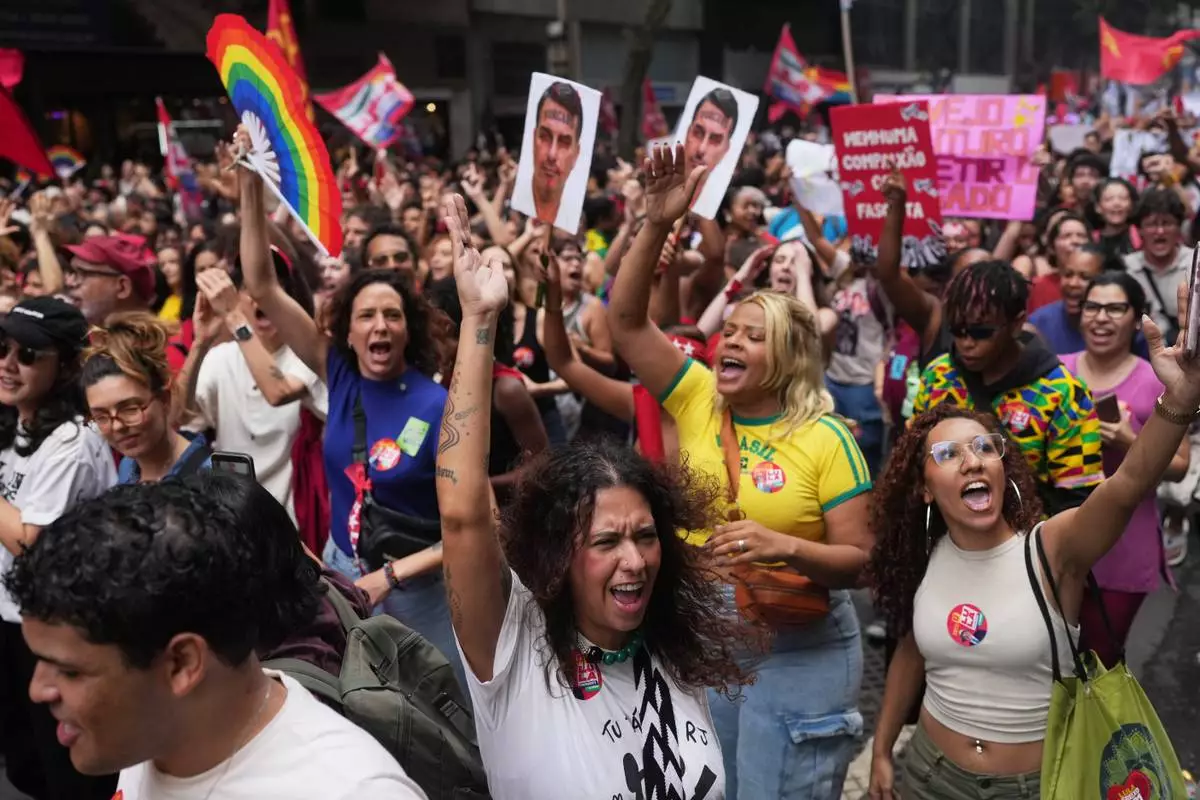
Students march to defend public education and support Brazilian President Luiz Inacio Lula da Silva, who is running for a fourth term, ahead of the presidential runoff election in Rio de Janeiro, Wednesday, Oct. 7, 2026. (AP Photo/Silvia Izquierdo)