Skip to Content Facebook Feature Image

Workforce Leaders Call for Greater Collaboration to Address Canada's Changing Labour Market

Business

Workforce Leaders Call for Greater Collaboration to Address Canada's Changing Labour Market
Business

Business

Workforce Leaders Call for Greater Collaboration to Address Canada's Changing Labour Market

2026-10-07 20:32 Last Updated At:21:00

OTTAWA, Ontario--(BUSINESS WIRE)--Oct 7, 2026--

Canada's workforce challenges are becoming increasingly complex as employers respond to changing skill requirements, labour shortages, technological change and major economic investments. Today, workforce leaders, employers, educators and policymakers will gather in Ottawa for the inaugural National Workforce Leadership Summit to examine shared workforce priorities and identify opportunities for coordinated action across sectors.

This press release features multimedia. View the full release here: https://www.businesswire.com/news/home/20261007610066/en/

The summit, convened by the National Sectoral Workforce Development Councils, will bring together leaders from multiple industries to explore solutions that strengthen Canada's talent pipeline and prepare workers for the future. It comes at a time when governments and employers are increasingly focused on workforce capacity as a driver of economic growth and competitiveness.

Discussions will focus on workforce transformation, labour market intelligence, workforce participation, labour mobility, workforce sustainability and the growing role of artificial intelligence in Canada's economy.

For more than 30 years, workforce development councils have helped employers, governments and workforce partners develop solutions that support skills development, talent pipelines and the future of work. Today, the Workforce Development Councils represent industries employing approximately half of Canada's workforce and works to strengthen workforce policy, reduce duplication and support evidence-based decision-making.

“No single industry can solve Canada's workforce challenges on its own. Labour shortages, shifting skills requirements and economic transformation are affecting employers across the economy,” says Philip Mondor, President and CEO, Tourism HR Canada. “The National Sectoral Workforce Development Councils are bringing together industry leaders, workforce experts and partners from coast to coast to coast to share knowledge, identify common challenges and develop practical solutions that strengthen Canada's talent pipeline and support a more resilient workforce.”

The National Workforce Leadership Summit reflects a growing recognition that many workforce challenges do not fit neatly within sector boundaries. Issues such as labour mobility, demographic pressures, workforce participation, digital transformation and emerging skill requirements affect employers across Canada's economy. The summit will create opportunities for employers, industry leaders, governments and workforce experts to share insights and identify practical approaches that can support workforce resilience and long-term economic growth.

A key theme of the event will be artificial intelligence and workforce transformation. Summit participants will explore how organizations can prepare workers for AI-enabled workplaces while supporting responsible adoption of emerging technologies. These conversations align with broader federal priorities related to ethical AI use, workforce readiness and skills development.

Additional discussions will focus on workforce intelligence, participation, inclusion and workforce sustainability. These themes align with ongoing government efforts to expand access to skills development, support underrepresented workers and strengthen labour market outcomes across Canada.

“Emerging technologies such as artificial intelligence are reshaping jobs, workplaces and the skills employers need to remain competitive,” says Mondor. “At the same time, creating opportunities for workers to move their skills across sectors has never been more important. This summit provides a unique opportunity for leaders from diverse industries to collaborate on workforce solutions that help workers adapt to change, support business growth and ensure Canada remains competitive in the years ahead.”

The summit will feature workforce leaders from sectors including manufacturing, transportation, agriculture, electricity, mining, tourism and biotechnology, as well as representatives from government, research organizations and employers from across the country. Participants will examine workforce challenges affecting their industries while identifying opportunities for greater collaboration and shared action.

The National Sectoral Workforce Development Councils believe that effective workforce development requires strong partnerships among employers, governments, educators and workforce organizations. By bringing these perspectives together, the summit will contribute to the workforce strategies required to support Canada's future economy.

About the National Sectoral Workforce Development Councils

The National Sectoral Workforce Development Councils bring together industry, governments, educators and workforce partners to develop solutions that support skills development, talent pipelines and the future of work. Representing industries that employ approximately half of Canada's workforce, the Councils work to strengthen workforce policy, reduce duplication and help governments and employers make informed decisions that benefit workers, businesses and Canada's economy.

Learn more about the National Sectoral Workforce Development Councils at workforcecouncils.ca.

Workforce Leaders Call for Greater Collaboration to Address Canada's Changing Labour Market

Workforce Leaders Call for Greater Collaboration to Address Canada's Changing Labour Market

Yemen’s Houthi rebels claimed that they attacked military facilities and airports in Saudi Arabia as the war between the kingdom and the Iran-backed rebels escalated.

Israelis are marking the third anniversary of the Palestinian militant Hamas group’s deadly Oct. 7, 2023, attack, which sparked a devastating war in Gaza, while for Palestinians the anniversary ushers in yet another day of misery.

Here is the latest news from the Middle East on Wednesday. Full coverage is available here.

The Houthis used ballistic and cruise missiles, as well as drones, to attack military facilities and airports in Saudi Arabia, the rebels’ military spokesman, Brig. Gen. Yahya Saree said Wednesday on social media. He didn’t provide evidence for the claim.

The attacks targeted King Khalid International Airport in the capital, Riyadh, with missiles, he said.

Flights to and from the airport were disrupted, with planes holding away from the airfield, according to Flightradar24, a tracking platform.

Also attacked were Abha airport, military facilities in Khamis Mushait and other “critical sites” in the cities of Najran and Asir, Saree said.

Maj. Gen. Turki al-Malki, spokesman for the Saudi-led coalition fighting the Houthis, said they intercepted and destroyed a ballistic missile fired by the rebels north of Riyadh.

The attacks came as Saudi Arabia and its allied Yemeni forces launched a major ground and air offensive on the Houthis on Yemen’s western coast and elsewhere in the country.

The Houthis also said they launched a missile strike early Wednesday against Yemen’s port city of Aden, the seat of the internationally recognized government.

An Associated Press journalist heard explosions that rocked the city around 2 a.m. local time.

Israelis gathered at intersections, bomb shelters and the site of a music festival that Hamas-led militants overran on Oct. 7, 2023, to mark the anniversary of the attack that killed 1,200 people and saw 251 taken hostage. The attack also sparked the war in Gaza and led to a series of conflicts across the Middle East.

“Every morning, you wake up and there is just endless missing,” said Anya Davitashili, who lost her 25-year-old son, Sean, in the attack.

For Palestinians, the anniversary brings another day of misery and difficulties after an Israeli retaliatory campaign in Gaza that has killed tens of thousands of people.

Most of the population, about 2 million people, lives in vast, squalid tent camps, with large parts of the strip’s cities reduced to rubble. More than half the territory remains in the hands of the Israeli military, and despite a ceasefire deal reached nearly a year ago, Israeli strikes continue almost daily.

“Since October 7th, we have lived a life we never imagined,” said Gaza City resident Walid Akram. “We witnessed death, destruction, and bombardment that we had never known before."

Hamas has portrayed the Oct. 7 attack as a response to decades of Israeli military occupation, land seizures and settlement construction. No events were expected Wednesday in Gaza

Three years after Israel’s military campaign against Hamas in the Gaza Strip, the city of Rafah, which used to be home to a quarter million people, lies in ruins.

The Israeli military has razed the southern city and other towns and districts to the ground, satellite imagery shows.

Demolition, using bulldozers and explosives, has continued since the Israel-Hamas ceasefire deal was reached a year ago.

Gaza’s devastated landscape is just one of many wounds that the enclave’s 2 million Palestinians have endured since the Israeli campaign that has killed over 74,000 Palestinians, according to local health authorities. More than one out of every 10 people from Gaza’s prewar population has been killed or wounded by Israeli fire.

With almost the entire population homeless, the coastal territory is now effectively one of the world’s most populated tent cities.

An Israeli drone strike killed one older man and wounded seven other people in southern Gaza on Wednesday, according to health officials.

Dr. Mohamed Saqr, a manager at Nasser Hospital, told The Associated Press that one of the injured was in critical condition.

The Israeli military had no immediate comment.

This report will be updated throughout the day as new developments emerge.

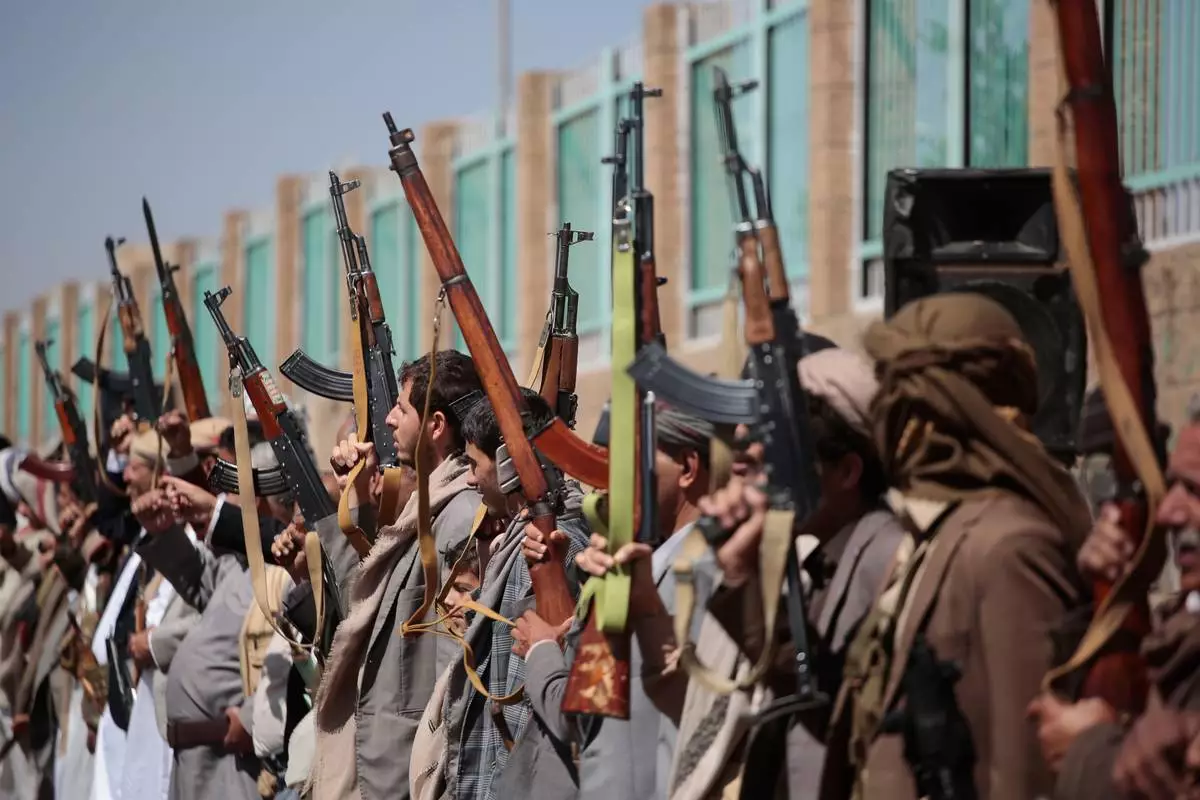
Houthi supporters chant slogans during an armed tribal rally in Sanaa, Yemen, Wednesday, Oct. 7, 2026. (AP Photo/Osamah Abdulrahman)

Houthi supporters chant slogans during an armed tribal rally in Sanaa, Yemen, Wednesday, Oct. 7, 2026. (AP Photo/Osamah Abdulrahman)

People visit a roadside bomb shelter where people were killed during the deadly Oct. 7, 2023, Hamas attack along the Israel-Gaza border, as the country marks the third anniversary of the attack, near Kibbutz Reim, southern Israel, Wednesday, Oct. 7, 2026. (AP Photo/Ohad Zwigenberg)

People visit a roadside bomb shelter where people were killed during the deadly Oct. 7, 2023, Hamas attack along the Israel-Gaza border, as the country marks the third anniversary of the attack, near Kibbutz Reim, southern Israel, Wednesday, Oct. 7, 2026. (AP Photo/Ohad Zwigenberg)

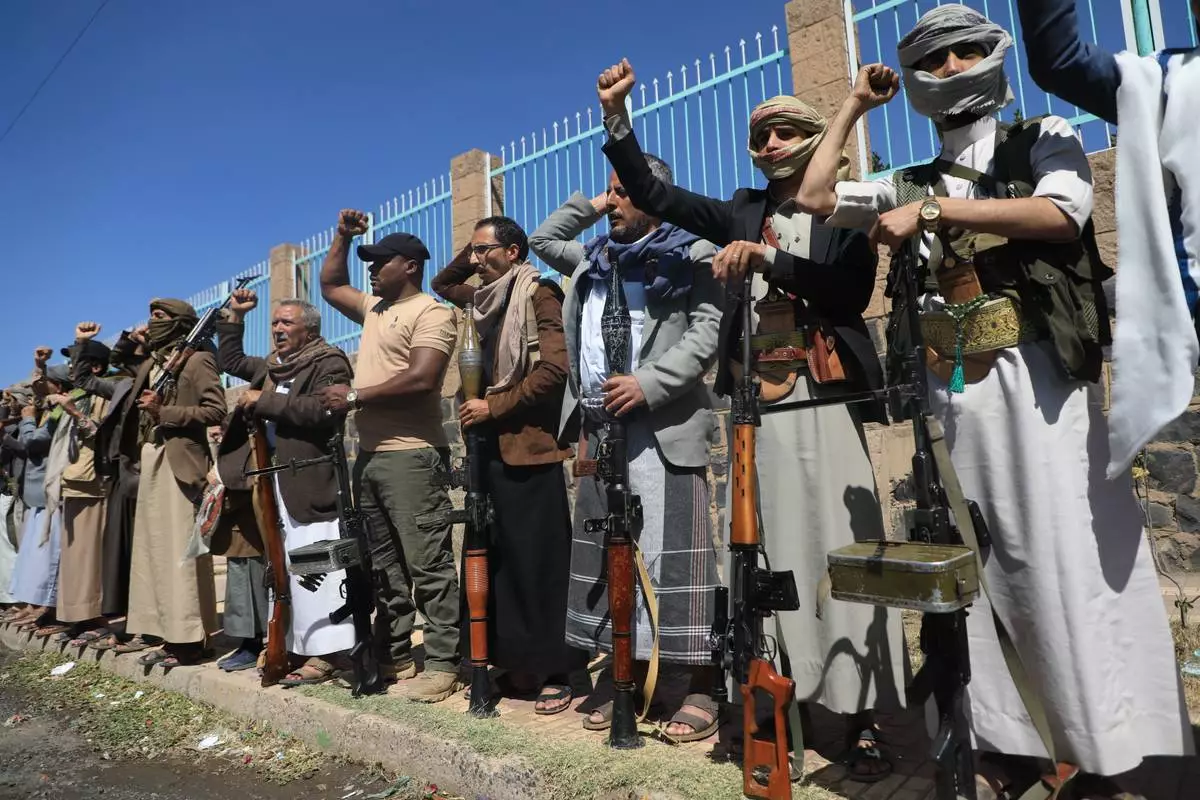
Houthi supporters carry their rifles while attending an armed tribal rally in Sanaa, Yemen, Wednesday, Oct. 7, 2026. (AP Photo/Osamah Abdulrahman)

Houthi supporters carry their rifles while attending an armed tribal rally in Sanaa, Yemen, Wednesday, Oct. 7, 2026. (AP Photo/Osamah Abdulrahman)

People mark the third anniversary of the Oct. 7, 2023, Hamas attack on Israel at the site of the Nova music festival, where hundreds of revelers were killed and abducted, near Kibbutz Reim, southern Israel, Wednesday, Oct. 7, 2026. (AP Photo/Ohad Zwigenberg)

People mark the third anniversary of the Oct. 7, 2023, Hamas attack on Israel at the site of the Nova music festival, where hundreds of revelers were killed and abducted, near Kibbutz Reim, southern Israel, Wednesday, Oct. 7, 2026. (AP Photo/Ohad Zwigenberg)

Recommended Articles