Skip to Content Facebook Feature Image

A quarter century later, the legacy of the US-led invasion of Afghanistan endures

News

A quarter century later, the legacy of the US-led invasion of Afghanistan endures
News

News

A quarter century later, the legacy of the US-led invasion of Afghanistan endures

2026-10-08 15:39 Last Updated At:17:04

KABUL, Afghanistan (AP) — Dr. Nigar Nangrahari was on a night shift in a Kabul hospital when the U.S.-led invasion of Afghanistan began 25 years ago — an event that would shape her and her country’s future for decades to come.

As she walked home the next morning, Nangrahari saw Kabul residents taking revenge on members of the Taliban, whose harsh, repressive rule had seen public stonings, limb amputations of alleged criminals and women obliterated from public life.

More Images
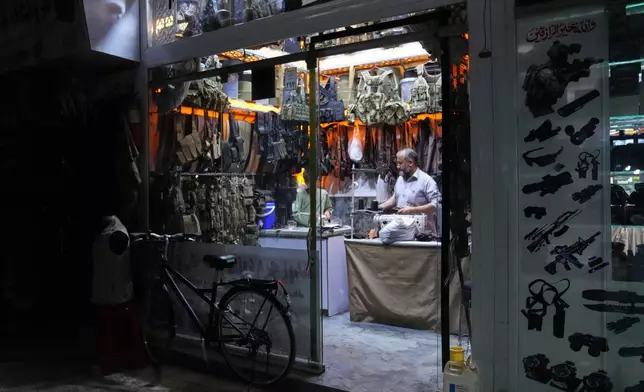
A shopkeeper works inside a store selling military equipment in Kabul's Mujahideen Market, formerly known as Bush Market before the Taliban returned to power, Sunday, Oct. 4, 2026.(AP Photo/Siddiqullah Alizai)
A shopkeeper works inside a store selling military equipment in Kabul's Mujahideen Market, formerly known as Bush Market before the Taliban returned to power, Sunday, Oct. 4, 2026.(AP Photo/Siddiqullah Alizai)

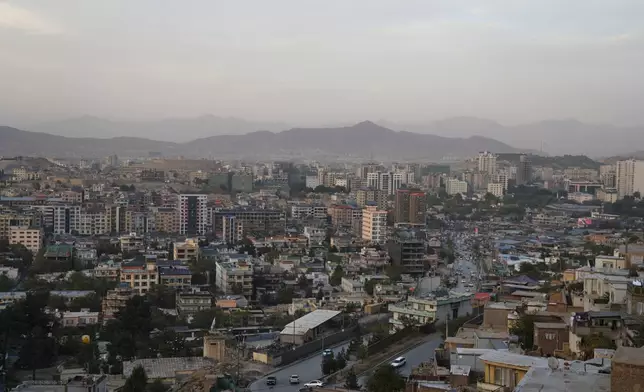
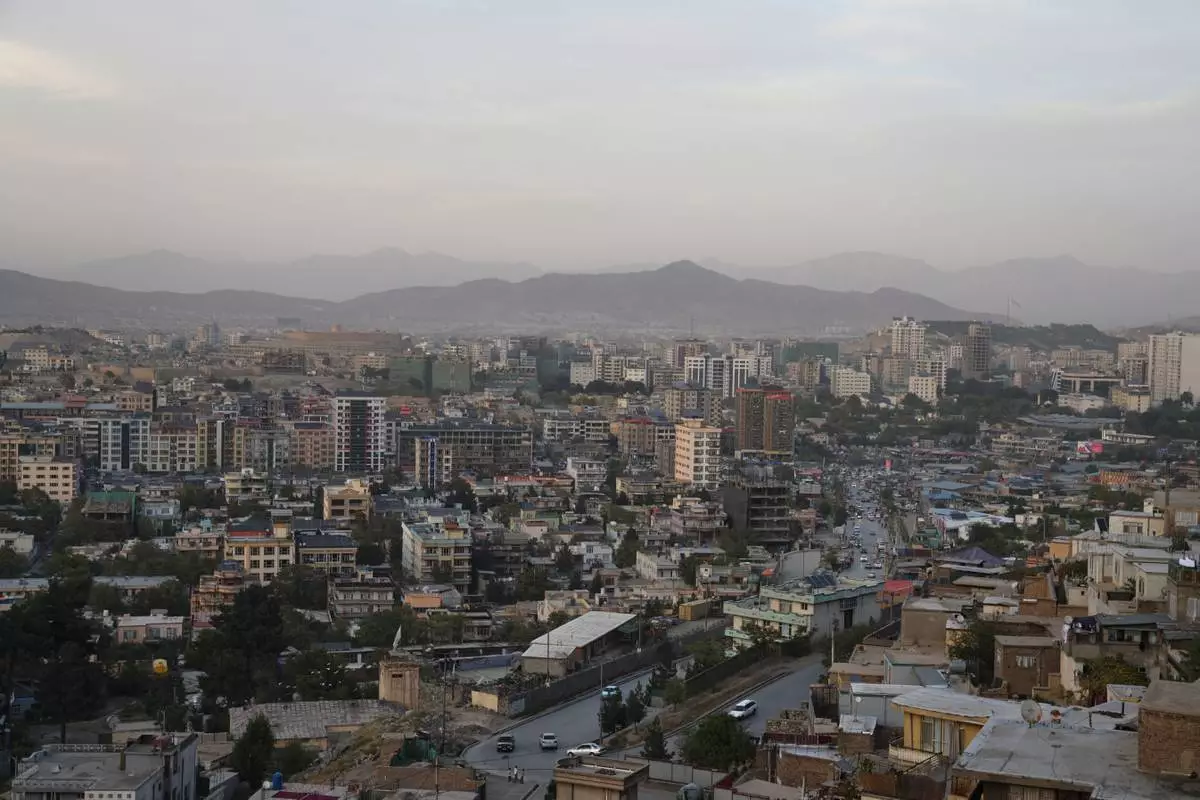
A general view of Kabul, Afghanistan, Sunday, Oct. 4, 2026. (AP Photo/Siddiqullah Alizai)
A general view of Kabul, Afghanistan, Sunday, Oct. 4, 2026. (AP Photo/Siddiqullah Alizai)

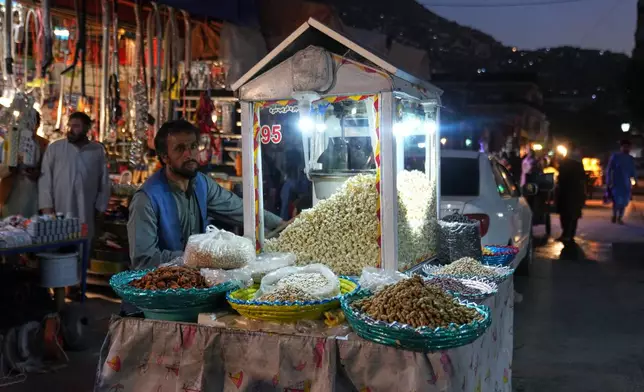
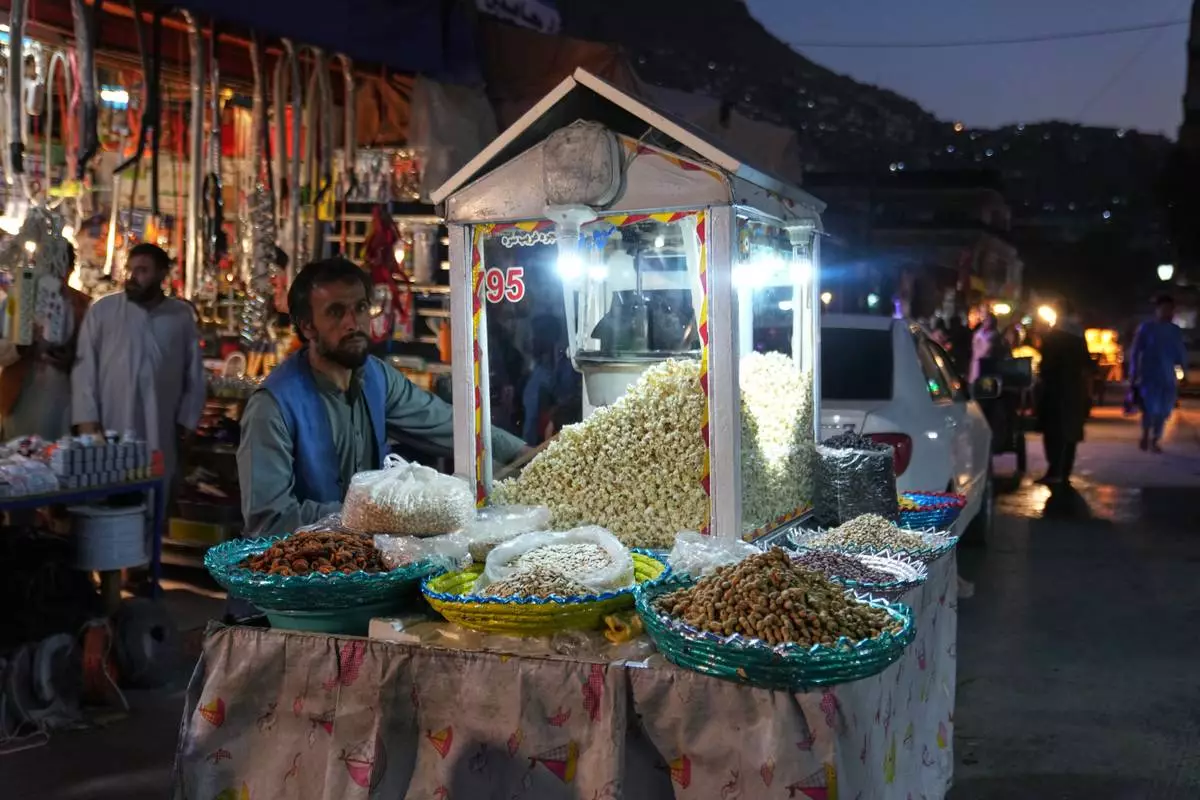
A street vendor sells popcorn in Kabul's Mujahideen Market, formerly known as Bush Market before the Taliban returned to power, Sunday, Oct. 4, 2026. (AP Photo/Siddiqullah Alizai)
A street vendor sells popcorn in Kabul's Mujahideen Market, formerly known as Bush Market before the Taliban returned to power, Sunday, Oct. 4, 2026. (AP Photo/Siddiqullah Alizai)

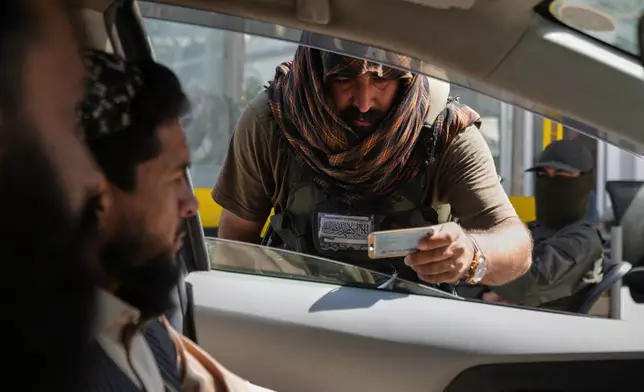
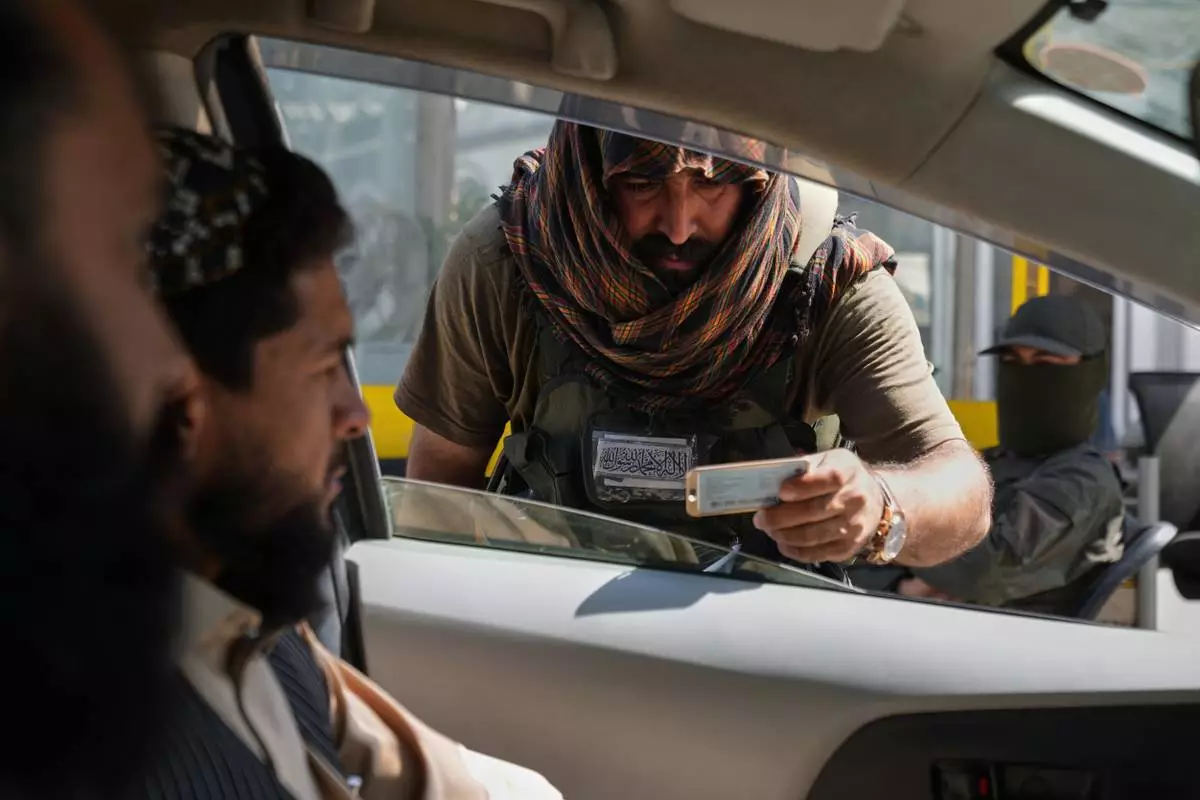
A Taliban security officer checks a motorist's documents on a road leading to the former U.S. Embassy, which has remained closed since the Taliban returned to power in 2021, in Kabul, Afghanistan, Monday, Oct. 5, 2026. (AP Photo/Siddiqullah Alizai)
A Taliban security officer checks a motorist's documents on a road leading to the former U.S. Embassy, which has remained closed since the Taliban returned to power in 2021, in Kabul, Afghanistan, Monday, Oct. 5, 2026. (AP Photo/Siddiqullah Alizai)

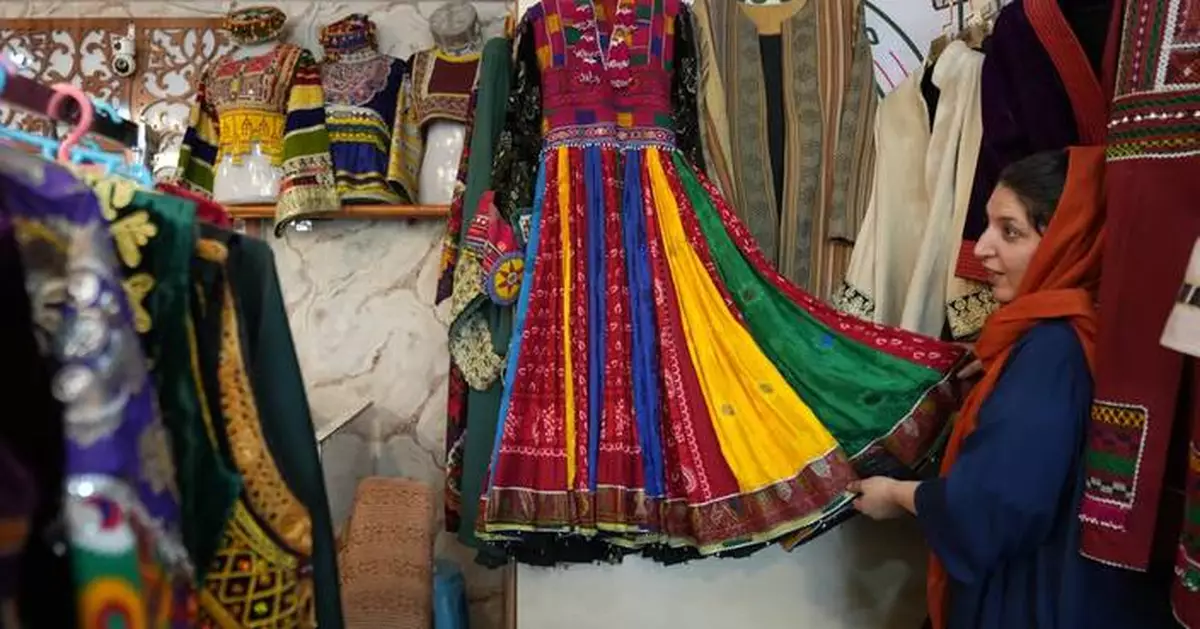
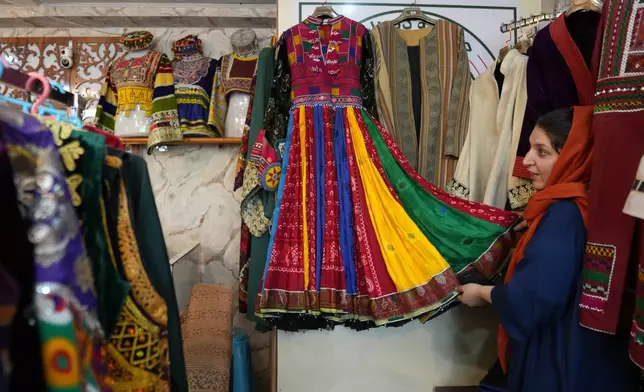
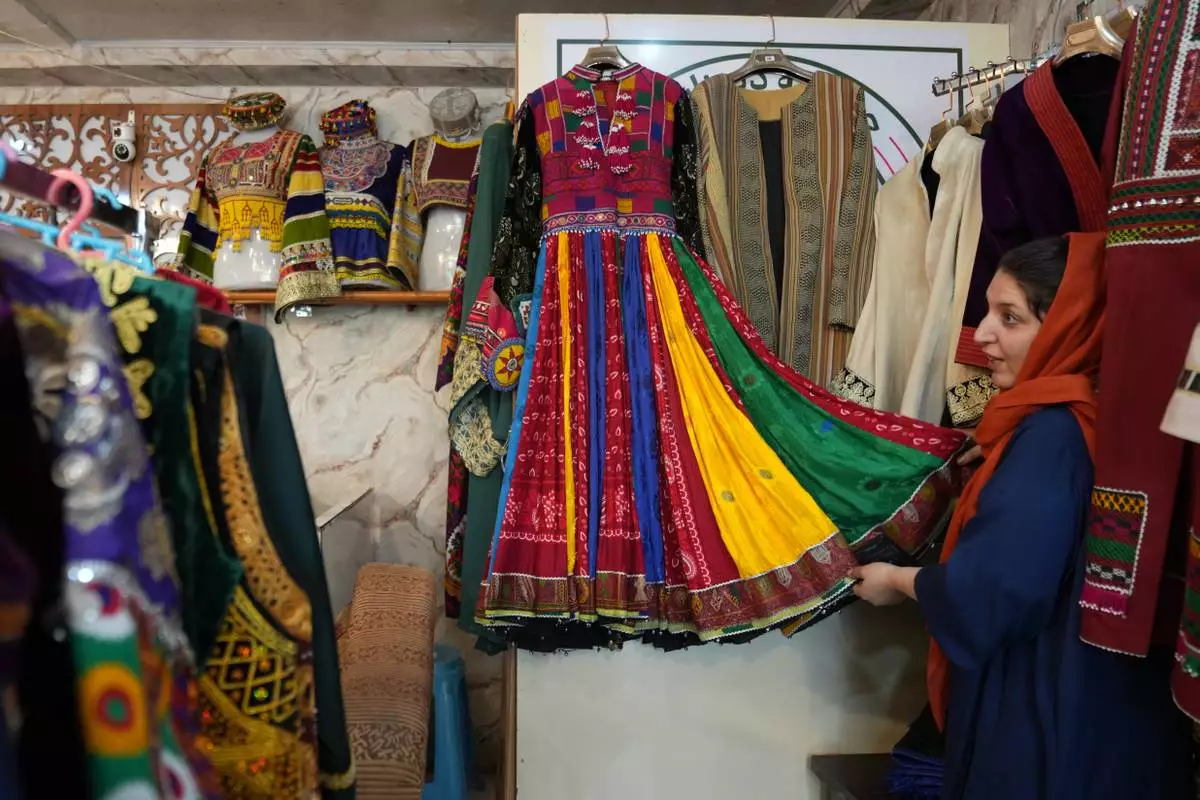
Tahmina Mangal displays a traditional Afghan dress at her clothing shop in Kabul, Afghanistan, Sunday, Oct. 4, 2026. (AP Photo/Siddiqullah Alizai)

Tahmina Mangal displays a traditional Afghan dress at her clothing shop in Kabul, Afghanistan, Sunday, Oct. 4, 2026. (AP Photo/Siddiqullah Alizai)

“Along the way, I saw ordinary people killing anyone they caught who was a Taliban member. I witnessed with my own eyes the people of Kabul capturing and killing Taliban fighters. Some had climbed trees to hide,” she said.

Afraid of what was to come, Nangrahari and her family stayed home for about a month. Eventually, she was called back to the hospital and returned to work as an obstetrician-gynecologist. She no longer had to wear a burqa in the street.

“They granted us freedom — but not the kind that Afghans could truly benefit from,” said Nangrahari, 58.

Afghanistan is a deeply conservative Muslim society, and the U.S. culture that came with the American presence in the country often rankled some segments of society.

“Afghans should neither be completely unrestricted nor subjected to the kind of severe constraints imposed by the Taliban,” she said. “There needs to be a moderate balance.”

Under U.S. President George W. Bush, the American-led coalition launched Operation Enduring Freedom with the stated goal of dismantling al-Qaida, the terrorist organization whose leader, Osama bin Laden, had orchestrated the Sept. 11 attacks in the United States from his base in Afghanistan.

The invasion was to mark the start of a 20-year war that cost tens of thousands of Afghan lives, along with thousands of coalition service members, U.S. contractors, aid workers and journalists.

The legacy of that war, and of the successive U.S.-supported Afghan governments during that time, endures today.

“Their stated goals were to bring good governance to Afghanistan and to combat narcotics and terrorism,” said Muin Gul Chamkanai, a former doctor who now heads a humanitarian organization, the Shkula Charitable Foundation, and also works as a political analyst. “The reality turned out to be the exact opposite.”

At a massive cost, both financial and in lives, the American presence brought certain freedoms, particularly for the media and in women’s education and employment opportunities. But pervasive corruption and often heavy-handed military tactics soon bred deep resentment.

Sitting at home on Oct. 7, 2001, Chamkanai switched on his television. The sight of his country being invaded enraged him.

“Had I been struck by their bombs, I would have considered martyrdom far preferable. I was not afraid,” he said. “I wanted to fight against them in Afghanistan using both the pen and the gun.”

Now, 25 years after the invasion and five years after the chaotic U.S. withdrawal from the country, the Taliban are firmly back in control of Afghanistan. Although not quite as extreme as their previous government, when they ruled the country from 1996-2001, they have reinstated many draconian restrictions, particularly on women and girls.

Security has improved without question since the Taliban seized power in August 2021. Gone are the endless devastating bombings and attacks, the vast majority of them carried out by the Taliban themselves during the two-decade-long war.

“After a long and arduous struggle, jihad and great sacrifices, Afghans succeeded in liberating their country,” deputy government spokesman Hamdullah Fitrat said in a statement on the 25th anniversary of the invasion. “This struggle demonstrated that Afghans will never submit to foreign occupation or external coercion.”

He said that Oct. 7, 2001, was “a dark day in the country’s history that resulted in thousands of Afghans being martyred, wounded, imprisoned, displaced and left homeless.”

But for a generation who grew up under U.S.-supported governments, the loss of personal freedoms, especially for women, who face restrictions on everything from what they wear to where they can go, has been a brutal blow.

After the Taliban took over, “gradually … restrictions were imposed, and the normal life we had known was taken away. Things became very difficult for us,” said Tahmina Mangal, a 33-year-old woman who saw her hopes of continuing her studies dashed by the shuttering of high schools and universities for girls and women.

“The burden is immense. It weighs heavily on my own spirits and psyche,” she said.

Now, Tahmina owns and runs a store selling traditional Afghan clothing for women. Although women face multiple restrictions and are barred from most jobs, the Ministry of Commerce does issue business licenses to women, she said. She viewed that as the only avenue open to her.

But with women barred from education and participation in any form of governance, she worries deeply about the future.

“If this situation persists, Afghanistan’s future is perilous,” Tahmina said. “Without women pursuing their studies or receiving an education, we will lack doctors, teachers and literate women, including mothers capable of raising healthy children for society. I view Afghanistan’s future as bleak and dire if this trend continues.”

For Nangrahari, although the Taliban government’s emphasis on improving infrastructure in the country is welcome, its emphasis on religious education for boys, and its ban on higher education for girls, “sets Afghanistan back by a century.” Afghanistan already is among the world's poorest countries.

“Roads have been improved and high-rise buildings constructed. Indeed, infrastructure is the foundation of the economy, and we acknowledge all of this,” Nangrahari said. “But a society lacking education is zero.”

Still, sitting in her clothing shop in Kabul, Tahmina said that women shouldn’t give up hope, and should continue pursuing their studies, even if it is only online.

“Governments inevitably come and go, collapses happen, and no government lasts forever,” she said. “I always say: ‘Remain hopeful for the future. Study, pursue professional training alongside your regular schooling, and seek higher education.’”
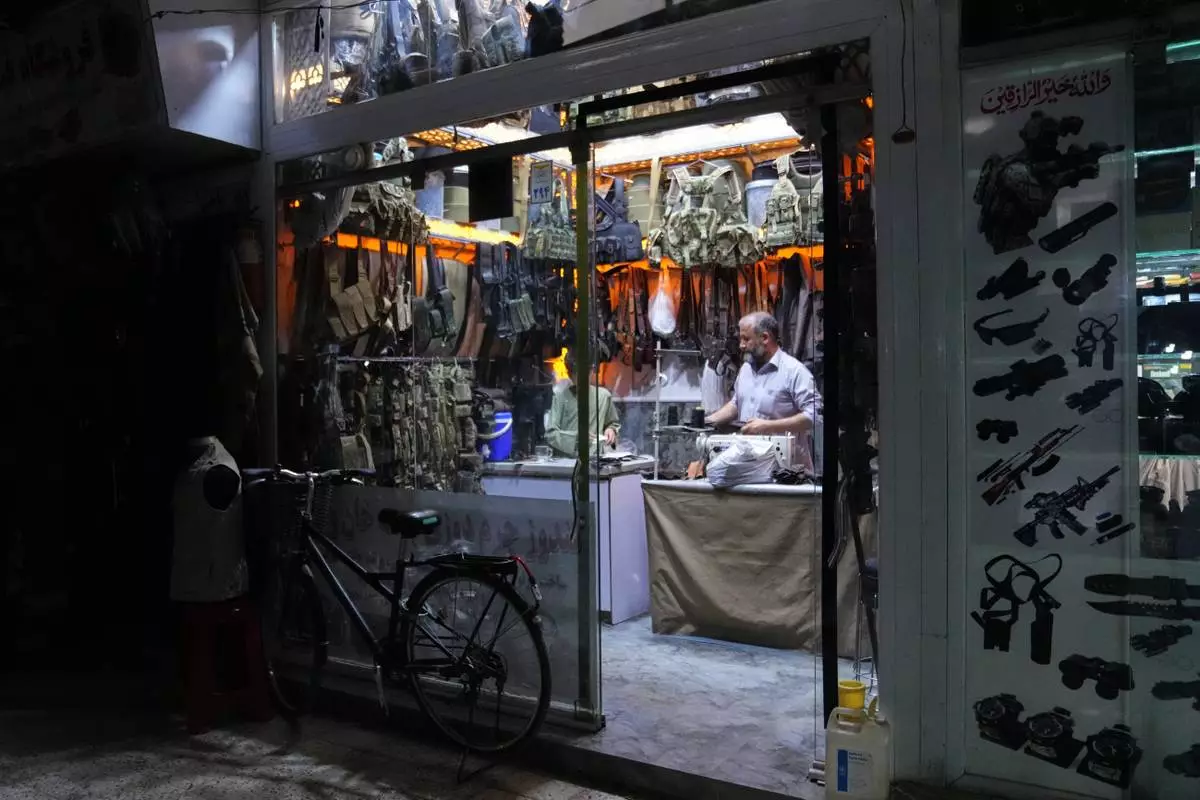
A shopkeeper works inside a store selling military equipment in Kabul's Mujahideen Market, formerly known as Bush Market before the Taliban returned to power, Sunday, Oct. 4, 2026.(AP Photo/Siddiqullah Alizai)
A shopkeeper works inside a store selling military equipment in Kabul's Mujahideen Market, formerly known as Bush Market before the Taliban returned to power, Sunday, Oct. 4, 2026.(AP Photo/Siddiqullah Alizai)

A general view of Kabul, Afghanistan, Sunday, Oct. 4, 2026. (AP Photo/Siddiqullah Alizai)
A general view of Kabul, Afghanistan, Sunday, Oct. 4, 2026. (AP Photo/Siddiqullah Alizai)

A street vendor sells popcorn in Kabul's Mujahideen Market, formerly known as Bush Market before the Taliban returned to power, Sunday, Oct. 4, 2026. (AP Photo/Siddiqullah Alizai)
A street vendor sells popcorn in Kabul's Mujahideen Market, formerly known as Bush Market before the Taliban returned to power, Sunday, Oct. 4, 2026. (AP Photo/Siddiqullah Alizai)

A Taliban security officer checks a motorist's documents on a road leading to the former U.S. Embassy, which has remained closed since the Taliban returned to power in 2021, in Kabul, Afghanistan, Monday, Oct. 5, 2026. (AP Photo/Siddiqullah Alizai)
A Taliban security officer checks a motorist's documents on a road leading to the former U.S. Embassy, which has remained closed since the Taliban returned to power in 2021, in Kabul, Afghanistan, Monday, Oct. 5, 2026. (AP Photo/Siddiqullah Alizai)

Tahmina Mangal displays a traditional Afghan dress at her clothing shop in Kabul, Afghanistan, Sunday, Oct. 4, 2026. (AP Photo/Siddiqullah Alizai)

Tahmina Mangal displays a traditional Afghan dress at her clothing shop in Kabul, Afghanistan, Sunday, Oct. 4, 2026. (AP Photo/Siddiqullah Alizai)
KYIV, Ukraine (AP) — Ukraine’s advances in drone technology and tactics have captured the world’s attention. Despite those innovations, one problem has plagued the country since the start of Russia’s invasion: a shortage of combat-ready troops.

Ukraine always has been outmanned by Russia, but as the war drags through its fifth year, the need for personnel is increasingly acute, commanders and analysts say, with some units at only half strength. There just aren't enough forces to fully exploit the battlefield advantages resulting from the drone innovations.

“Based on the equipment and the number of people we have today, we barely have enough to hold the sector we currently have,” said a deputy commander of the Da Vinci Wolves battalion in eastern Ukraine's Pokrovsk area, a focus of Russia’s offensive.

“To move forward would inevitably mean greater losses,” said the deputy commander, who insisted on identifying himself only as “Afer” because of military rules.

Long-standing mobilization problems, including draft dodging and desertion, make it harder for Ukraine to build its reserves, according to military experts, resulting in only incremental changes along the 1,250-kilometer (775-mile) front line.

Ukraine needs to be able to commit forces quickly without taking them from elsewhere on the front. Otherwise, commanders have fewer options to turn a temporary advantage into a sustained operation, said Nick Reynolds of the U.K.-based Royal United Services Institute, a defense and security think tank.

The shortage means that units can't be rotated often enough, he said, “leading to exhaustion and, in turn, exacerbating casualties.”

The Defense Ministry, which in July underwent a shake-up by President Volodymyr Zelenskyy, is trying to tackle the problem with reforms to mobilization, training and the way the army is organized.

Uneven performance by front-line units worsens the problem. Weaker formations suffer heavier losses, creating a cycle of high attrition and constant replenishment.

The ministry did not respond to Associated Press requests for comment, but one of its officials summarized the problem by saying, “There just are not enough people.”

Developing a new mobilization policy, including encouraging deserters to return to duty, is among the most sensitive issues under consideration, said the official, who was not authorized to brief the media and spoke on condition of anonymity.

Former Defense Minister Mykhailo Fedorov, who was replaced by Yevhenii Khmara in the summer shake-up by Zelenskyy, had sought to reorganize the military around fewer but stronger units. He wanted to reinforce those that performed well and disband the weaker ones.

Khmara has said he wants to continue those changes.

But the reforms will take time. Yehor Cherniev, a member of parliament's defense committee, said lawmakers have yet to see mobilization initiatives.

In June, Fedorov introduced reforms to military contracts designed to make infantry service more attractive by offering higher salaries and fixed terms of service.

Convincing Ukrainians who have little incentive to fight is a major challenge after more than four years of war, and the country is struggling to recruit enough troops from its estimated population of 39 million.

The pool of men aged 25-60 is relatively small following years of demographic decline from war-related displacement and migration. There are about 6.8 million men aged 25-59, according to U.N. figures provided by Ukraine's National Health System, but that includes wounded veterans and men otherwise unable to serve.

Official figures put the military’s strength at about 1 million, with only a small fraction deployed at the front.

Compulsory service applies only to men. Women are allowed to volunteer, and those with medical or pharmaceutical training are required to register with the military. Over 70,000 women are serving in the army, according to Defense Ministry statistics in January 2025.

In March, Fedorov said about 2 million Ukrainian men were evading service, while about 200,000 soldiers had deserted or left their units without authorization. The penalty for desertion is imprisonment of up to 12 years.

Some men flee the country illegally or hide at home. Recruiters sometimes stop them on streets and trains, and those without valid exemptions are sent into the army. In January 2025, the government said about 950,000 men had deferments at the request of businesses.

Russia, with an estimated population of 143 million, also is struggling to fill its military ranks. It launched a widely unpopular partial mobilization of 300,000 reservists months after launching the invasion, and hundreds of thousands of men fled abroad. Since then, the Kremlin has relied on volunteers lured by relatively high pay and benefits to sustain its force of what President Vladimir Putin has said numbers about 700,000 men fighting in Ukraine.

Ukraine's problem is not so much a shortage of personnel but how they are managed and deployed, said military analyst Taras Chmut, who also heads Come Back Alive, a charity providing assistance to the army.

Increasing the number of personnel in the defense forces does not necessarily increase their effectiveness, Chmut said.

Exhaustion, poor organization, inadequate training and the lack of a clear end-of-service date drive recruits to desert, according to soldiers and military analysts.

The consequences are felt immediately at the front, with fewer troops to replace battered units or available for emergencies, and a diminished ability to divert forces when an opening appears. Drones can sometimes alleviate the shortages.

With replacements scarce, some troops have spent up to a year at the front with little opportunity for rotation, said Afer, the deputy commander of the Da Vinci Wolves battalion. His unit is operating at only about half its strength while its area of responsibility has doubled, he said, meaning the same number of forces must defend about twice the territory.

Ideally, at least twice as many men are needed simply to hold current positions, but that doesn't take into account that a constant reserve of troops is needed to replace casualties, he said.

It's also a struggle to find qualified specialists who can operate increasingly sophisticated equipment on the battlefield, Afer said, adding that troops “who know how to think” are in short supply.

Ukraine can conduct localized offensives but not enough to shift the broader battlefield balance, despite mounting Russian losses. Even so, it has retaken territory in several areas, including in operations near the eastern city of Lyman.

Pavlo Narozhnyi, a Ukrainian military analyst, said he did not consider manpower an insurmountable problem for simply holding the defensive line.

“We can do limited offensives,” he said, pointing to recent actions in the Dnipropetrovsk and Lyman areas, “but it’s relatively small.”

Russian forces have occupied roughly 990 square kilometers (about 380 square miles) of Ukrainian territory since the beginning of 2026, while Ukrainian forces have retaken about 820 square kilometers (316 square miles), according to figures cited by Zelenskyy, who added that Kyiv aims to bring those figures closer to parity by year's end.

But RUSI's Reynolds said there would not be fundamental changes to the broader battlefield balance, with the front line essentially remaining the same.

——

Associated Press reporter Volodymyr Yurchuk contributed.

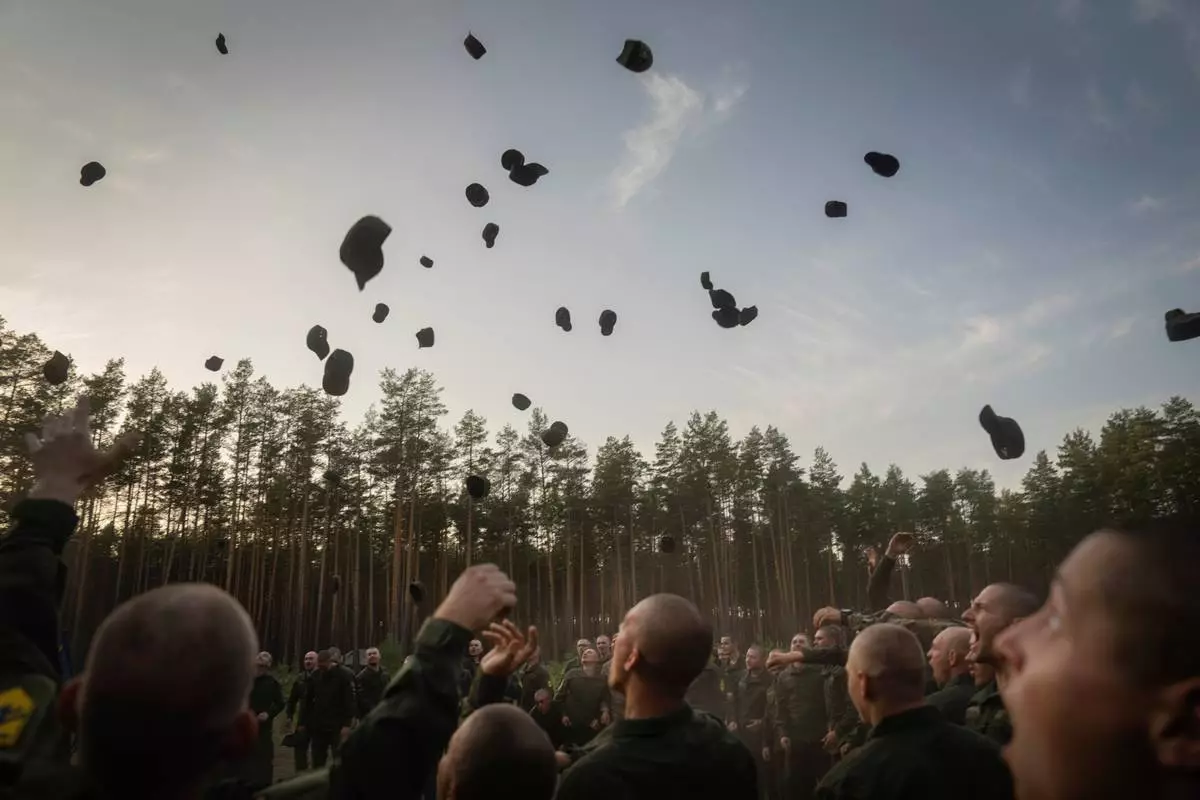
FILE - Newly recruited soldiers toss their hats as they celebrate the end of their training at a military base close to Kyiv, Ukraine, Monday, Sept. 25, 2023. (AP Photo/Efrem Lukatsky, File)

FILE - Newly recruited soldiers toss their hats as they celebrate the end of their training at a military base close to Kyiv, Ukraine, Monday, Sept. 25, 2023. (AP Photo/Efrem Lukatsky, File)

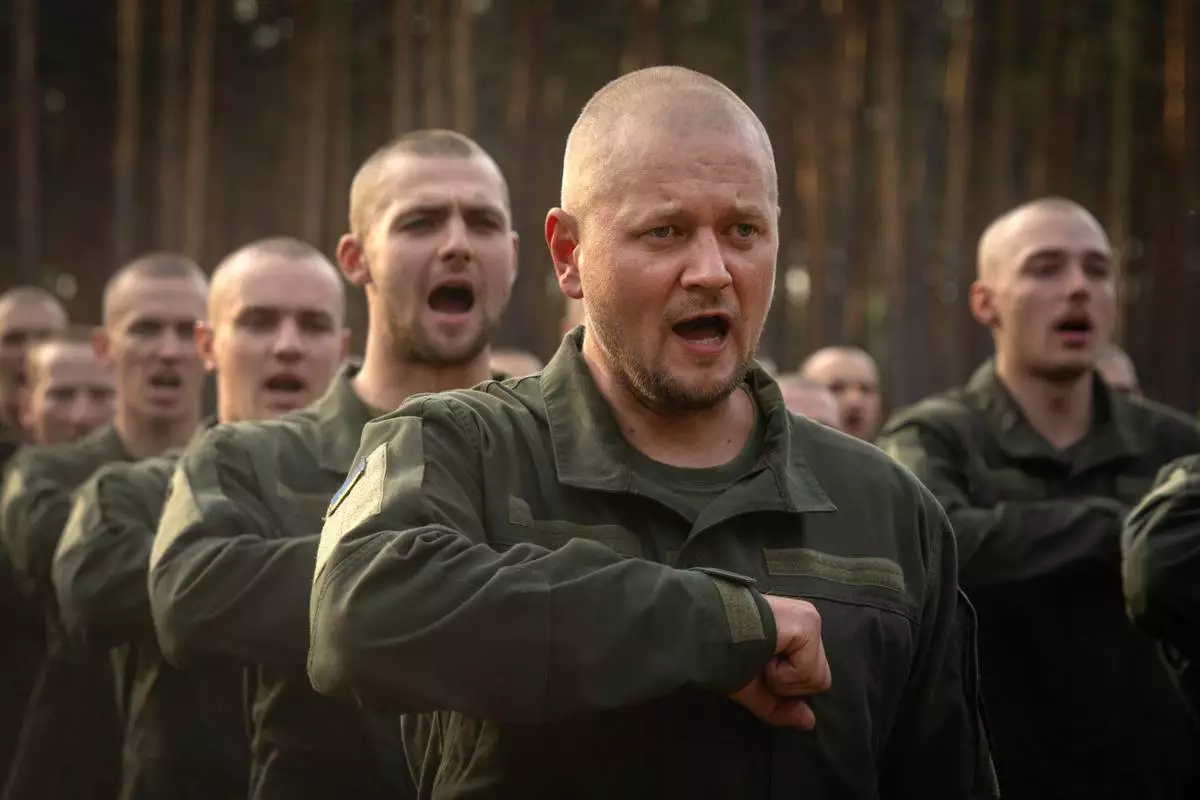
FILE - Newly recruited soldiers of Ukraine's 3rd Assault Brigade shout slogans at a military base close to Kyiv, Ukraine, Monday, Sept. 25, 2023. (AP Photo/Efrem Lukatsky, File)

FILE - Newly recruited soldiers of Ukraine's 3rd Assault Brigade shout slogans at a military base close to Kyiv, Ukraine, Monday, Sept. 25, 2023. (AP Photo/Efrem Lukatsky, File)

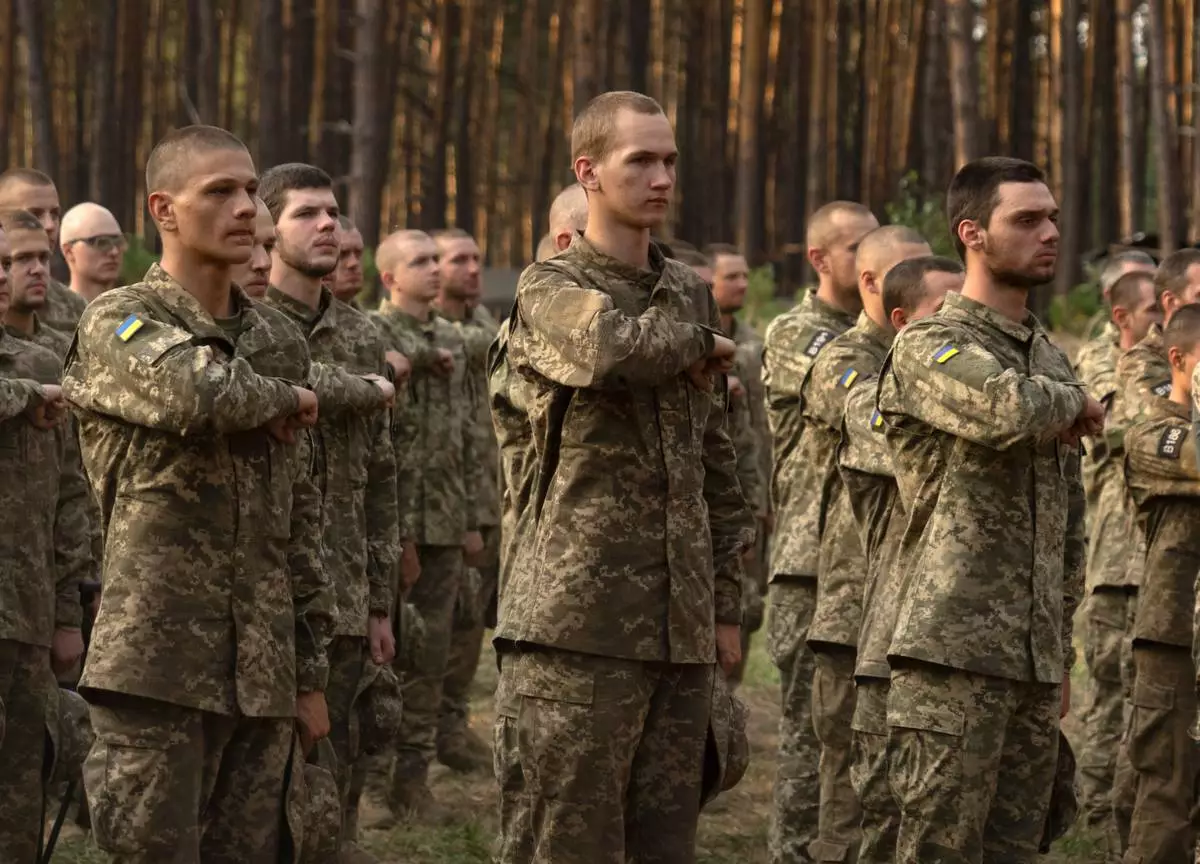
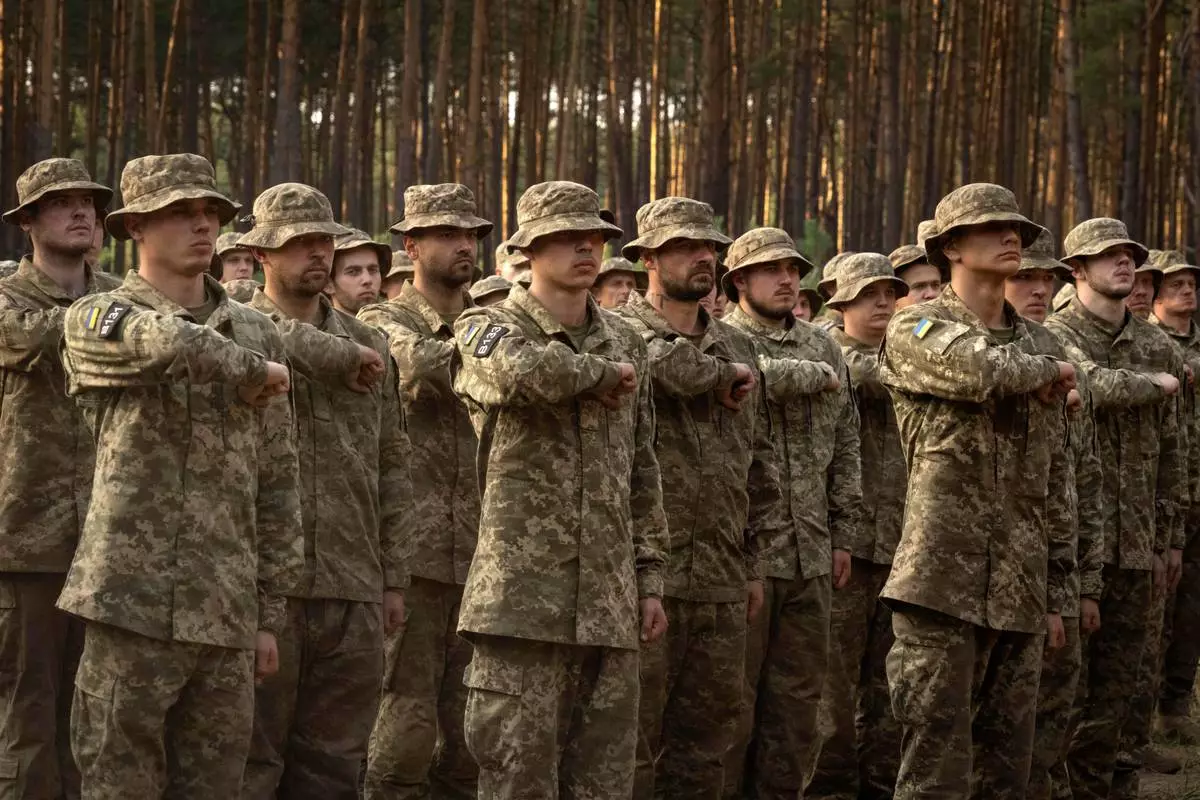
FILE - Newly recruited soldiers of Ukraine's 3rd Assault Brigade line up at a military base close to Kyiv, Ukraine, Monday, Sept. 25, 2023. (AP Photo/Efrem Lukatsky, File)

FILE - Newly recruited soldiers of Ukraine's 3rd Assault Brigade line up at a military base close to Kyiv, Ukraine, Monday, Sept. 25, 2023. (AP Photo/Efrem Lukatsky, File)

FILE - Newly recruited soldiers toss their hats as they celebrate the end of their training at a military base close to Kyiv, Ukraine, Monday, Sept. 25, 2023. (AP Photo/Efrem Lukatsky, File)

FILE - Newly recruited soldiers toss their hats as they celebrate the end of their training at a military base close to Kyiv, Ukraine, Monday, Sept. 25, 2023. (AP Photo/Efrem Lukatsky, File)

Recommended Articles