Nearly a year after the first phase of the ceasefire agreement began, life in Gaza shows the deal remains largely ink on paper. Bombardment, destruction, and displacement continue, while residents struggle with shortages of aid and medicine and soaring prices -- a reality far removed from the agreement's promises for more than two million Palestinians.
Izz al-Din al-Masri, a writer and political analyst, said that the world's attention faded once the ceasefire was announced, even as the war continued.
"We had hoped that there would be a ceasefire, but apparently it did not happen, and instead what is known as a pause in the voice of war has occurred. At the moment when the ceasefire summit was held, the whole world was screaming for Gaza and standing with Gaza. As soon as the ceasefire was announced and what is known as a ceasefire was reached, the voices of those advocating for Gaza fell silent, but the war has not ended," he said.
Amid the rubble, residents are trying to rebuild as much of their lives as possible, but the scale of the destruction makes returning to normalcy an arduous task.
"The least we are looking for today is shelter. You can see this rubble in front of you. After this scene, I am truly unable to express myself," said Abdul Salam Hammad, a displaced Gaza resident.
The suffering of Gaza residents weighs even more heavily on chronic disease patients, who face an arduous journey to obtain treatment.
"I am a patient with kidney failure, and I used to find it difficult to get treatment. Currently, every day they say that the substance used for dialysis might be prevented from crossing into the Strip. You know that a person with kidney failure needs dialysis, and it cannot be skipped for even one day. So our lives are threatened, everyone, the sick and the healthy," said Abu Ali al-Dallal, another displaced Gaza resident.
Hammam Obeid, a pharmacist and Gaza resident, said the crossings remain insufficient and prices remain high, with many medicines completely unavailable.
"I hope that more crossings would be opened, more types of goods would enter the country, and prices would drop. But unfortunately, none of these expectations have been realized so far. The proof is that a large proportion of medicines are missing and completely unavailable, and medicine prices in general are very high," he said.
A year on, Gaza is still waiting for the ceasefire to become a tangible reality -- not just words on paper, but life returning to its streets, homes, schools, and hospitals.
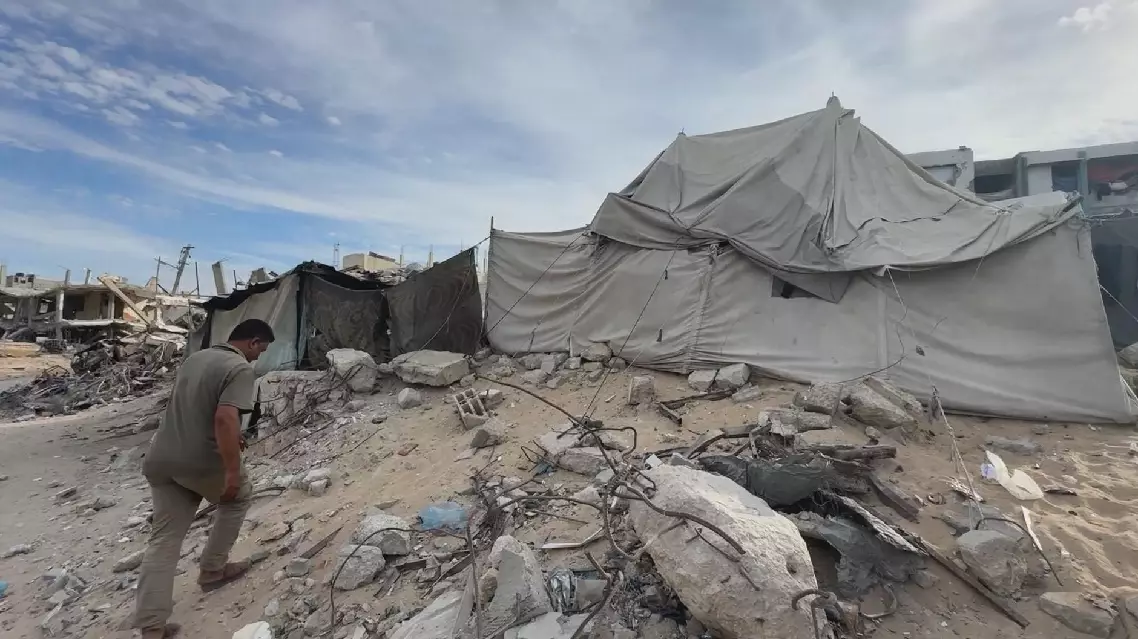
Gaza ceasefire remains largely on paper as local residents continue to suffer