Skip to Content Facebook Feature Image

Democrats eye return to power with many of the same faces crafting their agenda

News

Democrats eye return to power with many of the same faces crafting their agenda
News

News

Democrats eye return to power with many of the same faces crafting their agenda

2026-10-09 20:33 Last Updated At:20:40

WASHINGTON (AP) — Democrats hope to bring a new agenda to the House next year if they take the majority, but they will most likely do so with many of the same faces that have steered their party's legislative work for a decade or more.

Potential committee chairs in the next Congress include Rep. Bennie Thompson of Mississippi, who has served as top Democrat on the House Homeland Security panel since 2005. Then, there's Adam Smith of Washington, who began serving as top Democrat on Armed Services in 2011, and Rep. Maxine Waters of California, who became the lead Democrat on Financial Services in 2013.

Other longtime committee leaders include Reps. Frank Pallone at Energy and Commerce and Bobby Scott at Education and Workforce, who assumed their leadership posts in 2015. Rep. Richie Neal became the top Democrat on the Ways and Means Committee in 2017.

None would be able to continue in that position under the rules used by House Republicans, which generally limit lawmakers to three terms as chairman or ranking member.

For Democrats, the question is whether to stick with their current system, which emphasizes seniority, or move closer to the one that Republicans have established. It's a discussion that some Democrats say they are having behind the scenes.

"I think that the idea of term limits could be appealing to the American people, to the Democratic base. It sounds Democratic," said Rep. Eugene Vindman, D-Va. “I’m open to the idea. I’ve spoken to a number of folks who are open to the idea."

"I personally think it makes for a more vibrant Congress, but I know I’m in the minority in the minority,” said Rep. Chrissy Houlahan, D-Pa.

Party leaders are playing down the issue for now. Democratic leader Hakeem Jeffries said seniority has always been a factor when it comes to committee leadership, but not the only one.

“The caucus is going to work its will as we move forward,” Jeffries told reporters. “At the end of the day, we can't put the cart before the horse. We've got to still go out and win this thing in November.”

Term limits are not a new discussion for Democrats. When they were weighing whether to return Nancy Pelosi as speaker in 2018, those opposing her bid wanted her to commit to limiting how long lawmakers could serve as House party leaders or committee chairs. She eventually agreed to serve in the post for no more than four more years.

No such restrictions were added for committee chairs. In 2022, Democrats voted overwhelmingly against a six-year term limit for committee leaders.

Rep. Jim McGovern, D-Mass., who has served as top Democrat on the House Rules Committee since 2018, called term limits an “artificial, random mechanism that doesn’t always serve the best interest of the institution.”

“I want people in chairs who are going to fight to get things over the finish line and make a real difference,” McGovern said. "Some of those people may have been around for a long time and some of them may be relatively new.”

Pallone said he intends to be the next Energy and Commerce chairman or ranking member. He called term limits for chairs “very undemocratic.”

“If people want to vote for somebody they should be allowed to,” Pallone said.

He also said that term limits can lead to short-term thinking from chairs looking at their next opportunity in the private sector.

“People serve for a couple years, then they go work for some lobbying firm," he said. "What they do when they’re here is very much influenced by what lobbying firm they’re going to work for.”

Thompson also said he would like to serve again as top Democrat on Homeland Security if he wins reelection. He dismissed the way Republicans limit committee leaders to three terms.

“I don't want to be like Republicans. I'm a Democrat,” Thompson said.

House Majority Leader Steve Scalise, R-La., says term limits have served Republicans well.

“It’s been really good to show younger members that you’re always going to have a path to leadership if you keep working hard, if you do your job really well,” Scalise said. “We definitely lose some good chairmen along the way, but we also get new leaders who otherwise would not have been able to rise up."

Democrats don't always stick with seniority. One recent exception is Rep. Jamie Raskin, the lead Democrat on the Judiciary Committee. He challenged Rep. Jerry Nadler for the job in late 2024, prompting Nadler, then 77, to step aside.

Similarly, Democrats selected Rep. Angie Craig to become the top Democrat on the Agriculture Committee after she challenged the late Rep. David Scott for the post. Scott had been the panel's top Democrat for the previous two sessions, but was in poor health.

Democrats also elected Rep. Robert Garcia last year to succeed Rep. Gerry Connolly on the House Oversight and Government Reform Committee. Connolly died after a battle with esophageal cancer. Garcia defeated veteran Rep. Stephen Lynch of Massachusetts for the job.

“He has done, by everybody’s measure here, an incredible job," said Rep. Greg Casar, D-Texas. "We would not have all of the Epstein files that we’ve gotten so far without his leadership on that committee.”

Casar called next steps for Democrats on committee chairs an “internal conversation.”

“I think at a minimum we should go to a system where it’s about who the right person is, and then have discussions about how we make sure that new blood comes in," Casar said.

Rep. Brad Schneider, D-Ill., said he hears less talk about term limits than past years, and he credits some of the changes Democrats already made.

"Last cycle, there was a lot of clamor, and you saw some changes," Schneider said. “I'm not hearing similar angst this time.”

Rep. Pramila Jayapal of Washington said she favors term limits, but emphasized that her view is no reflection of the current leaders. It's more about helping Democrats develop a deeper bench.

“I just think it’s really smart policy and it’s really smart strategy to make sure that we keep building people skills, opportunities and leadership," Jayapal said.

She said she understood when she first served in Congress a decade ago the longstanding concerns voiced by the Congressional Black Caucus about term limits hurting members who had just earned chairmanships, but believes Democrats have done a better job of diversifying the caucus.

"And we need to do more, but we are taking away opportunities from a lot of those newer members," Jayapal said.

Some Democrats have talked about a hybrid approach that sets some limits, but not at the three-term threshold set by House Republicans.

“I don't know what the magic number is, but endless is not the magic number,” Houlahan said.
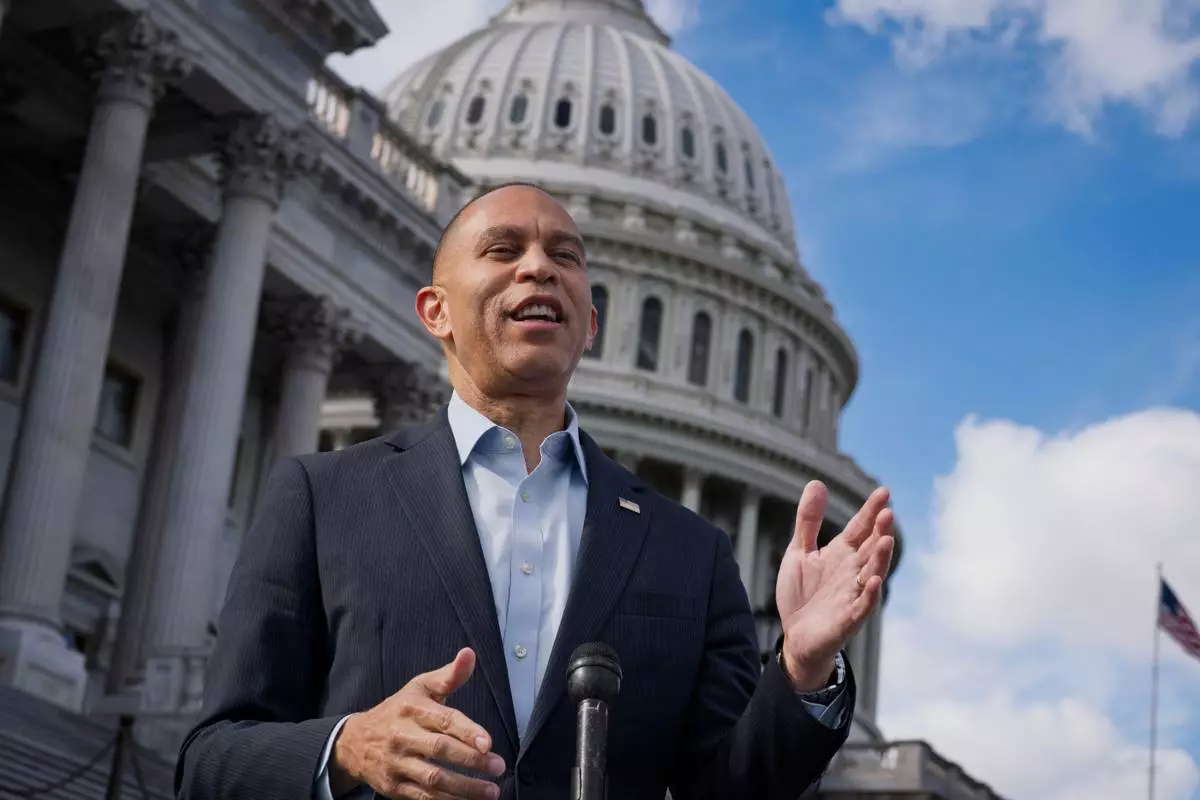
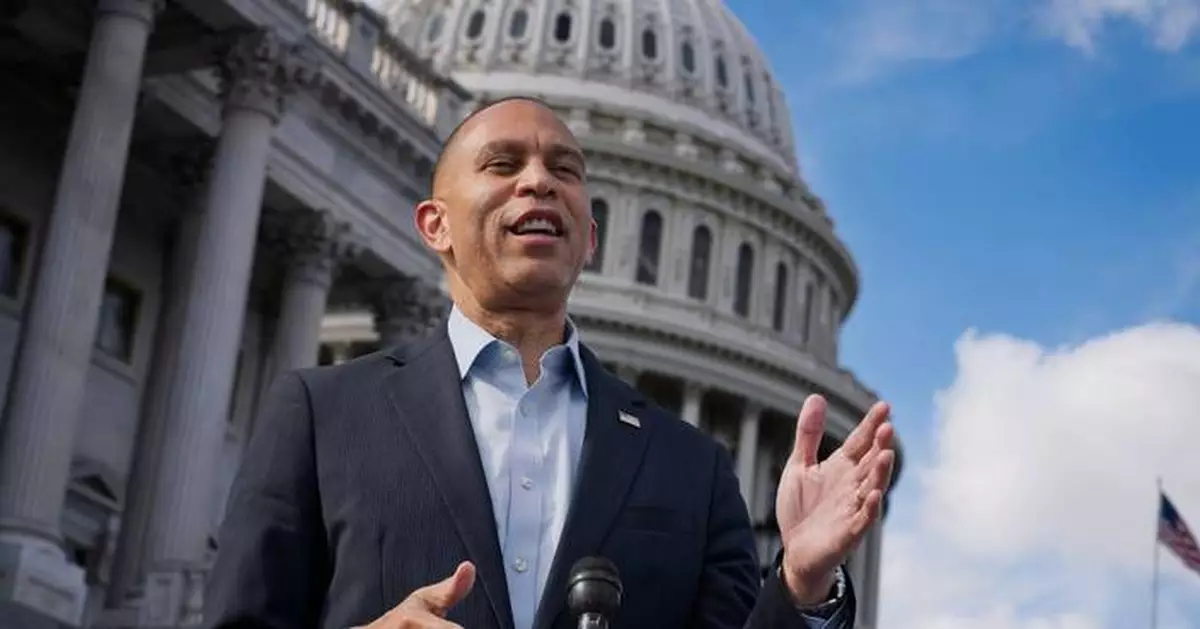
House Democratic Leader Hakeem Jeffries of New York speaks during a news conference at the Capitol in Washington, Wednesday, Sept. 30, 2026. (AP Photo/J. Scott Applewhite)

House Democratic Leader Hakeem Jeffries of New York speaks during a news conference at the Capitol in Washington, Wednesday, Sept. 30, 2026. (AP Photo/J. Scott Applewhite)
A supersized El Niño’s decapitating winds and the Gulf of Mexico’s toasty, storm-fueling waters are battling over the future strength of Hurricane Isaias. And the storm’s tilt and eye show who’s winning.

For now, it's the waters charged by climate change.

All Atlantic hurricane season there has been “this battle between shear and just the overall conducive conditions,” said Colorado State University hurricane researcher Phil Klotzbach.

El Niño — the natural temporary warming of parts of the Pacific that warps weather worldwide — dominated. Its wind patterns smothered almost any wisp of a storm from strengthening in the Atlantic, while boosting what will soon be record high levels in the Pacific, Klotzbach said.

It's called wind shear and it pushes the tops and middle of storms around, making them lopsided and keeping them from making a complete circular eyewall, which is when storms can really power up, Klotzbach and University at Albany's Kristen Corbosiero said.

The other ingredients for a storm to turbocharge a storm are pushing back. There is plenty of fuel in warm water and moisture. The Gulf of Mexico is about 2.7 degrees Fahrenheit (1.5 degrees Celsius) warmer than normal. The 86 degree waters (30 degrees Celsius) are 100 to 500 times more likely to be that extra hot because of climate change from the burning of coal, oil and gas, said climate scientist Kristina Dahl, vice president of the nonprofit Climate Central, which calculates the boost global warming causes to extreme weather.

“But there’s a certain point where it’s like, I don’t care how hot the waters are and how much moisture you have, if shear gets to a certain point, the shear is gonna win,” Klotzbach said.

The thunderstorm seeds of something bigger earlier in the week grew from circular winds over Central America but often were lopsided and couldn’t quite form a crucial eyewall, all because of El Niño’s high-level strong winds that pushed a would-be storm's top sideways, experts said.

Then a window of moderation opened for just a couple of days, but it was enough, Corbosiero said. It makes sense it was in the Gulf of Mexico and in October, because El Niño has less of an effect in the Gulf than it does in the main Atlantic, she said. And storms often pop up in that region in October because of more northerly storm systems that help foster the right conditions.

Wind shear wasn’t exactly low, but it was a moderate level, when other factors like unusually warm waters and heavy moisture can kick in. Isaias rapidly intensified from 40 mph to 80 mph (64 kph to 129 kph) in a day and by late Wednesday, Isaias became the latest-in-the-season first Atlantic hurricane to form since 1914, Klotzbach said.

“The warm waters and high moisture won,” Klotzbach said. Isaias Friday was not tilting and had a strong eye, the hurricane center said.

By Friday morning, Isaias blew past the threshold for becoming a major hurricane with winds of 111 mph (178 kph), strengthening to 120 mph winds (195 kph). The National Hurricane Center forecasts it to weaken to a strong Category 2 storm before landfall.

Before Isaias comes ashore — forecast for probably somewhere from the Mississippi and Alabama coast to the Florida Panhandle late Friday night or early Saturday — the wind shear will strengthen from moderate levels of around 20 mph (32 kph) to 52 mph (84 kph) and then Isaias will start to struggle, which is good news for coastal residents, Klotzbach said.

But as of Friday morning, hurricane center forecasters said the coast is in “a tenuous spot” because it would only take a six-hour delay in the onset of that more intense wind shear for Isaias to bring a stronger-than-expected landfall. Regardless of what will happen with wind shear, it will still be a dangerous hurricane when it hits land, forecasters said.

“Once it gets to the coast, we know that the storm surge is going to be deeper and farther reaching because of sea level rise caused by climate change,” Dahl said. “So in this part of the world, there’s been about six and a half inches of sea level rise over the past 100 years or so that’s attributable directly to climate change.”

The National Hurricane Center is calling the surge “life-threatening.”

A warmer atmosphere means storms hold and then dump more rain, worsening flooding, Dahl said. The hurricane center is warning about urban, river and flash flooding in the Southeast this weekend.

“There’s a little bit of a battle here going on, but I think the really important thing to remember is that climate change is like this long-term big kahuna warming everywhere, and El Niño’s like a little icing on the cake,” Dahl said.

The Associated Press’ climate and environmental coverage receives financial support from multiple private foundations. AP is solely responsible for all content. Find AP’s standards for working with philanthropies, a list of supporters and funded coverage areas at AP.org.

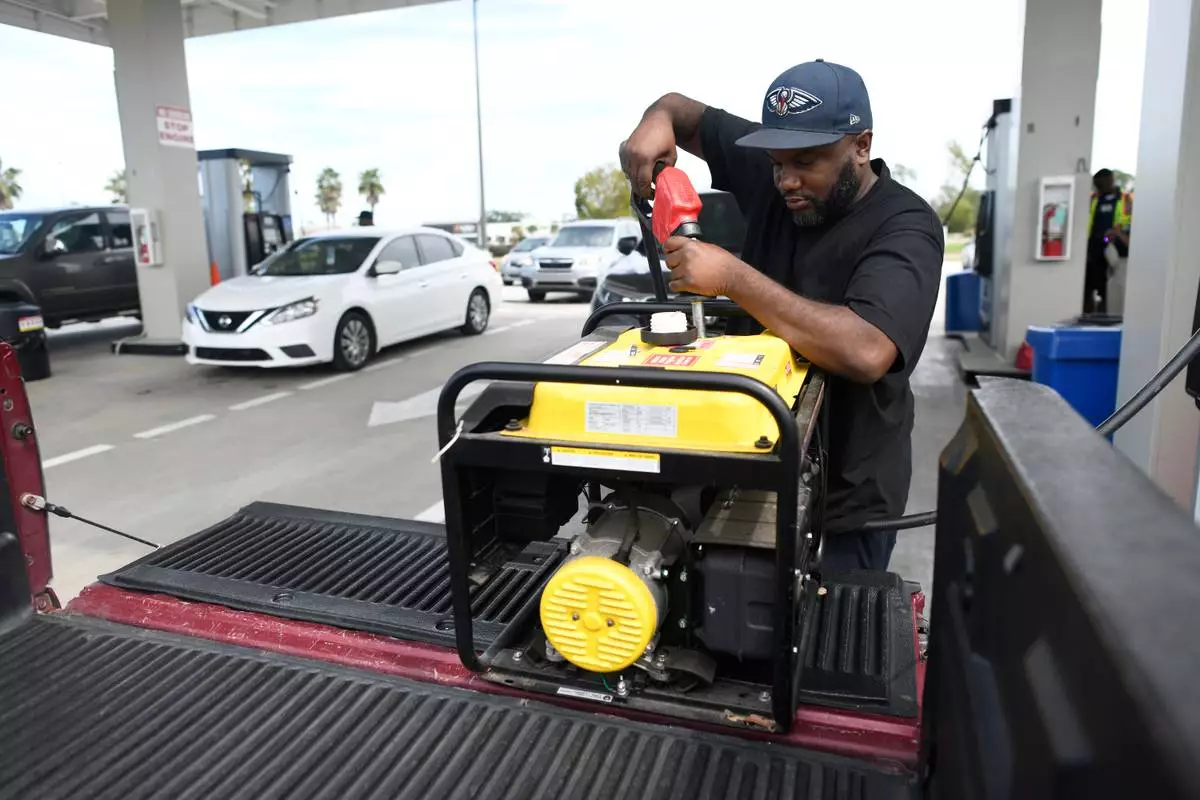
Residents fill up their gas tanks and generators at the Costco Wholesale Gas Station ahead of Hurricane Isaias' expected landfall along the Gulf Coast, Thursday, Oct. 8, 2026, in Mobile, Ala. (AP Photo/Octavio Jones)

Residents fill up their gas tanks and generators at the Costco Wholesale Gas Station ahead of Hurricane Isaias' expected landfall along the Gulf Coast, Thursday, Oct. 8, 2026, in Mobile, Ala. (AP Photo/Octavio Jones)

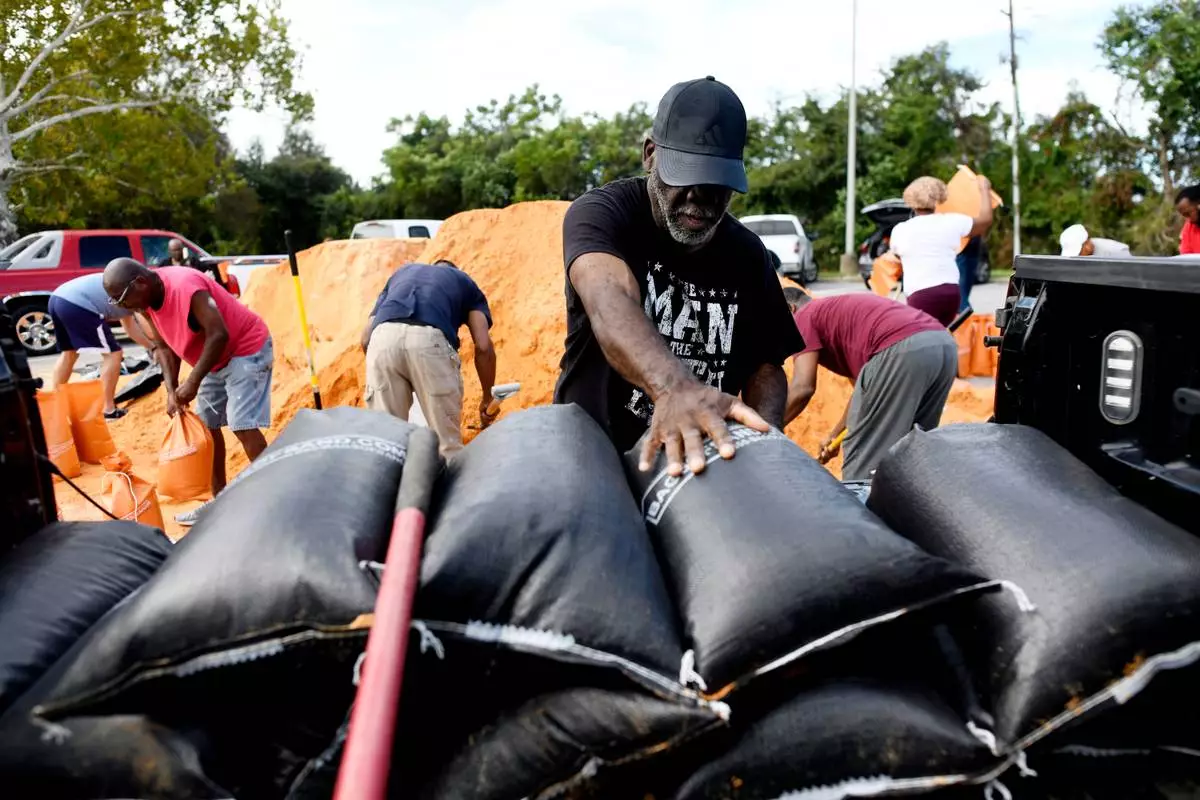
Residents pick up sandbags for storm preparation at the James Seals Jr. Parks & Recreation Center ahead of Hurricane Isaias' expected landfall along the Gulf Coast, Thursday, Oct. 8, 2026, in Mobile, Ala. (AP Photo/Octavio Jones)

Residents pick up sandbags for storm preparation at the James Seals Jr. Parks & Recreation Center ahead of Hurricane Isaias' expected landfall along the Gulf Coast, Thursday, Oct. 8, 2026, in Mobile, Ala. (AP Photo/Octavio Jones)

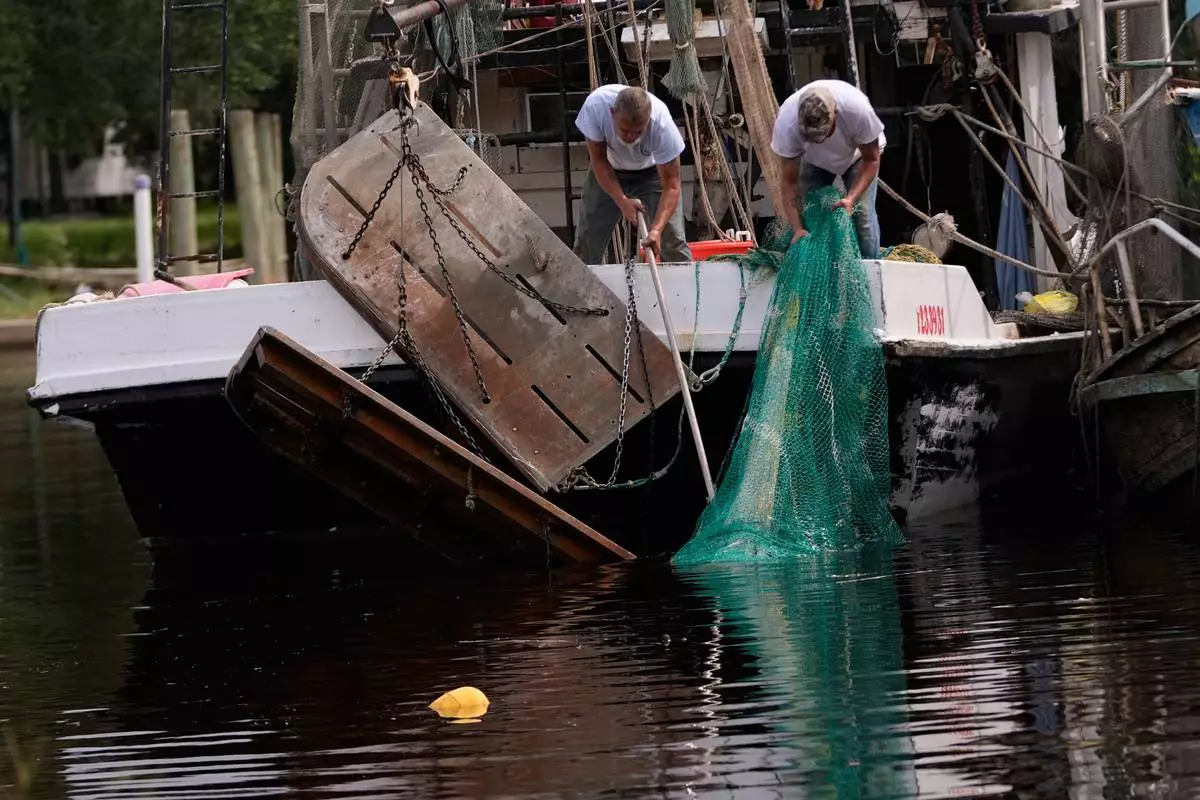
Boat owner Tony Rice, right, and his friend Lance Connor haul doors onto his boat to secure it as Hurricane Isaias approaches Bayou La Batre, Ala., Thursday, Oct. 8, 2026. (AP Photo/Gerald Herbert)

Boat owner Tony Rice, right, and his friend Lance Connor haul doors onto his boat to secure it as Hurricane Isaias approaches Bayou La Batre, Ala., Thursday, Oct. 8, 2026. (AP Photo/Gerald Herbert)

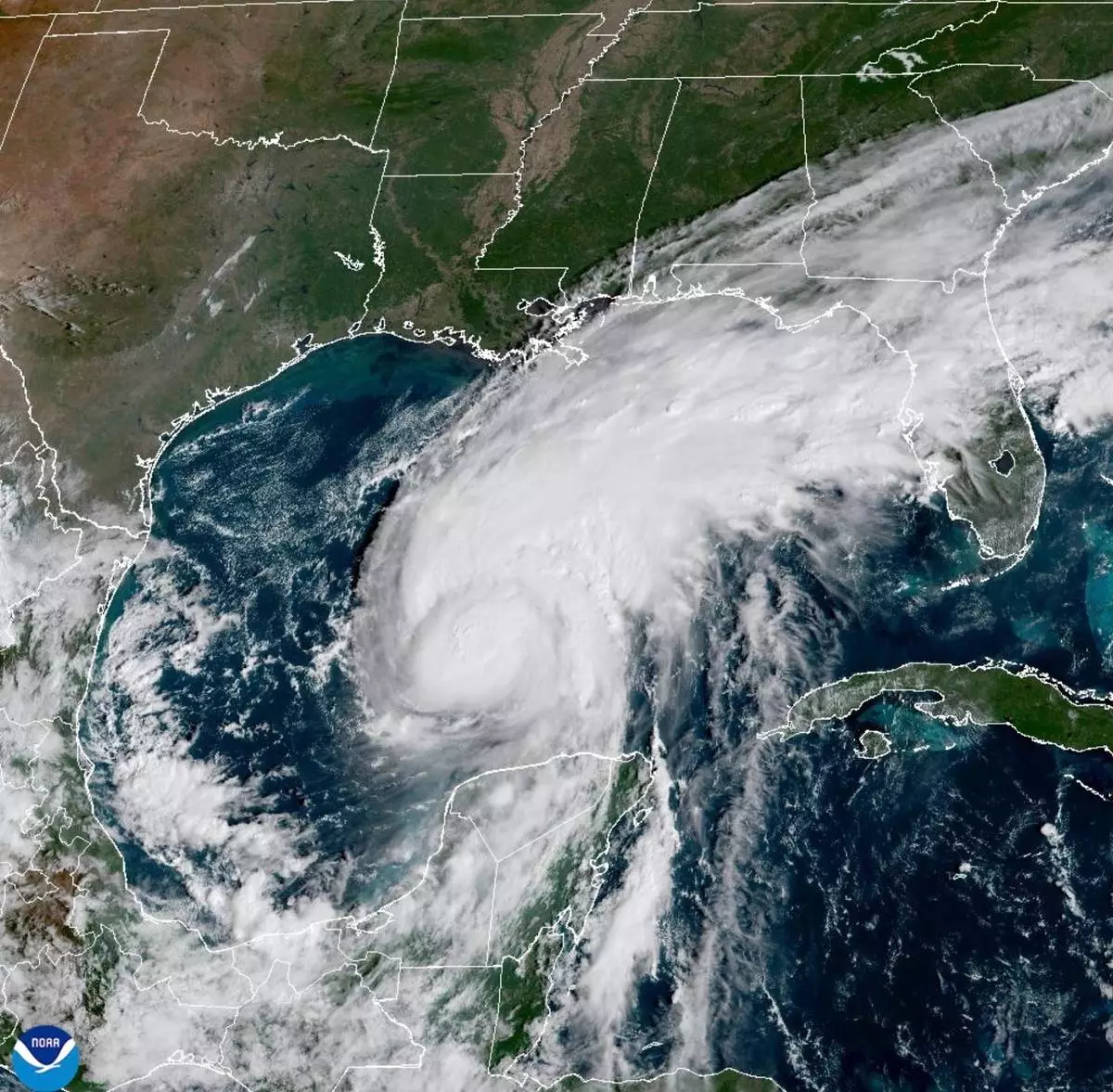
This satellite image from the National Oceanic and Atmospheric Administration shows Hurricane Isaias surging toward the U.S. Gulf Coast on Thursday, Oct. 8, 2026. (National Oceanic and Atmospheric Administration via AP)

This satellite image from the National Oceanic and Atmospheric Administration shows Hurricane Isaias surging toward the U.S. Gulf Coast on Thursday, Oct. 8, 2026. (National Oceanic and Atmospheric Administration via AP)

Recommended Articles