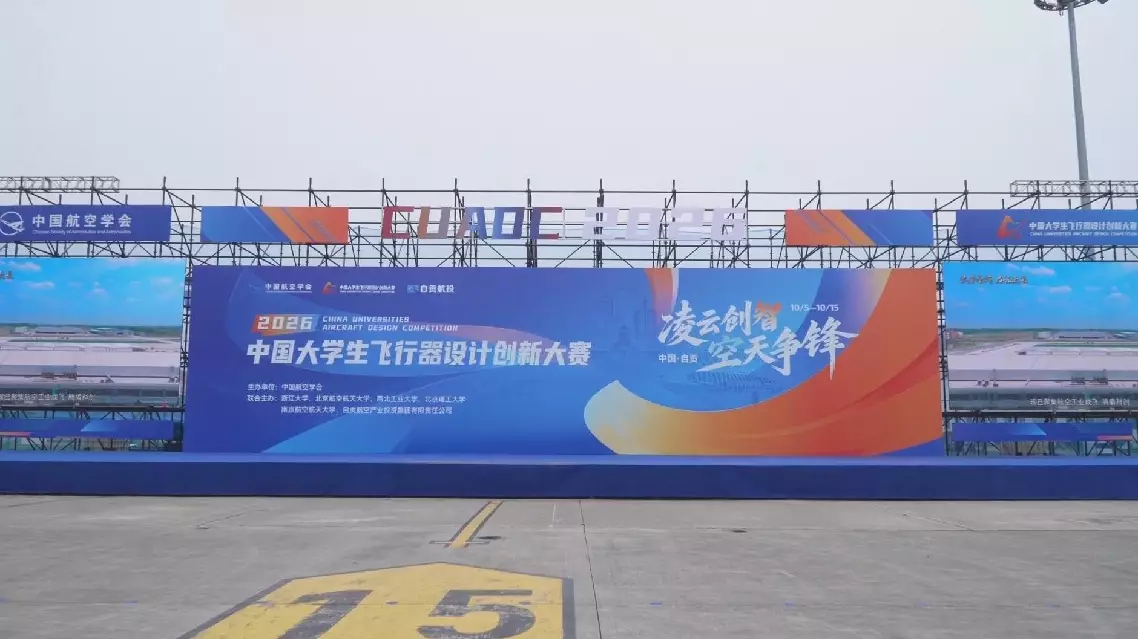
Aspiring young engineers are putting their miniature aircraft to the test in the skies of southwest China's Sichuan Province, where the 2026 China Universities Aircraft Design Competition is underway in Zigong City.
Opening on Friday, the fifth edition of the event has brought together more than 6,000 students and teachers representing over 200 universities to compete in 12 events.
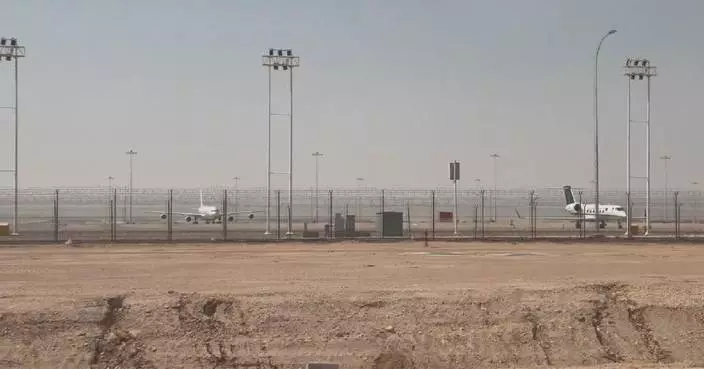
Down on the airfield, student teams are busy tinkering with their machines. The aircraft they have designed and built must complete specific tasks.
In the logistics drone event, teams must carry cargo aboard their aircraft and release it over a designated target. Accuracy matters after the load leaves the plane.
"Last year, few of us were familiar with the event. It was only in its second year then. We used round parachutes, which were hard to control, so we basically learned by trial and error, flying the aircraft many times to gauge roughly where it would land," said Zhou Tao, a student from Beihang University.
This year, Zhou's team switched to glider parachutes, something few teams had tried. With almost no reference cases in China, they built the entire solution from scratch.
Unfortunately, the flight line does not always reward careful preparation. In a separate short takeoff and landing event, a team representing the University of Hong Kong put their design to the test, but the result fell short of expectations. The students immediately started looking into what went wrong.
"We think that it consists of lots of factors, and we are ruling them out this afternoon and for the next days [that we have to prepare]. And it's quite natural for us to fail, but the important thing is that we learn from each failure and we correct them one by one," said Xiao Zifang, a student from the University of Hong Kong.
The competition also challenges students to think about what these aircraft could do beyond the airfield.
"Our events are designed around practical needs in daily life. Logistics and targeted cargo drops, for example, serve emergency rescue and disaster relief, and the logistics event targets low-altitude economy," said Yang Delin, deputy director of the Science Popularization Department of the Chinese Society of Aeronautics and Astronautics.
The goal is to help students turn classroom theory into practice, he said.
Yang Zexia, deputy director of the event's Competition Technical Committee, said aviation is getting closer to young people today through the internet and AI, but turning that knowledge into real aircraft still takes a long journey.
He stressed that hands-on experiences can turn interest into ability, bringing a new generation closer to aviation.
More young people are gaining hands-on experience with aircraft before they graduate. As that experience spreads across universities, it could help build a broader base of young talent for China's aviation industry.
Aircraft design competition in Sichuan draws young aviation talent