Nigeria's crude is selling for more than 100 U.S. dollars a barrel, well above the 64.85 U.S. dollars benchmark in its 2026 budget, and production is climbing to 1.7 million barrels per day. On paper, that should mean more dollars flowing into government coffers and more room for businesses to breathe. In practice, the manufacturers who keep Nigeria's factories running say the higher oil price has made their lives harder, not easier.
A significant share of the country's output is tied up in crude-backed loans. Nigeria's National Petroleum Company's 2025 audited financial statements show the federal authority committed more than 186,000 barrels per day to debt repayment, leaving a thinner slice of the gains than the headline price suggests.
"We are struggling now. The amount of money we are using to pay debt service, because we had to, the monetary has to raise interest rates to fight inflation. Before the reform started, we were borrowing at 8 percent. It got to 24 percent. Our bill for just servicing debts, including the foreign one, is more than 20 trillion (15 billion U.S. dollars) a year," said Taiwo Oyedele, Nigerian Minister of Finance.
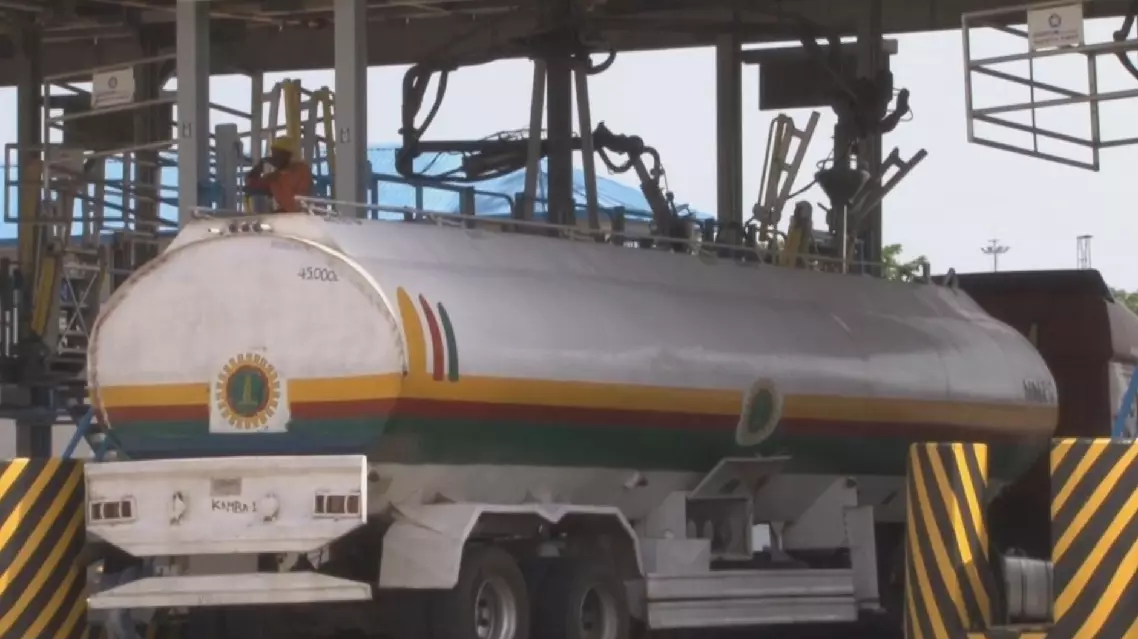
The other side of the oil-price shock is already being felt by manufacturers particularly those that rely on diesel to keep production moving when public electricity supply fails.
"That has been the case since especially [the outbreak of] the Iran war [in February]. The cost of all petrochemicals have gone up, the cost of petroleum products have gone up. Our diesel costs went from 1,000 Naira (75 U.S. cents) to nearly 2,000 Naira (1.5 U.S. dollars). And we have to run on generators when there is no power," said Frank Onyebu, a Nigerian manufacturer.
And the pressure does not just end with the energy bill. Manufacturers are also grappling with stockpiles of finished goods in their warehouses as a result of weak demand.
The Manufacturers Association of Nigeria says manufacturers spent over 1.34 trillion Naira (1 billion U.S. dollars) on alternative power in 2025 alone while also depending heavily on imports of raw materials.
"The expenditure supports business continuity but also places additional pressure on resources that will be made available in utilizing for capacity expansion, technology acquisition, and productivity improvement. Nigeria imported approximately 3.53 trillion Naira (2.6 billion U.S. dollars) in raw materials during the first half of 2025. With about 1.72 trillion (1.2 billion U.S. dollars) sourced from Asia, this illustrates the extent to which domestic production continues to depend on imported inputs," said Francis Meshioye, former President of Manufacturers Association of Nigeria.
The dependence on imported inputs creates another exposure -- manufacturers need foreign exchange to buy materials, while the cost of local production is already being pushed up by energy and logistics. Meshioye argued that industrial policy must do more than encourage Nigerians to buy locally made goods.
"Policy should support local content, domestic value addition, and export capacity. It should reduce unnecessary regulatory and operational costs and support productivity and investment. It should provide also sufficient consistency for businesses to make long-term investment decisions," he added.
For manufacturers, the test of Nigeria's oil windfall will not be the price displayed on an international trading screen. It will be whether factories can keep producing, sell at sustainable prices and expand the share of goods made locally. While oil may bring the dollars in, without a competitive industrial base, turning those dollars into lasting economic value will remain a much harder task.
Nigerian manufacturers demand cut in cost of production amid surging oil prices