China's consumer price index (CPI), a main gauge of inflation, edged up 0.9 percent year on year in the first nine months of 2026, while factory-gate prices rose 2.3 percent, official data showed on Wednesday, with officials and analysts pointing to artificial intelligence-driven industrial demand and global commodity costs as the key forces behind September's acceleration.
On a monthly basis, the CPI increased 0.2 percent, with the growth rate narrowing by 0.2 percentage points from the previous month, according to the National Bureau of Statistics (NBS).
The year-on-year increase in September was mainly driven by higher energy and industrial consumer goods prices, while falling food prices weighed on overall inflation.
In the meantime, the producer price index (PPI), which measures costs for goods at the factory gate, rose 5 percent year on year in September, with the growth rate accelerating by 1.2 percentage points from August.
This faster growth was mainly driven by rising international crude oil and non-ferrous metals prices, changes in supply and demand in certain energy and raw material industries, and growing demand from emerging sectors such as artificial intelligence (AI).
"China's overall price level remained stable in September, and core CPI, which excludes food and energy prices, continued to run smoothly. On the energy front, international crude oil prices fluctuated at high levels in September, with Brent crude futures up about 50 percent year on year, but the state took temporary regulatory measures twice, keeping the year-on-year rise in domestic refined oil prices far below the international increase and effectively easing the impact on people's production and daily lives," said Liu Nancun, an economist at the Price Monitoring Center of the National Development and Reform Commission (NDRC).
Peng Xiaozhen, a researcher at commodity consultancy SCI99, said the boom in emerging industries is reshaping China's price structure.
"High prosperity in emerging industries, represented by artificial intelligence, is exerting a positive pull on export chains and manufacturing production. New energy, power grids and computing infrastructure continue to generate new demand, keeping prices in the nonferrous metals industry on an upward trend. In addition, the rapid development of emerging industries and the continuously optimized market competition are driving steady improvement in downstream manufacturing prices as well," said Peng.
The inflation data came as China has rolled out a series of measures to stimulate consumption and strengthen domestic demand, seeking to support economic growth and encourage a reasonable recovery in prices.
In July, China released its first five-year plan dedicated exclusively to expanding consumption. The plan aims to unlock the full potential of the country's super-large market, optimize the consumption structure, and improve people's livelihoods through targeted measures.
On the monetary front, the People's Bank of China has pledged to make better use of both aggregate and structural monetary policy tools and enhance coordination between monetary and fiscal policies to promote stable economic growth and a reasonable recovery in prices.
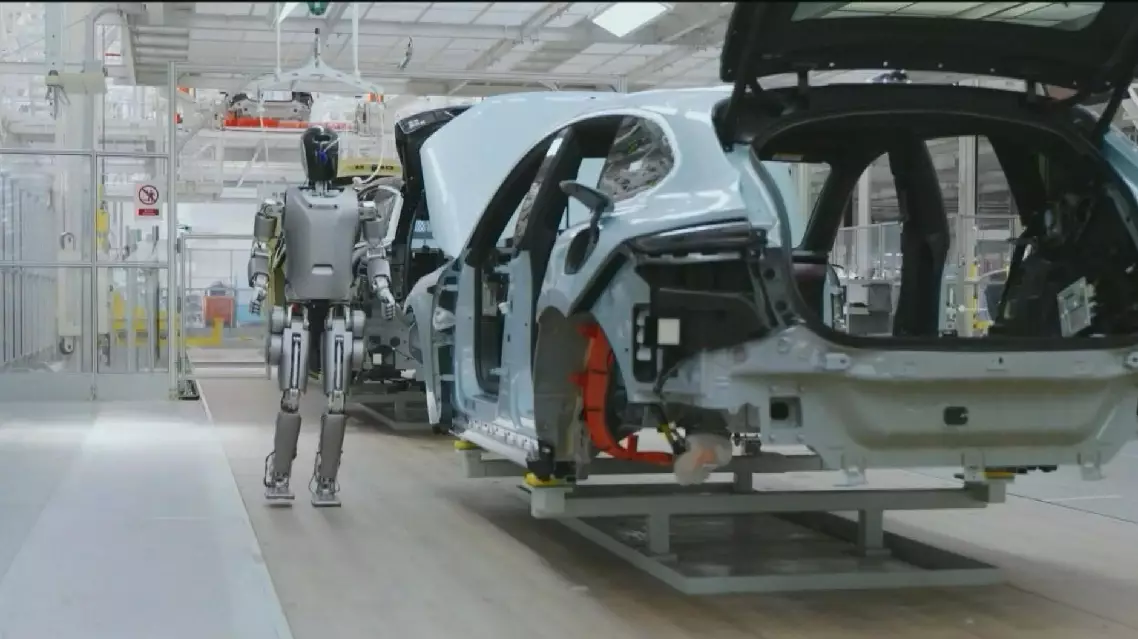
China's consumer inflation ticks up, outlook for price recovery improves
China's foreign-invested enterprises posted record trade volumes in the first three quarters of 2026, with imports and exports growing steadily and high-tech exports surging, according to the latest customs data released on Wednesday.
Speaking at a press conference in Beijing, Wang Jun, spokesman and deputy head of the General Administration of Customs, said foreign-invested enterprises are an important force in China's foreign trade.
"Foreign-invested enterprises are an important force in China's foreign trade and both participants in and beneficiaries of 'China Opportunity 2.0.' In the first three quarters of this year, their imports and exports reached 11.69 trillion yuan (1.75 trillion U.S. dollars), up 19 percent year on year -- a record high for the corresponding period in history," Wang said.
A wide range of foreign-invested enterprises are embracing the opportunities created by China's industrial upgrading and new quality productive forces development, Wang said, adding that they are integrating deeply into the country's industrial and innovation chains while continuing to root themselves more firmly in the Chinese market and scale up their investments.
"China has a population of over 1.4 billion and more than 400 million middle-income earners, and has been the world's second-largest importer for 17 consecutive years. This mega-market offers foreign-invested enterprises broad development space and long-term, stable growth prospects. In the first three quarters of this year, imports by foreign-invested enterprises grew 21.1 percent year on year," Wang said.
In particular, consumer goods imports by foreign-invested enterprises in China accounted for 34.5 percent of the country's total consumer goods imports. In the nine-month period, watches and clothing accounted for 83.4 percent and 62.3 percent of China's total imports in their respective categories.
In the first three quarters, foreign-invested enterprises in China traded 7.9 trillion yuan (1.18 trillion U.S. dollars) in intermediate goods, up 27.4 percent year on year. Key components for advanced manufacturing including electronic components, computer parts, and aircraft parts saw robust two-way flows.
More and more foreign-invested enterprises are achieving their own growth and development while continuing to deepen their presence in the Chinese market. In the first three quarters, more than 150 foreign-invested enterprises recorded import-export volumes exceeding 10 billion yuan (1.49 billion U.S. dollars), 20 more than the same period of last year.
"China's rich pool of high-quality human resources, favorable innovation environment, and diverse application scenarios help enterprises carry out technological research and development and bring products to the market, accelerating product iteration and upgrading for foreign-invested enterprises in China. In the first three quarters, exports by foreign-invested enterprises grew 17.2 percent year on year, with high-tech product exports surging 42.1 percent, significantly higher than their overall export growth," Wang said.
Currently, all foreign investment access restrictions in the manufacturing sector have been fully lifted, and national treatment for foreign-invested enterprises is being steadily implemented.
More foreign-invested enterprises are expected to firmly deepen their footprint in China, succeed and grow together with Chinese firms, and share in "China Opportunity 2.0" together, according to Wang.

Foreign-invested firms' trade hits record high in first three quarters