Environmentalists in north China's Inner Mongolia Autonomous Region said they aim to step up ecological conservation efforts to pursue green development following Chinese President Xi Jinping's inspection trip to Ulanqab City on Friday.
Xi, also general secretary of the Communist Party of China Central Committee and chairman of the Central Military Commission, called for coordinating high-quality development with high-standard environmental protection and adopting a holistic and systematic approach to conserving and improving the ecosystems of mountains, waters, forests, farmland, lakes, grasslands and deserts.
He also stressed the need to advance carbon emission reduction, pollution reduction, green belt expansion and economic growth in a coordinated manner, while firmly adhering to a development path that prioritizes ecological conservation and green development.
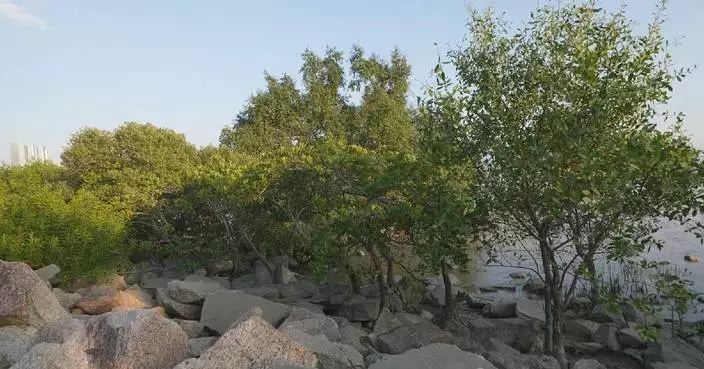
At the Huangqihai Lake nature reserve, Xi learned about Inner Mongolia's efforts to strengthen ecological and environmental protection and called for further efforts to respect, adapt to and protect nature, fully implement the Wetlands Conservation Law, strictly enforce ecological conservation redlines, and enhance the quality and stability of ecosystems.
"I am very excited and thrilled by the general secretary's visit to our Huangqihai Lake nature reserve today. He learned about the tidal flat and wetlands, the extent of the lake's surface area, and the status of migratory birds in our nature reserve," said Wang Shaojun, director of the Huangqihai Nature Reserve Service Center.
"Standing before the display board, I briefed the general secretary. I outlined the history of Huangqihai Lake, including changes in its water surface area from the 1950s to the present. In particular, I explained how, following the general secretary's instructions, we have implemented eight measures to promote the natural restoration of Huangqihai Lake," said Ban Xiuping, Party secretary of Qahar Right Wing Front Banner, Ulanqab City.
"The general secretary is very concerned about sand prevention and control efforts in Inner Mongolia. He kindly inquired about the management of the Kubuqi Desert and the Mu Us Sandy Land. He is also deeply interested in the development of the 'Three-North' Shelterbelt Forest Program, as well as the development of the 'One Lake, Two Seas' (Hulun Lake, Ulan Suhai Lake and Daihai Lake) and the Chahan Nao'er Wetland," said Wu Guoqing, deputy director of the Inner Mongolia Autonomous Region Forestry and Grassland Bureau.
Huangqihai Lake historically had a vast expanse of water and lush vegetation. However, it once came close to drying up due to climate change and other factors.
To strengthen the lake's protection and management, a banner-level nature reserve was established in 1993. It was upgraded to a league-level nature reserve in 1999 and approved by the Inner Mongolia Autonomous Region People's Government as a regional-level nature reserve in 2003.
"For us, Huangqihai Lake is a mother lake. It nurtures the people in the surrounding villages. So, we take great pride in the fact that our parents' generation never went hungry," said Wu Jianguo, a resident in Tuguiwula Town, Qahar Right Wing Front Banner.
"Back in 2006, due to a decline in rainfall, an increase in water consumption and relatively intensive human activity, the water in Huangqihai Lake had almost dried up. Huangqihai Lake is the mother lake of Qahar Right Wing Front Banner. In the 1950s and 1960s, people living in the surrounding areas relied on fish from the lake to get through those difficult times. So, our banner's Party committee and local government were determined to properly manage Huangqihai Lake," said Wang.
"In recent years, rainfall has increased. Additionally, we have enclosed the core protected areas and placed them under management to reduce disturbances from human activities, and carried out river dredging, greening, and restoration projects across the river basin, as well as other measures, which have achieved phased results. Monitoring has recorded a total of 168 bird species under 19 orders. Among them, 10 species are national first-class protected animals and more than 30 are national second-class protected animals. Notably, fish were spotted last year. This indicates that the waterbody's self-purification capacity and the aquatic ecological circulation system are continuously recovering," said Ban.
"The earnest instructions from the general secretary have given us greater encouragement and confidence. We must firmly uphold the redlines for ecological and environmental protection, reduce human interference and promote natural restoration. Guided by these core principles, we will persist in our efforts so that local people can truly see the changes brought about by ecological benefits," she said.
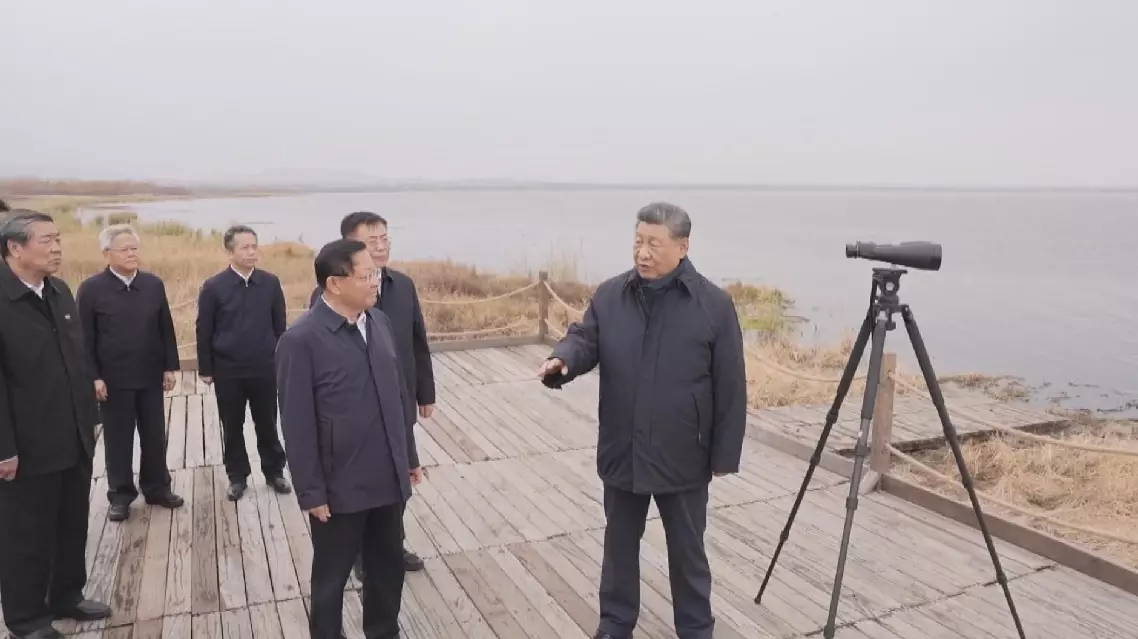
Inner Mongolia environmentalists aim to strengthen ecological conservation following Xi's inspection trip