Four Chinese irrigation projects have been added to the World Heritage Irrigation Structures (WHIS) list, bringing the country's total to 46, the Ministry of Water Resources said Thursday.
The projects, located in Henan, Gansu, Jiangxi and Fujian provinces, were recognized during the 77th International Executive Council Meeting of the International Commission on Irrigation and Drainage (ICID) in Marseille, France, on Wednesday.
Dating back more than 2,200 years, a canal irrigation system in central China's Henan Province uses dam-free water diversion to irrigate about 34,000 hectares of farmland in Jiyuan and Jiaozuo. The irrigated farmland forms a major grain-producing area in the province.
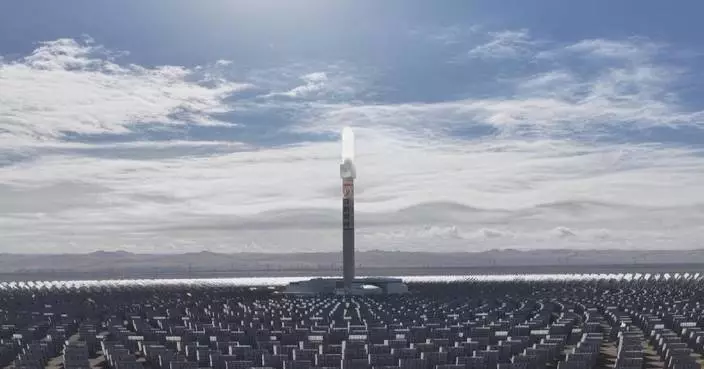
In northwest China's Gansu Province, an oasis irrigation system in the Hexi Corridor, a key artery of the ancient Silk Road, dates back to the Ming Dynasty (1368-1644). It irrigates about 63,200 hectares of land and is a typical example of oasis irrigation in arid regions of Eurasia.
The project in Shangrao City, east China's Jiangxi Province, dates back to the Song Dynasty (960-1279). Its gravity-fed irrigation network consists of canals, weirs and ponds.
Another ancient irrigation system in Changtai District of Zhangzhou City, southeast China's Fujian Province, has a history of more than 800 years. Featuring low dams and a network of weirs, ponds and canals, it irrigates about 1,850 hectares of land.
China has a long history of irrigation engineering. The Dujiangyan irrigation system in southwest China's Sichuan Province, built in 256 BC, remains in use today and was added to the WHIS list in 2018.
Established by the ICID in 2014, the WHIS designation aims to protect and promote irrigation projects of historical value and scientific experience.
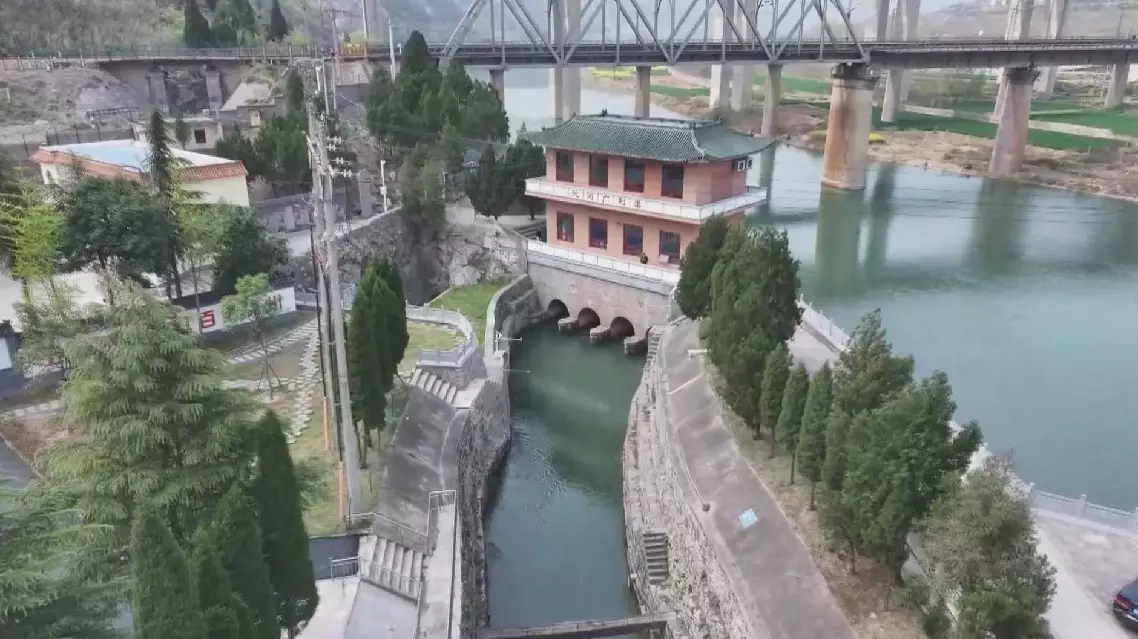
Four Chinese sites added to World Heritage Irrigation Structures list
China's first-ever multi-generational space rice research has taken a new step toward humans' ability to fully grow food in orbit, with the Shenzhou-23 crew completing another round of sample collection, sowing, and storage aboard the Tiangong space station.
The research project aims to study the molecular mechanisms behind rice's multi-generational genetic stability and environmental adaptability in microgravity. Over the past week, the three astronauts collected a new batch of samples, which will be returned to Earth for scientists to analyze at the phenotypic and molecular levels, helping reveal how long-term microgravity affects rice genetic stability.
China's space rice research began in 2022, when the Shenzhou-14 crew conducted the world's first full life-cycle rice cultivation experiment in space. During that mission, six rice seeds were grown aboard Tiangong for 120 days, producing 59 first-generation space-grown seeds that the crew returned to Earth.
On May 24 this year, the Shenzhou-23 spacecraft carried a new batch of rice seeds into orbit. The seeds fall into two groups: ordinary seeds that have never left Earth, and third-generation descendants bred on the ground from the 59 space-grown seeds harvested in 2022. Both are Chinese japonica varieties known for their adaptability and three- to four-month growing cycle.
After more than four months in orbit, the Shenzhou-23 crew has reached the first harvest and begun second-generation cultivation using two propagation methods. The aim is to compare how space-flown and Earth-grown rice adapt to space, and to explore how different propagation methods affect second-generation space rice.
The second-generation space rice is expected to mature during the Shenzhou-24 mission, scheduled for later this year.
While the 2022 experiment covered a full life cycle "from ground seed to space seed," this year's research advances to "from ground seed to space seed to space seed" -- a repeating cycle that researchers hope could provide important theoretical support for in-situ crop production beyond Earth -- the ability to grow food in space without relying on resupply from Earth. Such a capability is considered essential for humanity's future exploration of deep space.
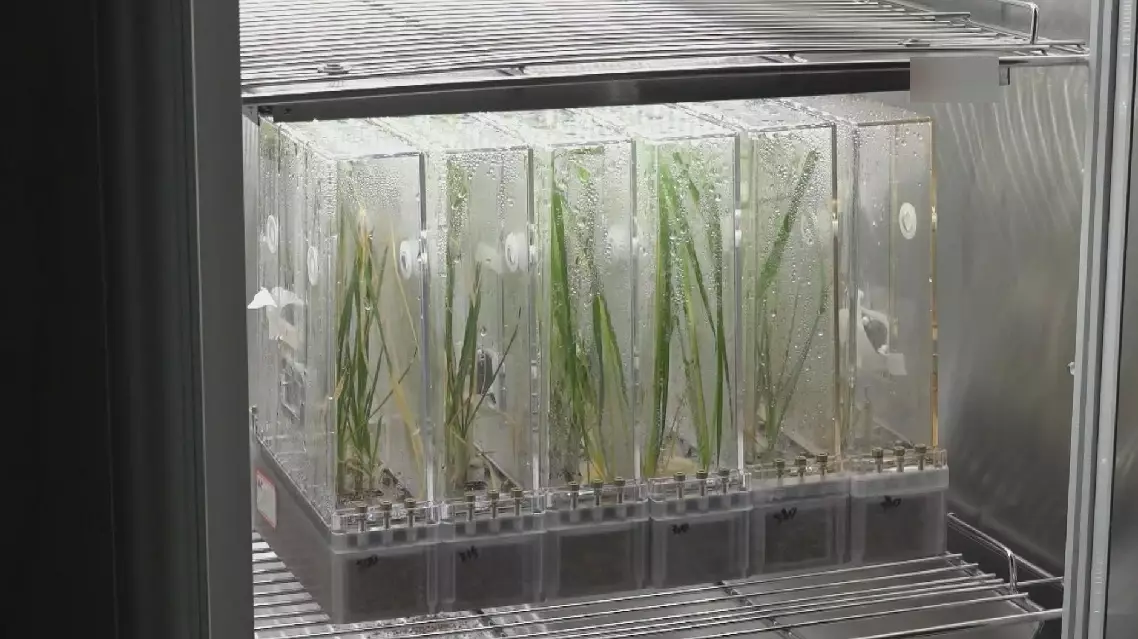
China's multi-generational space rice research advances toward growing food in orbit