Tropical fruits traditionally growing in southern China, such as pineapples, papayas, bananas and sugarcane, are bearing fruit on the edge of a desert in northwest China's Xinjiang Uygur Autonomous Region, bringing a touch of the tropics to the desert landscape.
Abundant sunlight and large temperature difference between day and night on the desert provide favorable conditions for pineapple growth, while greenhouses make it possible by recreating a suitable growing environment.
Researchers categorize the pineapples into three size groups, regularly measure their circumference, and apply tailored care based on growth stages.
Beyond pineapples, the smart greenhouses also produce plump papayas and dense banana plants, both developing well and expected to yield a good harvest.
The desert's tropical fruit story goes beyond greenhouses. In Yutian County of Hotan Prefecture, a trial batch of more than 24,000 sugarcane plants was successfully grown in open fields for the first time on the southern edge of the Taklimakan Desert.
Sugarcane typically thrives in temperatures between 25 and 32 degrees Celsius. To manage volatile spring temperatures in Hotan, local technicians introduced a sugarcane variety from South China's Guangxi Zhuang Autonomous Region, improved its cold tolerance, and applied integrated water and fertilizer management technology.
"The feedback on this year's sugarcane harvest has been very positive, with people finding it sweet and juicy. Next year, we plan to expand cultivation to over 100 mu (about 6.67 hectares), so more consumers can enjoy Xinjiang-grown sugarcane," said Zhang Mingzhong, a local sugarcane grower in Yutian County.
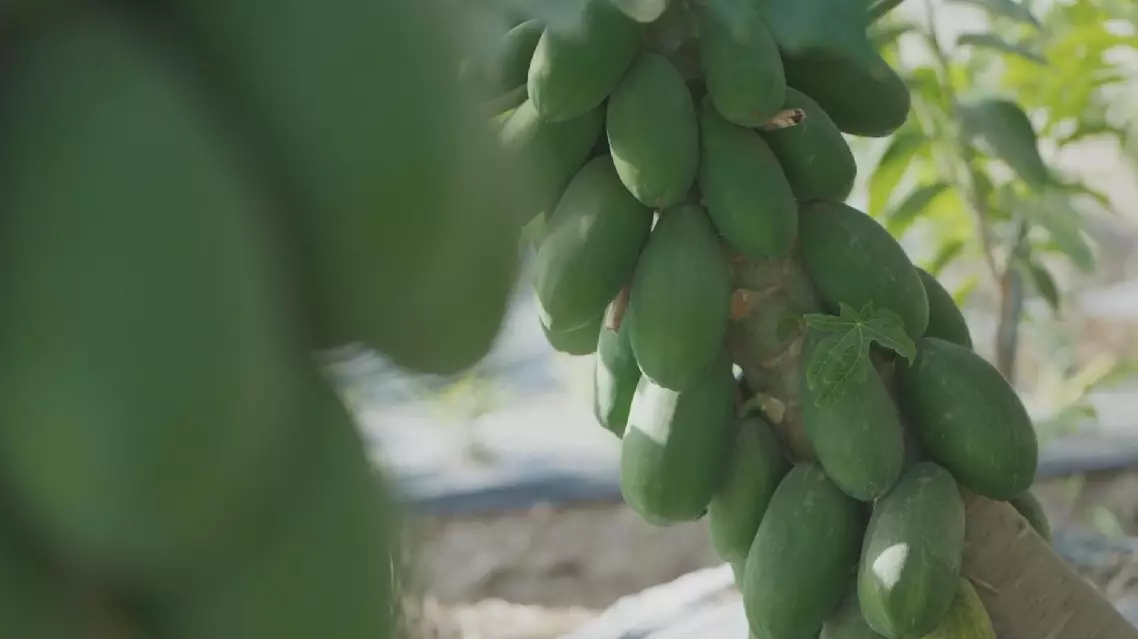
Tropical fruits thrive in desert environment in Xinjiang