Skip to Content Facebook Feature Image

Africa's ratings do not match repayment record, new credit agency chief says

China

China

China

Africa's ratings do not match repayment record, new credit agency chief says

2026-10-30 20:40 Last Updated At:21:17

Following the launch of a new African Union-mandated rating agency, the interim head of the agency has emphasized that Africa currently pays far more to borrow than its repayment record justifies.

The Africa Credit Rating Agency (AfCRA) launched in Mauritius on Oct 7 as an independent, private sector-driven institution.

Speaking in a virtual interview with China Global Television Network (CGTN), Sifiso Falala, interim chief executive of the Africa Credit Rating Agency (AfCRA), said the problem starts with how few African countries are considered safe to lend to.

"We all know that the African cost of borrowing is very high, exceptionally high, so much so that African countries often borrow money to repay existing debt and cover their various budget deficits. And that is as a result of the fact that out of the 55 states in Africa, only three are in what you'd call investment-grade. The risk -- over 50 African states are rated as being uncreditworthy, so to speak," he said.

The continent reportedly loses 74.5 billion U.S. dollars a year through inflated borrowing costs. Falala said this is overpayment is rooted in an unfair system, stressing that the ratings do not match actual repayment behavior.

"Fundamentally, if you look at the past 10 years, you'll find, for example, that 50 or more of the African states have not defaulted on their payments. In other words, they've made good. Technically speaking, they should be considered as creditworthy, and yet, according to the model that is used, they are not creditworthy. And because they are not creditworthy, they then tend to pay more when they borrow. So that is a serious problem, because they would argue that a creditworthiness model is not the same as a default model," he said.

AfCRA was established with an aim to improve how international financial markets assess African sovereigns, sub-sovereigns and businesses by strengthening data, expertise and context on African credit risk, and to give Africa a stronger voice in global financial governance.

Its ratings will cover African sovereigns, sub-sovereigns, corporates and public and private institutions, and may extend to non-African entities subject to management decisions.

Africa's ratings do not match repayment record, new credit agency chief says

Africa's ratings do not match repayment record, new credit agency chief says

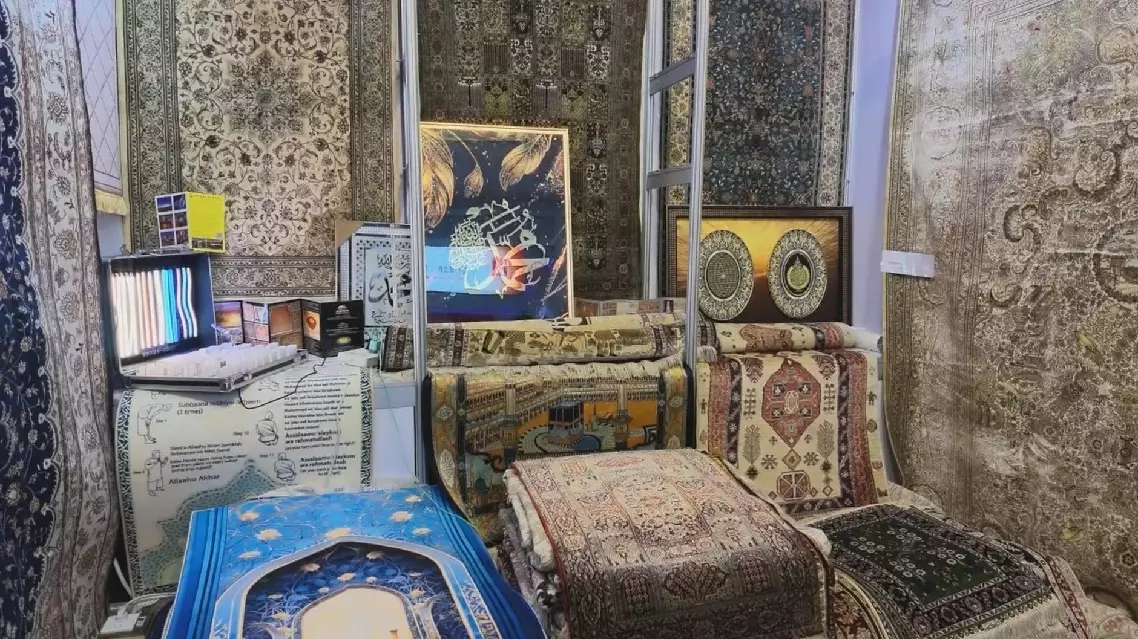
Famed for its vast range of goods, the Canton Fair not only grabs attention with high-tech innovations, but traditional handicrafts still hold their ground.

Running in three phases from Oct 15 to Nov 4 in Guangzhou of south China's Guangdong Province, the fair, also known as the China Import and Export Fair, has attracted global buyers arriving with long procurement lists for Chinese products and a keen interest in closer collaboration with Chinese companies.

For 70 years, the Canton Fair has stood as China's enduring gateway to global trade. It is not only a stage for major corporations, but also a launchpad for time-honored handicraft makers.

Yamei Carpet Factory from central China's Henan Province is a beneficiary of this platform, as the fair helps it connect with international clients without traveling the world chasing buyers.

"These are Persian-style handwoven rugs. Our main export destinations are the Middle East, followed by Europe and the United States," said Chen Yufeng, director of Yamei Carpet Factory.

Today, the Henan-based enterprise has grown from a small workshop into a globally renowned supplier of premium handmade rugs, with annual export revenue jumping from a few thousand U.S. dollars to more than 8 million dollars.

"So far it's going very good. I like the product. I'm looking at mixed items, handmade silk rugs. I'm looking at bronze sculptures and other items. They are very popular because of the workmanship, the quality," said Faizan Hamshaid, a buyer from Pakistan.

Handwoven silk rugs come at a steep price, with a single piece costing thousands of U.S. dollars and requiring years of work by highly skilled artisans. The benefits of this booming trade ripple out to rural communities.

"Around 90 percent of our workers are women. At least half of them are local farmers. They can weave rugs at home in their villages while still tending their farmland. On average, a weaver can earn an extra 40,000 yuan (about 6,009 U.S. dollars) every year," Chen said.

Traditional handicrafts attract foreign buyers with unique charm at Canton Fair

Traditional handicrafts attract foreign buyers with unique charm at Canton Fair

Recommended Articles