WASHINGTON (AP) — Barbara Weigand could not have prepared more for retirement. She stayed healthy and saved diligently for years.
This year, though, a shoulder surgery and a bladder cancer diagnosis have really tested her finances. She recently withdrew $4,000 from her retirement account to cover medical expenses associated with her cancer treatment.
“On my monthly income, I would not be able to afford my new medical expenses,” says Weigand, 83, who lives in North Canton, Ohio. She is currently on a Medicare Advantage plan and was searching for new coverage as Medicare's open enrollment period began in October.
For older adults in the United States, the rising cost of healthcare is hitting where it hurts most — their pocketbooks. With Medicare costs, prescription drug prices and long-term care expenses weighing on household budgets, their concerns could carry significant political weight heading into Tuesday's elections.
Weigand is part of a reliable voting bloc; 83% of voters over age 50 say they’re extremely motivated to vote in the midterms, according to an AARP poll conducted in early October. Their concerns over managing healthcare costs put the issue of affordability squarely in the spotlight.
Here are some of their biggest healthcare concerns — and how Weigand sees them.
THE SITUATION: Open enrollment for Medicare plans began in mid-October, and enrollees are facing a slew of changes that will go into effect in 2027.
During the enrollment period, people are considering higher Part D out-of-pocket caps, the end of temporary federal Part D premium subsidies, and new drug price negotiations. Additionally, in some states, insurers put caps on the number of people who can enroll in Advantage plans, pulling out of markets or eliminating plans that people have come to rely on.
Juliette Cubanski, director of KFF’s program on Medicare policy, told The Associated Press that the open enrollment period offers enrollees “an opportunity to evaluate the coverage they have and see if there might be better options for them in terms of accessing the care that they need, at possibly a lower cost.”
While Weigand is grateful to have the mental acuity to do the research and the spiritual community that she relies on, she worries about other older people who are struggling to plan for the year ahead. “There are so many changes, and a lot of people my age who don’t know where to start," she says. "What do they do?”
THE SITUATION: The Trump administration has made lowering drug prices a priority in its effort to show Americans that it is tackling soaring costs. Republican President Donald Trump has struck multiple most-favored-nation drug deals with pharmaceutical companies and has launched the discount drug website TrumpRx, among other steps.
In September, his administration said all 50 states would join in on a program set to provide most-favored-nation pricing to some drugs within the Medicaid program, bringing the net price of selected drugs down to prices paid in certain other countries.
Still, the cost of prescription drugs prevents some people from filling prescriptions. A KFF survey from March found that about 4 in 10 U.S. adults say they have not taken their medication as prescribed in the past year due to costs.
Weigand is considering rationing her drugs to save money. “I've been thinking — if I could just do this every other day rather than every day to make the medicine last longer," she says. "Isn't that sad?“
The KFF report says about 1 in 5 people surveyed had cut pills in half or skipped doses of medicine in the prior year because of the cost.
The costs of receiving long-term care — whether from spouses, home-care aides or friends — have risen steeply for retirees.
An AARP report released Wednesday that examines out-of-pocket caregiving expenses finds that family caregivers are spending nearly 60% more supporting a family member or friend than five years ago. They spend an average of $11,508 a year supporting a family member or friend, compared with $7,242 in 2021, according to the report.
Nancy LeaMond, AARP's executive vice president and chief advocacy officer, said “we're already hearing from our members about healthcare affordability — its prescription drug costs, caregiver costs, co-pays, premiums," she said. "Not only are we trying to help family caregivers with their finances, but also to get them the kind of information they need to help their loved ones.”
These worries are top of mind for older people. About one-third of Americans over 50 provide regular care to an adult relative or friend with a health issue or disability, according to a national poll on healthy aging conducted in September 2025 by the University of Michigan.
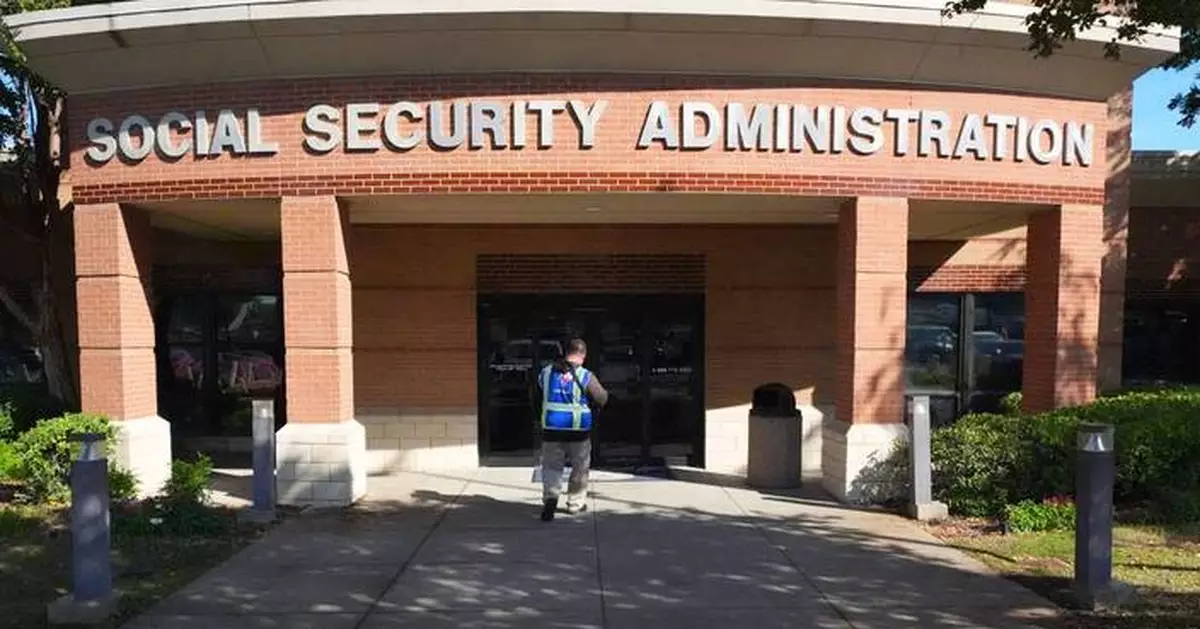
The Social Security Administration announced this month that the annual cost-of-living adjustment for older adults and people with disabilities will rise by 3.6% beginning in 2027. That translates to $75 extra per month for the nearly 72 million people who receive monthly Social Security benefits and about 7.3 million beneficiaries who get Supplemental Security Income.
The agency faces an approaching bankruptcy date if a funding shortfall is not addressed by Congress.
The Social Security and Medicare trustees’ report from June states that Social Security’s combined trust funds, which cover old age and disability recipients, will be unable to pay full benefits beginning in 2034. After that, incoming revenue would cover about 83% of scheduled benefits.
With 2034 not far away, the upcoming Congress will be on the hook to determine how to shore up the program.
Matt Hogan, a partner at the Impact Research polling firm, has this advice to candidates in the closing days of the midterm campaign: “Regardless of party, to make inroads with these voters, Social Security and Medicare should definitely be part of their messaging.”
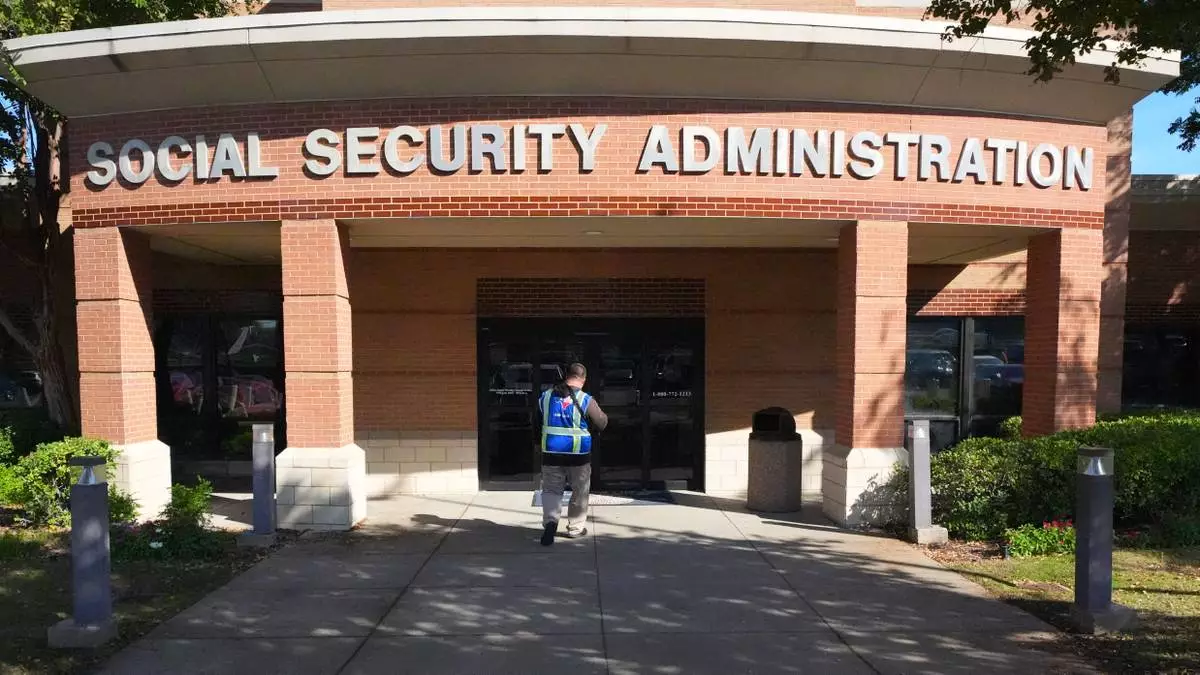
A person walks into the Social Security Administration office in Dallas, Friday, Oct. 23, 2026. (AP Photo/LM Otero)
WASHINGTON (AP) — There's been a lot of talk this midterm election season about socialism, but only a handful of candidates running for Congress actually align with the far-left wing of the party or consider themselves part of the Democratic Socialists of America.
Most of these candidates come from a few Democratic strongholds, and several toppled seasoned incumbents in hard-fought primary campaigns. They are expected to win their elections on Nov. 3, and would join two democratic socialists already in the House.
The progressive newcomers bring a new energy to the Democratic Party and also potential challenges for leadership, regardless of whether Democrats or Republicans hold the House majority, for the final two years of President Donald Trump's term.
While Republicans have raised alarm bells over socialism, the warning may not pack the punch it once did, particularly among Democrats. These candidates wouldn't be the first democratic socialists on the national scene. The election of New York's Mayor Zohran Mamdani, the rise of Rep. Alexandria Ocasio-Cortez, D-N.Y., and the enduring influence of Sen. Bernie Sanders of Vermont all speak to shifting ideas in American politics.
Here's a look at some of the candidates potentially coming to Congress.
Chevalier was a community organizer and a field staffer for Mamdani’s mayoral campaign who landed an upset victory over long-serving Rep. Adriano Espaillat in upper Manhattan and the Bronx.
A newcomer to politics who formally became a democratic socialist last year, Chevalier centered her campaign on the idea that government — and her opponent — had abandoned the working class. She argued Congress needs fresh faces to challenge the status quo.
“I think folks are really tired of politics that seems more beholden to donors,” she told The Associated Press hours before she won her primary.
Chevalier once helped organize pro-Palestinian protests at Columbia University and made opposition to Israel’s “genocide” in Gaza the cornerstone of her campaign. She was arrested last month during a protest of Israeli Prime Minister Benjamin Netanyahu’s speech at the United Nations General Assembly in Manhattan.
Kiros, a lawyer turned doctoral student, won a stunning primary victory, the first-time candidate beating 30-year incumbent Rep. Diana DeGette in the Denver-area seat.
The 29-year-old, an immigrant from Ethiopia whose family relocated to Colorado after she was born, earned a bachelor's degree in political science and economics from Washington College in Maryland, and her law degree from the University of Notre Dame. She was working as an attorney in New York City before running for Congress as a democratic socialist.
Taking to a stage under a sign that read “Power to the People,” Kiros laid out her plans in a victory speech: taking the fight to “Donald Trump and the oligarchy,” abolishing U.S. Immigration and Customs Enforcement, passing Medicare for All and ending the “genocide in Palestine.”
“This is a movement,” Kiros said. “We are just getting started.”
The 34-year-old McKinney overcame a major spending disadvantage in the Democratic primary to unseat Rep. Shri Thanedar in a Detroit-area congressional district.
McKinney, a Michigan state lawmaker, ran a grassroots campaign focused on reforming utility costs, backing Medicare for All, and getting money out of politics.
“No longer can our party continue to serve two masters,” McKinney said at an event in August. “It’s up to us to push our party to either fight for the working people, or continue to fight for the corporate oligarchs.”
McKinney has described himself as a democratic socialist and was endorsed by the Democratic Socialists of America.
Rabb has served 10 years in the Pennsylvania state House of Representatives, bringing a provocative style of politics as one of the chamber’s most progressive and outspoken members. The Ivy League-educated Rabb won a four-way primary in a heavily Democratic Philadelphia district.
Rabb has said that he joined the Philadelphia chapter of the Democratic Socialists of America in 2026, but that he traces his involvement with a constellation of progressive groups and causes. He ran on progressive issues in the primary, with an emphasis on the corrosive role of money in politics.
“I believe that the Democratic Party listens more to people who fund it than the people who actually come out to vote," he said. "And as a result, there’s this huge disconnect between the people closest to the pain and the people closest to the purse.”
He supported abolishing U.S. Immigration and Customs Enforcement, imposing a moratorium on data centers and passing a Medicare for All health care subsidy. He also supported creating new government-run grocery stores — to wipe out “food deserts” — and expanding federal minimum wage law to eliminate a lower tipped minimum wage and cover independent contractors such as gig workers.
Valdez is a state lawmaker and part of a slate of Mamdani-backed progressives in New York elections this year. She beat the handpicked successor to retiring Rep. Nydia Velazquez in the Democratic primary for a sprawling, gentrified district in Brooklyn and Queens, and is expected to sail through to Congress this fall, given the district’s deep-blue bent.
She cast herself as a booster of Mamdani’s agenda in Washington and campaigned heavily on affordability and generational change, promising to bring the fight to Trump and champion the working class from Congress.
A member of the New York City chapter of the DSA since 2019, Valdez has said she hopes to prove the buzz around Mamdani’s election wasn’t a flash in the pan but instead signaled a burgeoning populist shift in the Democratic Party.
“Right now there’s really mass dissatisfaction with the way the party leadership has been operating and not standing up strongly enough to Trump,” Valdez told The Associated Press earlier this year.
Several other candidates align with the party's left wing but are not necessarily DSA members. Additionally, some democratic socialist candidates remain locked in tight election contests.
Adam Hamawy, an Army veteran and medical doctor, running in a safe Democratic district in New Jersey, has said he’s not a member of the DSA but that he would ally himself with people who support getting corporate money out of politics.
“They’re getting attacked again by fearmongering, which is really always the last resort when you have nothing to talk about,” he said in an interview with journalist Chris Hedges.
In California, Angela Gonzales-Torres is a democratic socialist running to unseat Rep. Jimmy Gomez in the Los Angeles district. And in Michigan, climate activist and former DSA member William Lawrence is looking to defeat GOP Rep. Tom Barrett in one of the nation’s most competitive seats.
Associated Press writers Lisa Mascaro, Anthony Izaguirre, Joey Cappelletti, Jesse Bedayn, Marc Levy and Mike Catalini contributed to this report.

I Voted stickers are seen at an early voting polling place Friday, Oct. 23, 2026, in Nashville, Tenn. (AP Photo/George Walker IV)