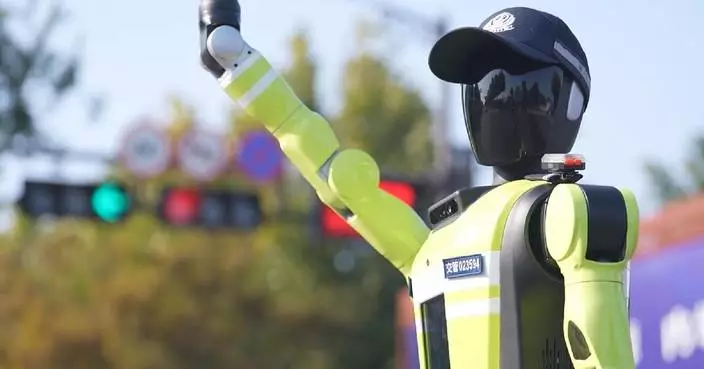
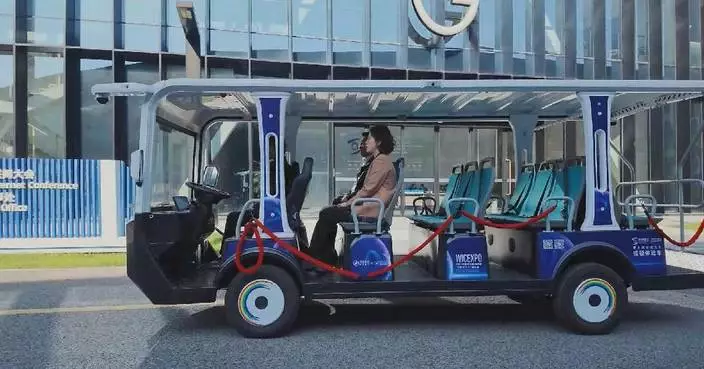
China's AI inference has surpassed training data for the first time, indicating that the country's AI industry has transitioned from model training and research and development to large-scale industrial application, according to an industry report released on Saturday.
During the opening ceremony of 2026 New Domain and New Quality Innovation Competition's finale in Qingdao, east China's Shandong Province, the China Center for Information Industry Development (CCID) released a report on 10 major trends in innovation and development within new domains and new-quality areas.
The report said China's average daily token calls had exceeded 175 trillion as of June 2026, an increase of more than 1,000 times compared with early 2024. Meanwhile, the iteration cycle for top-tier large models had shortened from several months to a few weeks or even days.
Artificial intelligence is transforming from research labs to real-world impact.
"Artificial intelligence is now reshaping industrial systems at an unprecedented rate. It is no longer confined to transforming tools, but it has become an instrument of transformation itself -- a general-purpose technology leading systemic changes across domains," said Liu Wenqiang, vice president of CCID while addressing the ceremony.
Intelligent manufacturing is an important scenario for accelerating the large-scale application of artificial intelligence.
China has established over 500 excellence-level smart factories covering more than 80 percent of major manufacturing sub-sectors in 31 provincial-level regions.
Domestically-developed computing power and large-scale AI models have been applied in more than 20 industries, including steel and automotive, in over 1,000 scenarios, fostering the expansion of innovative business models such as personalized customization and full-lifecycle services.
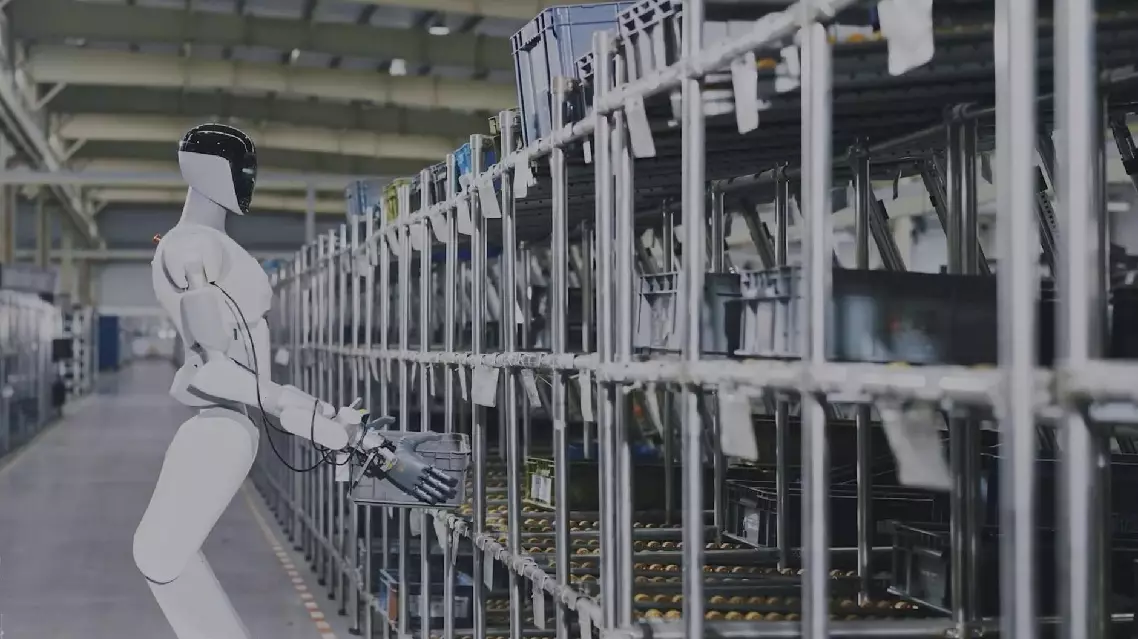
China's AI inference surpasses training
Through a decade of technical iteration and independent breakthroughs, China's J-20 stealth fighter has continued to upgrade since its 2016 debut, advancing from imported powerplants to fully domestically built engines, and from single-seat air superiority to two-seat intelligent coordination.
The J-20 made its maiden flight in 2011 and was first shown to the public at the 11th Airshow China in Zhuhai, south China's Guangdong Province, in November 2016.
A milestone in the decade-long upgrade effort was the debut of J-20 fighters equipped with domestically built engines at Airshow China 2021 in Zhuhai.
"The engine is the heart of an aircraft. With the domestic engine, the J-20 has more powerful thrust. It can fly faster, cruise at supersonic speed for longer, maneuver at higher g-loads, carry a larger payload and fly farther. It gives us independent control over our own power, and it also lays the foundation for developing the next generation of even more advanced fighters," said military observer Wang Mingliang.
The engine swap solved the "heart" problem, while the development of the two-seat J-20S variant has expanded the combat paradigm of traditional fifth-generation fighters.
As the world's only publicly unveiled two-seat stealth fifth-generation aircraft, the J-20S transcends the mission limits of single-seat fighters.
The front-seat pilot focuses on air combat and tactical maneuvering, while the rear-seat operator handles unmanned formation command, situational coordination, intelligent collaboration, and ground and maritime mission planning -- a configuration better suited to the intelligent, unmanned and system-based air combat scenarios of the future.
"This means the J-20 is no longer a purely traditional air-superiority fighter. It may take on the role of a system hub or a system controller. In other words, the rear-seat systems controller, beyond operating the aircraft's own weapons, sensors and communications systems, is also responsible for providing intelligence and target cueing to other aircraft, assigning combat tasks and coordinating their operations in networked combat. Clearly, it can be described as a commander of a new type of airborne combat system," Wang said.
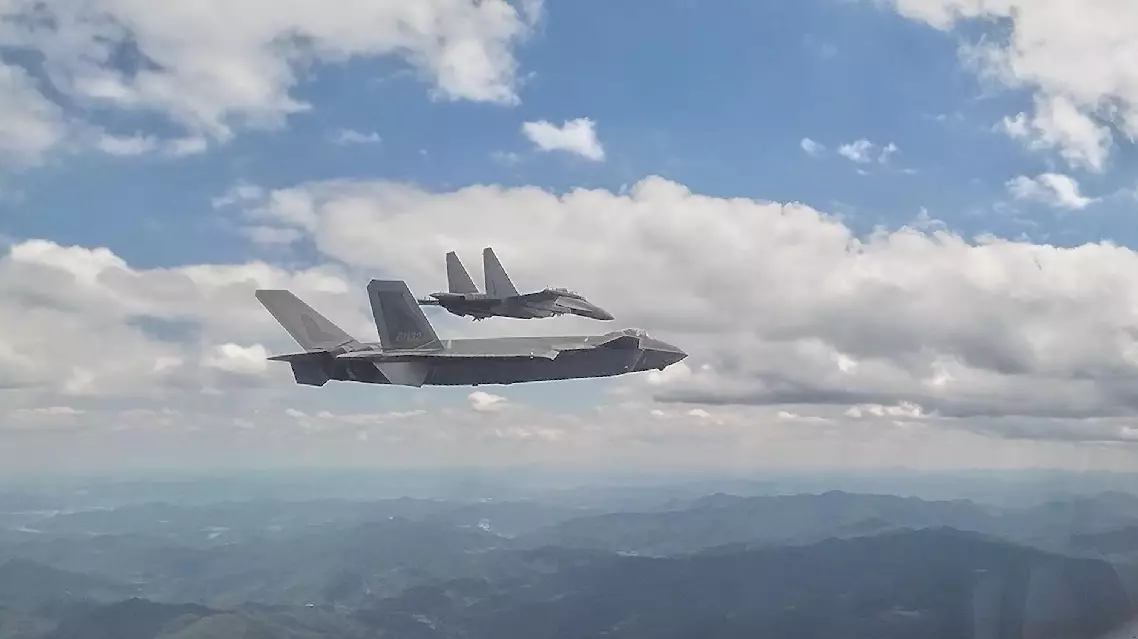
China's J-20 stealth fighters show improved capabilities through continuous upgrading