China's e-commerce logistics index posted a slight month-on-month rebound in October, driven by National Day holiday and pre-Singles Day shopping, as well as logistics firms' AI-assisted peak-season planning, the China Federation of Logistics and Purchasing said on Thursday.
The index, an indicator of logistics operations across the e-commerce sector, came in at 112.1 points in October, up 0.2 points from the previous month, a modest gain that nonetheless pointed to steady momentum ahead of the November 11 online shopping festival known as Singles Day, the world's largest online and offline shopping event.
A highlight of the October reading was the continued adjustment in the structure of online demand, with quality-oriented and scenario-based consumption becoming increasingly prominent, while orders in several emerging arenas grew into a new driver of e-commerce demand.
Driven by the holiday economy and promotional campaigns, the consumer market continued to unleash its vitality, with home appliances, mobile phones and digital products, and beauty and apparel categories performing steadily to consolidate the foundation of the e-commerce market.
At the same time, transactions in smart products such as AI glasses rose rapidly, while the pet economy, trips during the National Day holiday and seasonal shopping drove up demand for pet products, outdoor gear and autumn and winter wear, creating new growth poles for online consumption.
On the supply side, logistics companies planned ahead for peak-season support, using AI for order forecasting, capacity coordination and route optimization, scientifically allocating logistics resources and steadily improving peak-season timeliness, load factors and fulfillment guarantees.
He Hui, vice president of the federation, said the October data made the changing structure of online consumption unmistakable, with traditional categories shoring up the overall market while new lifestyle scenarios generated fresh momentum.
"In October, the shift in the online consumption structure was quite evident: traditional categories underpinned the overall market, while smart hardware sold well. Consumption scenarios such as National Day holiday travel, seasonal shopping and pet care drove new demand, with consumption continuing to shift toward segmented scenarios and higher quality, steadily generating new orders and injecting vitality into the online consumption market," said He Hui, vice president of the China Federation of Logistics and Purchasing.
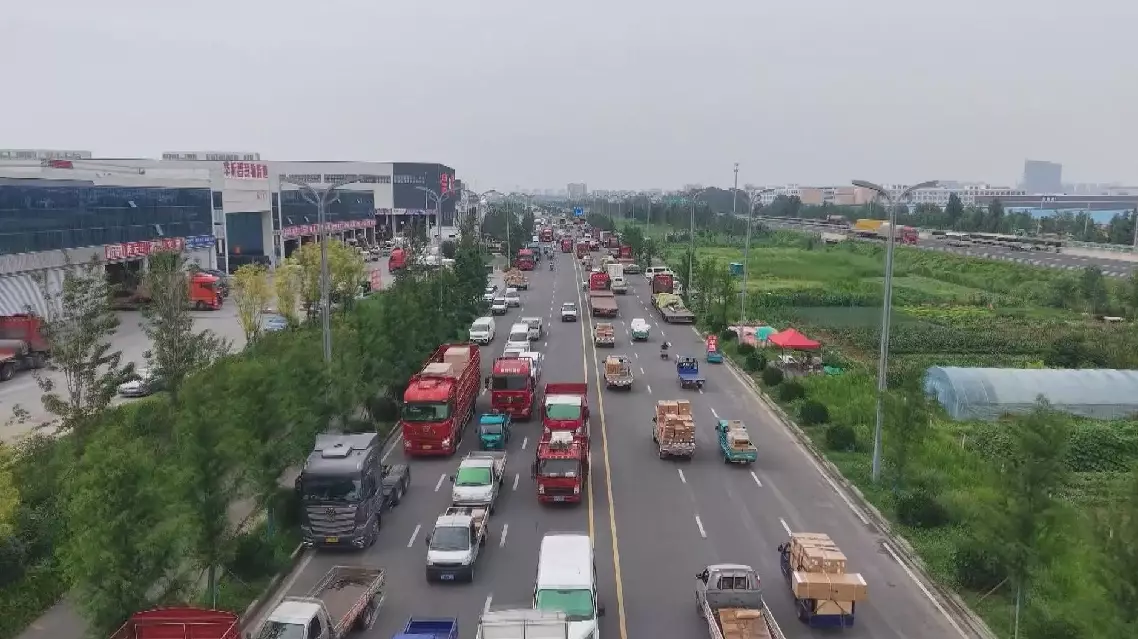
Beyond the national picture, the October index also reflected another notable feature, as rural e-commerce logistics business volume remained at a high level while regional growth paces diverged.
In terms of the data, the rural business volume index of e-commerce logistics stood at 128.3 points in October, down 0.1 points month on month, with the index for the eastern region edging up 0.1 points while those for the central, western and northeastern regions ended their previous rebound and posted slight declines.
The three-tier county-township-village delivery network continued to function effectively, keeping both channels open for consumer goods flowing to rural areas and specialty agricultural products moving up to urban markets, while a stable network of end-point outlets and distribution systems continued to underpin orders in lower-tier markets.
Although growth has slowed in some regions, the rural e-commerce foundation remains solid, continuing to unlock the consumption potential of county-level markets.
China's e-commerce logistics index rebounds slightly in October