WELLINGTON, New Zealand (AP) — New Zealand is choosing a new government in a national election that concludes Saturday. But one outcome is already known: The next prime minister will be a man named Chris.
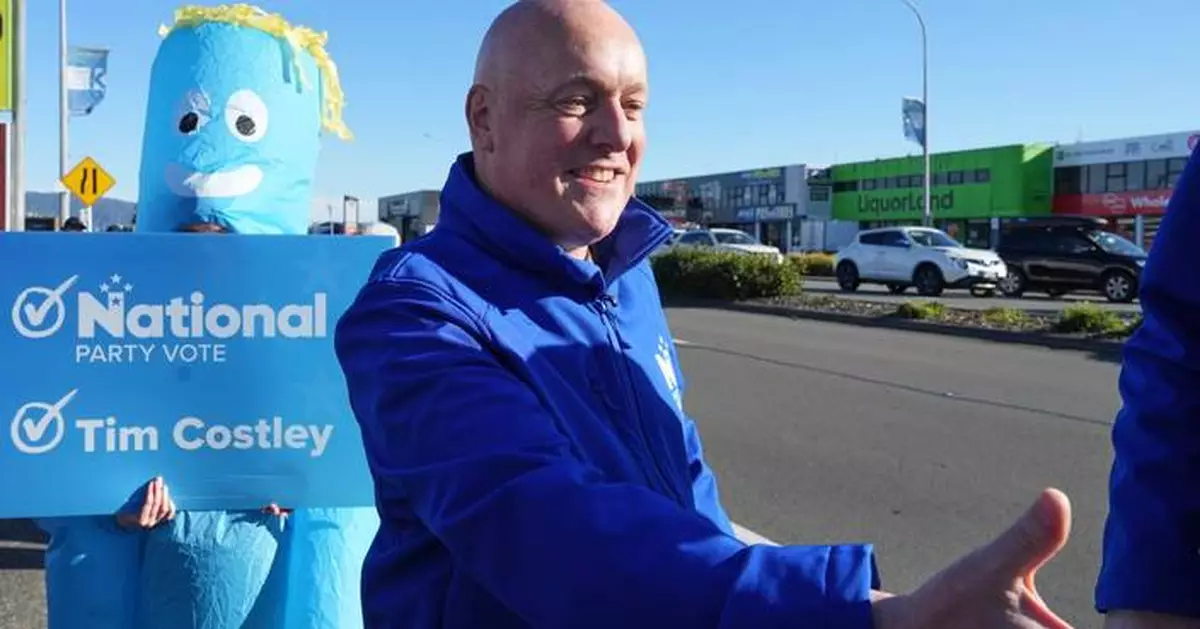
The leaders of the nation's two biggest political parties bear that name. Center-right National is helmed by Christopher Luxon, who has been prime minister since the 2023 election, when his party ousted center-left Labour, led by Chris Hipkins.
Both leaders in the “battle of the Chrises” are, according to most opinion polls, fairly unpopular with voters.
The ascension of political Chrises is linked to the popularity of the name Christopher for New Zealand children until the mid-1980s, peaking in 1968 when nearly 800 babies were given the name, according to government data. In 2025, just 20 newborns were named Christopher.
Here’s how to tell the political leaders apart.
The National party’s leader and incumbent prime minister, Luxon, 56, was one of more than 600 Christophers born in New Zealand in 1970. When he took power after the 2023 election, Luxon was a relative political novice who had first been elected to Parliament in 2020.
Before entering politics he was head of national carrier Air New Zealand. He also worked in the United States and Canada as an executive for consumer packaged goods firm Unilever.
Luxon, a father of two, has often declined to discuss his Christian faith publicly in resolutely secular New Zealand, a country where politicians who hold strong religious views are sometimes seen as suspect.
His party was elected on his pledges of economic growth, and Luxon highlighted his own business acumen when he said he would seek deals abroad for New Zealand.
Luxon says his achievements in office include a free trade deal negotiated and signed between New Zealand and India, export growth, education reforms and tougher measures against criminal gangs. His detractors note that domestic economic recovery has been slow, with living costs and unemployment stubbornly high. They portray Luxon, a millionaire, as disconnected from the struggles of ordinary people.
In 2026 Luxon survived an unusual pair of confidence votes among his lawmakers over his leadership of the party, after slumps in opinion polling and verbal gaffes that some analysts said reflected his political inexperience. The National leader prompted one of the votes himself as speculation grew that he might be toppled by his party.
The second vote followed a leadership bid from another Chris, then Defense Minister Chris Penk, who was sacked from the Cabinet by Luxon and will leave politics after the election. Transport Minister Chris Bishop, third-ranked in Luxon’s cabinet, is often mentioned as a possible successor for the party’s leadership.
The Labour party’s leader, Hipkins, 48, was born in 1978 when he was one of more than 400 babies to receive the name Christopher. Hipkins became prime minister without a general election in January 2023 after his then-leader Jacinda Ardern abruptly quit, citing exhaustion following more than five years in the job.
After nine months as prime minister, Hipkins led Labour to electoral defeat and became leader of the opposition. He began in politics as student body president at his university, where he studied political science, and entered New Zealand’s parliament in 2008 at age 30.
The father of two was handed weighty portfolios in Ardern’s Cabinet, including health, education and responsibility for New Zealand’s pandemic response. While the public health outcomes of the country's strict COVID-19 lockdowns were praised by experts globally, Labour faced a backlash against the economic impact of the measures on the biggest city, Auckland.
Hipkins, who has campaigned in 2026 on pledges to curb steep living costs and boost funding for New Zealand’s public healthcare system, is still negatively associated with the pandemic-era policies by opponents.
He presents himself as a relatable everyman.
After Ardern announced she would quit, Hipkins spoke to reporters dressed in a hoodie, baseball cap and wraparound sunglasses, provoking memes on social media. His love of sausage rolls is so well-documented that he has been served them by foreign leaders on official visits abroad.
During the pandemic, Hipkins made headlines when he told a news conference it was difficult for people to “get outside and spread their legs” without infecting others. He later clarified that he had intended to say “stretch their legs,” but the phrase went viral.
No other lawmakers in his party are called Chris.
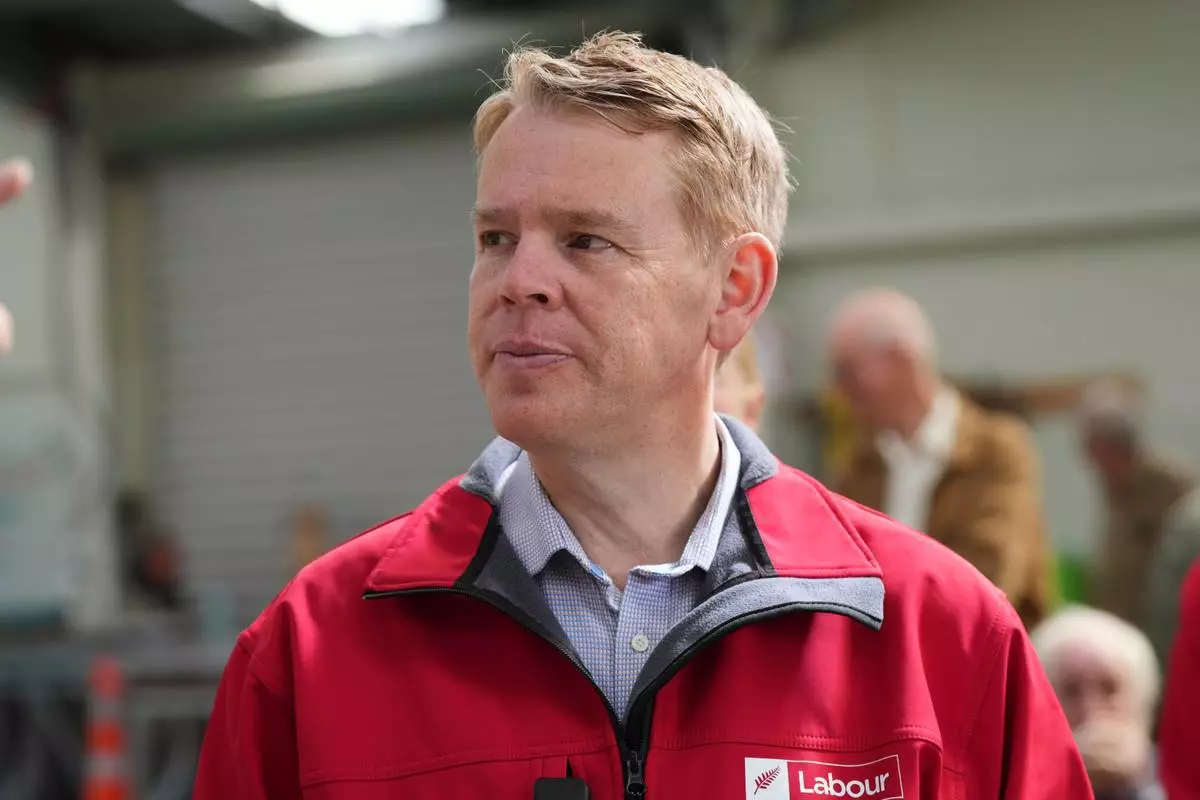
Labour Party leader Chris Hipkins reacts as he visits a steel framing business while campaigning for election in Paraparaumu, New Zealand, Wednesday, Nov. 4, 2026. (AP Photo/Charlotte Graham-McLay)

FILE- New Zealand National Party leader Christopher Luxon moves to shake the hand of a supporter as he campaigns in Paraparaumu, New Zealand, Thursday, Oct. 8, 2026. (AP Photo/Charlotte Graham-McLay, File)
WASHINGTON (AP) — Senate Democratic Leader Chuck Schumer is vowing that Democrats will not allow President Donald Trump to put “a right-winger” on the Supreme Court once they take power, raising the possibility that his party could block a presidential nominee if there is a vacancy in the next two years.
In an interview with The Associated Press on Thursday, Schumer would not say if he would hold a Supreme Court vacancy open until after the next presidential election, as former Senate Republican Leader Mitch McConnell did in 2016. But he said that Democrats are “not going to allow any crappy nominees” to be confirmed to the Supreme Court — or to the lower courts or Trump’s Cabinet, either.
“The bottom line is we’re not going to allow a right-winger on the court,” Schumer said.
Schumer’s pledge came two days after Democrats won a decisive Senate majority in the midterm elections — a feat few predicted a year ago, when Schumer was facing intense criticism from progressives within his party and Senate Republicans were betting that a favorable map and backing from Trump would help them keep power.
While there is still frustration with Schumer in some corners of the party, the New Yorker is expected to easily be reelected as leader by his caucus after leading them to wins in Republican-leaning states across the country. Democrats could have as many as 56 seats in the Senate if they win Mississippi and Alaska, which still have not been called — “a durable majority,” Schumer predicts, that has been 20 years in the making as he has been directly or indirectly in charge of his party’s Senate campaign operation.
With so many seats, Schumer is betting that “it’s not just a flip of the Senate once.” And the party will have the power not only to reject any of Trump’s nominees, forcing him to seek more moderate choices, but also to halt the Iran war and alter policies that they have been unable to counter in the minority.
Schumer says the party’s agenda will center around lowering prices, along with five issues that they have focused on in the minority — healthcare, housing, Trump’s tariffs, childcare and lowering energy bills. He has said Democrats will try to ban federal elected officials from stock trades, and limit consumer costs from data center expansion.
Democrats also want to investigate Immigration and Customs Enforcement raids across the country and scrutinize the Trump administration, which he says is the “most corrupted administration by far in American history.”
But Schumer would not get into specifics, or how he plans to get around Trump — who posted a picture of a red hat with the word “veto” in large letters on election night.
Beyond Trump, Schumer will also have to navigate his own caucus, including progressives who have criticized him and incoming freshman who won red states and would not commit to supporting him for leader during their campaigns. And to pass any legislation, he will still have to win Republican support as well.
He predicts that Republicans will suffer more losses “and keep following Trump over the cliff” if they don't work with Democrats in a bipartisan way.
But that will not be easy. Schumer would not say if he would try and eliminate the filibuster, which he tried and failed to do when he was majority leader during President Joe Biden’s term, to allow Democrats to pass legislation with a simple majority instead of 60 votes.
“The focus has got to be on getting things done,” he says. “That’s all I am saying.”
Asked if he would support a third Trump impeachment after Trump was impeached and acquitted twice during his first term, Schumer responds that he would support an impeachment of Defense Secretary Pete Hegseth, an effort that House lawmakers have already launched.
And Trump? “That’s up to the House,” Schumer said.
Schumer first led his party’s campaign arm in the 2006 cycle and has had a hand in every election since then, with mixed results.
He attributes this year's wins to good candidates and a focus on local issues in Republican states — the effect of Trump’s tariffs on farms in Iowa, where Democrat Josh Turek won, Trump’s war with Canada in Maine, where Democrat Troy Jackson beat Republican Sen. Susan Collins, and data centers in Ohio, where former Sen. Sherrod Brown won after losing his seat two years ago to Republican Sen. Bernie Moreno.
Still, the party's focus on lowering costs was “a message that resonated everywhere,” he says. “That’s a big difference than in the past.”
The Democrats who won were not all his recruits — in Michigan, Democrat Abdul El-Sayed represents the progressive wing of the party and beat Schumer’s original choice for the seat, Haley Stevens, in the primary. But Schumer poured $67 million into that race to help El-Sayed and the two “talk regularly,” he said.
Even with his winning record this year, it is still unclear how long he will stay in power — and how long the party will support him as some call for a new generation of leadership. He is up for reelection in 2028, and he won’t say if he’ll run again for a sixth term.
“I’m focused on 2027,” said Schumer, who became the party's Senate leader in 2015.
Senators in his caucus are sticking by him, but many are also agitating for change as they enter a new era of power.
Maryland Sen. Chris Van Hollen, a potential contender for the 2028 presidential nomination who has not committed to supporting Schumer, said in an interview with the AP on Wednesday that Democrats need to have an “open and honest discussion” about the next leader.
Vermont Sen. Peter Welch said in a separate interview that Schumer “has to adjust and open things up and take into account the criticism of our efforts.”
Still, Welch said, there’s no indication of a leadership challenge. “Schumer did an incredible job on this campaign,” he said.
Associated Press writers Joey Cappelletti and Lisa Mascaro contributed to this report.
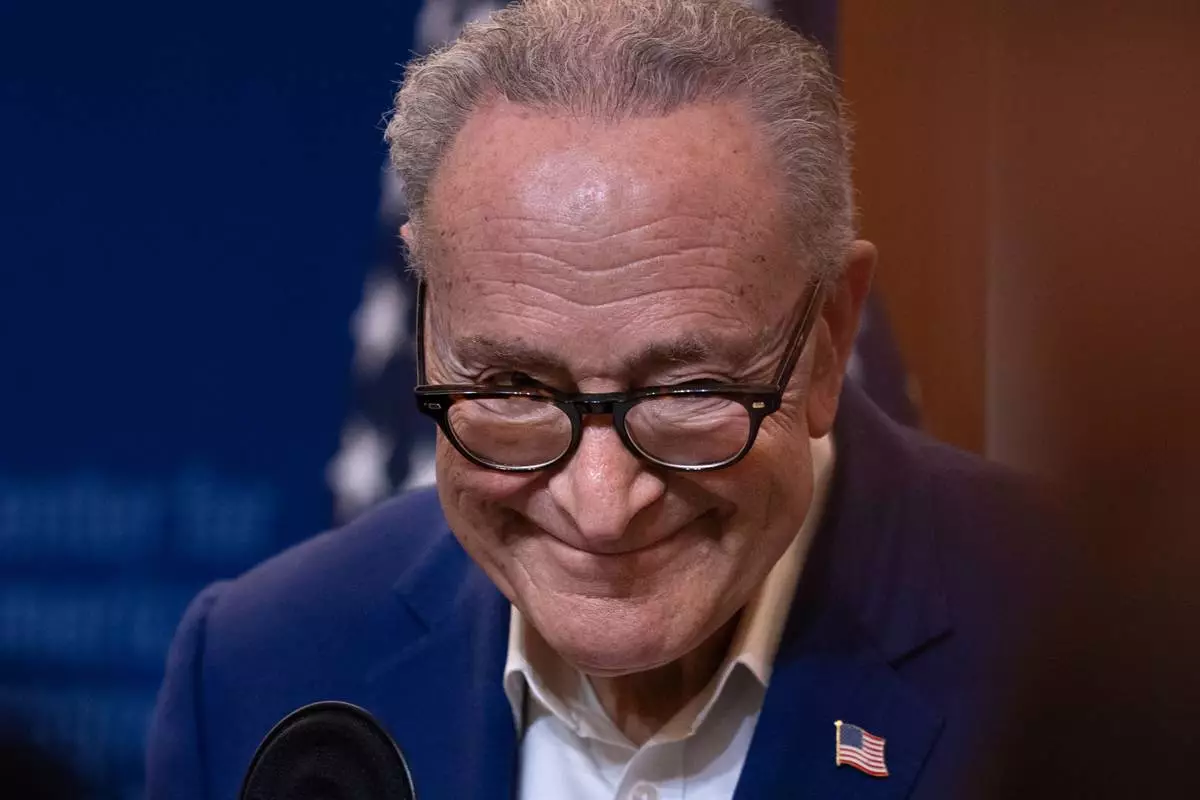
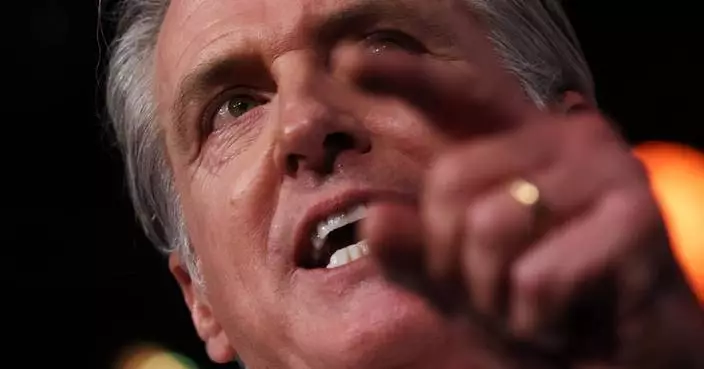
Sen. Chuck Schumer, D-N.Y., speaks at the Center for American Progress (CAP) post election forum, Thursday, Nov. 5, 2026, in Washington. (AP Photo/Manuel Balce Ceneta)
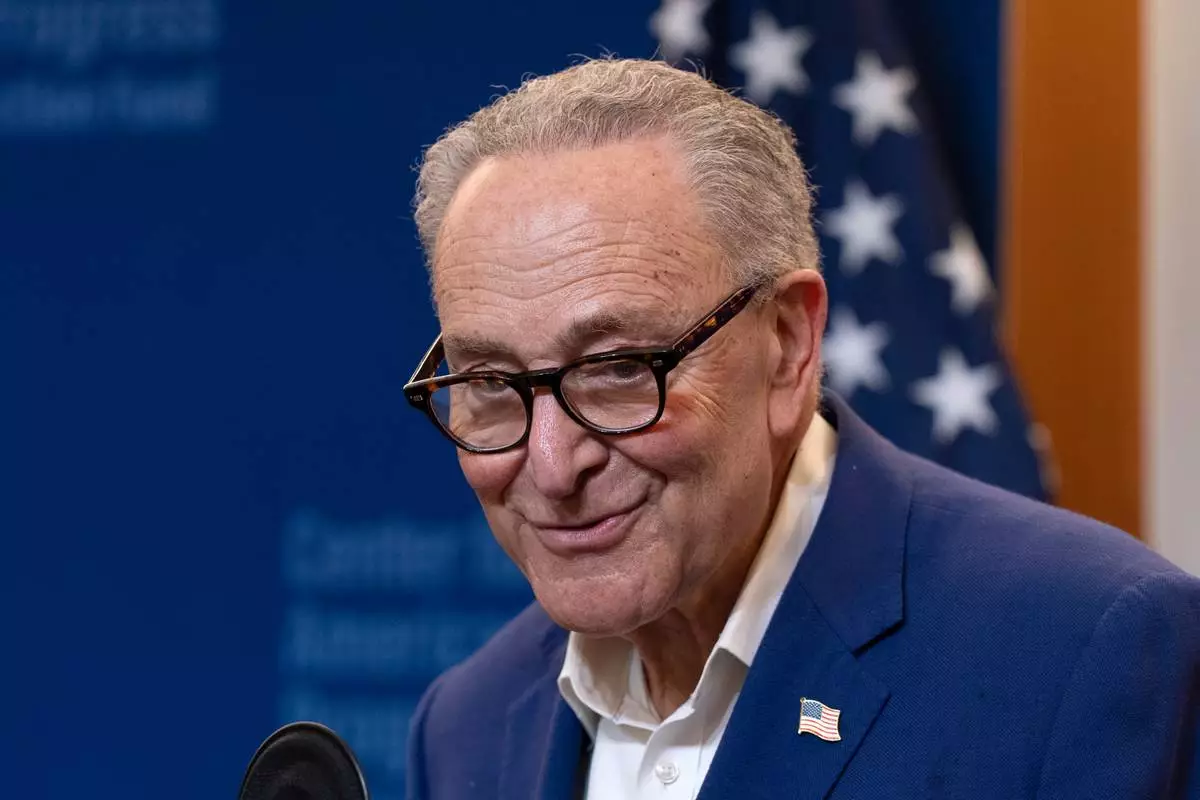
Sen. Chuck Schumer, D-N.Y., speaks at the Center for American Progress (CAP) post election forum, Thursday, Nov. 5, 2026, in Washington. (AP Photo/Manuel Balce Ceneta)

Senate Minority Leader Chuck Schumer, D-N.Y., speaks at the Democratic Senatorial Campaign Committee office, Tuesday, Nov. 3, 2026, in Washington. (AP Photo/Allison Robbert)
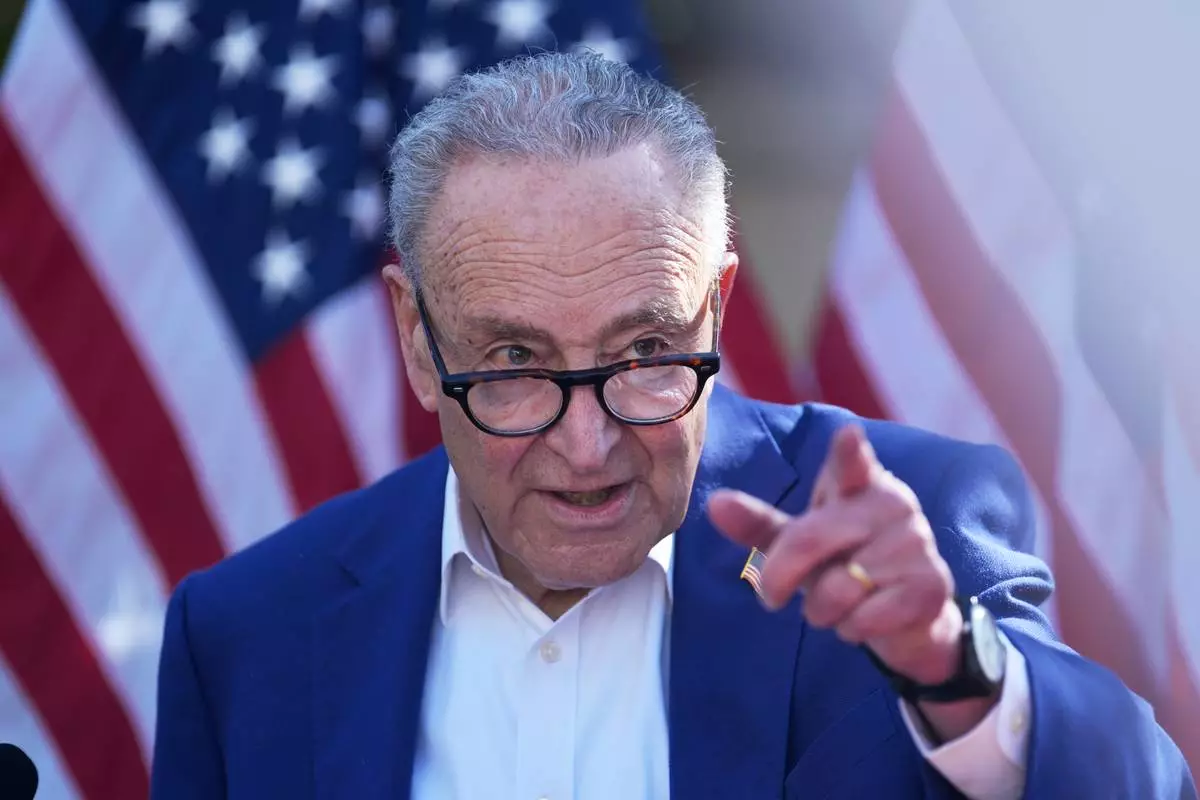
Senate Minority Leader Chuck Schumer, D-N.Y., speaks at the Democratic Senatorial Campaign Committee office, Wednesday, Nov. 4, 2026, in Washington. (AP Photo/Allison Robbert)