China is now both a global production hub and a key source of global demand, with a growing capacity to absorb goods from around the world, according to a report released on Thursday at an international economic forum in Shanghai.
The Export-to-China Capacity Development Report, designed to help other countries boost exports to China, debuted at the ninth Hongqiao International Economic Forum, held as part of the ninth China International Import Expo (CIIE), which runs in the mega Chinese financial hub from November 5 to 10.
As household incomes rise and consumption patterns shift toward higher-quality goods and services, China has considerable room to expand imports of premium products, advanced technologies and services, the report says.
China's import mix has evolved from one overwhelmingly dominated by manufactured goods to a more diversified structure encompassing industrial products, energy and raw materials and agricultural commodities, it notes.
The report says that China's expanding demand for both high-end manufactured goods and primary commodities offers an inclusive market for other economies at different stages of development.
In an interview with China Media Group on the sidelines of the forum, Liao Fan, director of the Chinese Academy of Social Sciences' (CASS) Institute of World Economics and Politics, said the report not only focuses on China's demand but also helps trading partners to boost export to China.
"One of the most important ideas behind the formulation of this report is that we are no longer focusing solely on the demand side - that is, what China needs - but are also examining the export supply side to determine what our trading partners can actually sell to China and how they can sell such goods more effectively. By focusing on both the demand and supply sides simultaneously, we can streamline the relationship between our trading partners. I believe this is the biggest highlight of our report," he said.
The report was jointly compiled by the Chinese Academy of Social Sciences' Institute of World Economics and Politics and the Division on International Trade and Commodities of the United Nations Conference on Trade and Development (UNCTAD).
It additionally delves into the export performance of 10 of China's trading partners, including Colombia, Kenya, Spain, Thailand and Britain, assessing their potential in the Chinese market and offering recommendations on how to boost exports to China.
Liao said resource-based countries will have to shore up their weaknesses to better export their goods to China.
"For countries with abundant natural resources but a relatively simplistic export structure, we may need to enable them to strengthen production, processing and subsequent export capabilities. In terms of production, the key is to strengthen their own production capacity and transform the potential of their resource endowments into tangible and marketable products. Regarding processing, I believe they need to maximize the added value of their products as much as possible, so that they can export more high-value-added goods to China. They also need to address their shortcomings in warehousing, logistics and final delivery capabilities. Only then will they be able to successfully and smoothly sell their high-quality products to China," said the expert.
The World Openness Report 2026 was also released at the forum, warning that global openness is under growing strain amid rising trade protectionism, spreading geopolitical conflicts and profound restructuring of global industrial chains.
In 2025, the Global Openness Policy Index stood at 0.7448, down 1.09 percent year on year, while the Openness Performance Index fell 0.9 percent to 0.7458, reversing the recovery seen in both 2023 and 2024, according to the World Openness Report 2026.
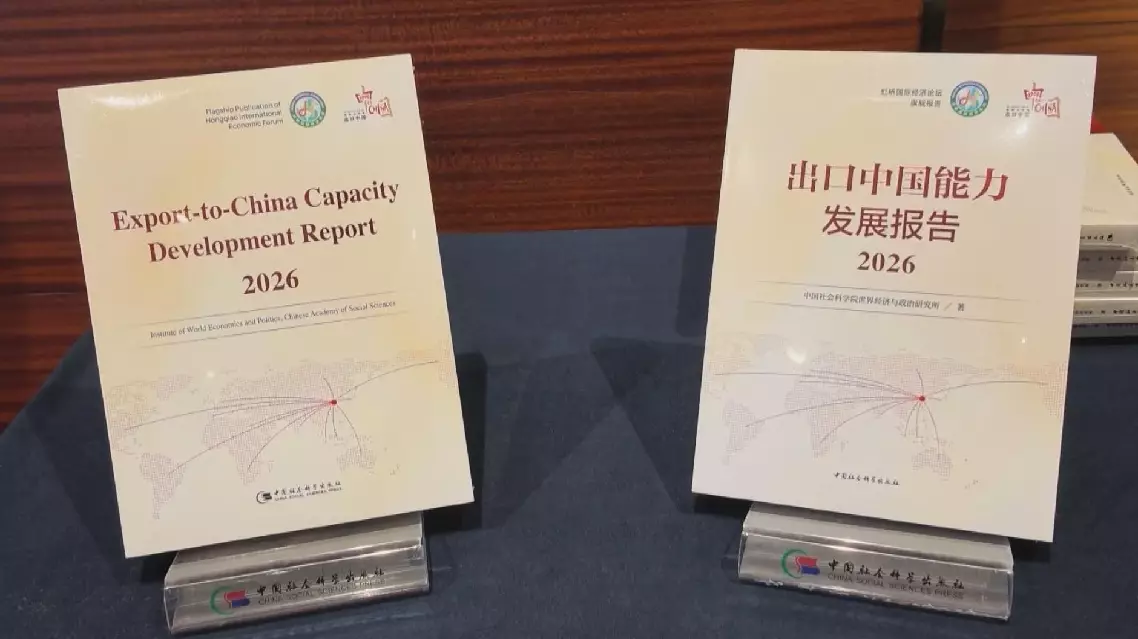
Report highlights China's growing role as global import market