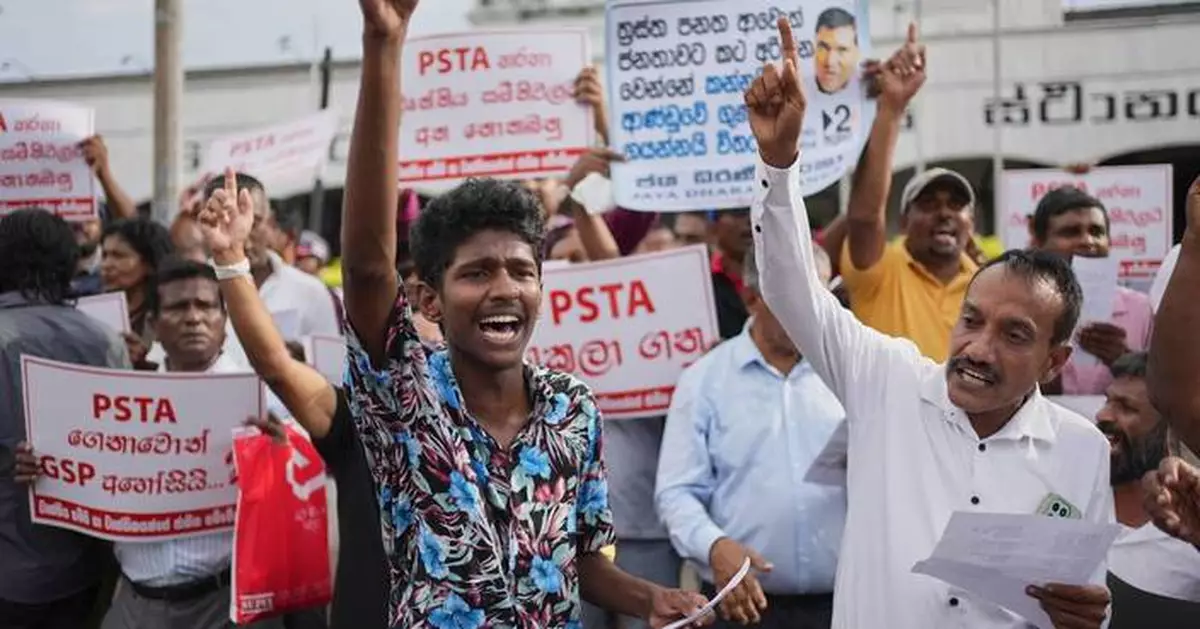
COLOMBO, Sri Lanka (AP) — Trade unions and political activists rallied in Sri Lanka’s capital on Friday against anti-terrorism and anti-crime bills, saying they would give sweeping powers to law enforcement authorities and could lead to abuses.
The bills — the protection of the state from terrorism and prevention of organized crimes — were submitted to Parliament, which has scheduled a debate and vote in the coming weeks.
Human Rights Watch said that the proposed counterterrorism law is too broad in scope and provide inadequate judicial oversight, sweeping powers of search and arrest for the armed forces, and executive authority to curtail freedom of speech and movement.
The bill seeks to replace legislation that critics say has enabled arbitrary detention and the torture of detainees for decades in Sri Lanka.
Government spokesman Nalinda Jayatissa on Tuesday rejected the allegations by rights activists and said that the proposed laws would not harm trade unions or media freedoms.
"These are clearly draconian laws,” trade union activist Saman Rathnapriya said, adding that “anyone can be turned into a terrorist by these laws."
He said the government had no right to bring such oppressive laws because "they have protested against such laws when they were in the opposition.”
President Anura Kumara Dissanayake’s National People’s Power alliance came to power in 2024, pledging to abolish “all oppressive laws.”
Dissanayake’s victory in the presidential election that year was seen as a rejection of the political old guard that was blamed for an unprecedented economic crisis following decades of mismanagement and corruption.
Rathnapriya said the government has failed to revive the economy.
“Fearing that people might revolt against them, the government is now attempting to bring in tough laws in a bid to suppress any future public protests,” he said, adding that protests would continue if the bills were not withdrawn.
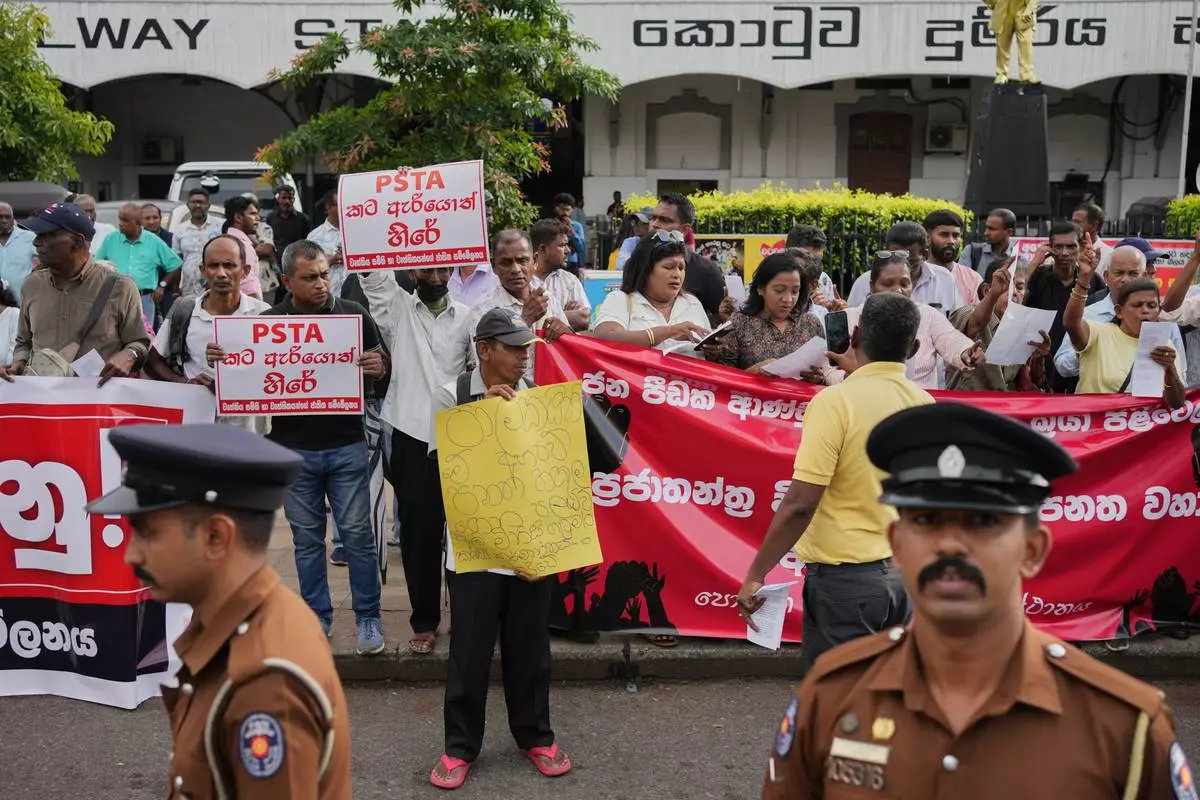
Trade union members representing opposition political parties protest against a proposed anti-terrorism law in Colombo, Sri Lanka, Friday, Nov. 6, 2026. (AP Photo/Eranga Jayawardena)
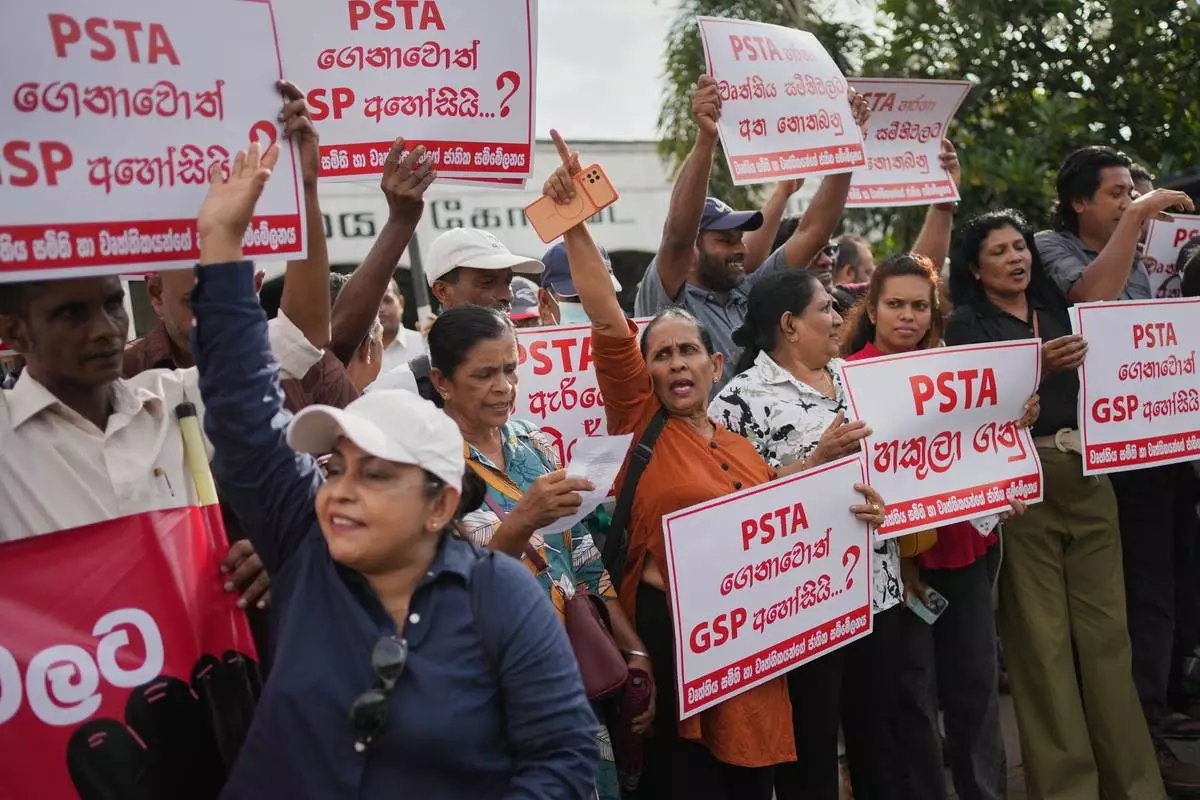
Trade union members representing opposition political parties protest against a proposed anti-terrorism law in Colombo, Sri Lanka, Friday, Nov. 6, 2026. (AP Photo/Eranga Jayawardena)
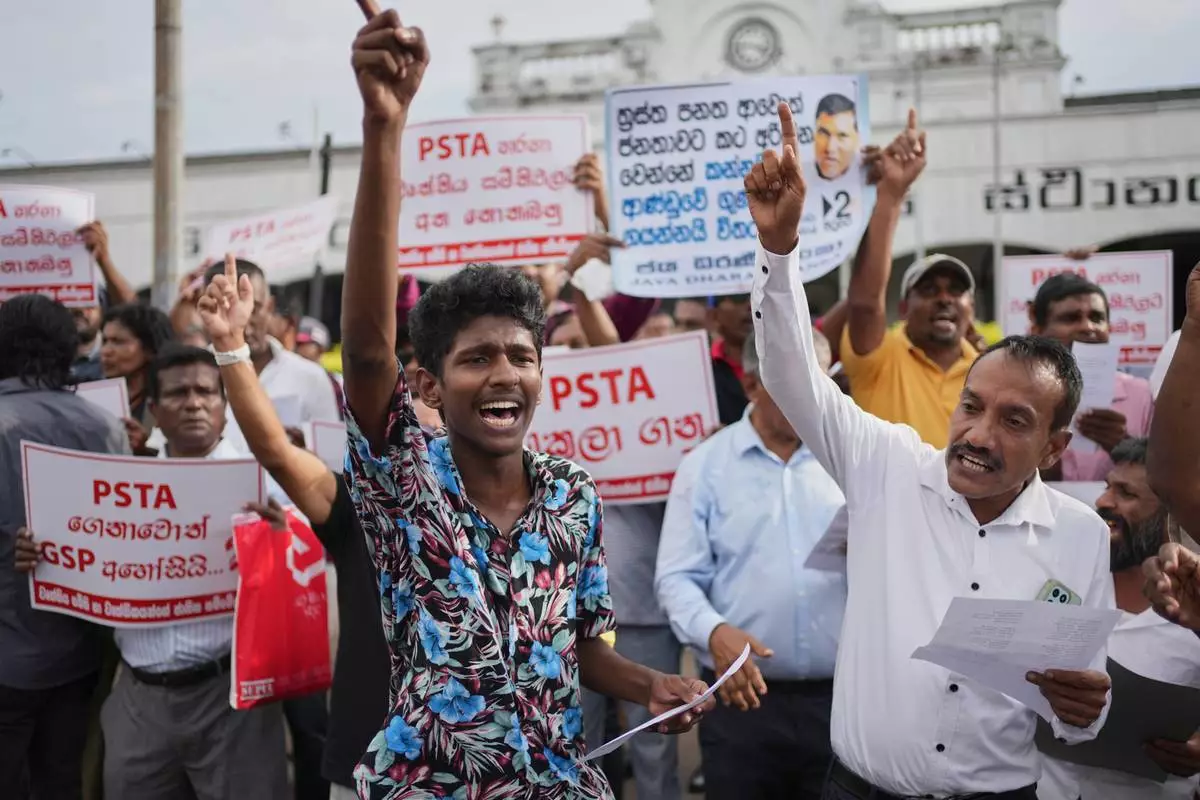
Trade union members representing opposition political parties protest against a proposed anti-terrorism law in Colombo, Sri Lanka, Friday, Nov. 6, 2026. (AP Photo/Eranga Jayawardena)
ROME (AP) — Pope Leo XIV is kicking off a three-nation tour of Latin America on Friday with a visit to Uruguay, the region’s least Catholic and most secular country, three weeks after undergoing lung cancer surgery that had put the entire trip into question.
Leo is due to arrive in Montevideo after a 13½-hour flight from Rome. He has a packed three-day itinerary in Uruguay including a visit to a neighborhood plagued by gang violence, a Mass in Paysandú, around 375 kilometers (230 miles) from the capital, and another Mass in the city of Florida, about 100 kilometers (60 miles) away from Montevideo.
The Uruguay leg is the first stop on what will be the longest and farthest trip of his pontificate, all being undertaken as the 71-year-old pope continues his recovery. The trip will also bring him to neighboring Argentina and finally back home to Peru, where Leo served as a missionary priest and bishop for two decades.
“His stamina is fantastic. The way that he's singing is incredible. And you can only sing if your lungs are really strong,” said María Montserrat Alvarado, the Vatican's new communications chief. She noted that Leo has passed the 14-day convalescence period required by doctors after his Oct. 13 surgery and is eager to get on the road.
“His doctors are very confident and he'll have plenty of medical care on board should something happen, but we don't see that in his prognosis or even in the way that he's acting,” she said.
In Uruguay, which hasn’t had a papal visit since 1988, Leo is expected to try to remind the 3.5 million people of their strong Catholic heritage stemming from the times of Spanish colonial rule. He's likely to propose the faith anew as an answer to today’s challenges and problems.
Upon arrival, Leo will meet with President Yamandú Orsi, leader of the center-left alliance that assumed power in Uruguay in March 2025, and then deliver his welcome address to government officials and diplomats. He finishes the long day with a vespers service at the city's cathedral.
Leo will find in Uruguay a country unlike any other in Latin America, which is home to around 40% of the world's 1.4 billion Catholics. Uruguay is considered the most secular country in the region, where only a fraction of people who identify as Catholic actually go to Mass regularly.
Uruguay’s secularism has roots in the weakness of its colonial church. With no gold or silver to mine, Spain valued the land of cattle ranches mainly as a buffer against Portuguese Brazil and left it largely unsettled. Montevideo was founded only in the 1720s, roughly two centuries after Mexico City and Lima.
With few priests and no local bishop, the church never became the powerful institution it was elsewhere in the empire. “Uruguay was colonized late, and that made Catholicism weaker,” said Gerardo Caetano, a Uruguayan historian.
Montevideo, Uruguay’s capital, awoke to its usual calm. Along the waterfront, joggers were out for their morning runs and residents walked their dogs along the very same promenade that the pope is set to visit just a few hours later.
“We still don’t understand why he chose Uruguay, given that it’s a secular country, but we hope he leaves something positive behind," said Mary Fernández while drinking a mate - Uruguay's beloved beverage - by the river.
The origins of the separation between church and state can be traced back to the 19th century, particularly to the spread of liberal ideas promoted by European intellectuals, who viewed religion as a symptom of backwardness or a lack of rationality, said Luis Bahamondes, a professor at the Center for Judaic Studies at the University of Chile.
“While Latin America also experienced a separation of church and state, the Catholic Church has nonetheless maintained strong ties with the various states in the region,” he said. “In this context, Uruguay stands out as a paradigmatic example of how secularism can be implemented.”
This process went so far as to include the renaming of certain holidays to reflect their secular character — such as “Family Day” and “Tourism Week” — signaling that the “inherent weight of Catholicism had no place within the State’s official framework,” Bahamondes added.
Since then, Uruguay has become the first country in the world to legalize marijuana for recreational use, the second country in Latin America to decriminalize abortion, and the third country in the Americas to legalize same-sex marriage.
More recently, it became the first country in the region to approve assisted dying legislation despite the strong opposition of the Catholic Church, evidence of Uruguay’s entrenched, church-state separation that prohibits any mention of God in oaths of office.
Leo is expected to recall the church's opposition to abortion and euthanasia as part of his broader argument about upholding human dignity in all phases of life.
Uruguayan church officials have marveled at the apparent enthusiasm that the visit has provoked, with reports that tickets to Leo’s prayer vigil at Montevideo’s Centenario Stadium were snapped up after two days.
“It seems that the pope’s presence is shifting something here and is gradually breaking down this veil that has always sought to obscure and diminish the presence of the Catholic tradition that lies at the country’s foundation,” said Guzmán Carriquiry, the Uruguayan former head of the Vatican’s pontifical commission for Latin America.
“I believe this pope will stir up questions in the hearts of Uruguayans — disturbing questions — questions about meaning and, we hope, questions about faith,” he said.
Carriquiry said that he expects Leo will seek to revive the Catholic roots of Uruguay, especially when he travels to the city of Florida on Sunday to mark an important Catholic feast day.
The Nov. 8 feast commemorates the Virgin of the Thirty-three, a small wooden icon of the Virgin Mary that is intricately connected to Uruguay’s independence movement. According to tradition, 33 independence patriots acquired the Guaraní statue and had it with them when independence was declared from the Brazilian empire in Florida on Aug. 25, 1825.
“So the number 33 is an ecclesiastical symbol, a national symbol,” said Carriquiry, who was also Uruguay’s ambassador to the Holy See. “And so the pope will speak there about the Catholic tradition that lies at the origin of Uruguay — that stems from Uruguay and gave rise to Uruguay — in order to revive and renew the Catholic tradition in the hearts of Uruguayans.”
Andrew Chesnut, chair of Catholic studies and an expert in the Latin American church at Virginia Commonwealth University, said that he wasn’t surprised that Leo’s visit had generated enthusiasm and that he will be welcomed warmly.
“But that’s not necessarily going to translate into folks in the pews,” he said. “If the overarching goal is trying to revitalize Catholicism in the most Catholic region on Earth, Uruguay is kind of a lost cause, and it has been for decades.”
Nayara Batschke contributed from Montevideo, Uruguay.
Associated Press religion coverage receives support through the AP’s collaboration with The Conversation US, with funding from Lilly Endowment Inc. The AP is solely responsible for this content.
This story has been corrected to show that the last name of the Vatican’s new communications chief is Alvarado, not Alvar.
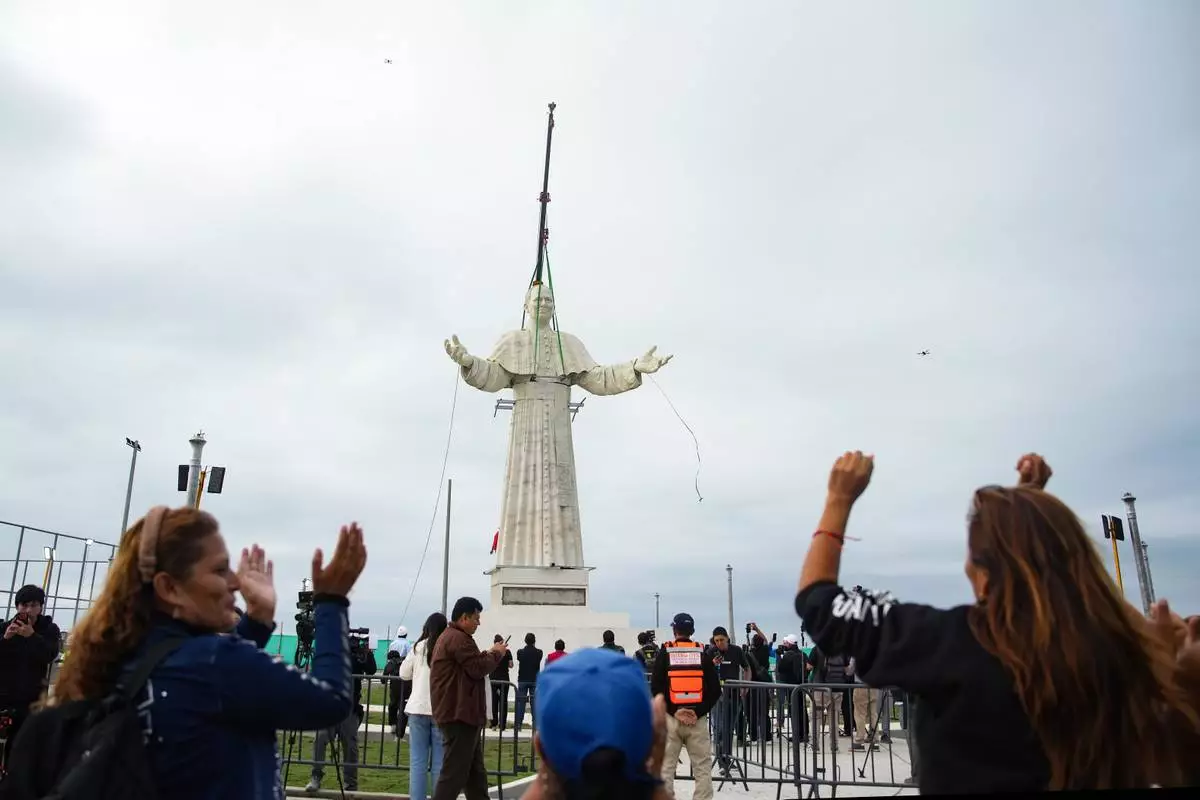
People cheer as a statue of Pope Leo XIV is installed in 'El Niño' park in Callao, Peru, Friday, Nov. 6, 2026, ahead of his planned trip to Uruguay, Argentina, and Peru from November 6 to17. (AP Photo/Guadalupe Pardo)
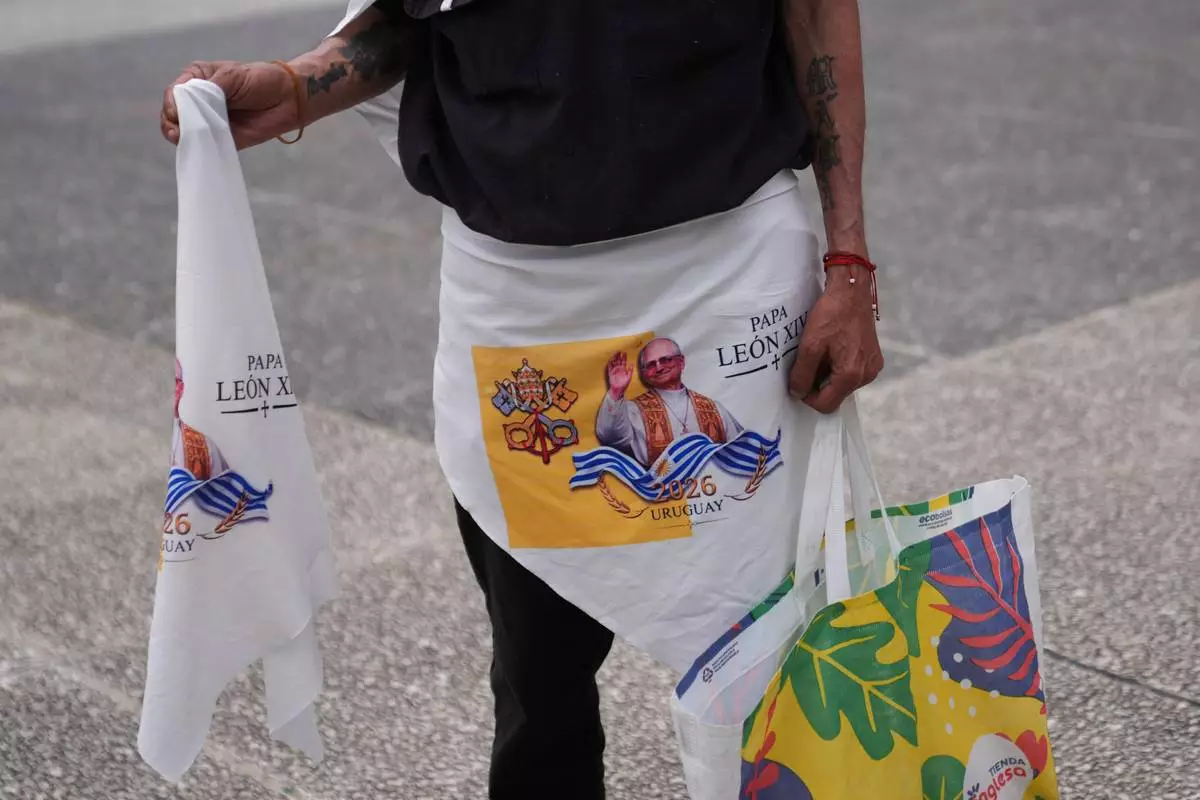
A vendor sells scarves featuring Pope Leo XIV's image ahead of his arrival in Montevideo, Uruguay, Friday, Nov. 6, 2026. (AP Photo/Matilde Campodonico)
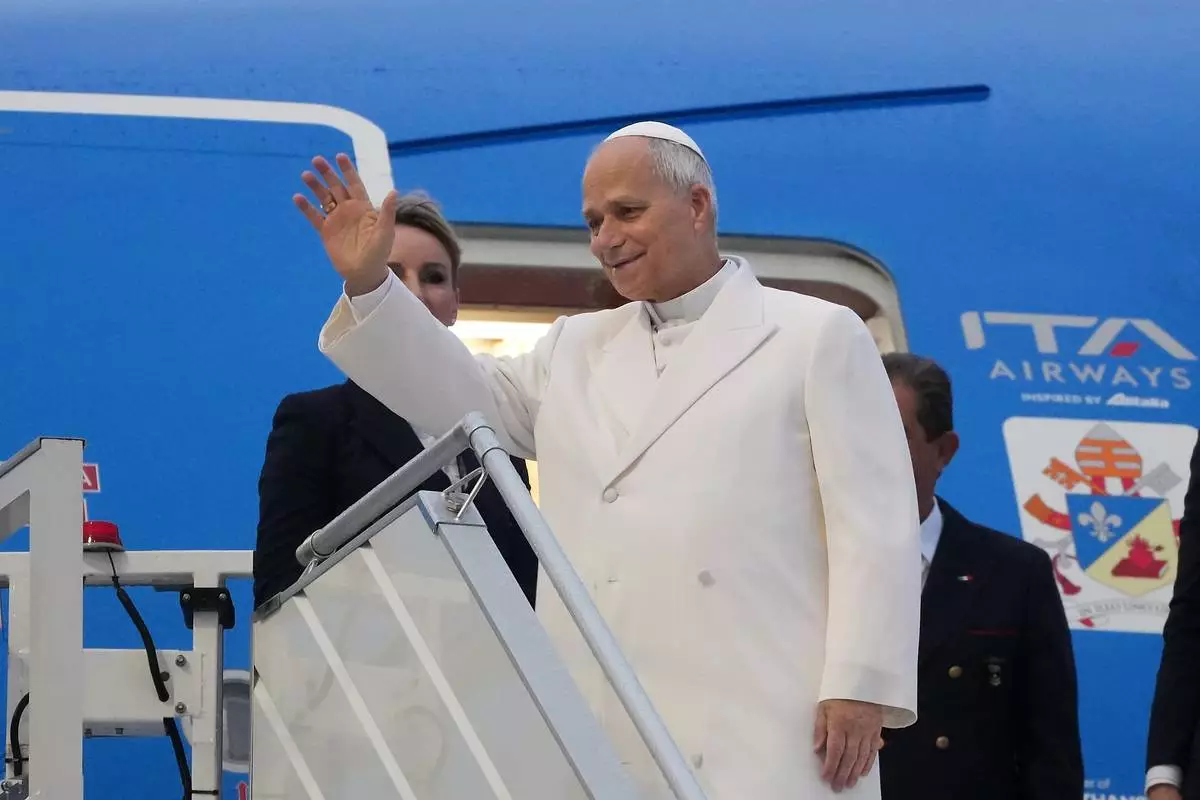
Pope Leo XIV departs from Rome's Leonardo da Vinci International Airport in Fiumicino, near Rome, for Montevideo, Uruguay, at the start of his twelve-day apostolic journey to South America, Friday, Nov. 6, 2026. (AP Photo/Gregorio Borgia)
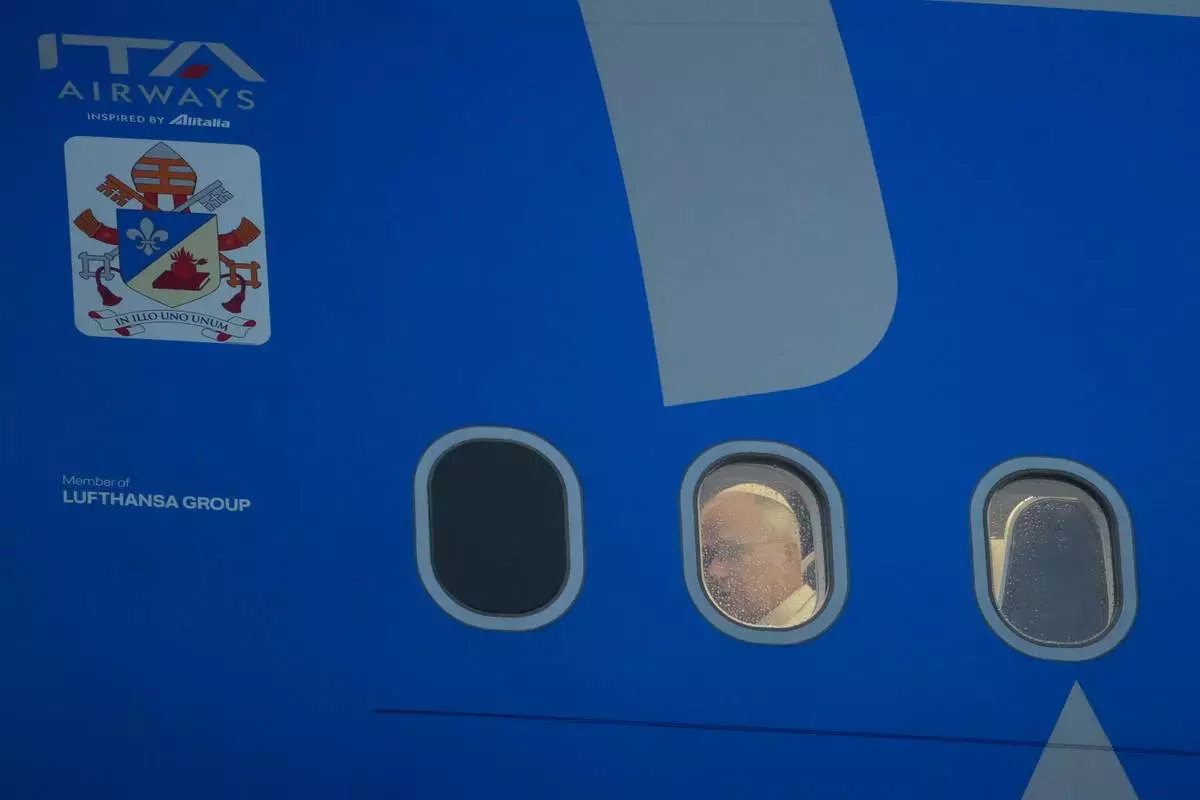
Pope Leo XIV departs from Rome's Leonardo da Vinci International Airport in Fiumicino, near Rome, for Montevideo, Uruguay, at the start of his twelve-day apostolic journey to South America, Friday, Nov. 6, 2026. (AP Photo/Gregorio Borgia)
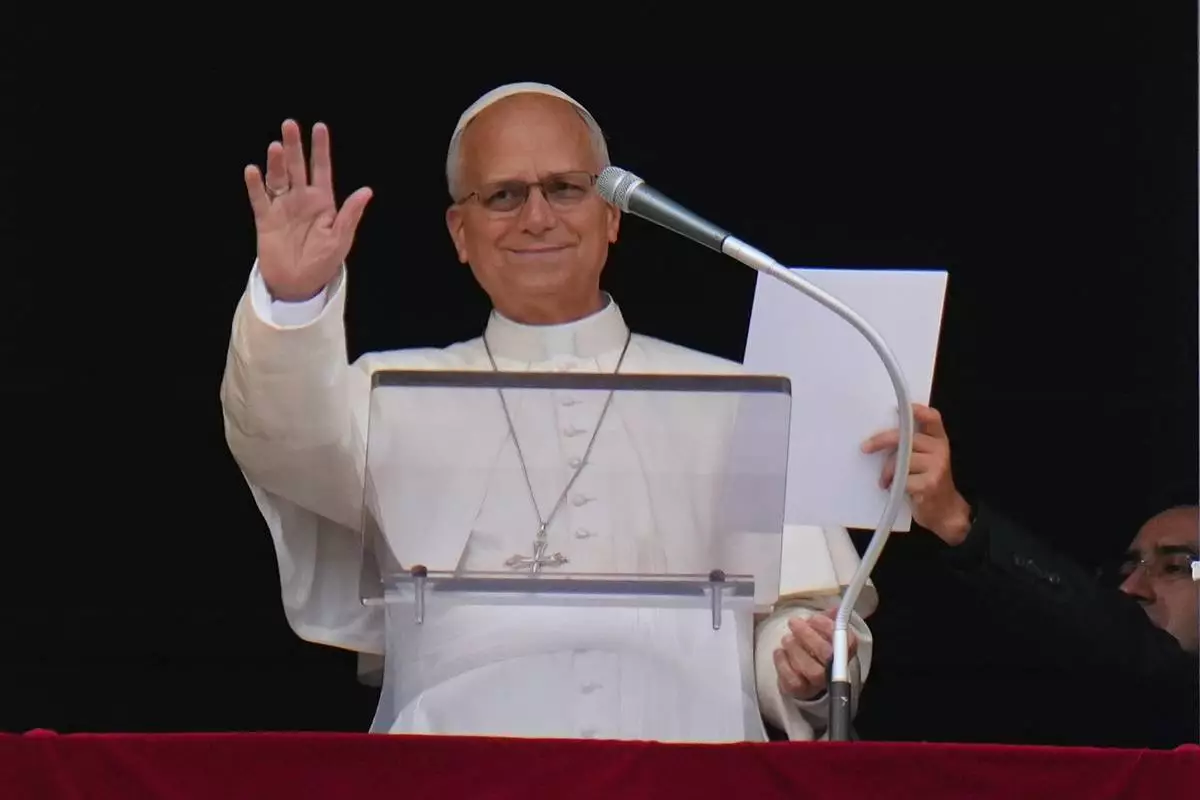
Pope Leo XIV appears at the window of the Apostolic Palace overlooking St. Peter's Square at the Vatican for the Angelus noon prayer on All Saints' Day, a feast celebrated across much of the Christian world, Sunday, Nov. 1, 2026. (AP Photo/Alessandra Tarantino)
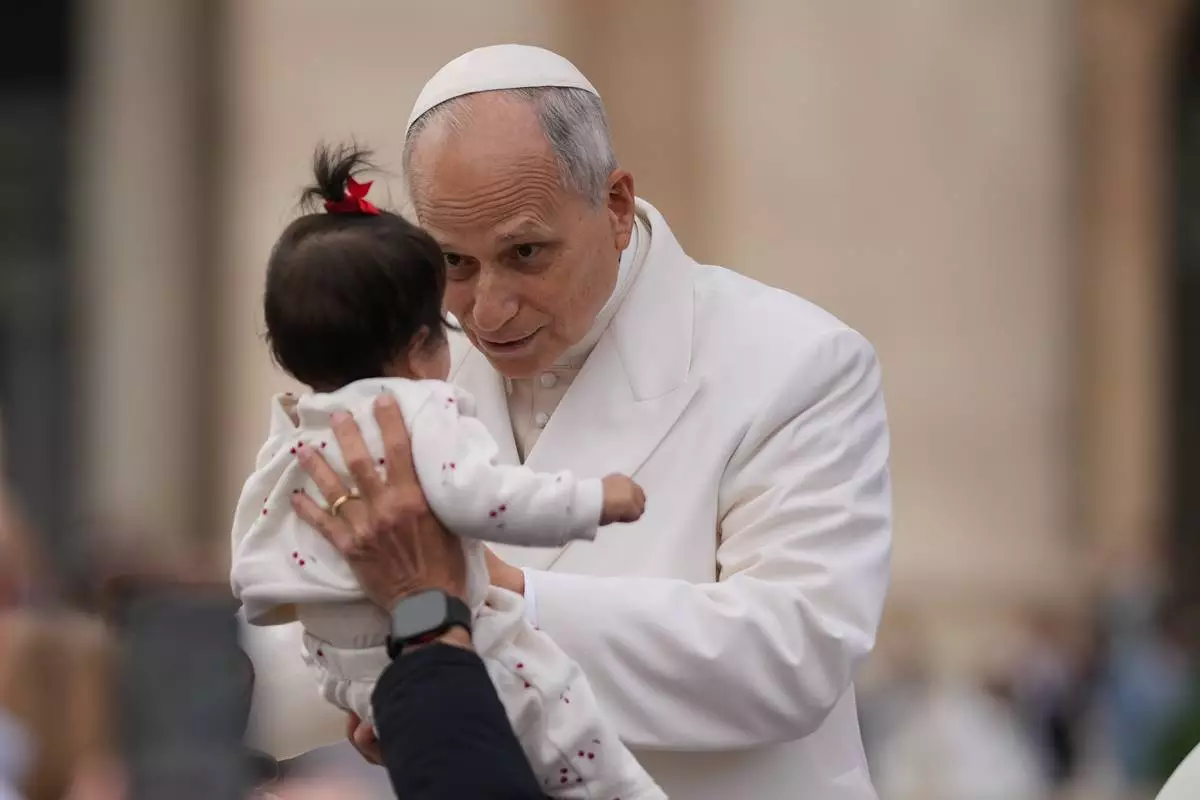
Pope Leo XIV blesses a new born after his weekly general audience in St. Peter's Square at The Vatican, Wednesday, Nov. 4, 2026. (AP Photo/Andrew Medichini)
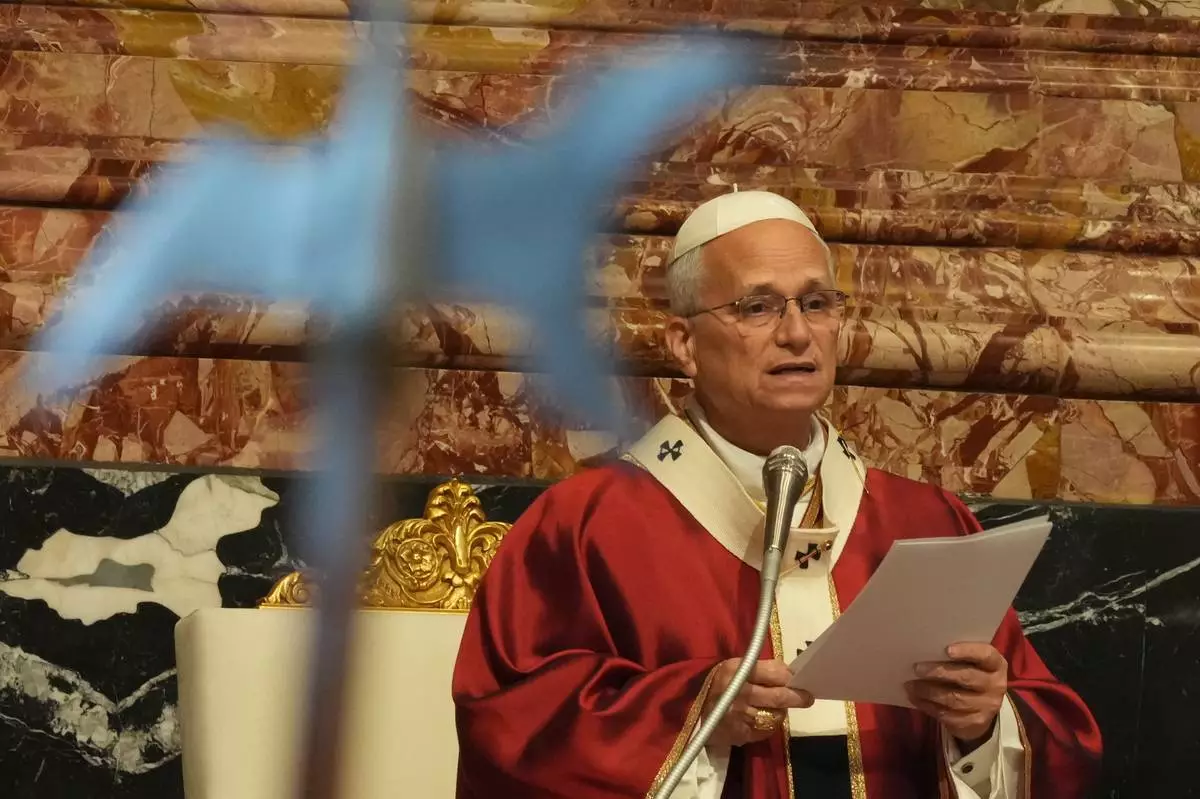
Pope Leo XIV celebrates a mass in memory of cardinals and bishops who died during the past year, in St. Peter's Basilica, at the Vatican, Thursday, Nov. 5, 2026. (AP Photo/Andrew Medichini)
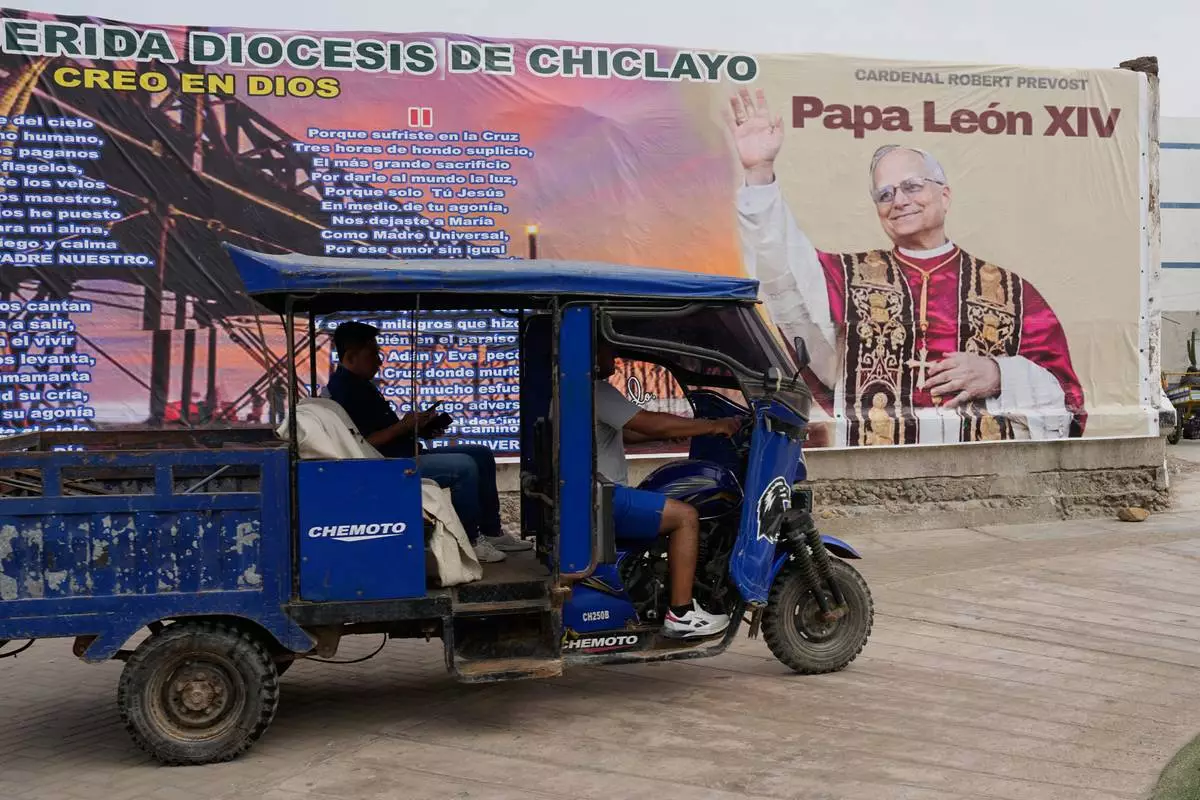
A mototaxi pass drives past a banner of Pope Leo XIV at Pimentel beach in Chiclayo, Peru, Thursday, Nov. 5, 2026, ahead of his planned trip to Uruguay, Argentina, and Peru from November 6 to 17. (AP Photo/Martin Mejia)