United Nations Development Programme (UNDP) Administrator Alexander De Croo highlighted the global significance of the China International Import Expo (CIIE) and the benefits the event can deliver to the rest of the world in an interview with the China Media Group in Beijing on Thursday.
Having just attended the opening ceremony of the 9th CIIE, which runs from Nov 5 to 10 in Shanghai, De Croo said he was deeply impressed by the vitality of the event and China's firm commitment to high-level opening up.
"First of all, it's quite an amazing experience. You feel the amount of energy that is there, the openness to the world, and the opening of the Chinese markets to the world. It's a great occasion for us to talk about trade and to talk about how trade can be an incredible accelerator for development," he said.
While addressing the opening ceremony, De Croo said the value of the CIIE goes beyond merely opening the Chinese market to the world and carries a far more profound significance.
"Indeed, it is called the international import expo, so you could think that it is only about imports of goods and services into the Chinese market, and that, of course, is the primary goal. But if you support countries in doing so, and I think that the no-duty policy of the Chinese government towards the least developed countries and towards African countries obviously is a good example of opening up and of enabling trade. But the whole effect, of course, is that you support countries in being ready for trade. Now, being ready for trade is good for China, but it's good towards the rest of the world. And that, to us, is the real discussion: How do you support countries in transforming their economic and industrial model? How do you support them in to be investable and attracting domestic and international investment? How do you support them in creating jobs?" he elaborated in the interview.
Against the backdrop of challenges posed by unilateralism and disruptions to free trade, the CIIE serves as an important platform for enhancing trade and cooperation, the UNDP chief said.
"I think if you look throughout the world, there is way more countries that believe that they're better off working together with the rest of the world, being it now related to trade, being it now related to fighting climate change, being it related to managing migration and refugee flows. And so, the whole endeavor now is to rally those countries together that believe that you're better off working together with the rest of the world. This is obviously the position of China, but there are other countries in the world that also share that belief," he said.
Launched in 2018 as the world's first national-level expo dedicated to imports, the CIIE has become an important gateway for foreign businesses seeking access to China's vast consumer and industrial markets. China has described the expo as "an international public good shared by the world," highlighting its role in opening up market opportunities, fostering long-term economic cooperation and facilitating international exchanges.
The ongoing 9th CIIE features an exhibition area exceeding 440,000 square meters. It has brought together 4,142 overseas exhibitors from 148 countries and regions, and over 480 exhibits are set to make their global, Asian or China debut at the event, a record high.
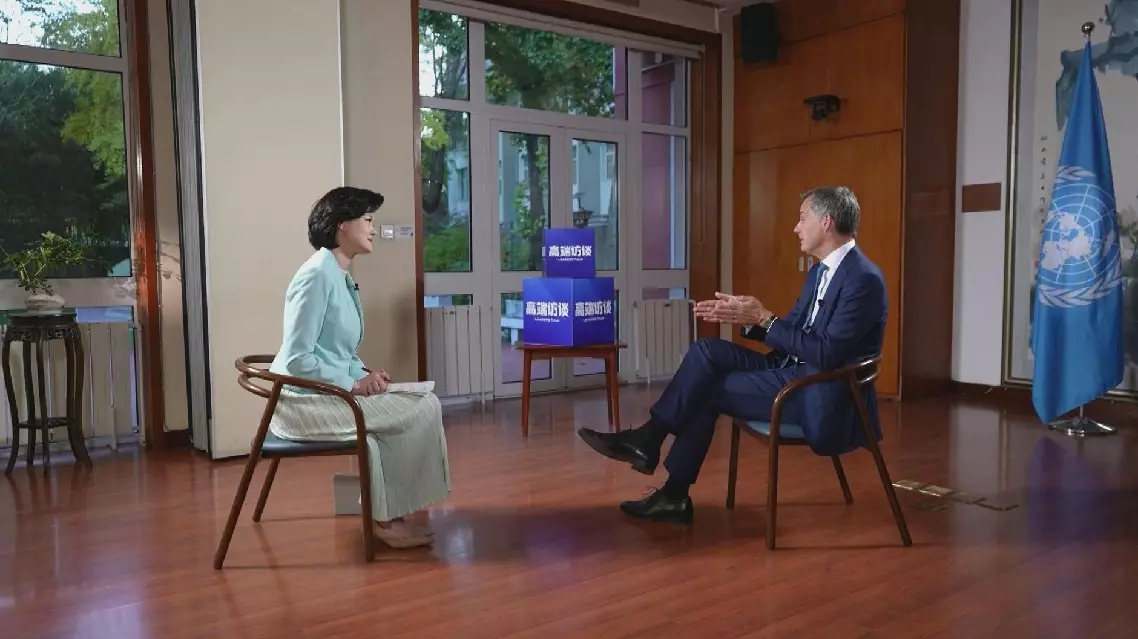
UNDP chief highlights global significance of China's import expo
Competition in the global automotive industry has shifted from a contest of scale to a multi-dimensional coordination of capabilities, a new report released at the ninth Hongqiao International Economic Forum said on Thursday, which called for a more collaborative global industry ecosystem. Titled "Global Automotive Competitiveness Report 2026," the study was unveiled at the parallel session "Free and Fair Trade and Industrial Competitiveness Cooperation" of the Hongqiao Forum, held as part of the ninth China International Import Expo (CIIE).
The report constructs an evaluation framework for the international competitiveness of the automotive industry consisting of five dimensions -- industrial foundation, technological innovation, market competitiveness, global resource allocation, and environmental support -- and 29 indicators. Based on calculations and comparisons across 41 major countries worldwide, the report concludes that global automotive competition has evolved from a scale-based competition to a multi-dimensional coordination of capabilities. It calls for efforts to foster a new global automotive industry ecosystem featuring more coordinated supply chains, more inclusive technology, more open trade, more mutually beneficial investment, and more synergistic governance.
"The automotive industry has evolved from traditional fuel vehicles to new energy vehicles and now to intelligent connected vehicles, and its entire competitive logic is undergoing fundamental changes. The previous set of evaluation and analysis indicators, characterized by scale and output value, can hardly adapt to or explain the new competitiveness. The iteration and upgrading of the automotive industry, including the opening of new market space, require better coordination and cooperation," said Tang Yunyi, deputy director of the Institute of Applied Economics of the Shanghai Academy of Social Sciences.
The idea that global auto competition is now a contest of coordinated capabilities rather than sheer scale is finding an echo among the automakers that have built their China businesses on competition and cooperation alike.
For companies like Mercedes-Benz, which has spent decades manufacturing and selling in the world's largest car market, the report's core argument that lasting advantage lies in coordination mirrors a conviction already embedded in its own approach to the country.
"I believe, as a German company, in this true collaboration driving long-term value creation. And it is based on rules, fair competition, and therefore, we are very much looking forward to the next chapter here in China," said Oliver Thone, a board member of Mercedes-Benz Group AG.
The ninth Hongqiao International Economic Forum, running at the National Exhibition and Convention Center under the theme "Stability and Cooperation: Building an Open World Economy Together," brings together business leaders and representatives from around the world to explore paths to a more open global economy, alongside a series of parallel sessions and report releases.
The forum is running alongside the ninth China International Import Expo (CIIE), which opened in Shanghai the same day, drawing more than 4,100 overseas exhibitors from 148 countries and regions. First held in 2018 as the world's first national-level expo dedicated to imports, the CIIE has since evolved into a vital gateway for foreign businesses seeking access to China's vast consumer and industrial markets.
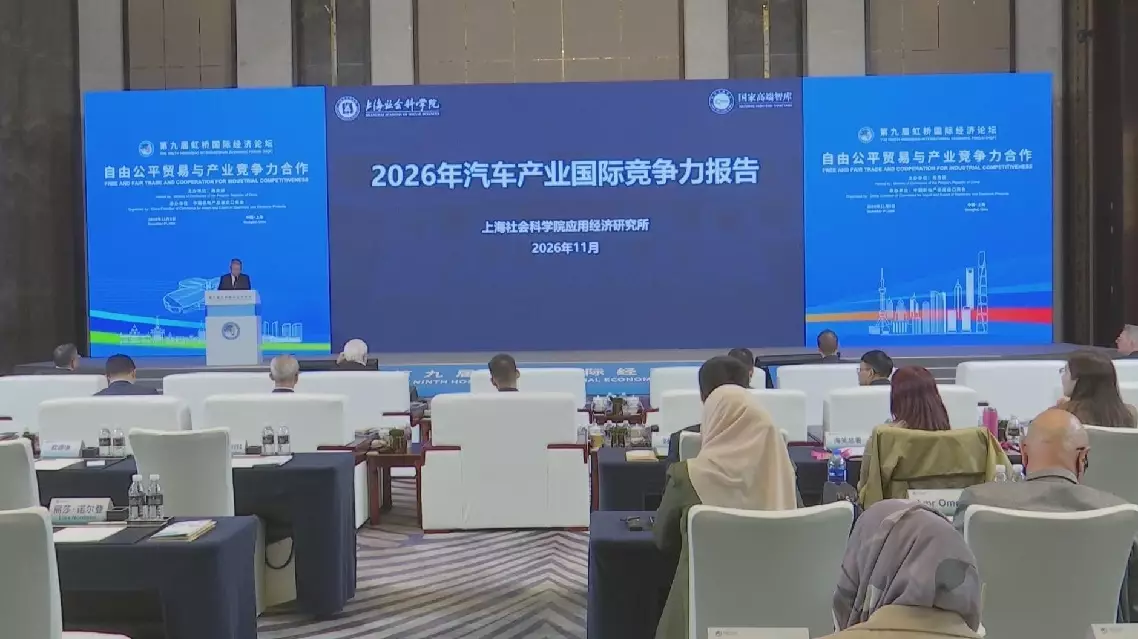
Shanghai forum unveils new framework for global auto industry competitiveness