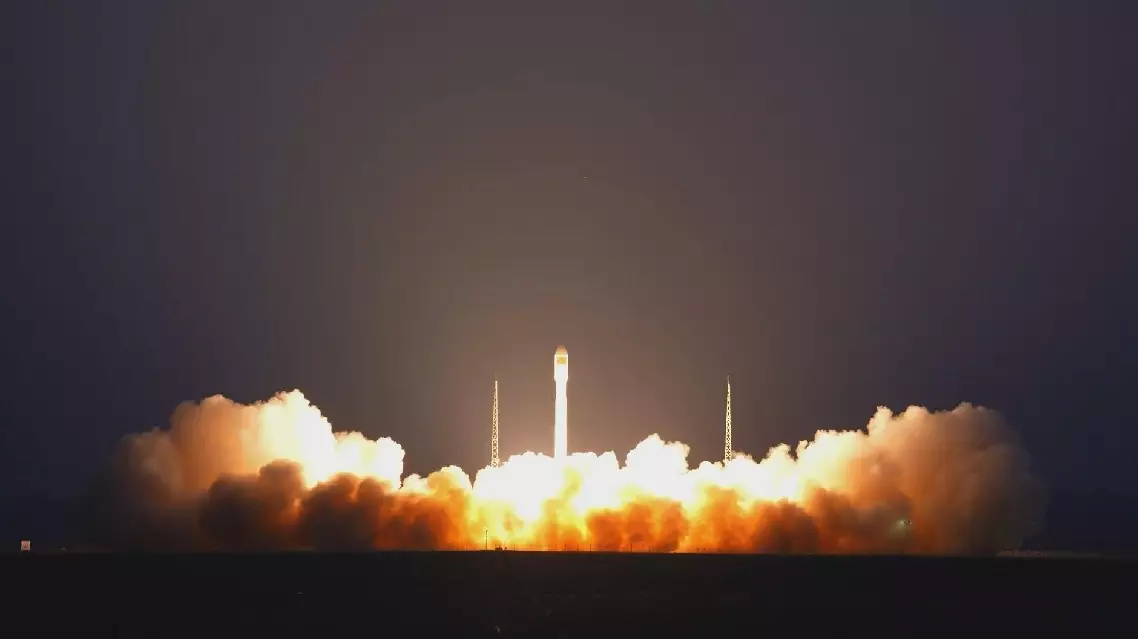
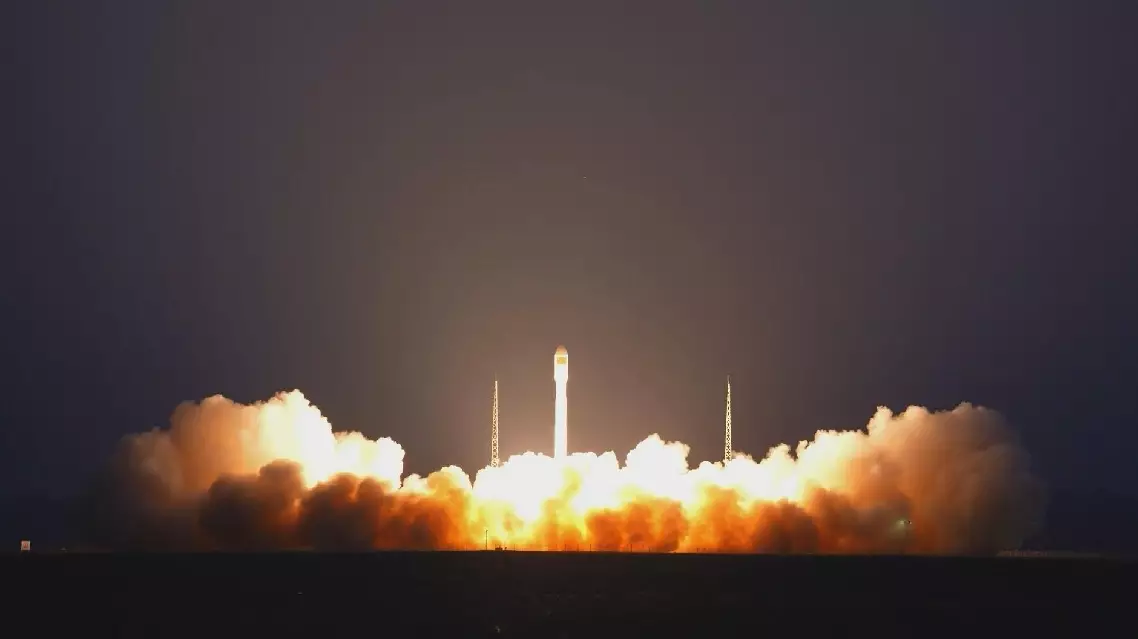
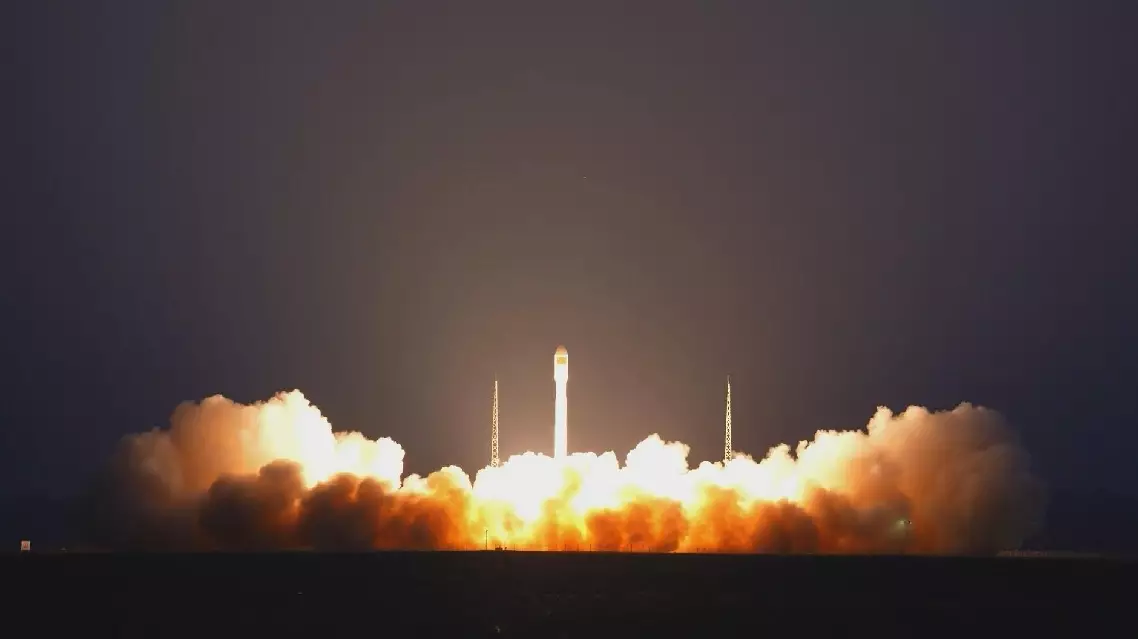
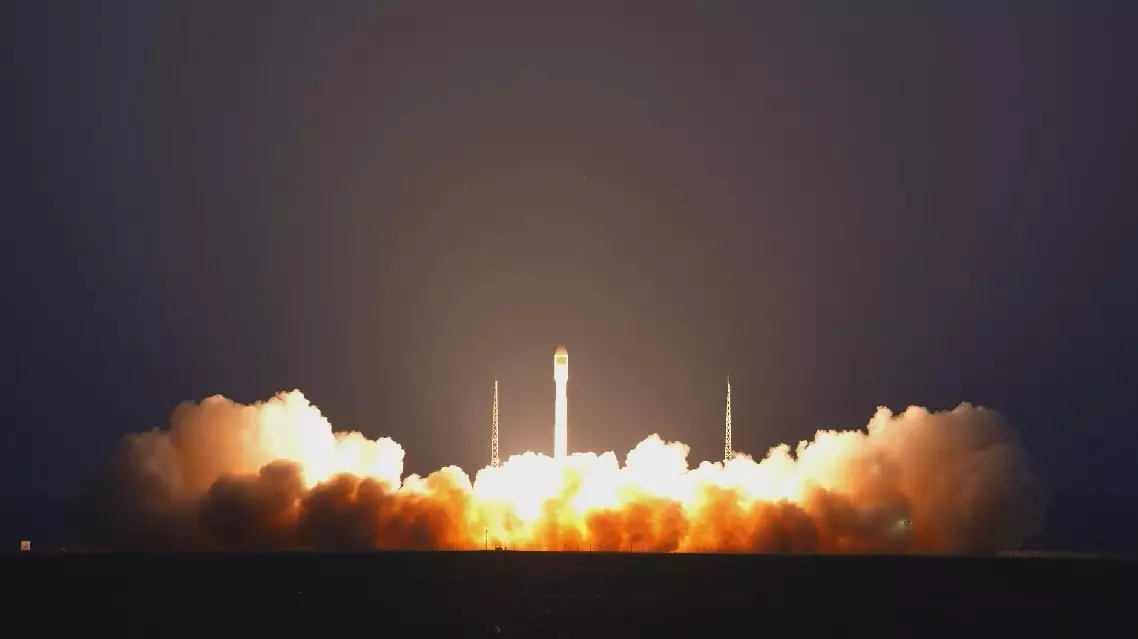
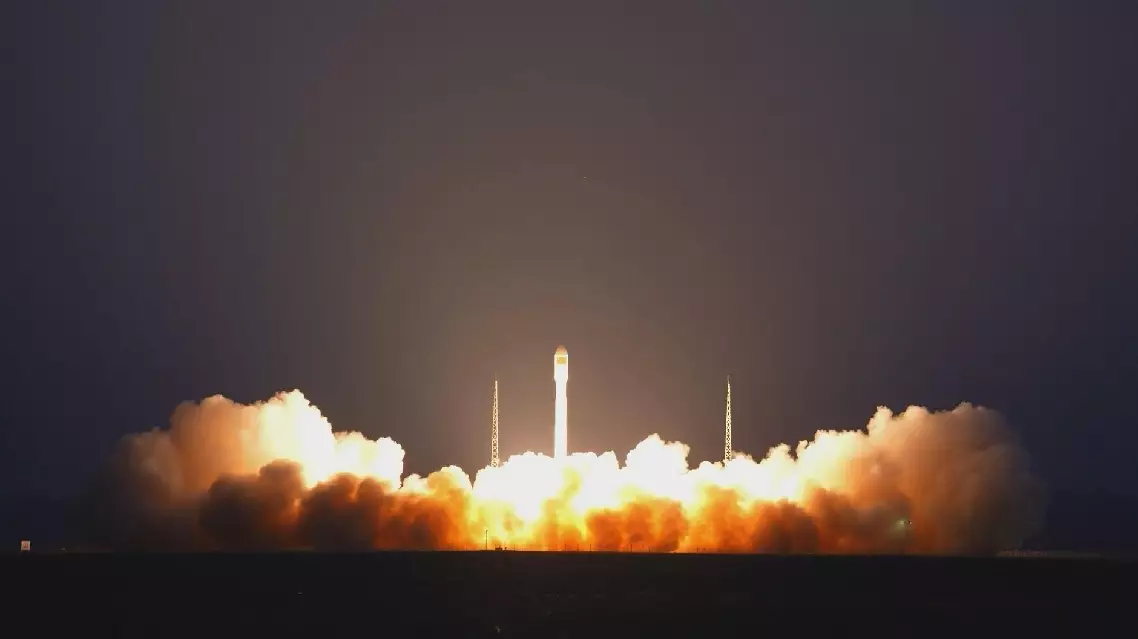
China's privately-developed commercial Ceres-2 Y3 carrier rocket sent four satellites into the orbit on Saturday morning.
The rocket blasted off at 07:37 Beijing Time on Saturday (2337 GMT on Friday) from the Jiuquan Satellite Launch Center, successfully sending the satellites of Guanlan Shiyan, Yunyao-1 28, Zhongbei Daxue-1 and Juntian-1 06A into the planned orbit.
Click to Gallery
China's privately-developed commercial rocket sends four satellites into orbit
China's privately-developed commercial rocket sends four satellites into orbit
China's privately-developed commercial rocket sends four satellites into orbit
China's privately-developed commercial rocket sends four satellites into orbit
China's privately-developed commercial rocket sends four satellites into orbit
The launch marked the second flight of the Ceres-2 carrier rocket, developed Chinese space firm Galactic Energy (Beijing Galactic Energy Space Technology Co., Ltd.).
CERES-2 is a medium-class solid-fuel carrier rocket designed for flexible, truck-based launches. It has been developed through technological upgrades to CERES-1, and the earlier model has completed 21 launches and delivered 89 satellites into space.
CERES-2 combines solid-fuel propulsion in its first three stages with a liquid-fuel upper stage. The rocket has a liftoff weight of about 100 tons and can carry up to 1.6 tons to a 500-kilometer low-Earth orbit, or 1.3 tons to a Sun-synchronous orbit at the same altitude, according to the official website of the company.
China's privately-developed commercial rocket sends four satellites into orbit
China's privately-developed commercial rocket sends four satellites into orbit
China's privately-developed commercial rocket sends four satellites into orbit
China's privately-developed commercial rocket sends four satellites into orbit
China's privately-developed commercial rocket sends four satellites into orbit
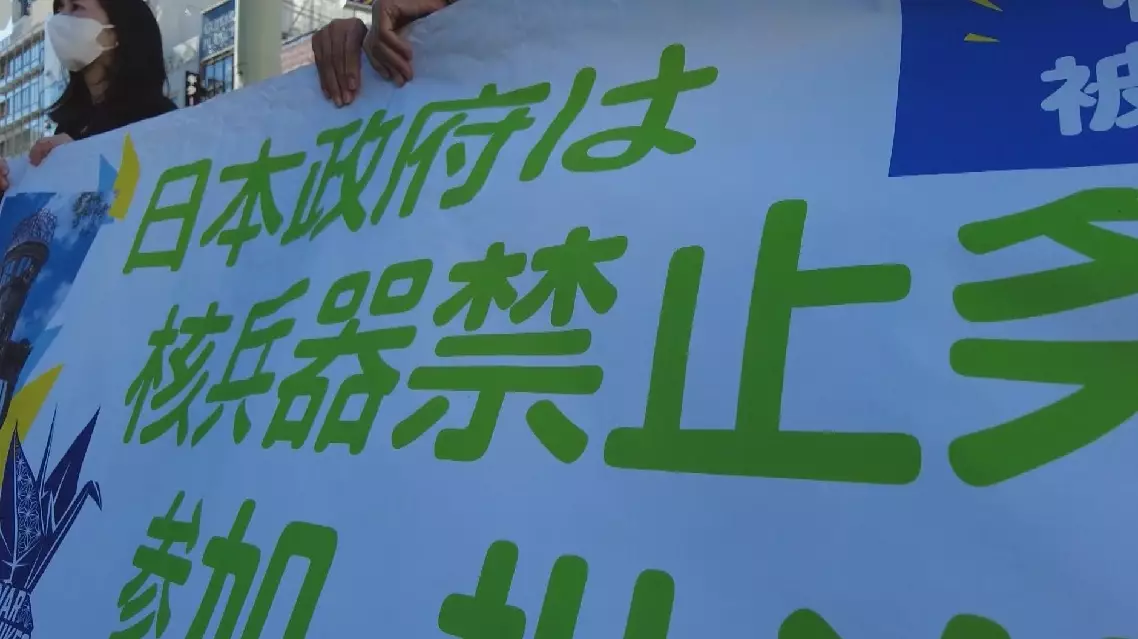
Japanese citizens gathered in Tokyo on Friday to protest against the government's attempt to breach the country's long-standing "Three Non-nuclear Principles," urging it to uphold its anti-nuclear commitment and oppose military expansion.
The protest came after Japanese media reported on Thursday that the government was considering explicitly including exceptions to the principles in its revised National Security Strategy, scheduled for the end of the year.
Japan's Three Non-Nuclear Principles stipulate that the country will not possess, produce, or permit the introduction of nuclear weapons. The current National Security Strategy, one of the country's three key security documents, explicitly states that Japan's basic policy of adhering to the principles will remain unchanged.
Protesters expressed concern that introducing exceptions would effectively undermine the principles and gradually weaken restrictions on nuclear weapons.
"Such a move is very machiavellian and disgraceful. I believe that under no circumstances should nuclear weapons be allowed into Japan. I also oppose incorporating such provisions as new clauses into the Three Non-nuclear Principles. Once this practice is accepted, the restrictions will gradually be loosened, eventually becoming uncontrollable," said a protester.
Other protesters said that the government's reported move to reconsider the non-nuclear principles is a deviation away from Japan's postwar pacifist commitment.
They also criticized the country's growing defense spending.
"Japan was defeated in the war and subsequently formulated the Constitution, which explicitly stipulates that Japan renounces the use of force. Japan thus became a country that will no longer wage a war. But now Japan's defense budget has increased by big margins every year, and there are moves to allow nuclear weapons into the country. Prime Minister Sanae Takaichi has even proposed reviewing the Three Non-nuclear Principles, a national policy that people across the country have upheld tighter all along. I find the current government's stance very disappointing," said another protester.
"Japan has always followed the Constitution of the country and formulated and adhered to the 'Three Non-Nuclear Principles' in accordance with it. But now the Takaichi administration is trying to breach this principle, and I oppose this. In the final analysis, I simply cannot feel at ease if Japan possesses nuclear weapons," said a protester.
Japanese rally against attempt to breach "Three Non-Nuclear Principles"