The U.S. Department of the Treasury announced a new round of Iran-related sanctions on Friday, designating eight money services businesses based in Canada.
In a statement, the U.S. Department of the Treasury's Office of Foreign Assets Control (OFAC) said the eight Canadian firms were sanctioned as part of Operation Economic Outcast.
According to the statement, these businesses facilitated transactions for the Iranian regime, sanctioned entities affiliated with it, and other illicit actors moving assets into and out of Iran.
The companies helped convert Iranian rial and other currencies into digital assets, thereby enabling international transactions involving Iran, OFAC said.
Many of them are accused of processing transactions with sanctioned Iranian digital asset exchanges and dealings with digital asset addresses linked to Iran's Islamic Revolutionary Guard Corps (IRGC).
The action was coordinated with the Treasury's Financial Crimes Enforcement Network (FinCEN) and the Financial Transactions and Reports Analysis Centre of Canada (FINTRAC), according to the statement.
Separately on Friday, U.S. President Donald Trump said that the United States is talking with Iran.
On the same day, Qatari Prime Minister and Foreign Minister Sheikh Mohammed bin Abdulrahman bin Jassim Al Thani said at an event at Oxford University in the United Kingdom that the United States and Iran had not reached a comprehensive deal.
He stressed that both sides should accept a "good agreement" rather than pursue a "perfect" one.
US sanctions eight Canadian money services firms over Iran-related transactions
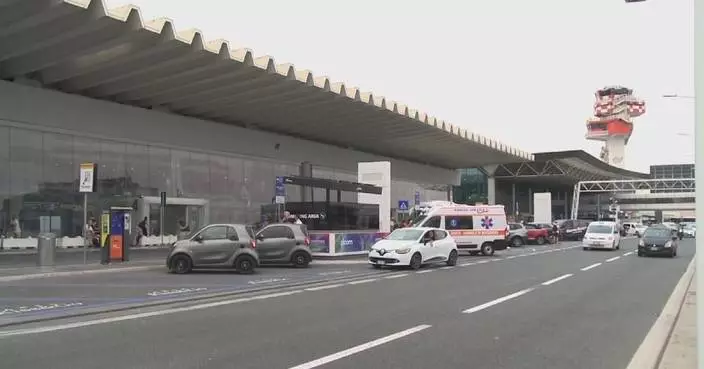
An extraordinary wave of fake bomb threats targeting European aviation this week is unprecedented in recent years, but the continent's transport system has avoided a systemic collapse, according to Serbian aviation analyst Petar Vojinovic.
European aviation faced multiple rounds of bomb threats this week, affecting flights across several countries and prompting some aircraft to divert or land under military jet escort. All affected flights were searched and no explosives were found, with the threats ultimately confirmed to be false alerts.
The latest wave came on Friday, following a series of threats reported on Tuesday and Thursday, with more than 20 flights affected on Thursday alone.
Speaking to China Media Group (CMG), Vojinovic noted that no evidence currently links the wave of false reports to any specific group, calling the sudden surge unprecedented.
"As far as I know, [this] hasn't been happening like for years earlier because such a concentrated level of reports, fake reports, because they didn't actually find anything, is really extraordinary. It still wasn't connected particularly to any organization," he said.
Vojinovic explained that upon receiving a bomb threat, airlines must follow established security protocols to implement response measures. They cannot independently judge the authenticity of a threat, nor can they lower their vigilance level simply because it might be a false alarm.
Consequently, even though all such threats have turned out to be fake, the mandatory handling procedures still cause flight delays, disrupt airport operations, increase security screening costs, and lead to issues regarding passenger accommodation and compensation, he noted.
"So that creates a delay of several hours. When an airline operates a single aircraft, that aircraft is used on several routes on that day. So the ones that had to be diverted, they had to be checked. They are not available for the next flight. And all of that is still being done because that's the only way that you can check and that you can double check and that you can clear that everything is safe," Vojinovic said.

European aviation withstands unprecedented wave of fake bomb threats: expert