LOS ANGELES (AP) — As he campaigned for California governor, Xavier Becerra reflected on the way his Catholic upbringing informs his politics. “The sanctity of life is something that’s really ingrained in you,” the Democrat and former U.S. health and human services secretary said earlier this year.
He then explained his rationale, confounding to some, for supporting abortion rights. Becerra exemplifies how Catholicism’s deep roots often go hand in hand with California’s progressive reputation. That complexity is a snapshot of a larger reality — that American Catholics are in many ways a politically mixed bag.
Click to Gallery
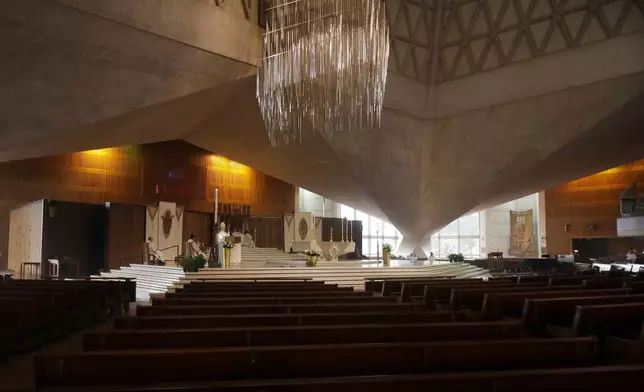
FILE - San Francisco Archbishop Salvatore Cordileone, center left, celebrates Easter Mass at St. Mary's Cathedral in San Francisco, April 12, 2020. (AP Photo/Jeff Chiu, File)
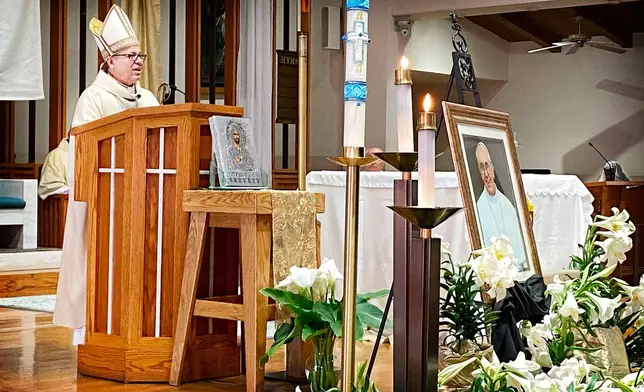
FILE - Bishop Alberto Rojas of the Diocese of San Bernardino gives the homily at a memorial Mass for Pope Francis at Our Lady of the Rosary Cathedral, April 25, 2025, in San Bernardino, Calif. (Terry Pierson/The Orange County Register via AP, File)
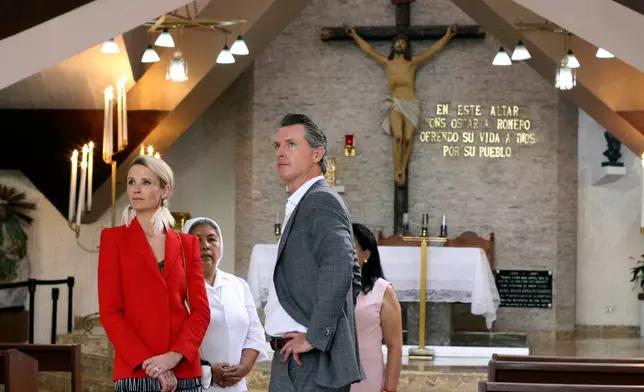
FILE - California Gov. Gavin Newsom, right, and his wife, Jennifer Siebel Newsom, left, visit the Divine Providence Chapel where Monsignor Oscar Arnulfo Romero was assassinated by a gunman in 1980, during a part of their three-day visit in San Salvador, El Salvador, April 9, 2019. (AP Photo/Salvador Melendez)
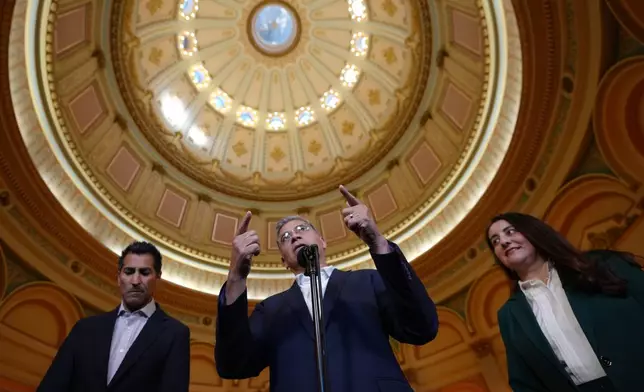
California Gov.-elect Xavier Becerra, center, accompanied by Assembly Speaker Robert Rivas and Senate President pro Tempore Monique Limon meet with reporters at the Capitol in Thursday, Nov. 5, 2026, in Sacramento, Calif. (AP Photo/Rich Pedroncelli)
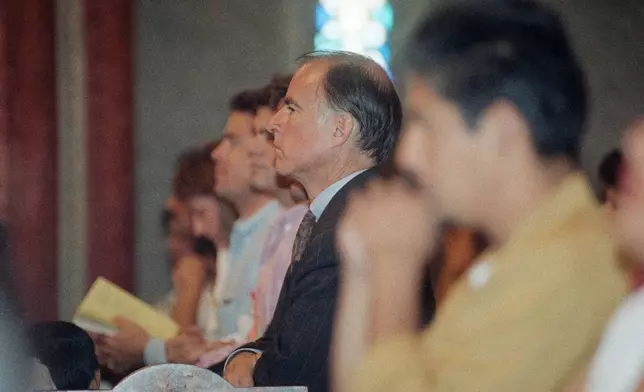
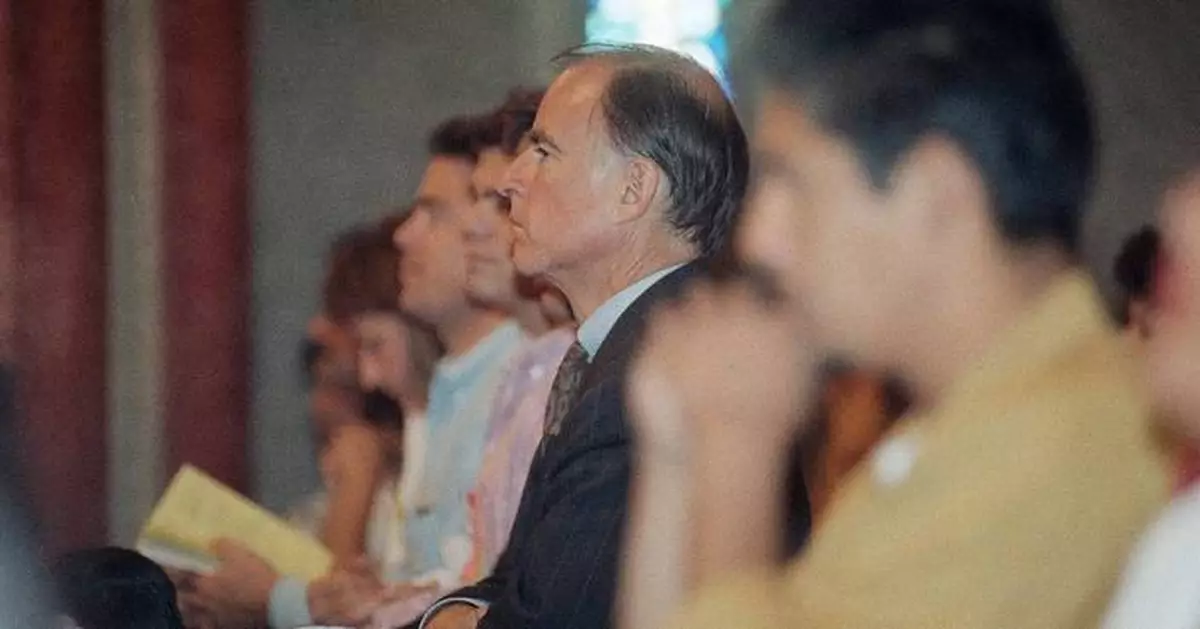
FILE - Democratic presidential candidate Jerry Brown, center, attends a church service at St. Cecilia Catholic church in Los Angeles, May 10, 1992. (AP Photo/Kevork Djansezian, File)
“There is no Catholic vote,” said David Gibson, the director of Fordham University’s Center on Religion and Culture. White evangelicals for Republicans or Black Protestants for Democrats are more politically reliable religious groups, he said.
With Becerra’s win this week, California has elected five consecutive Catholic governors — a remarkable streak indicative of Catholicism’s enduring influence. “Catholicism is part of the fabric of California culture the way Puritan Protestantism is part of the New England regions,” Gibson said.
Catholic voters — especially Latinos — helped elect Becerra, according to The AP Voter Poll, a survey of roughly 100,000 midterm voters. He became the state's first elected Latino governor.
Beginning with Gray Davis, who took office in 1999, four of those five governors also have been Democrats. Some have been more vocal about their faith than others — notably Jerry Brown, who was a seminarian in the 1950s.
California is home to more Catholics than any other U.S. state. A Pew Research Center poll in 2024 found that 25% of adults in California identify as Catholic, accounting for almost half of the state’s Christians.
But numbers aside, Catholicism has been woven into the fabric of the state for centuries.
From economically progressive strains of Catholic social teaching and explicit rejections of the death penalty to official teachings against abortion and in vitro fertilization, Catholic theology rarely fits neatly into political categories, which helps explain the unpredictable voting habits.
Take Gov. Gavin Newsom, whose strong support of abortion rights is at odds with Catholic leadership. Yet his announcement this week that he planned to change more than 500 death sentences in the state to life in prison without the possibility of parole was celebrated by the California Catholic Conference, the public policy organization representing the church in California.
“I take this action because I firmly believe that state-sanctioned killing is incompatible with California’s values, undermines the foundations of our legal system, and diminishes each of us,” Newsom said in a public letter.
Some leaders within the church have subverted Trump administration policies, like San Bernardino Bishop Alberto Rojas, who last year formally excused parishioners from their weekly obligation to attend Mass following immigration detentions on parish properties in the diocese.
Others have taken high-profile conservative stances, like San Francisco Archbishop Salvatore Cordileone, who in 2022 barred U.S. Rep. Nancy Pelosi, a Catholic, from receiving Communion over her support of abortion rights.
About 2 in 10 voters in the California governor’s race were Catholic, and they mostly voted for Becerra, according to The AP Voter Poll. About 6 in 10 Catholic voters supported Becerra, while about 4 in 10 voted for his Republican opponent Steve Hilton.
About 7 in 10 Latino Catholics voted for Becerra, while white Catholics were split between Becerra and Hilton.
Those complex political patterns are also reflected nationally. Catholics were split evenly between Democrats and Republicans.
That’s a modest shift from 2024, when just over half of U.S. Catholics voted for Trump, according to AP VoteCast.
Catholics in California are also ethnically diverse. Many are immigrants from Latin America and the Philippines. Resident Tracy Creighton's ancestry goes back to the missions founded more than two centuries ago by Spanish Franciscan priests.
As the mother of teenagers, Creighton has sought to pass on the importance of serving others and respecting nature — values she believes are both deeply Catholic and Californian.
“I feel in the last several years we have lost our way in terms of being of service to others,” she said, citing Saint Francis of Assisi as a model. “That is why I stay Catholic.”
Catholic faith, history and culture contribute to many Californians' understanding of themselves, such as their relationship to the 21 missions founded between 1769 and 1823.
“Obviously, the legacy of the missions is a mixed one and has problematic implications,” said Cecilia González-Andrieu, a theology professor at Loyola Marymount University. “For Latina theologians like myself, there’s a need for us to be able to hold that in tension, the fact that within our very selves we have this mix of cultures and bloods.”
Leaders are increasingly reckoning with that tension and how it should be communicated to young people. The history of the missions is included in the statewide public fourth-grade curriculum, which is often accompanied by a field trip to one.
A law signed by Newsom went into effect last year that requires schools to teach in social studies class about how missionaries mistreated Native Americans, and to share Native perspectives.
But mistreatment isn’t the only fraught legacy of the missionaries who arrived in the late 18th century.
“The mission system spread disease and was ill-equipped to deal with the immunological effects of old-world people and their immunities,” said William Deverell, a historian at the University of Southern California. “It’s your major consequential institutional moment which brings with it a horrible demographic decline of the Indigenous population.”
Despite their complicated legacy, the missions are landmarks. Many still operate as Catholic parishes.
The missions also helped influence the Spanish Colonial Revival style of homes that became signatures of California architecture. “Why I love California so much is the architecture and the beauty of it. And I think Catholicism plays a lot into that,” Creighton said.
Creighton says it’s difficult to overstate the significance of Mission San Luis Rey in Oceanside, near San Diego, where she lives.
“Everyone does their homecoming pictures, their Christmas pictures. It’s just ingrained in us,” she said, adding that even non-Catholics will often take photos there. “It’s a landmark that’s important in who we are here.”
Beyond architecture, Catholic influence is all over many California homes.
Between the crucifixes and votive candles on display, Brian Murillo’s Fresno home is a testament to his Catholic upbringing. The state employee describes himself as a lapsed Catholic who stopped going to Mass because he felt the American church’s leadership was too aligned with Republican politics.
But Murillo, whose father is from Mexico, still says a Hail Mary or an Our Father prayer whenever he leaves the house.
“Sometimes I’ll be cleaning the house and I’ll be doing a prayer or in the car by myself,” he said. “It’s been such a part of my growing up, even to this day.”
Associated Press religion coverage receives support through the AP’s collaboration with The Conversation US, with funding from Lilly Endowment Inc. The AP is solely responsible for this content.
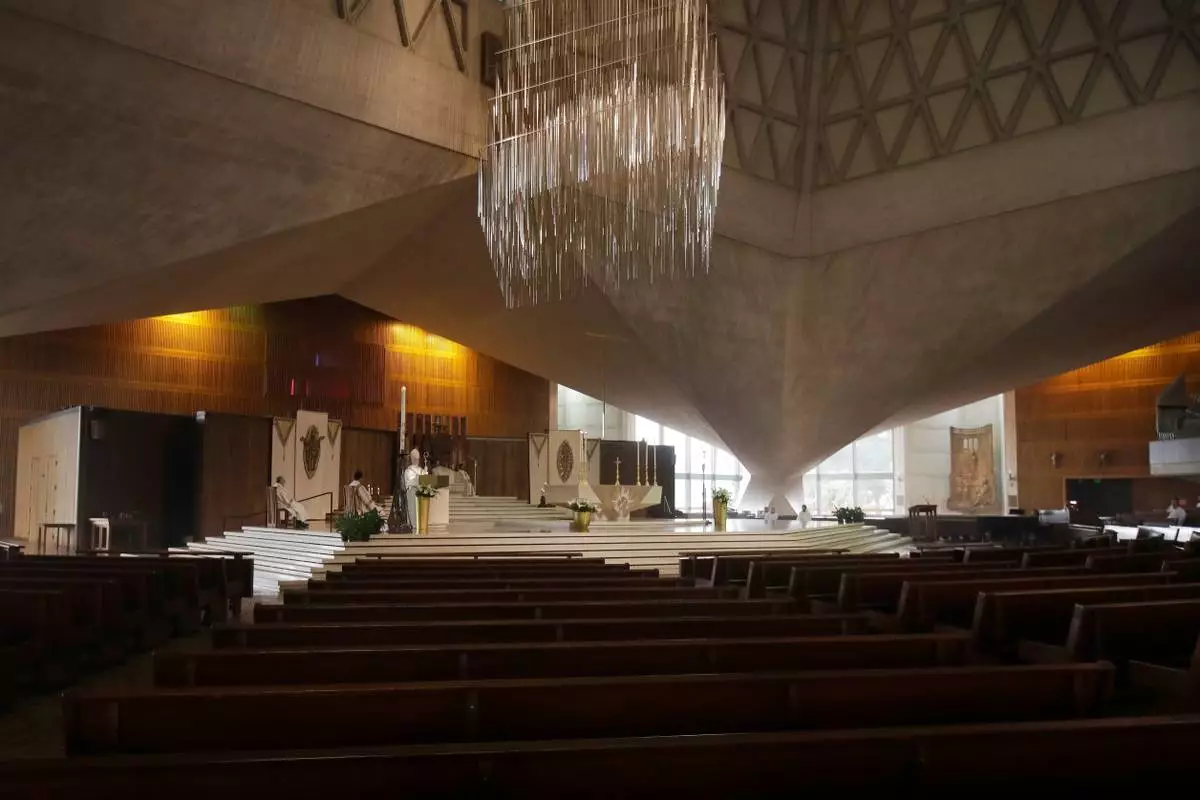
FILE - San Francisco Archbishop Salvatore Cordileone, center left, celebrates Easter Mass at St. Mary's Cathedral in San Francisco, April 12, 2020. (AP Photo/Jeff Chiu, File)
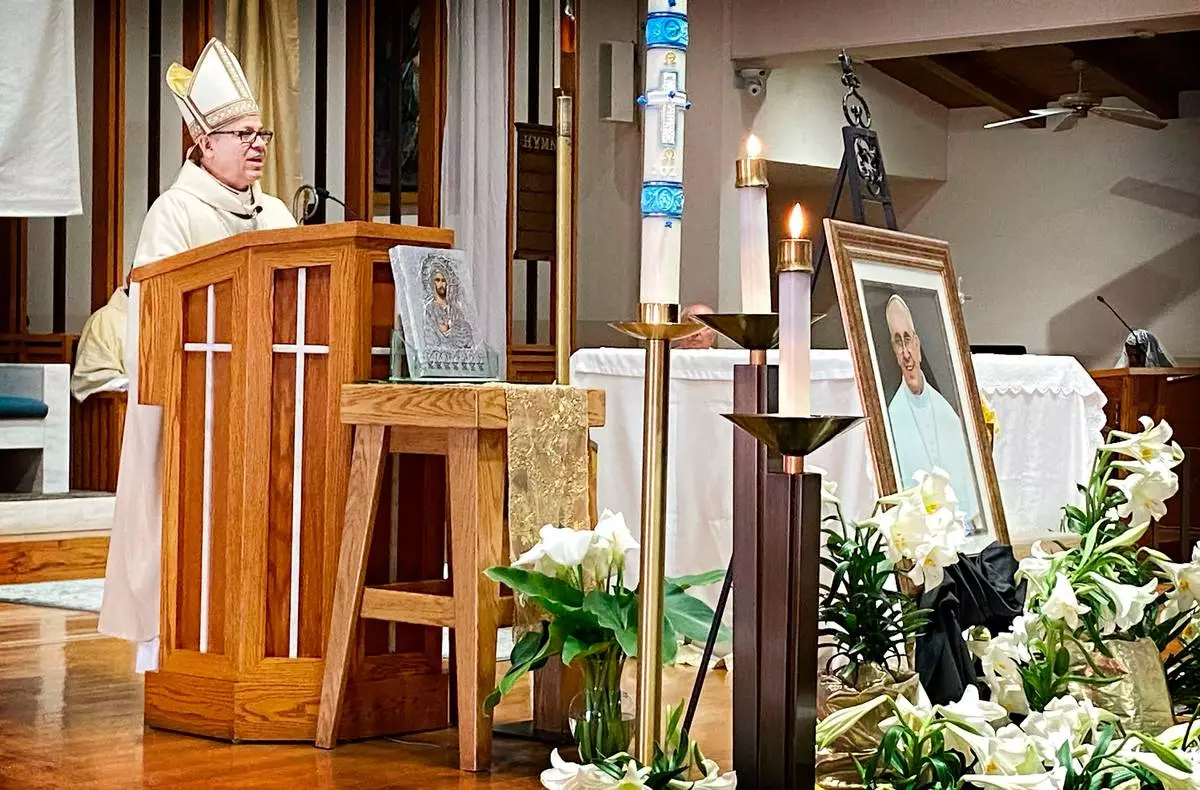
FILE - Bishop Alberto Rojas of the Diocese of San Bernardino gives the homily at a memorial Mass for Pope Francis at Our Lady of the Rosary Cathedral, April 25, 2025, in San Bernardino, Calif. (Terry Pierson/The Orange County Register via AP, File)
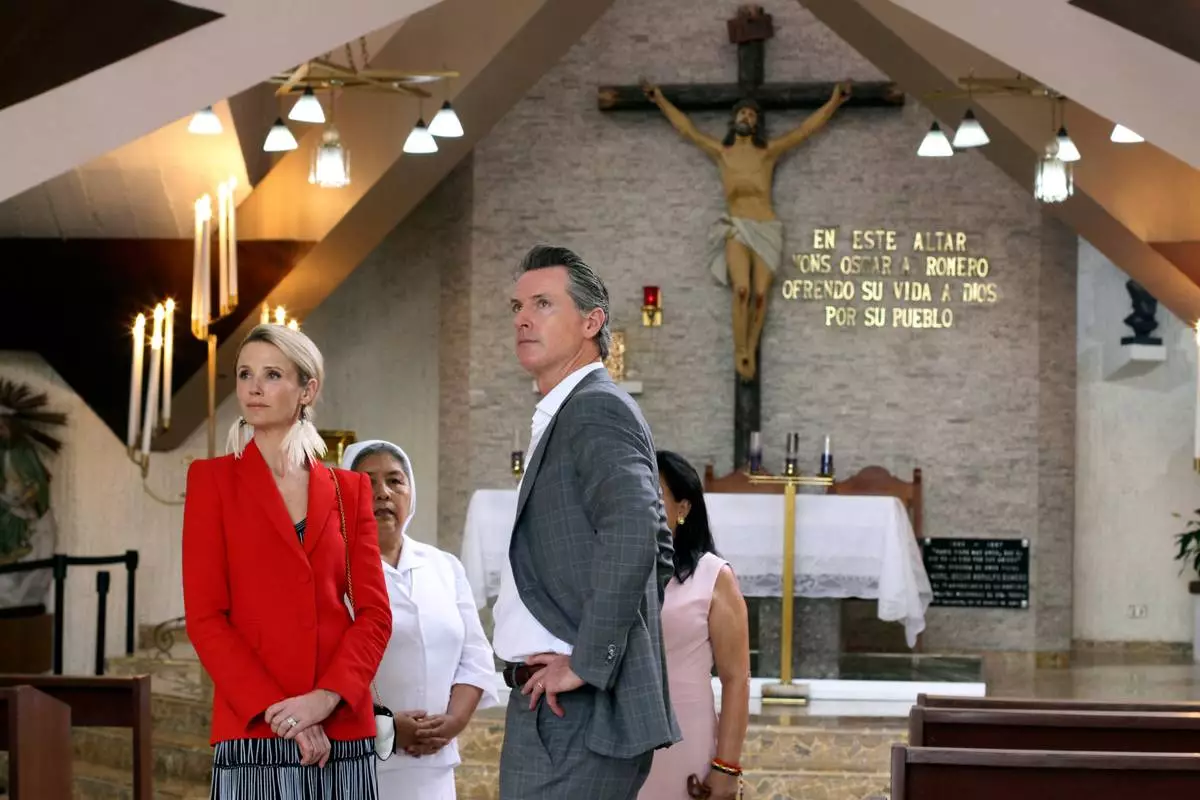
FILE - California Gov. Gavin Newsom, right, and his wife, Jennifer Siebel Newsom, left, visit the Divine Providence Chapel where Monsignor Oscar Arnulfo Romero was assassinated by a gunman in 1980, during a part of their three-day visit in San Salvador, El Salvador, April 9, 2019. (AP Photo/Salvador Melendez)

California Gov.-elect Xavier Becerra, center, accompanied by Assembly Speaker Robert Rivas and Senate President pro Tempore Monique Limon meet with reporters at the Capitol in Thursday, Nov. 5, 2026, in Sacramento, Calif. (AP Photo/Rich Pedroncelli)
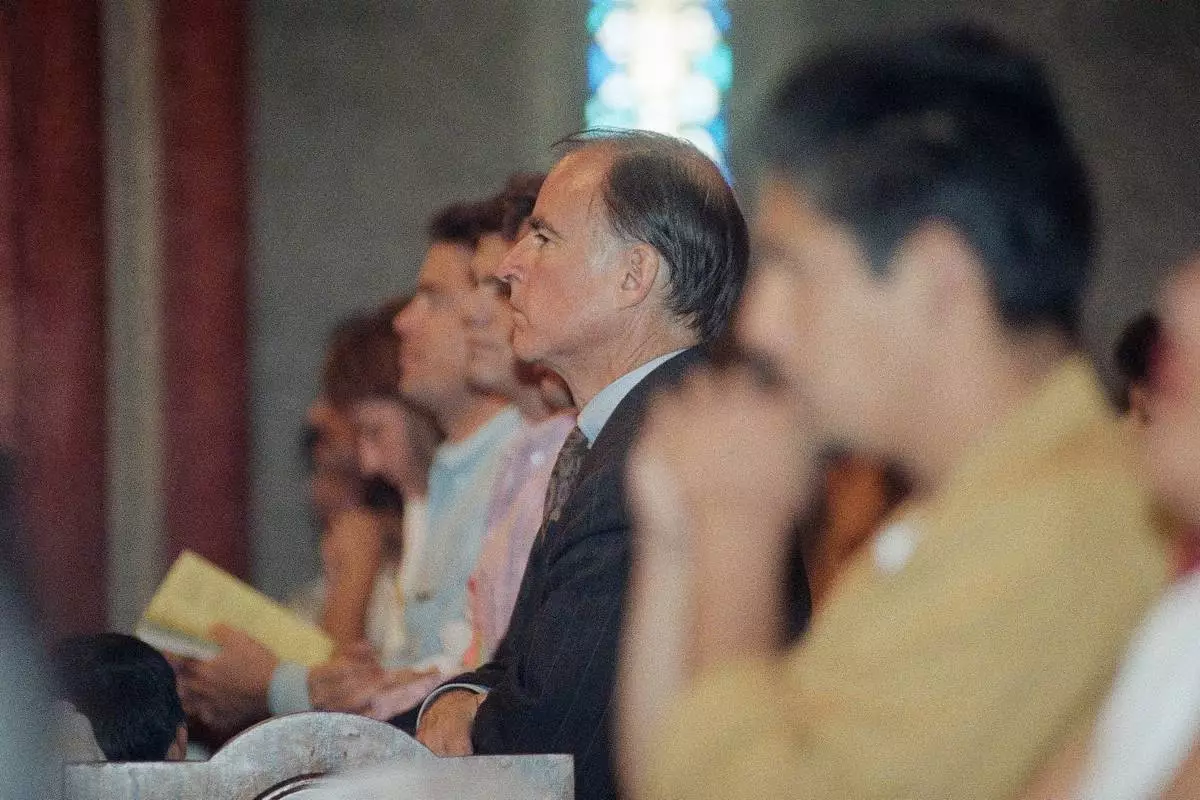
FILE - Democratic presidential candidate Jerry Brown, center, attends a church service at St. Cecilia Catholic church in Los Angeles, May 10, 1992. (AP Photo/Kevork Djansezian, File)