Skip to Content Facebook Feature Image

Voters demanded economic relief. Trump and Democrats face tough choices on how to deliver

News

Voters demanded economic relief. Trump and Democrats face tough choices on how to deliver
News

News

Voters demanded economic relief. Trump and Democrats face tough choices on how to deliver

2026-11-08 20:44 Last Updated At:20:50

WASHINGTON (AP) — Voters have sent a strong election-year message to the new Democratic congressional majority and President Donald Trump: Repair the damage inflation has done to the economy.

Trump, who campaigned on the idea that a Democratic victory in the midterms would trigger a 1929-style economic depression, has maintained that the economy is booming. Since his party lost in Tuesday's voting, he has claimed he is willing to work with Democrats in the House and Senate, though that's not something he has done much of in the past.

More Images
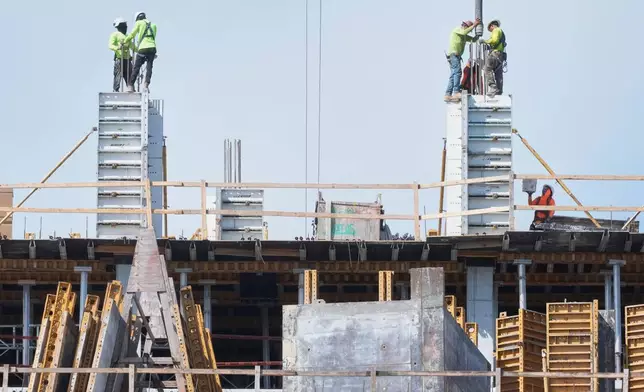
FILE - Workers hold a hose as concrete in poured to form a beam on a residential building under construction, Tuesday, Oct. 6, 2026, in Miami. (AP Photo/Marta Lavandier, File)

FILE - Workers hold a hose as concrete in poured to form a beam on a residential building under construction, Tuesday, Oct. 6, 2026, in Miami. (AP Photo/Marta Lavandier, File)

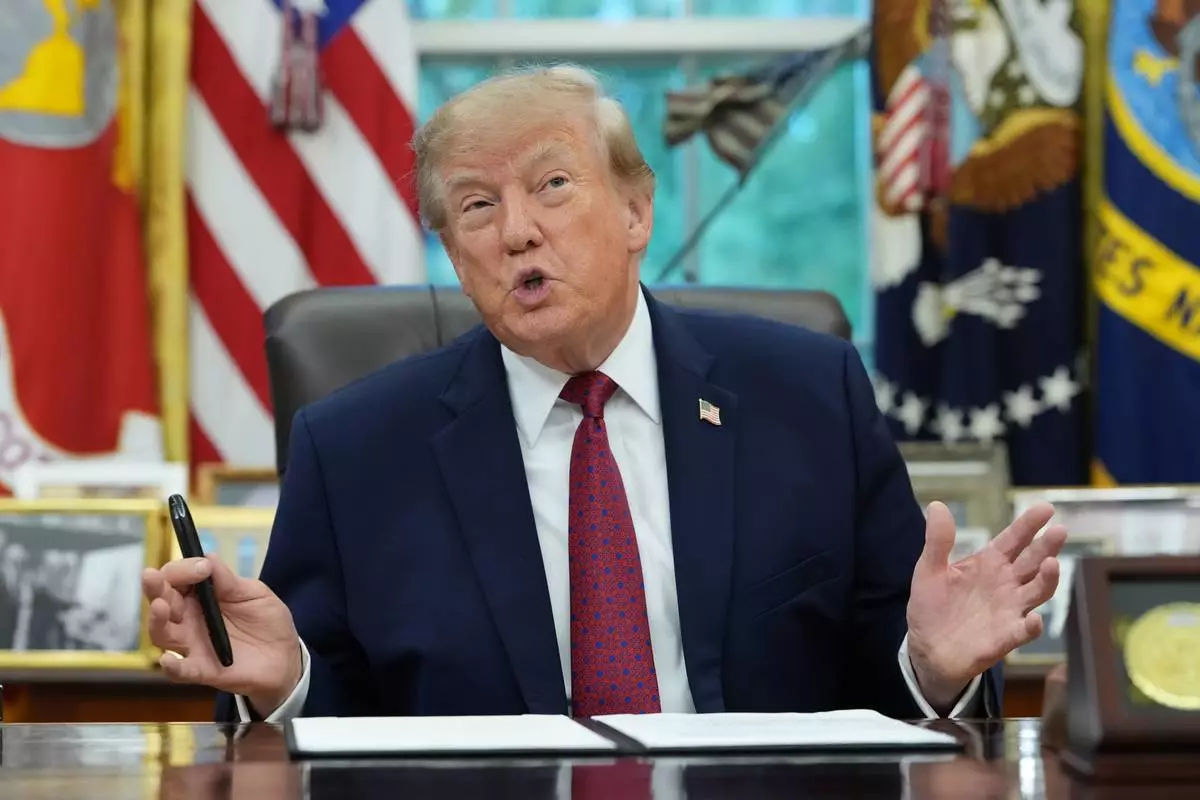
President Donald Trump speaks before signing an executive order in the Oval Office of the White House Thursday, Nov. 5, 2026, in Washington. (AP Photo/Alex Brandon)
President Donald Trump speaks before signing an executive order in the Oval Office of the White House Thursday, Nov. 5, 2026, in Washington. (AP Photo/Alex Brandon)

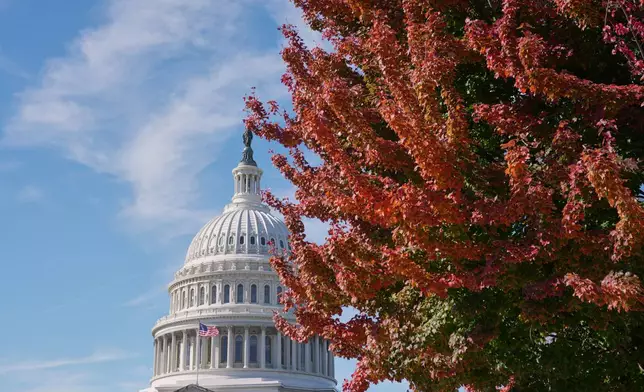
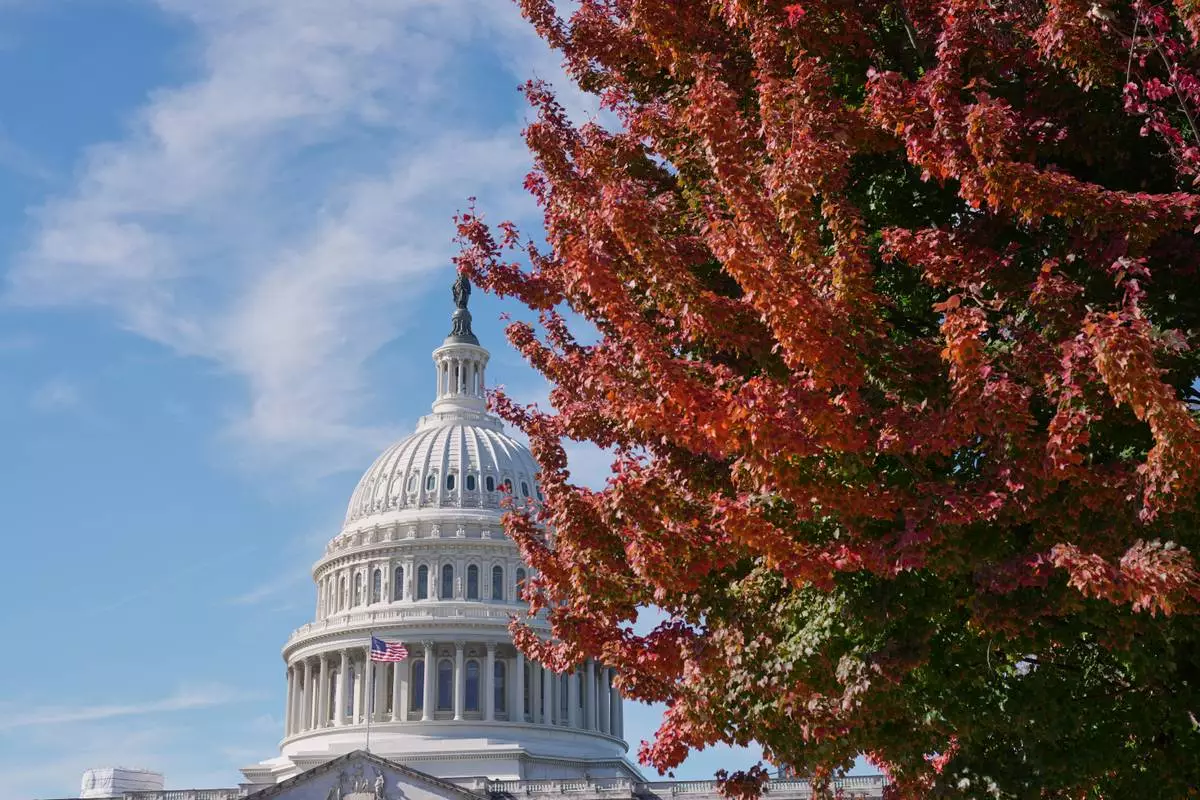
The U.S. Capitol is seen a day after the midterm elections, Wednesday Nov. 4, 2026, in Washington. (AP Photo/Mariam Zuhaib)

The U.S. Capitol is seen a day after the midterm elections, Wednesday Nov. 4, 2026, in Washington. (AP Photo/Mariam Zuhaib)

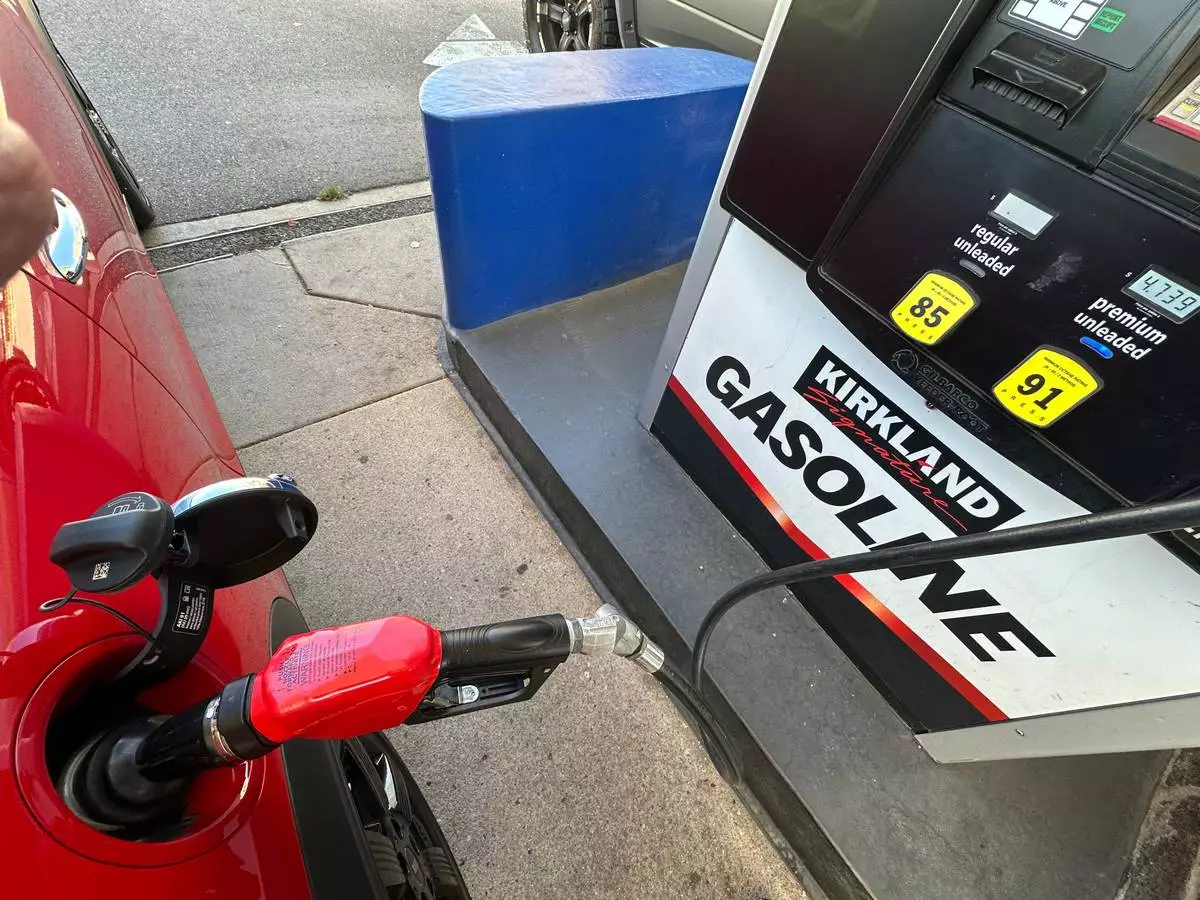
A motorist puts gas in the tank of a vehicle at a Costco gasoline station Thursday, Oct. 29, 2026, in Lone Tree, Colo. (AP Photo/David Zalubowski)

A motorist puts gas in the tank of a vehicle at a Costco gasoline station Thursday, Oct. 29, 2026, in Lone Tree, Colo. (AP Photo/David Zalubowski)

“I’ll get along, probably, with the Democrats, unless they want to be destructive,” Trump told reporters last week.

After Friday’s strong jobs report showed employers adding 165,000 jobs and the unemployment rate dipping to 4.1%, Trump was defiant. “Democrats may control Congress, but I will NEVER stop fighting for you, and I will VETO anything that hurts America,” he said in a text message to his supporters.

Democrats are seeking to check Trump's power and are preparing for early fights on government spending. Other challenges include chronic budget deficits, tariffs, artificial intelligence and difficult choices about a Social Security system that could run short of money in as little as six years.

But as long as rising prices keep making middle-class lives less affordable, Democrats and Republicans alike face the risk of angering and alienating voters in the next election cycle.

“Until inflation and interest rates are under control, the likelihood of change elections is going to be high on an ongoing basis,” said Marc Goldwein, senior vice president at the Committee for a Responsible Federal Budget.

Trump's tariffs and the war against Iran that he launched in February contributed to the consumer price index climbing to 3.7% annually. The president also tried to bully the Federal Reserve, an independent body tasked with keeping inflation low, to slash its benchmark interest rate in ways that could have worsened inflation.

The gridlock of a Republican White House and Democratic Congress gives the Fed more room to maneuver, possibly smoothing the central bank's ability to return inflation to the 2% target it has failed to reach for nearly six years.

“I think that one of the surprise winners Tuesday was the Fed,” said Douglas Holtz-Eakin, an economist and president of the center-right American Action Forum.

The Democratic Senate could block Trump's ability to fill potentially open spots on the Fed board, Holtz-Eakin said, removing “Trump's incentives to meddle with the Fed” and clearing a path for Fed Chair Kevin Warsh “to follow his instincts and aggressively reduce inflation.”

Trump has maintained that the costs of oil, gasoline and diesel will all plummet once the Iran war ends. The problem is he refuses to say when or how the war will come to a conclusion.

John Cochrane, an economist at Stanford University's Hoover Institution, stressed that the Fed's efforts to combat inflation would be helped if the federal government reduced budget deficits.

“It takes monetary and fiscal restraint,” he said.

The U.S. government keeps amassing debt as tax revenues fall short of burgeoning spending on Medicare, Medicaid, Social Security and other programs. Paying the interest on the national debt now tops $1 trillion annually and exceeds spending on the military. The problem could spiral because investors have pushed up the interest rates charged on government debt over the past year.

Neither the White House nor Democrats ran on spending cuts. The president wants an additional $500 billion a year for the military, while some Democratic candidates have pushed for restoring Affordable Care Act subsidies that lapsed under Trump.

Since August, Treasury Secretary Scott Bessent has repeatedly said the administration would put forward a plan to trim the roughly $2 trillion annual budget deficit. Bessent is working with White House budget director Russell Vought on cuts they're branding as a “fiscal consolidation plan,” to be released after the election.

Deficit reduction would likely require some combination of tax increases and spending cuts, Goldwein said. But he said that the lowest hanging fruit would be to trim Medicare expenditures in ways that save money for both the government and patients.

“It’s not rocket science,” he said. “The most important thing you can do is reduce healthcare costs and find policies that lower the costs of Medicare, which will reduce deficits and interest rates.”

When Harvard University economist Jason Furman thinks about the most important economic issues facing the United States, AI is at the top of his list.

“It’s the most screamingly obvious investment boom this country has ever had, or, possibly, second to railroads” in the late 19th century, Furman said.

Using AI, Furman has built an economic analysis tool called Econvitals that replicates some of the work done when he was chairman of the White House Council of Economic Advisers in Democratic President Barack Obama's administration.

Econvitals parsed construction spending data on Tuesday and found an 80.6% increase in data center construction over the past year, while spending on building homes, schools, factories and offices had fallen.

The stock market sold off last week on concerns that Democrats could restrict the construction of data centers and impose guardrails on AI. But the American economy still needs the technology to keep fueling growth now and into the future.

Trump has been vociferous in promoting the sector and has taken a hands-off stance on regulating AI, insisting that existing laws and voluntary agreements signed by tech companies are enough. He has shrugged off public concerns about the risks of job losses and large-scale cyberattacks, but a majority in The AP Voter Poll, a sweeping survey of the American electorate conducted in all 50 states, say AI does more harm than good for the economy.

The dilemma is that AI is helping to propel demand in the economy and sustain the stock market. If those slipped, there could be less consumer spending, lower growth and many in the U.S. feeling even worse off financially.

“Every time you have a single strength in an economy you are also having a big vulnerability,” Furman said.

Senators who won six-year terms last week will face the politically fraught challenge of working with Trump's successor to find ways to save Social Security, which is projected to be unable to pay full benefits at the end of 2032.

Removing the cap on payroll taxes and increasing the retirement age are among the possible lifelines for sustaining the program that provides income to older Americans and those with disabilities. But any changes would likely need to be bipartisan to get enough votes to clear the Senate because Social Security overhauls cannot be made by party-line votes through the reconciliation process.

Sen. Elizabeth Warren, D-Mass., said she saw an opening earlier this year to fix Social Security when she overheard Sen. Bernie Moreno, an Ohio Republican, talk about the need to lift the cap on payroll taxes. “I reached out to him in a matter of days,” she said in an interview this summer. The two senators went public with a plan that is still being formulated as legislation.

Warren, who worked with the Republicans on a law this year to encourage the construction of more homes, said other bipartisan efforts had failed because Republican lawmakers had been afraid to cross Trump.

But with Social Security, there is a need to act now. Experts say “the checks that go out to seniors will drop by nearly a quarter” after 2032, Warren said.

“Think what that means, literally, to millions and millions of Americans, who depend on those Social Security checks, or who have parents who depend on them. And Congress is doing nothing,” she said.
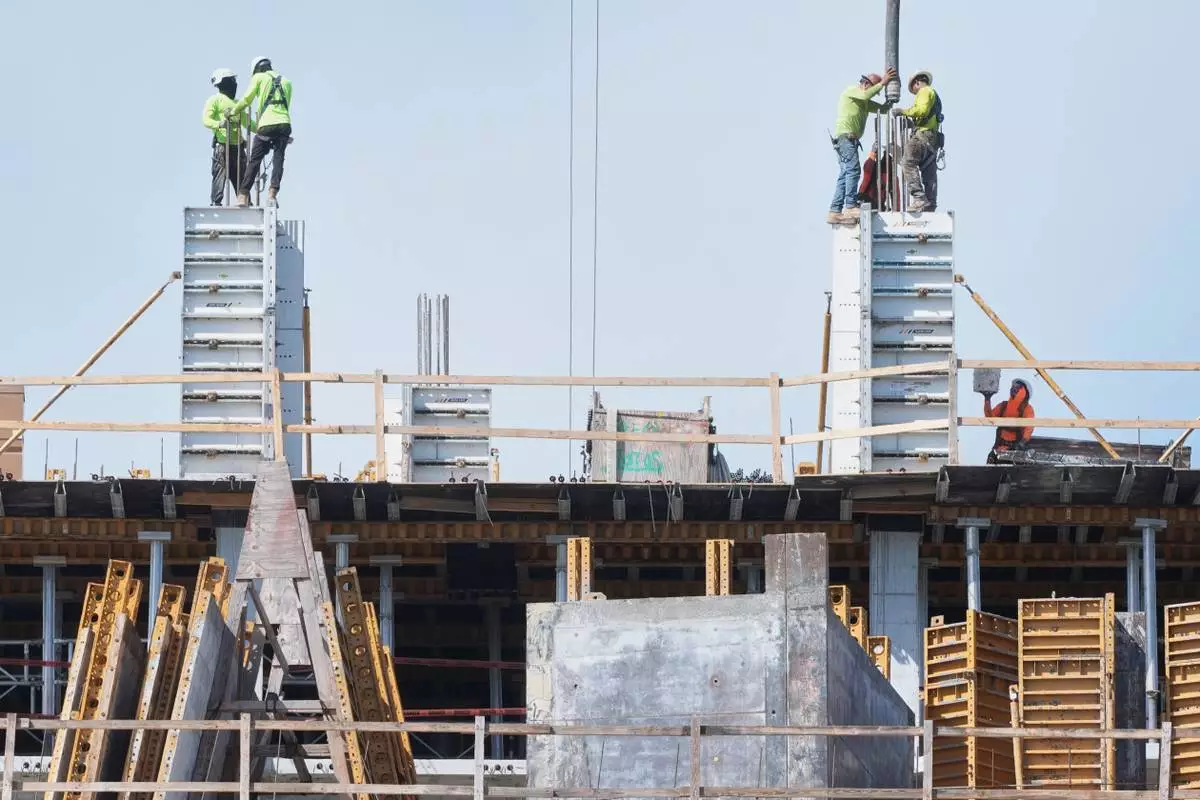
FILE - Workers hold a hose as concrete in poured to form a beam on a residential building under construction, Tuesday, Oct. 6, 2026, in Miami. (AP Photo/Marta Lavandier, File)
FILE - Workers hold a hose as concrete in poured to form a beam on a residential building under construction, Tuesday, Oct. 6, 2026, in Miami. (AP Photo/Marta Lavandier, File)

President Donald Trump speaks before signing an executive order in the Oval Office of the White House Thursday, Nov. 5, 2026, in Washington. (AP Photo/Alex Brandon)
President Donald Trump speaks before signing an executive order in the Oval Office of the White House Thursday, Nov. 5, 2026, in Washington. (AP Photo/Alex Brandon)

The U.S. Capitol is seen a day after the midterm elections, Wednesday Nov. 4, 2026, in Washington. (AP Photo/Mariam Zuhaib)
The U.S. Capitol is seen a day after the midterm elections, Wednesday Nov. 4, 2026, in Washington. (AP Photo/Mariam Zuhaib)

A motorist puts gas in the tank of a vehicle at a Costco gasoline station Thursday, Oct. 29, 2026, in Lone Tree, Colo. (AP Photo/David Zalubowski)


A motorist puts gas in the tank of a vehicle at a Costco gasoline station Thursday, Oct. 29, 2026, in Lone Tree, Colo. (AP Photo/David Zalubowski)

NEW YORK (AP) — Losing a tangible connection to your family’s ancestral homeland can bring unexpected sorrow, whether through the death of an older relative, the sale of a property passed down for generations gets sold or the destruction a handful of surviving heirlooms.

Learning a language spoken by their parents, grandparents or great-grandparents is a way some English-speaking children, grandchildren and great-grandchildren of immigrants choose to reinforce ties to the old country and nurture their cultural identity.

Knowing the mother tongue of one's ancestors could unlock a stack of letters that clarify hazy chapters of family history. Basic speaking skills may lead to meeting cousins in another country. Listening to stories and songs in the original language conveys nuances and meaning that often are lost in translation, experts say.

Imparting an ancestral language to their children also is important to some parents. Adults who grew up speaking a language other than English, perhaps because they had immigrant parents or they were born abroad themselves, may see the language as a way to foster intergenerational bonds, preserve family traditions and expand future career options.

Whether you’re a parent who wants a child to know their roots or someone eager to acquire an ancestral language yourself, here are tips for claiming a legacy through language.

Linguists and educators generally categorize foreign language students into two broad groups, each with different starting points and perhaps motivations. Most children and adults are second-language learners, who begin formal instruction with little or no prior knowledge.

Most heritage language learners, by contrast, organically acquired some familiarity with a language other than English as young children, said Tanya Ivanova-Sullivan, associate director of the National Heritage Language Resource Center at the University of California, Los Angeles. They typically heard the language spoken at home and understand or speak it themselves to varying degrees.

“Heritage language speakers are home chefs,” Ivanova-Sullivan said. “They learned the language in the family kitchen from parents and grandparents rather than in the classroom.”

Repeated early exposure tends to give heritage language students an advantage over second-language learners, but they may be reluctant to speak up in class if they aren't confident in their grammar or relatives teased them for not being fluent, experts say.

Many people are embarassed about making mistakes when conversing in a language they don't know very well, said Arturo Diaz, executive director of the UCLA Center for World Languages. He encouraged students to use what they already know, saying perfection doesn't have to be the goal.

"So just remove any apprehension you may have in learning language and then just have fun with the experience," Diaz said.

Some scholars and educators say that someone with a cultural or familial relationship to a language also could be considered a heritage language student even if they are starting pretty much from scratch, according to the Center for Applied Linguistics, a nonprofit research and teacher education organization that promotes language learning and linguistic diversity.

Listening to relatives whose first language isn't English is an effective way to learn a heritage language, Yang Xiao-Desai, a professor of Chinese at San Francisco State University, said.

“Ask your grandparents for stories,” she said. “Ask them to share a story of a dish, a story of a recipe, a piece of furniture. Whatever you can.”

Podcasts, music and subtitled movies and videos in a target language also may help learners pick up words and phrases.

Ivanova-Sullivan recommends expanding the circle of people with whom you practice. Some communities have programs that pair an English speaker learning a foreign language with a native speaker who wants to learn English.

“When you’re expanding your network, you’re expanding the opportunities to use the language in different ways, and that’s how your vocabulary (grows)," she said.

Visiting your family's country of origin can be a valuable experience for people who can afford the trip, Ivanova-Sullivan said. She takes her 12-year-old to her native Bulgaria for two months every summer.

Organized tours overseas for people who want to visit their ancestral homelands have multiplied in the last decade, in part due to at-home DNA test kits.

If you're interested in learning a language while traveling but have limited time off from work, check out intensive programs like EF Language Abroad, which has campuses in Spain, France, Korea, Italy, Germany, Japan and the United Arab Emirates.

Before or after traveling, connect with members of your extended family on social media platforms like Facebook and Instagram. Even beginner students can pick up phrases and customs from their relatives.

Parents who want their children to learn a family language and embrace their heritage can consider community language schools, which integrate language lessons with cultural traditions. Volunteers and parents from local immigrant communities often operate such schools as nonprofit organizations.

Classes typically are held after school or on weekends. Most are designed for children learning or maintaining a language spoken at home, but some serve adult learners as well, said Joy Peyton, president of the Coalition of Community-Based Heritage Language Schools.

“They use their languages with their parents, with their friends,” Peyton said. “They recognize that their language has value.”

The coalition, a nationwide initiative that connects and advocates for these schools, has documented nearly 1,000 programs teaching 62 languages in 44 states, she said. Korean is the most-taught language, according to Peyton.

Ana Lúcia Lico, a co-founder and board member of the organization, came to the U.S. from São Paulo, Brazil, at age 35. She made sure her two sons, now 20 and 23, learned Portuguese and were immersed in Brazilian culture while growing up in Northern Virginia.

Her older son, Gabriel Lico Bickham, attended a local heritage language school for two hours every Saturday for about a decade, starting at age 4. He remembers learning grammar but also being immersed in games like “Corre cotia,” similar to the American duck, duck, goose.

Lico, whose husband was born in the U.S., said she also exposed her boys to Brazilian Portuguese through music, dance and playing sports.

“Soccer is huge in Brazil,” she said. "Through soccer, my kids developed a whole amazing set of vocabulary, words that I never had to teach them."

Hiring childcare providers who are native speakers or shopping in neighborhoods where a heritage language is spoken are additional ways for children to learn the ancestral tongue, said Richard Brecht, co-director of the American Councils Research Center, a nonprofit group devoted to the improvement of language learning worldwide.

Comic books about a group of children living in a fictitious neighborhood in Brazil helped Bickham learn Portuguese, a skill he says is helping shape his future. Also fluent in Spanish, he recently graduated from the University of Virginia. In January, he leaves for Mozambique, where Portuguese is the official language, for an English teaching assistant position through the Fulbright program.

“Growing up today, I feel very close to my Brazilian identity,” Bickham said. “And the language is probably the most important aspect out of that because the language is what unlocks all these cultural aspects.”

FILE - A girl touches her grandmother's hand inside Luna y Cielo Play Cafe where children learn and practice the Spanish language through play in Chicago's Logan Square neighborhood, Oct. 15, 2025. (AP Photo/Rebecca Blackwell, File)

FILE - A girl touches her grandmother's hand inside Luna y Cielo Play Cafe where children learn and practice the Spanish language through play in Chicago's Logan Square neighborhood, Oct. 15, 2025. (AP Photo/Rebecca Blackwell, File)

Recommended Articles