MENDON, Utah--(BUSINESS WIRE)--Nov 10, 2026--
Autonomous Solutions, Inc. (ASI), worldwide leader of industrial vehicle automation and creator of Mobius®, the platform that defined Industrial Autonomous Fleet Orchestration (IAFO), and RDO Equipment Co. will present “The Autonomous Fleet Is Here. Are You Ready for What’s Next?” at AEMP EQShift 2026 in New Orleans, November 16-18. The ASI and RDO general session takes place Wednesday, Nov. 18, 2026, from 10:00 to 11:00 a.m. and brings insights from large, real-world autonomous deployments to the fleet and equipment managers who run machines in the field every day.
This press release features multimedia. View the full release here: https://www.businesswire.com/news/home/20261110107836/en/
Adam Gilbertson, Senior Vice President of Field Technology and Mountain Construction of RDO, will ask the questions he believes fleet managers would ask if they were standing next to Mel Torrie, ASI’s CEO, on the jobsite. The one-hour session is designed to be educational, focusing on what worked, what took longer than expected, and what the team would do differently.
The discussion is organized around three pillars of readiness: preparing the jobsite, preparing the organization, and preparing the ecosystem. Attendees will hear how site readiness, digital site models, connectivity, and safety planning shape a successful deployment; how operator and technician roles evolve, how to bring crews along, and how maintenance shifts toward a coordinated “pit stop” model; and why integration and interoperability across mixed fleets will define the industry’s next chapter.
“Autonomy isn’t a science project anymore. It’s an operating decision, and the machine isn’t the hard part,” shares Mel Torrie. “What ASI has learned is that success depends on the readiness of the site, the people, and the technology ecosystem around the equipment. Fleet managers know their sites and their operators better than anyone, and that experience is exactly what autonomy needs. This session is an honest, practical conversation about what it takes to get ready, and we’re grateful to AEMP and RDO for creating the space to have it.”
“Our customers’ questions about autonomy have shifted from ‘someday’ to ‘how soon?’” shares Adam Gilbertson. “Dealers see the day-to-day realities of putting these machines to work, from site preparation and connectivity to service and field support. We wanted to sit down with ASI and share what we learned so equipment and fleet managers can walk away with practical steps they can use on their own jobsites.”
Attendees will leave with insights from a large-scale deployment, lessons learned and best practices, a clearer view of how autonomy affects equipment management, workforce strategy, and project delivery, and practical steps to begin preparing for the next wave of autonomy, including five questions every equipment leader should ask before committing to autonomy.
About Autonomous Solutions, Inc.
Autonomous Solutions, Inc. (ASI), worldwide leader of industrial vehicle automation, developed the Mobius® Industrial Autonomous Fleet Orchestration system. ASI’s innovative, proprietary robotic hardware and software make any fleet, large and small, operate autonomously. Most autonomous solutions are designed around a single vehicle, a closed ecosystem, or a future roadmap. ASI was built for real-world fleet orchestration across mixed vehicle environments, existing infrastructure, and long-term operational scalability. Trusted by global Fortune 500 companies across various sectors, such as heavy construction, agriculture, logistics, and landscaping, ASI transforms the dirty, dull, and dangerous into efficient, scalable, accurate, and reliably productive operations. Founded in 2000 by a group of engineers who took technologies developed at Utah State University into the commercial sector, ASI has grown to become one of the largest privately held robotics-focused companies anywhere and continues to rapidly scale. Homebase is ASI’s 200+-acre proving ground in Northern Utah with offices in Salt Lake City, Utah, Dallas/Fort Worth, Texas, and Longmont, Colorado. For more information, visit asirobots.com or follow ASI on LinkedIn.
About RDO Equipment Co.
Founded in 1968, RDO Equipment Co. sells and supports intelligently connected agriculture, construction, environmental, irrigation, positioning, and surveying equipment from leading manufacturers, including John Deere, Vermeer, and Topcon. With more than 90 locations across the U.S. and partnerships in Africa, Australia, Mexico and Ukraine, we deliver creative solutions so our customers can grow and build the world. For more information, follow RDO Equipment Co. on social media and visit RDOequipment.com.

Attending AEMP's EQShift? RDO will ask Autonomous Solutions, Inc. (ASI) questions the fleet managers would ask if they were standing next to ASI’s CEO on the jobsite. The one-hour session is designed to be educational, focusing on what worked, what took longer than expected, and what the team would do differently.
Negotiators from Russia, Ukraine and the U.S. are to meet Tuesday and Wednesday in Abu Dhabi, United Arab Emirates, in the latest bid to end the war.
Key developments from past sessions since Moscow's full-scale invasion of its neighbor on Feb. 24, 2022:
Feb. 28, 2022: Ukrainian and Russian delegations meet in neighboring Belarus for the first time after the invasion. Two other meetings follow in early March, deciding only on humanitarian corridors for evacuating civilians.
March 10, 2022: Russian and Ukrainian Foreign Ministers Sergey Lavrov and Dmytro Kuleba meet on the sidelines of a diplomatic forum in Antalya, Turkey.
March 21, 2022: Ukrainian President Volodymyr Zelenskyy calls for direct talks with Russian President Vladimir Putin, an idea rejected by the Kremlin.
March 29-30, 2022: Delegations meet in Istanbul to work on a draft peace agreement. Moscow says it's willing to “fundamentally cut back” military activity near Kyiv and the northern city of Chernihiv; Ukraine says it's open to discussing neutral status for Ukraine if its security is backed by other nations.
April 7, 2022: Lavrov rejects a Ukrainian proposal as “unacceptable,” saying Kyiv has walked back on an agreement to exempt the Crimean Peninsula from wider Ukrainian security guarantees. Russia illegally annexed Crimea in 2014. The talks on a prospective peace deal fall apart later that month as the parties raise new demands.
April 26, 2022: U.N. Secretary-General António Guterres visits Russia to discuss ending the war.
May 13, 2022: U.S. Defense Secretary Lloyd Austin calls his Russian counterpart, their first contact since war began.
July 22, 2022: Russia and Ukraine, with mediation by Turkey and the U.N., agree to unblock grain supplies stuck in Ukraine’s Black Sea ports. Russia withdraws from the deal a year later.
Sept. 30, 2022: Russia illegally annexes the Ukrainian regions of Donetsk, Luhansk, Zaporizhzhia and Kherson, even though it doesn’t fully control any of them. Ukraine responds by applying to join NATO and by enacting a decree that declares negotiations with Putin “impossible.”
Nov. 15, 2022: Zelenskyy unveils a 10-point peace plan at the G20 summit in Indonesia.
June 16-17, 2023: African leaders travel to Kyiv and St. Petersburg on a peace mission, without success.
June 25, 2023: Officials from 15 countries, including the U.S., India, Brazil, South Africa, Saudi Arabia, Turkey and several representatives from the European Union, meet in Copenhagen, Denmark, to discuss Zelenskyy’s peace plan.
Aug. 5-6, 2023: Two days of discussions on the war begin in Saudi Arabia with delegates from 40 countries, including China, India, South Africa and Brazil, but not Russia. No joint statements are issued.
Oct. 28-29, 2023: Delegates from 65 countries meet in Malta to continue talks on Zelenskyy’s peace plan. Russia, which dismissed the talks, was not invited. China, though invited, did not participate.
June 15-16, 2024: Representatives of 92 nations meet in Nidwalden, Switzerland, to discuss Ukraine’s peace plan, but a consensus remains elusive. The summit’s final statement is backed by most — but not all — participants.
Dec. 7, 2024: U.S. President-elect Donald Trump travels to Paris and meets Zelenskyy and other European leaders.
Feb. 12, 2025: Trump and Putin speak directly via telephone and agree to begin negotiations on ending the war. The conversation ends a three-year U.S.-led effort to isolate Putin.
Feb. 18, 2025: Russian and U.S. officials, including Lavrov and U.S. Secretary of State Marco Rubio, meet in Saudi Arabia and agree to work toward ending the war, as well as restoring bilateral ties. Ukrainian officials are not invited.
Feb. 28, 2025: Zelenskyy holds a contentious meeting with Trump, Rubio and Vice President JD Vance in the White House. A proposed minerals deal between the countries is left unsigned.
March 11, 2025: U.S. and Ukrainian officials meet in Saudi Arabia, with Americans proposing a plan for a 30-day ceasefire. Kyiv agrees to the proposed truce.
March 13, 2025: Putin effectively rejects the ceasefire plan, stating certain issues still must be resolved. He also meets with U.S. envoy Steve Witkoff in Moscow. Witkoff travels to Russia twice more in April to meet Putin.
March 23-24, 2025: The U.S. holds separate talks with each side in Saudi Arabia.
May 16, 2025: Russian and Ukrainian negotiators meet in Istanbul for the first time in three years and agree to swap 1,000 prisoners from each side.
June 2 and July 23, 2025: Two more rounds of talks between Russia and Ukraine in Istanbul produce an exchange of draft memorandums.
Aug. 15, 2025: Trump and Putin meet in Anchorage, Alaska. The summit produces no concrete peace agreement, ceasefire deal, or specific resolution on the war in Ukraine. International observers widely view it as a symbolic boost for Moscow.
Aug. 18, 2025: Trump hosts Zelenskyy and European leaders at the White House. Discussions center on establishing robust security guarantees for Ukraine.
November 2025: A 28-point U.S.-Russian peace plan emerges, and critics say it favors Moscow. On Nov. 23, it's cut to 19 points during discussions involving Washington, Kyiv and Ukraine’s European allies in Geneva.
Dec. 2, 2025: Putin and his officials meet Witkoff and Trump’s son-in-law Jared Kushner in Moscow. The Kremlin describes the meeting as constructive but says much work remains.
Dec. 4-6, 2025: Witkoff and Kushner meet a Ukrainian delegation in Miami.
Dec. 14-15, 2025: Ukrainian officials led by Zelenskyy travel to Berlin for talks with Witkoff and Kushner. U.S. officials say Washington agrees to provide Kyiv with unspecified security guarantees.
Dec. 20-21, 2025: Putin's envoy Kirill Dmitriev holds talks with Witkoff and Kushner in Miami. The Americans meet separately with a Ukrainian delegation.
Dec. 28, 2025: Zelenskyy meets in Florida with Trump, who calls Putin beforehand.
Jan. 6-7, 2026: Zelenskyy and other Ukrainians attend a summit of the “Coalition of the Willing” in Paris and hold talks with Witkoff and Kushner. Kyiv’s allies tout major progress for defending Ukraine if a peace deal is struck, saying they were ready to provide international guarantees to deter Russia from attacking again.
Jan. 17, 2026: A Ukrainian delegation arrives in the U.S. for talks.
Jan. 20-22, 2026: Witkoff and Kushner meet separately in Davos, Switzerland, with Ukrainian and Russian delegations. Zelenskyy then meets Trump for what the U.S. leader calls “very good” talks. Zelenskyy calls them “productive and meaningful.”
Jan. 23-24, 2026: Russian, Ukrainian and U.S. delegates meet in Abu Dhabi in the first known instance of Trump administration officials sitting down with both countries to try to halt the war.
Feb. 4-5, 2026: A second round of trilateral talks in Abu Dhabi leads to swapping 157 prisoners from each side.
Feb. 17-18, 2026: The third round of trilateral negotiations in Geneva, Switzerland, ends without a breakthrough.
Feb. 28, 2026: The U.S. and Israel begin a war with Iran, leading the Trump administration to wind down talks with Russian and Ukrainian officials.
May 7, 2026: Ukraine's top negotiator Rustem Umerov meets in Miami with U.S. representatives, as negotiations remain stalled.
Sept. 5-6, 2026: Witkoff and Kushner meet Putin in Moscow on Sept. 5, and in Kyiv with Zelenskyy the next day.
Oct. 21, 2026: The Kremlin says Putin agrees “in principle” to resume talks after Nov. 10.
Oct. 27-Nov. 1, 2026: After intervention by U.S. first lady Melania Trump and Pope Leo XIV, a localized ceasefire is reached for the region around the Russia-occupied town of Oleshky in southern Ukraine to allow the evacuation of some of its residents and the delivery of food and other supplies.
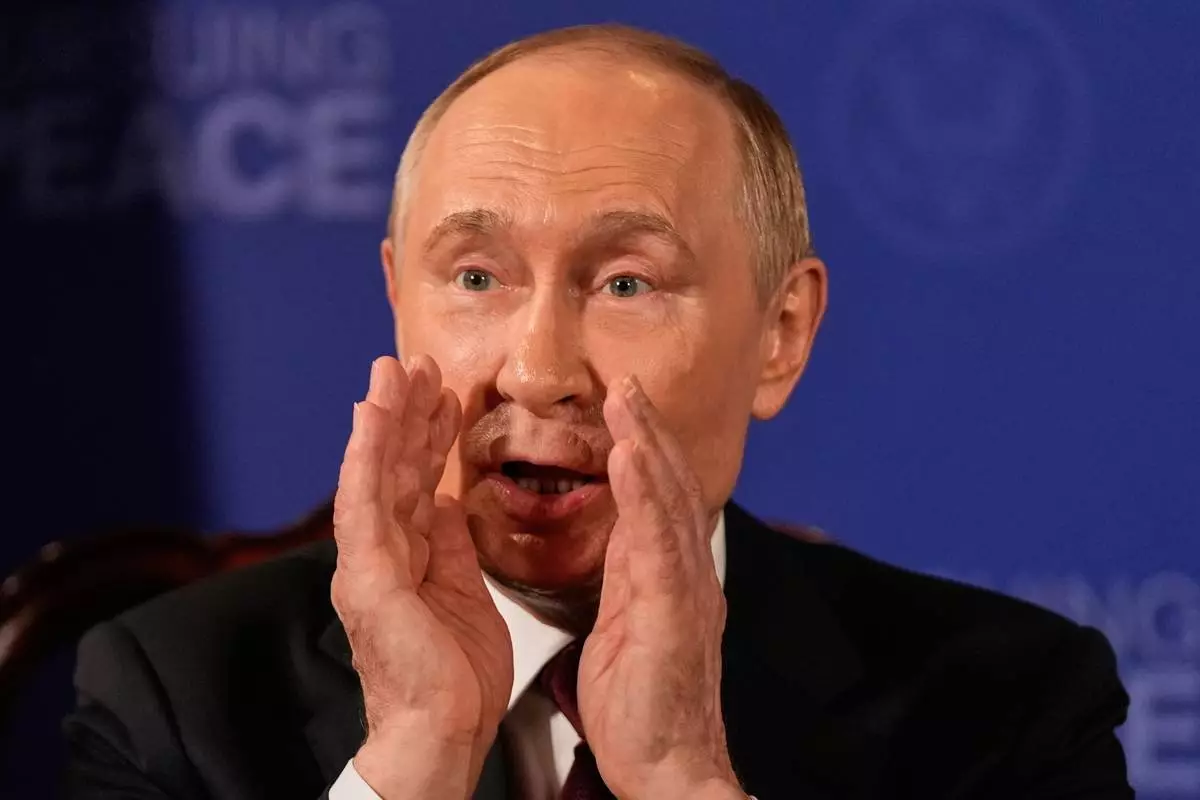
FILE - Russian President Vladimir Putin speaks as he meets with U.S. President Donald Trump on Aug. 15, 2025, at Joint Base Elmendorf-Richardson, Alaska. (AP Photo/Julia Demaree Nikhinson, File)
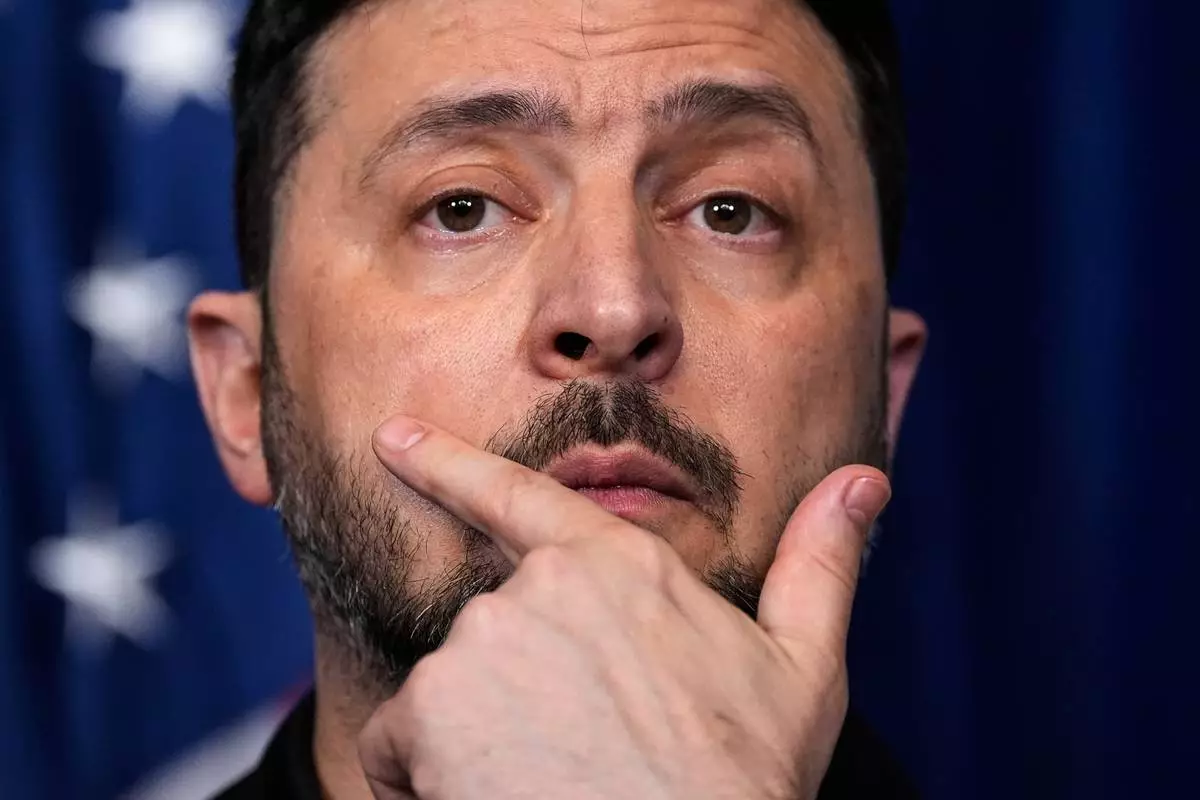
FILE - Ukrainian President Volodymyr Zelenskyy speaks at a joint news conference with U.S. President Donald Trump at the Mar-a-Lago club in Palm Beach, Fla., on Dec. 28, 2025. (AP Photo/Alex Brandon, File)
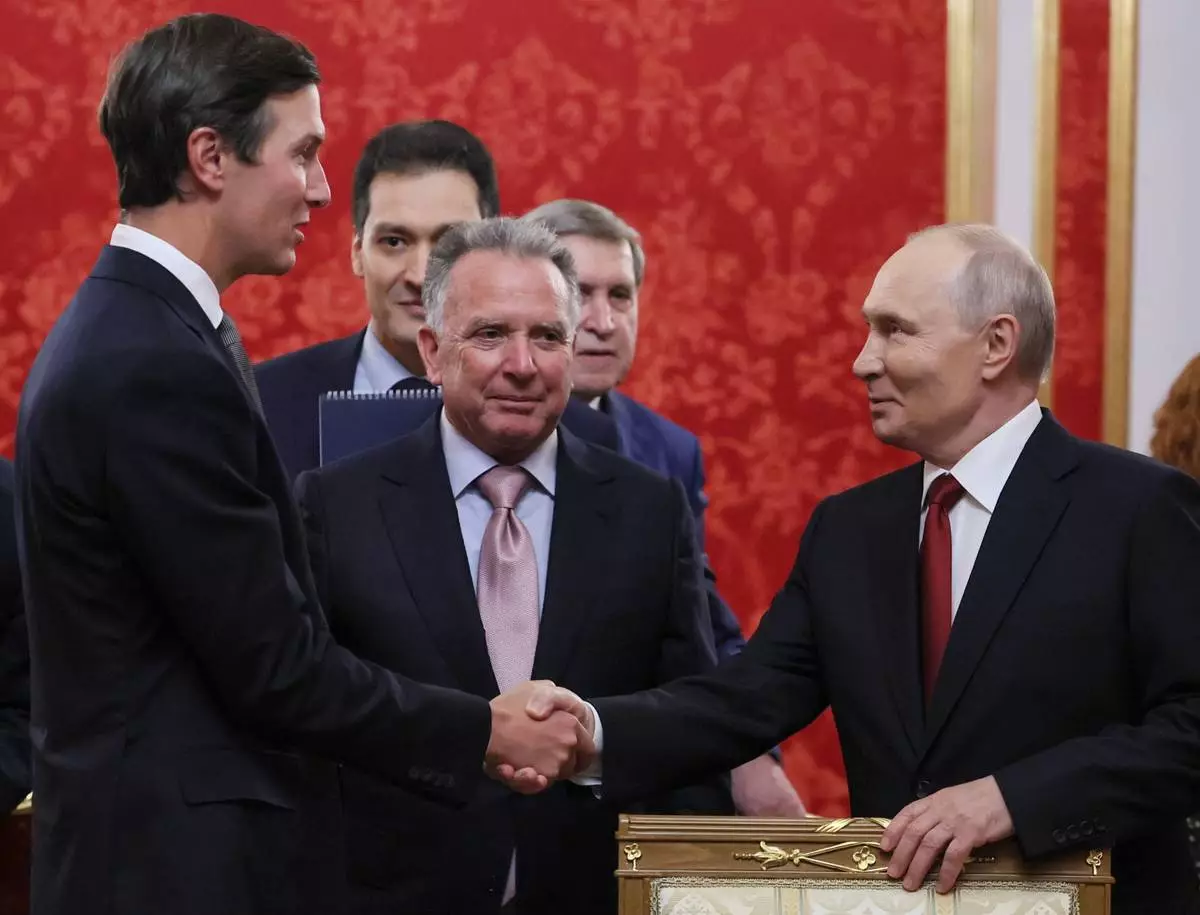
FILE - President Vladimir Putin, right, greets U.S. envoys Jared Kushner, left, and Steve Witkoff, center, before talks at the Senate Palace of the Kremlin in Moscow, on Saturday, Sept. 5, 2026. (Mikhail Metzel/Sputnik/Kremlin Pool Photo via AP, File)
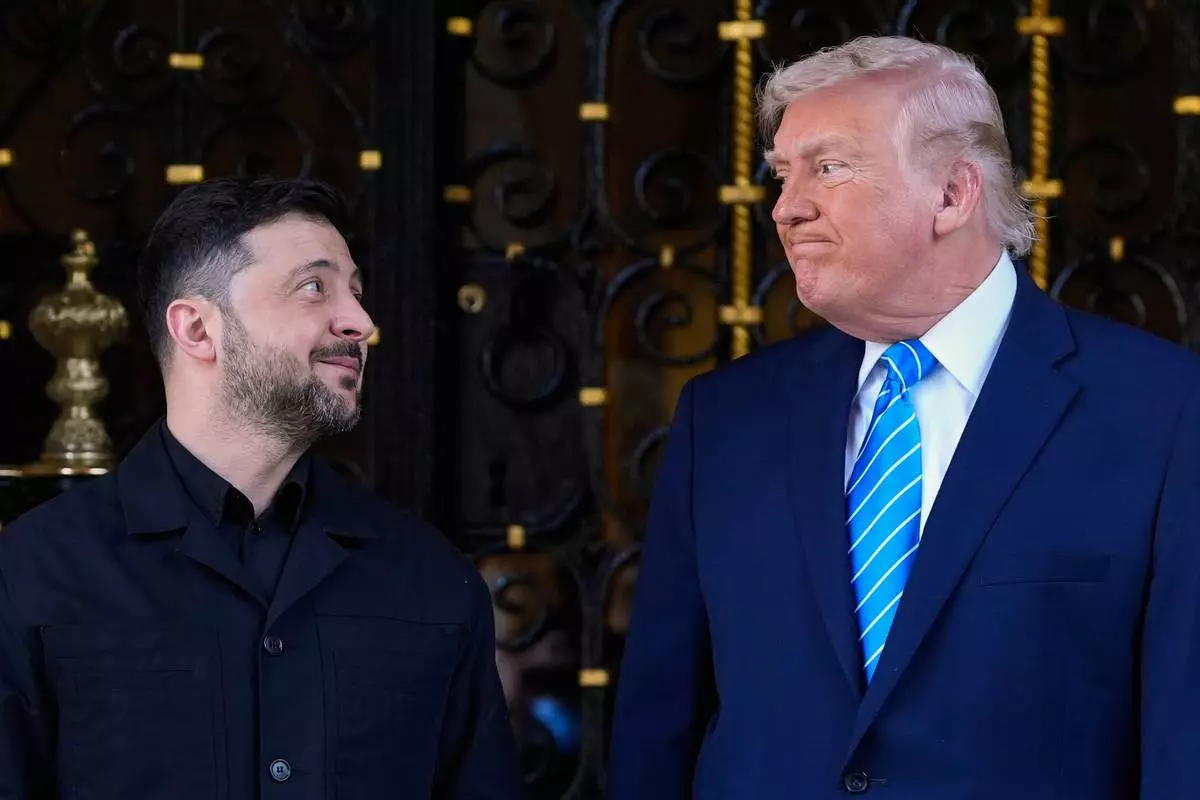
FILE - U.S. President Donald Trump greets Ukrainian President Volodymyr Zelenskyy at his Mar-a-Lago club in Palm Beach, Fla., on Dec. 28, 2025. (AP Photo/Alex Brandon, File)
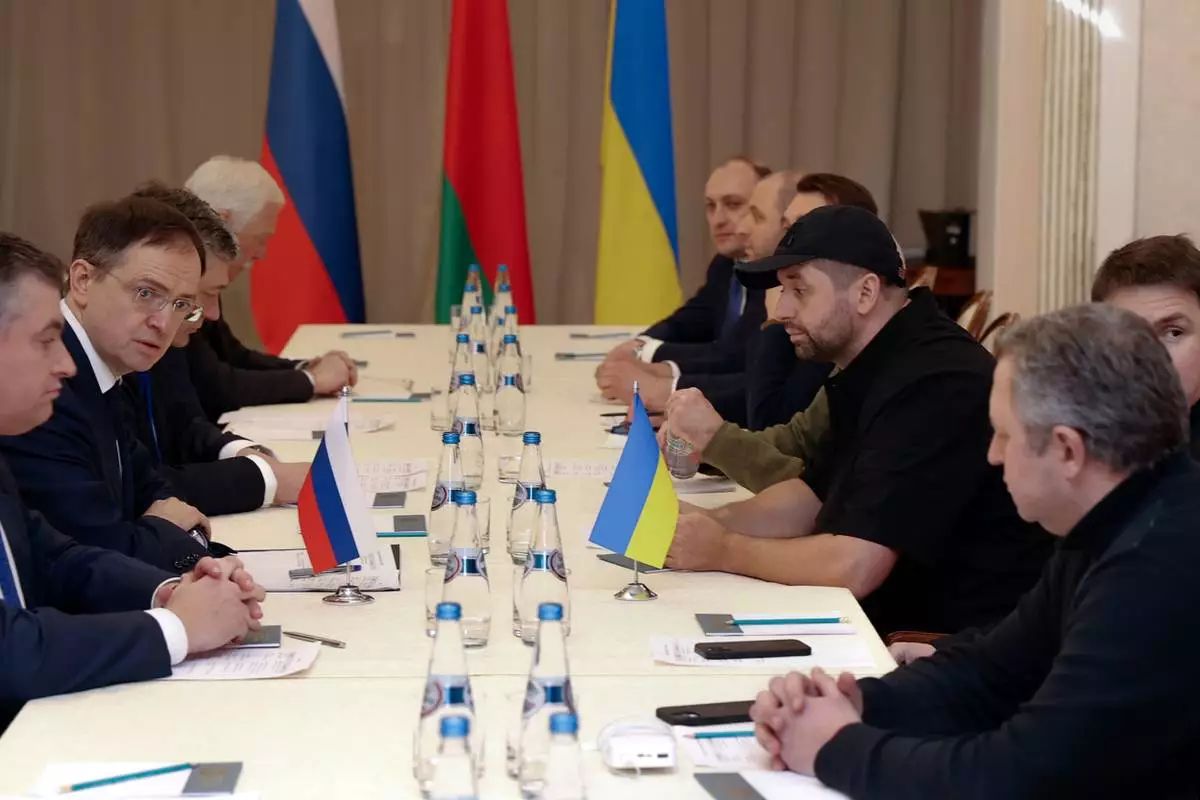
FILE - Vladimir Medinsky, second left, the head of the Russian delegation, and Davyd Arakhamia, third right, faction leader of the Servant of the People party in the Ukrainian parliament, attend peace talks in the Gomel region of Belarus on Monday, Feb. 28, 2022. (Sergei Kholodilin/BelTA Pool Photo via AP, File)