SAN FRANCISCO--(BUSINESS WIRE)--Nov 10, 2026--
Advances in surgery have made it possible to reach nearly any organ deep inside the body through a needle puncture rather than a large incision. But physically navigating those pathways still depends on extraordinary human skill, requires the use of X-ray radiation and yields outcomes that vary with the experience of the person holding the instrument. Mosaic Intelligence Labs emerged today from stealth with $47 million in seed funding to build sensing-enabled spatial intelligence and robotic infrastructure to help physicians understand and safely navigate the body from within.
This press release features multimedia. View the full release here: https://www.businesswire.com/news/home/20261110289756/en/
Backed by investors including 8VC, Fundomo, Lingotto Innovation, and Obvious Ventures, Mosaic is developing full-stack intelligent surgical machines to extend the reach and precision of surgical expertise. The company is starting with endovascular intervention: procedures in which physicians guide flexible wires and catheters through blood vessels to deliver treatment.
Blood vessels provide access to virtually all bodily organs. Yet inside them, physicians work without a direct line of sight. Today they combine the skillful use of live X-ray images, preoperative scans, and the feel of instruments in their hands to understand where they are and what lies ahead. Interpreting those signals takes years of practice, and much of that knowledge remains difficult to capture or pass on.
Mosaic treats surgical intelligence as a learning problem, and starts by giving surgical instruments their own senses. The company is developing technology that combines sensing where instruments meet anatomy with advanced computation used to reconstruct the vascular environment from within. Its platform is designed to give physicians a continuously updated, three-dimensional understanding of anatomy and instrument position, paired with a robotic interface that supports precise instrument control.
“We spent years in operating rooms watching extraordinary people do extraordinary things. But what really stayed with us was just how much depended on knowledge that lived in the hands and minds of the person holding the instrument,” said Dr. Ileana Pirozzi, co-founder and CEO of Mosaic. “We kept returning to one question: what would it take to scale the knowledge of the very best surgeons? We believe that starts with making our machines aware, and turning surgical repetition into experience we can learn from.”
Pirozzi and co-founder Dr. Alison “Ali” Kight Mackanic met during their doctoral studies at Stanford. Their work alongside clinicians revealed a recurring constraint: less invasive techniques had expanded what medicine could accomplish, but the ability to perform difficult procedures became increasingly tied to individual experience. That observation became the foundation for Mosaic.
As AI advances into the physical world, Mosaic is tackling a fundamental prerequisite for embodied intelligence in surgery: making surgical machines aware of their environments. In robotics, a “world model” represents an environment and helps a machine predict how its actions will change it. Biology offers a related idea: an organism’s umwelt is the perceptual world shaped by its senses and its interactions with its surroundings. Perception informs action, and action changes what is perceived. That evolving loop is central to Mosaic’s approach to surgical machine intelligence.
Today, physicians supply the perception, judgment, and adaptation needed to guide surgical tools and machines through the body. The instruments themselves lack a continuously evolving understanding of the anatomy they encounter and how their actions affect it.
“There is no evolving loop between perception and action, and as a result they are structurally locked out of the ability to become intelligent,” said Mackanic, co-founder and CTO of Mosaic.
Mosaic is developing the infrastructure to connect those elements. By capturing synchronized information about the environment, instrument movement, and physician actions, and combining it with increasingly accurate physical models, the company is building a foundation for machines that can relate what they sense to what happens when they move. The goal is to support physicians today while making surgical experience a source of cumulative learning over time.
The longer-term opportunity extends beyond today’s vascular treatments. Catheters can carry drugs, energy, biologics, and other therapies directly to the target site. More reliable navigation could expand the range of treatments delivered through the vascular system and the settings in which clinicians can offer them.
Mosaic is recruiting engineers, physicians, and creatives in San Francisco with open roles across hardware engineering, sensing, perception, machine learning, and clinical engineering. Joining Mosaic means working alongside a group of builders who have created surgical systems used to treat more than 20 million patients, rockets, cars, artificial hearts and drugs.
Learn more at mosaicintelligence.xyz.
About Mosaic Intelligence Labs
Mosaic Intelligence Labs is a San Francisco–based company developing sensing-enabled instruments, spatial intelligence, and surgical systems to help physicians navigate the human body from within. Founded by Stanford-trained scientists Ileana Pirozzi and Ali Mackanic, Mosaic brings together engineering, perception, robotics, and clinical practice. Its mission is to expand what can be treated through the vascular system and help surgical expertise reach more people.
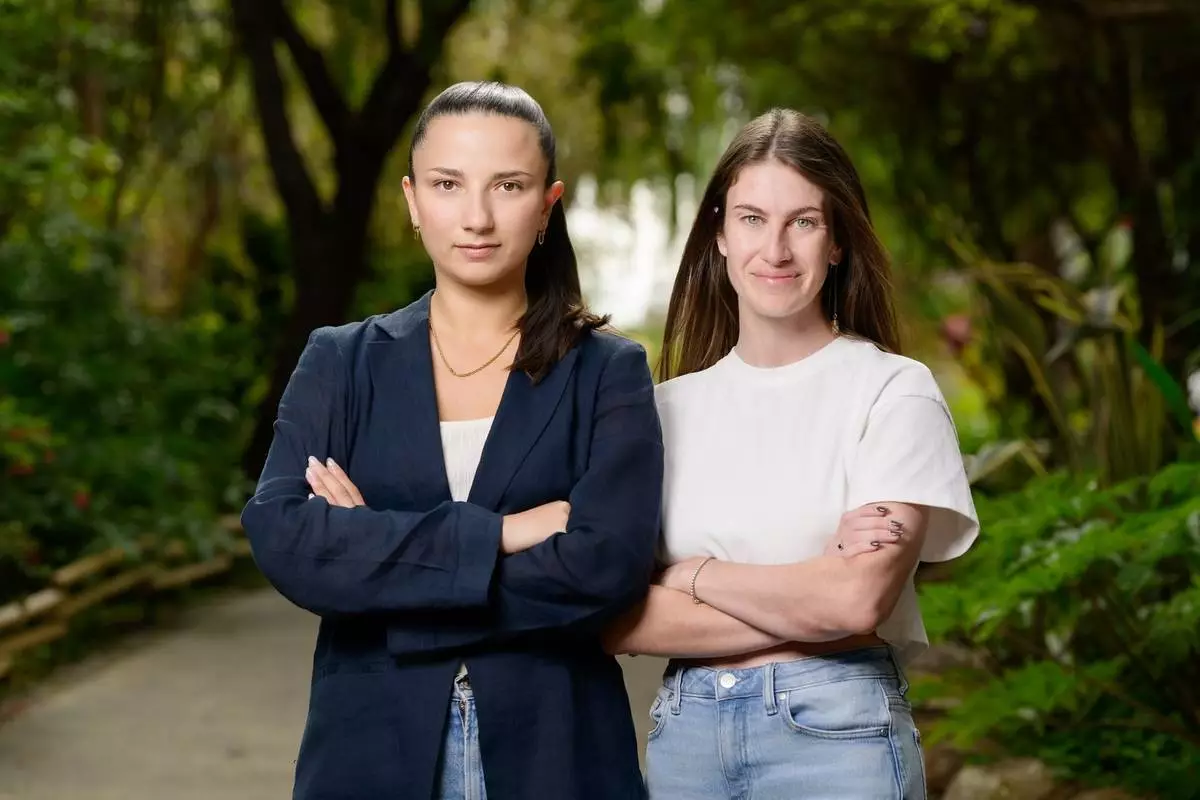
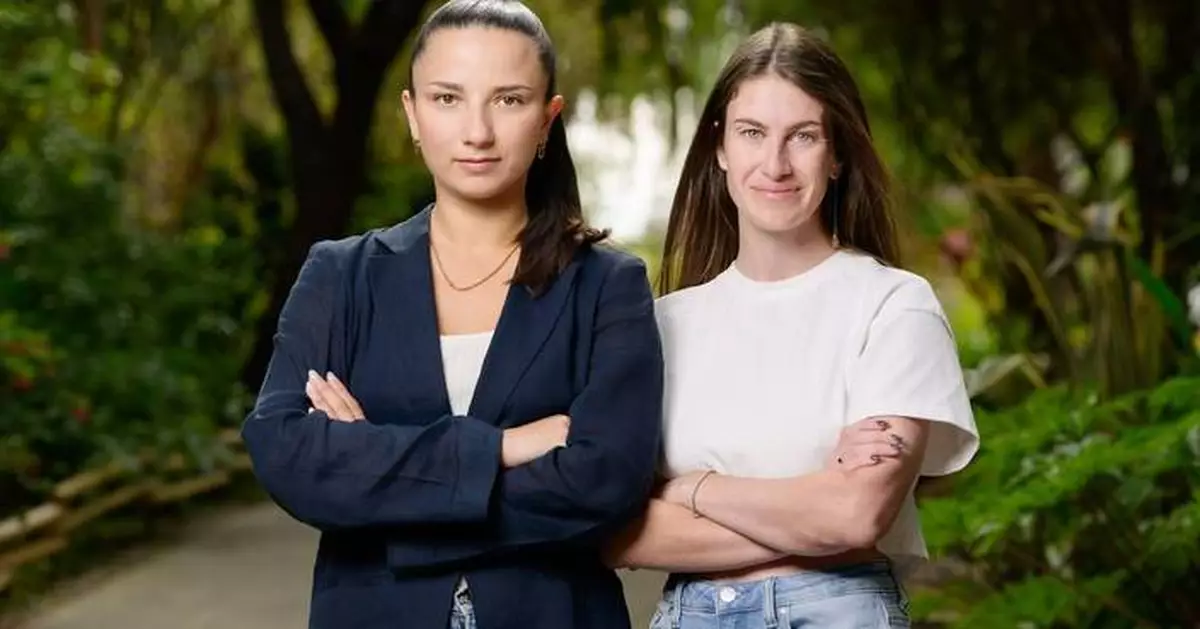
Mosaic Intelligence Labs founders Dr. Ileana Pirozzi (left), Co-Founder and CEO, and Dr. Alison Mackanic (right), Co-Founder and CTO.
Negotiators from Russia, Ukraine and the U.S. are to meet Tuesday and Wednesday in Abu Dhabi, United Arab Emirates, in the latest bid to end the war.
Key developments from past sessions since Moscow's full-scale invasion of its neighbor on Feb. 24, 2022:
Feb. 28, 2022: Ukrainian and Russian delegations meet in neighboring Belarus for the first time after the invasion. Two other meetings follow in early March, deciding only on humanitarian corridors for evacuating civilians.
March 10, 2022: Russian and Ukrainian Foreign Ministers Sergey Lavrov and Dmytro Kuleba meet on the sidelines of a diplomatic forum in Antalya, Turkey.
March 21, 2022: Ukrainian President Volodymyr Zelenskyy calls for direct talks with Russian President Vladimir Putin, an idea rejected by the Kremlin.
March 29-30, 2022: Delegations meet in Istanbul to work on a draft peace agreement. Moscow says it's willing to “fundamentally cut back” military activity near Kyiv and the northern city of Chernihiv; Ukraine says it's open to discussing neutral status for Ukraine if its security is backed by other nations.
April 7, 2022: Lavrov rejects a Ukrainian proposal as “unacceptable,” saying Kyiv has walked back on an agreement to exempt the Crimean Peninsula from wider Ukrainian security guarantees. Russia illegally annexed Crimea in 2014. The talks on a prospective peace deal fall apart later that month as the parties raise new demands.
April 26, 2022: U.N. Secretary-General António Guterres visits Russia to discuss ending the war.
May 13, 2022: U.S. Defense Secretary Lloyd Austin calls his Russian counterpart, their first contact since war began.
July 22, 2022: Russia and Ukraine, with mediation by Turkey and the U.N., agree to unblock grain supplies stuck in Ukraine’s Black Sea ports. Russia withdraws from the deal a year later.
Sept. 30, 2022: Russia illegally annexes the Ukrainian regions of Donetsk, Luhansk, Zaporizhzhia and Kherson, even though it doesn’t fully control any of them. Ukraine responds by applying to join NATO and by enacting a decree that declares negotiations with Putin “impossible.”
Nov. 15, 2022: Zelenskyy unveils a 10-point peace plan at the G20 summit in Indonesia.
June 16-17, 2023: African leaders travel to Kyiv and St. Petersburg on a peace mission, without success.
June 25, 2023: Officials from 15 countries, including the U.S., India, Brazil, South Africa, Saudi Arabia, Turkey and several representatives from the European Union, meet in Copenhagen, Denmark, to discuss Zelenskyy’s peace plan.
Aug. 5-6, 2023: Two days of discussions on the war begin in Saudi Arabia with delegates from 40 countries, including China, India, South Africa and Brazil, but not Russia. No joint statements are issued.
Oct. 28-29, 2023: Delegates from 65 countries meet in Malta to continue talks on Zelenskyy’s peace plan. Russia, which dismissed the talks, was not invited. China, though invited, did not participate.
June 15-16, 2024: Representatives of 92 nations meet in Nidwalden, Switzerland, to discuss Ukraine’s peace plan, but a consensus remains elusive. The summit’s final statement is backed by most — but not all — participants.
Dec. 7, 2024: U.S. President-elect Donald Trump travels to Paris and meets Zelenskyy and other European leaders.
Feb. 12, 2025: Trump and Putin speak directly via telephone and agree to begin negotiations on ending the war. The conversation ends a three-year U.S.-led effort to isolate Putin.
Feb. 18, 2025: Russian and U.S. officials, including Lavrov and U.S. Secretary of State Marco Rubio, meet in Saudi Arabia and agree to work toward ending the war, as well as restoring bilateral ties. Ukrainian officials are not invited.
Feb. 28, 2025: Zelenskyy holds a contentious meeting with Trump, Rubio and Vice President JD Vance in the White House. A proposed minerals deal between the countries is left unsigned.
March 11, 2025: U.S. and Ukrainian officials meet in Saudi Arabia, with Americans proposing a plan for a 30-day ceasefire. Kyiv agrees to the proposed truce.
March 13, 2025: Putin effectively rejects the ceasefire plan, stating certain issues still must be resolved. He also meets with U.S. envoy Steve Witkoff in Moscow. Witkoff travels to Russia twice more in April to meet Putin.
March 23-24, 2025: The U.S. holds separate talks with each side in Saudi Arabia.
May 16, 2025: Russian and Ukrainian negotiators meet in Istanbul for the first time in three years and agree to swap 1,000 prisoners from each side.
June 2 and July 23, 2025: Two more rounds of talks between Russia and Ukraine in Istanbul produce an exchange of draft memorandums.
Aug. 15, 2025: Trump and Putin meet in Anchorage, Alaska. The summit produces no concrete peace agreement, ceasefire deal, or specific resolution on the war in Ukraine. International observers widely view it as a symbolic boost for Moscow.
Aug. 18, 2025: Trump hosts Zelenskyy and European leaders at the White House. Discussions center on establishing robust security guarantees for Ukraine.
November 2025: A 28-point U.S.-Russian peace plan emerges, and critics say it favors Moscow. On Nov. 23, it's cut to 19 points during discussions involving Washington, Kyiv and Ukraine’s European allies in Geneva.
Dec. 2, 2025: Putin and his officials meet Witkoff and Trump’s son-in-law Jared Kushner in Moscow. The Kremlin describes the meeting as constructive but says much work remains.
Dec. 4-6, 2025: Witkoff and Kushner meet a Ukrainian delegation in Miami.
Dec. 14-15, 2025: Ukrainian officials led by Zelenskyy travel to Berlin for talks with Witkoff and Kushner. U.S. officials say Washington agrees to provide Kyiv with unspecified security guarantees.
Dec. 20-21, 2025: Putin's envoy Kirill Dmitriev holds talks with Witkoff and Kushner in Miami. The Americans meet separately with a Ukrainian delegation.
Dec. 28, 2025: Zelenskyy meets in Florida with Trump, who calls Putin beforehand.
Jan. 6-7, 2026: Zelenskyy and other Ukrainians attend a summit of the “Coalition of the Willing” in Paris and hold talks with Witkoff and Kushner. Kyiv’s allies tout major progress for defending Ukraine if a peace deal is struck, saying they were ready to provide international guarantees to deter Russia from attacking again.
Jan. 17, 2026: A Ukrainian delegation arrives in the U.S. for talks.
Jan. 20-22, 2026: Witkoff and Kushner meet separately in Davos, Switzerland, with Ukrainian and Russian delegations. Zelenskyy then meets Trump for what the U.S. leader calls “very good” talks. Zelenskyy calls them “productive and meaningful.”
Jan. 23-24, 2026: Russian, Ukrainian and U.S. delegates meet in Abu Dhabi in the first known instance of Trump administration officials sitting down with both countries to try to halt the war.
Feb. 4-5, 2026: A second round of trilateral talks in Abu Dhabi leads to swapping 157 prisoners from each side.
Feb. 17-18, 2026: The third round of trilateral negotiations in Geneva, Switzerland, ends without a breakthrough.
Feb. 28, 2026: The U.S. and Israel begin a war with Iran, leading the Trump administration to wind down talks with Russian and Ukrainian officials.
May 7, 2026: Ukraine's top negotiator Rustem Umerov meets in Miami with U.S. representatives, as negotiations remain stalled.
Sept. 5-6, 2026: Witkoff and Kushner meet Putin in Moscow on Sept. 5, and in Kyiv with Zelenskyy the next day.
Oct. 21, 2026: The Kremlin says Putin agrees “in principle” to resume talks after Nov. 10.
Oct. 27-Nov. 1, 2026: After intervention by U.S. first lady Melania Trump and Pope Leo XIV, a localized ceasefire is reached for the region around the Russia-occupied town of Oleshky in southern Ukraine to allow the evacuation of some of its residents and the delivery of food and other supplies.
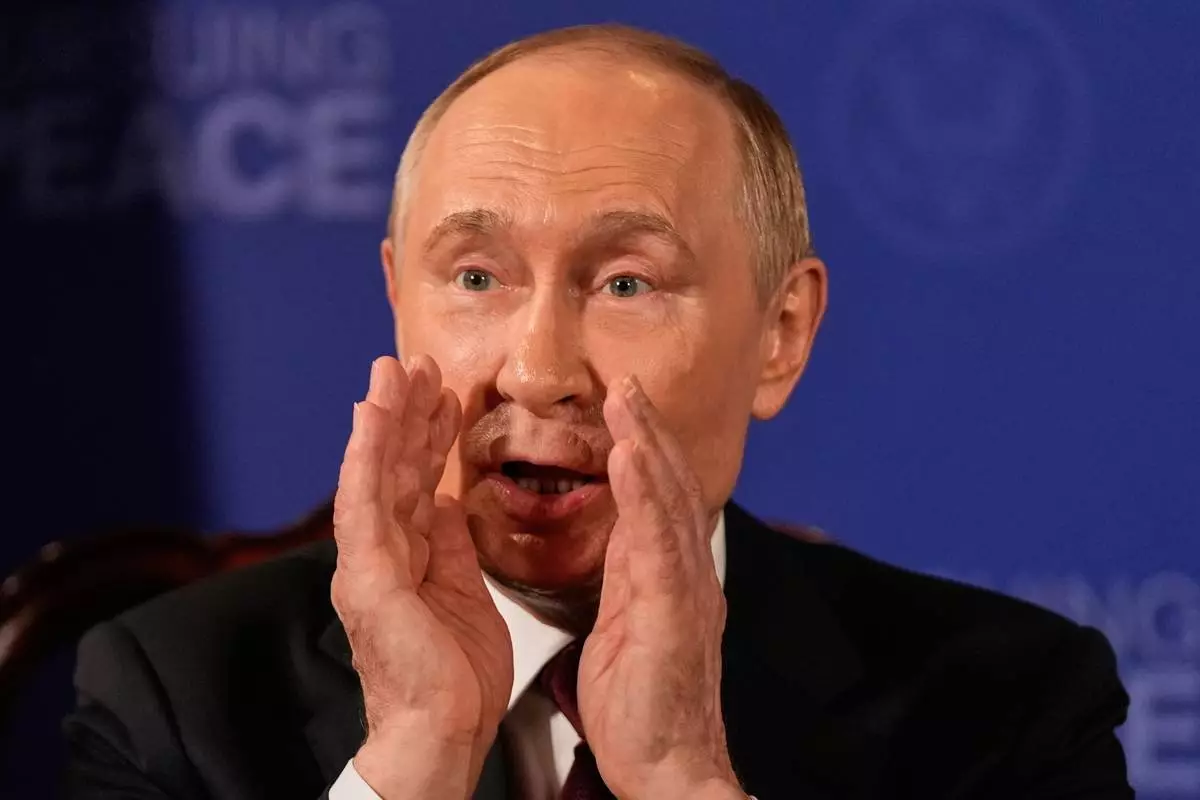
FILE - Russian President Vladimir Putin speaks as he meets with U.S. President Donald Trump on Aug. 15, 2025, at Joint Base Elmendorf-Richardson, Alaska. (AP Photo/Julia Demaree Nikhinson, File)
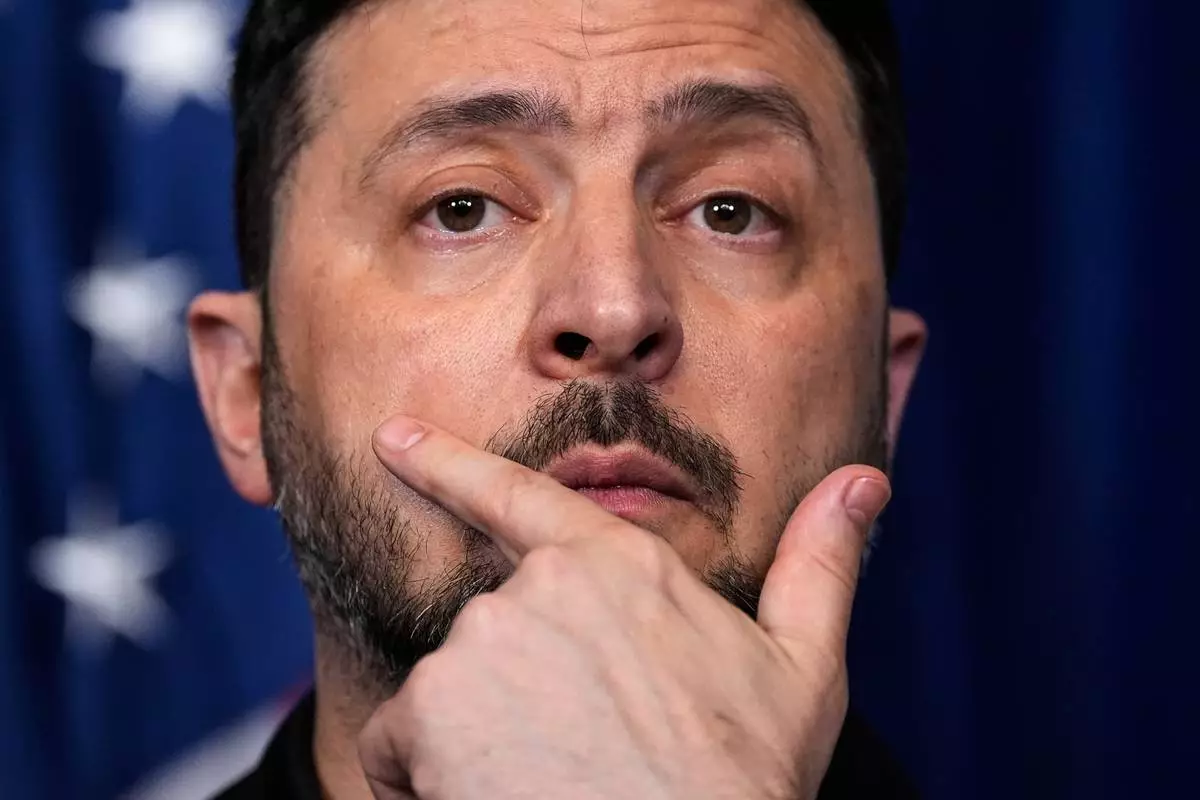
FILE - Ukrainian President Volodymyr Zelenskyy speaks at a joint news conference with U.S. President Donald Trump at the Mar-a-Lago club in Palm Beach, Fla., on Dec. 28, 2025. (AP Photo/Alex Brandon, File)
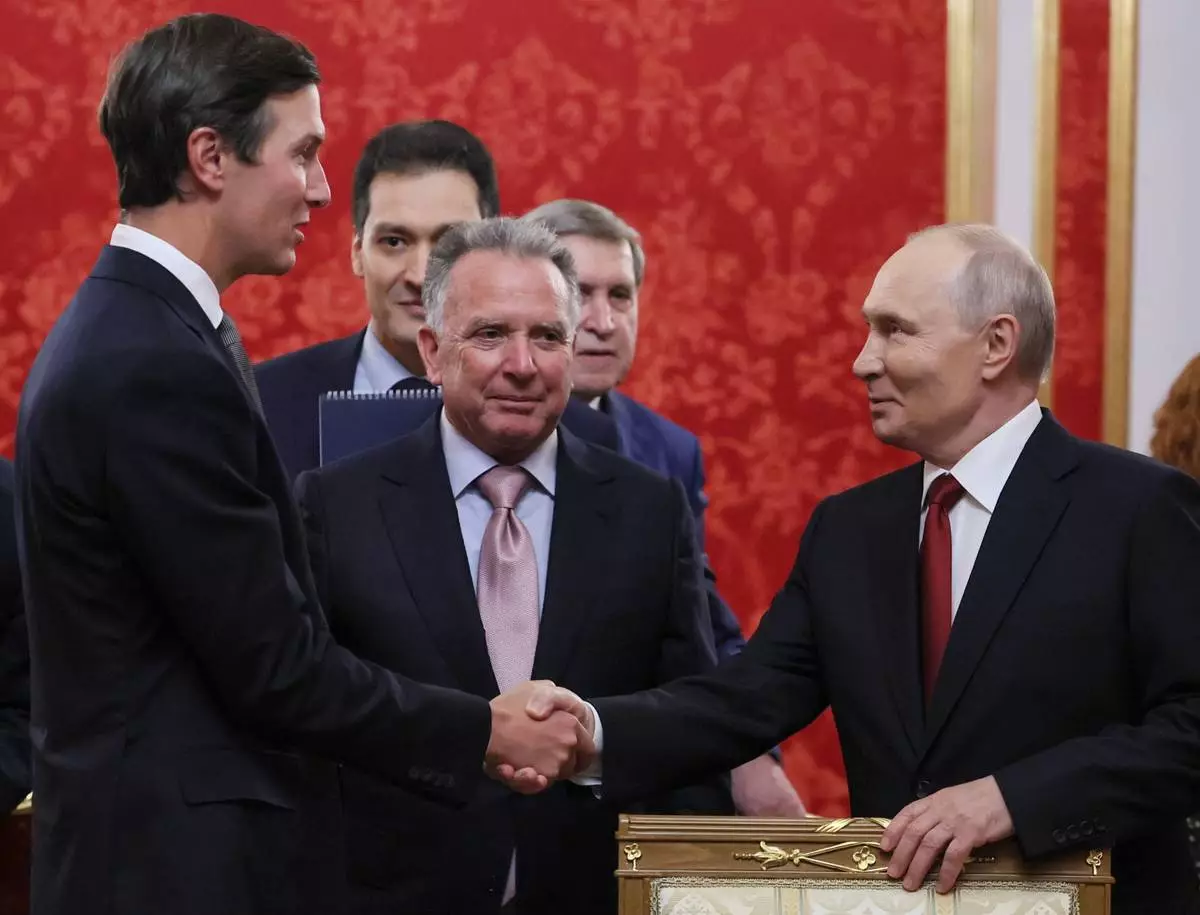
FILE - President Vladimir Putin, right, greets U.S. envoys Jared Kushner, left, and Steve Witkoff, center, before talks at the Senate Palace of the Kremlin in Moscow, on Saturday, Sept. 5, 2026. (Mikhail Metzel/Sputnik/Kremlin Pool Photo via AP, File)
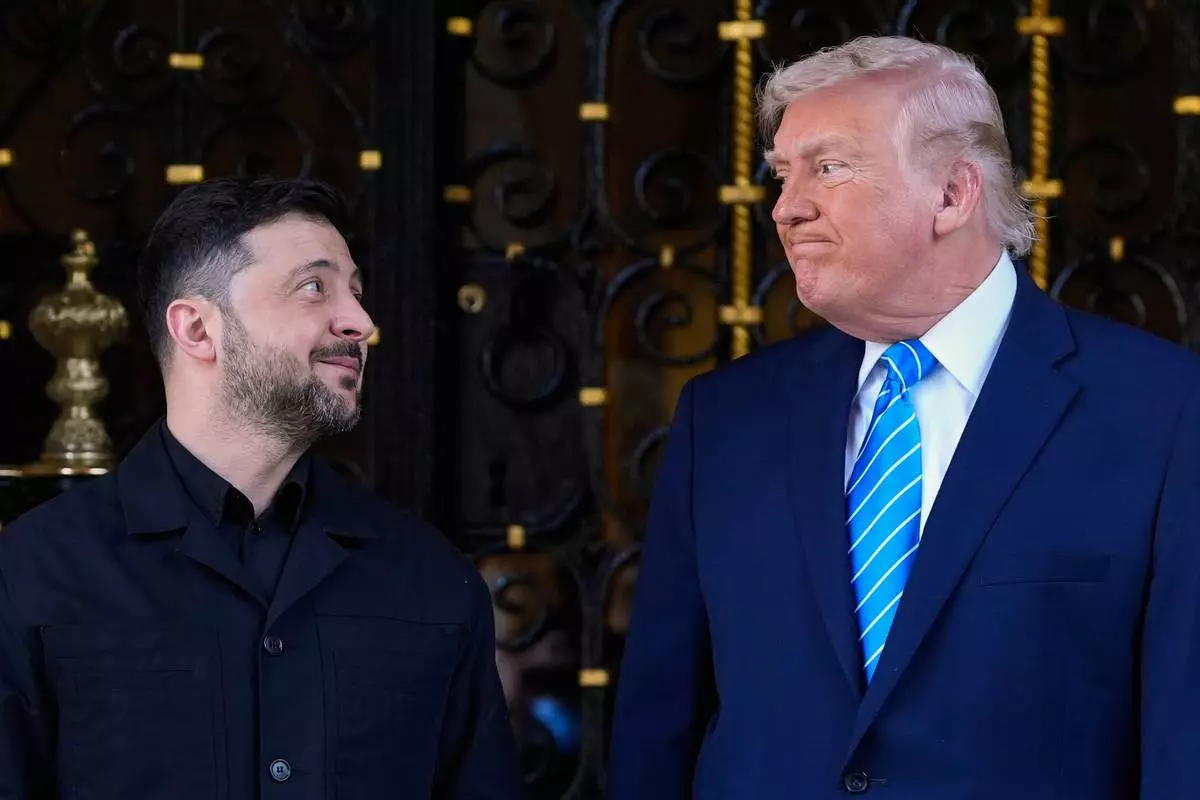
FILE - U.S. President Donald Trump greets Ukrainian President Volodymyr Zelenskyy at his Mar-a-Lago club in Palm Beach, Fla., on Dec. 28, 2025. (AP Photo/Alex Brandon, File)
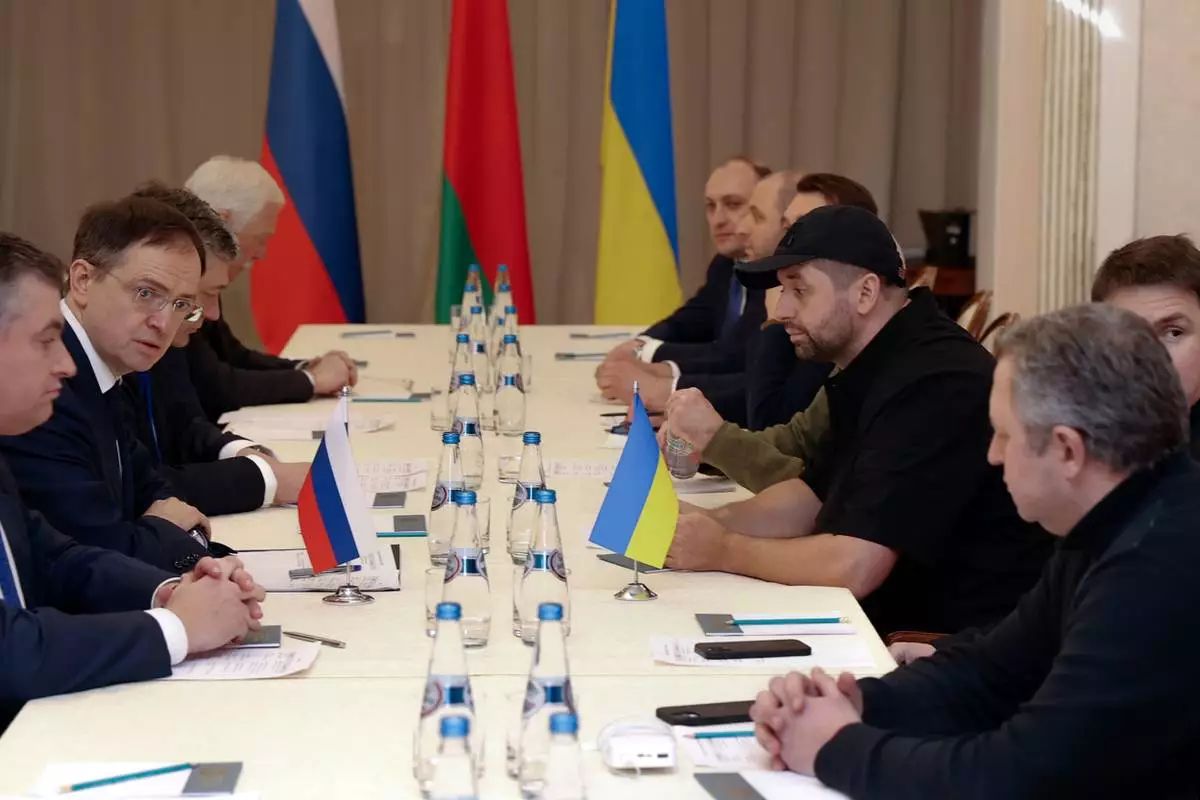
FILE - Vladimir Medinsky, second left, the head of the Russian delegation, and Davyd Arakhamia, third right, faction leader of the Servant of the People party in the Ukrainian parliament, attend peace talks in the Gomel region of Belarus on Monday, Feb. 28, 2022. (Sergei Kholodilin/BelTA Pool Photo via AP, File)