CAPE CANAVERAL, Fla. (AP) — NASA’s Voyager 1 is about to become humanity’s first object to reach one light-day from Earth as it pushes ever deeper into interstellar space.
That’s a mind-blowing distance of more than 16 billion miles (26 billion kilometers) for the spacecraft launched 49 years ago.
Click to Gallery
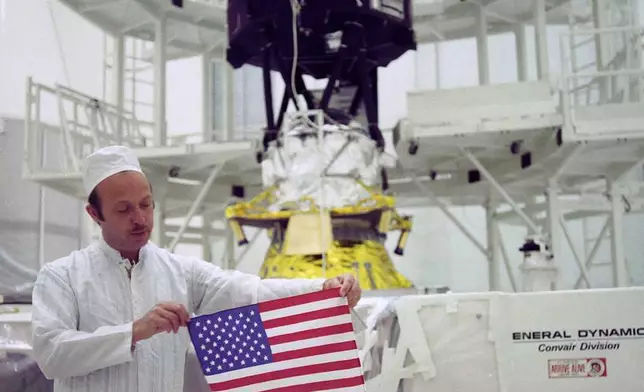
This image provided byNASA/JPL-Caltech shows as John Casani, Voyager project manager in 1977, holding a small Dacron flag that was folded and sewed into the thermal blankets of the Voyager spacecraft before they launched, below him lie the Golden Record, left, and its cover, right, in the background stands Voyager 2 before it headed to the launch pad, Cape Canaveral, Fla., Aug. 4, 1977. (NASA/JPL-Caltech via AP)
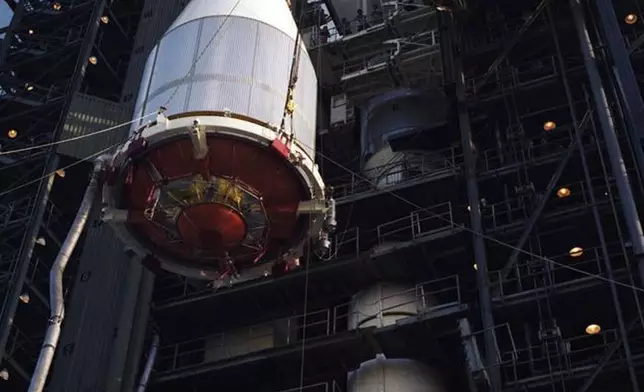
In this image provided by NASA/JPL-Caltech/KSC, The Voyager 2 spacecraft, encapsulated within its payload fairing, is seen in August 1977, as it was being hoisted upward for attachment to its launch vehicle at NASA's Kennedy Space Center in Cape Canaveral, Florida. (NASA/JPL-Caltech/KSC via AP)
This undated handout image provided by NASA shows the Voyager Golden Record Album. (NASA/JPL-Caltech via AP)
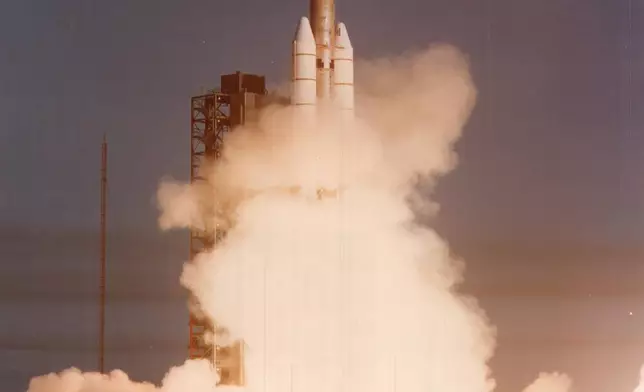
In this image provided by NASA/JPL-Caltech, NASA's Voyager 1 spacecraft launched atop its Titan/Centaur-6 launch vehicle from the Kennedy Space Center Launch Complex, Merritt Island, Florida on Sept. 5, 1977, at 8:56 a.m. local time. (NASA/JPL-Caltech via AP)
This image provided byNASA/JPL-Caltech shows as John Casani, Voyager project manager in 1977, holding a small Dacron flag that was folded and sewed into the thermal blankets of the Voyager spacecraft before they launched, below him lie the Golden Record, left, and its cover, right, in the background stands Voyager 2 before it headed to the launch pad, Cape Canaveral, Fla., Aug. 4, 1977. (NASA/JPL-Caltech via AP)
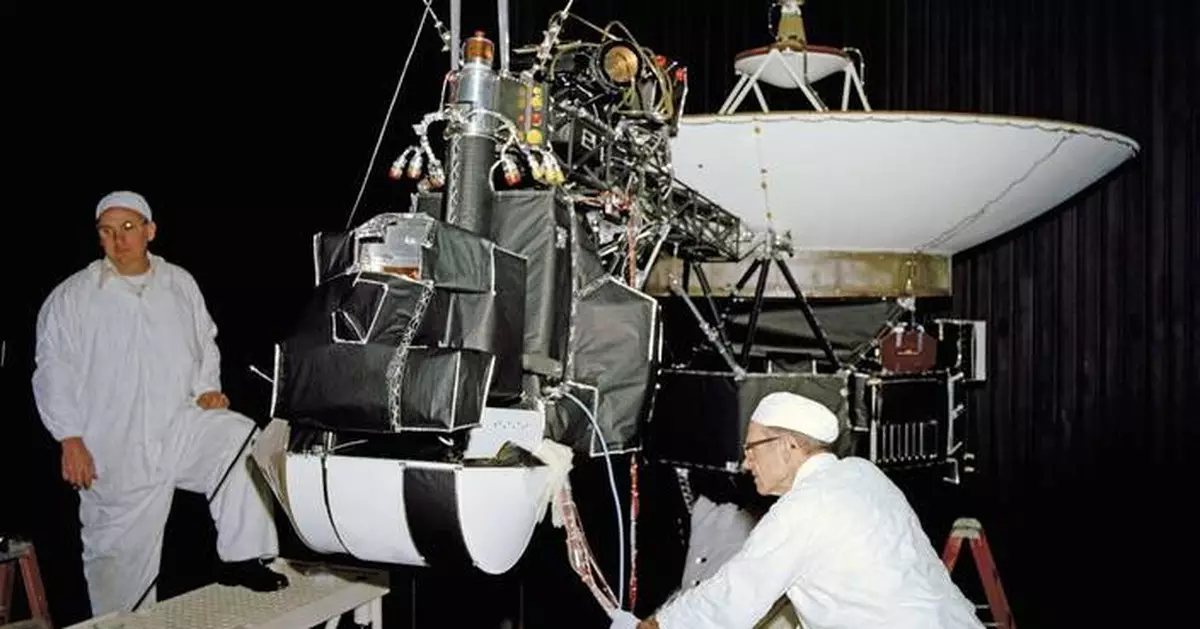
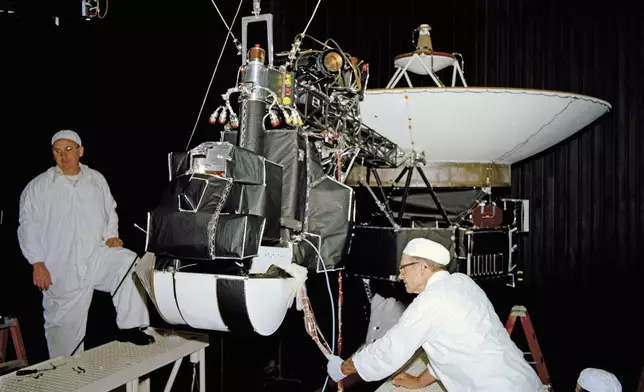
This image, provided by NASA/JPL-Caltech and taken on April 27, 1977, shows one of the Voyagers in the 25-Foot Space Simulator thermal vacuum chamber at NASA's Jet Propulsion Laboratory in Southern California. (NASA/JPL-Caltech via AP)
When Voyager 1 reaches that remarkable milestone on Wednesday, its radio signals will take precisely 24 hours traveling at the speed of light to reach Earth — in other words, one light-day. NASA is looking at another 18,000 years before the spacecraft achieves a full light-year and more than double that before it comes near another star.
Project manager Suzanne Dodd sees Voyager 1 as Earth's ambassador hurtling between stars while providing a “sense of wonder” on the home front.
“It's a national treasure,” she told The Associated Press. “Really extraordinary.”
To celebrate this moment, NASA is urging people from all corners to grab their phone or a flashlight to create a wave of golden light after sunset Tuesday, using Morse code to spell the letters V-G-R, Voyager's call sign, into the night sky.
Despite sporadic problems typical of old age, Voyager 1 and its twin Voyager 2 continue to send back science and engineering data as they zoom toward different points in space at 38,000 mph (61,000 kph). Although launched two weeks before its sibling in 1977, Voyager 2 won't reach the one light-day mark until 2035.
Voyager 1 swept past Jupiter and Saturn to scientists' delight in 1979 and 1980, respectively, before exiting the solar system. It reached what NASA defines as interstellar space — the expansive region between star systems — in 2012. Voyager 2 visited those two planets plus Uranus and Neptune, also sending back stunning photos, before entering interstellar space in 2018.
Almost every day, the Voyagers beam back details about their never-before-explored environment: the strength and direction of the magnetic field as well as tidbits about the surrounding pressure, dust and galactic cosmic rays. They're a bit like weather satellites, according to Dodd, who's worked with the Voyagers since 1984.
The skeleton flight control team at NASA's Jet Propulsion Laboratory in Pasadena, California, sends commands about once a week. The operation ramps up when spacecraft problems arise, with help sometimes coming from a couple of retirees who once worked on the project.
In September, controllers completed the latest power-conserving effort for the plutonium-powered spacecraft, then in October briefly lost contact with it. They're still trying to figure out why communication was disrupted.
All this expertise and love have kept Voyager 1 chugging along like “the little engine that could,” according to Dodd, while racking up entries in Guinness World Records. Besides venturing farther than any other human-made object, Voyager 1 in 1990 snapped the most distant picture of Earth: the iconic “Pale Blue Dot” as seen from beyond Neptune.
“On that blue dot, that's where everyone you know and everyone you ever heard of and every human being who ever lived, lived out their lives. It's a very small stage in a great cosmic arena,” Cornell University astronomer Carl Sagan, part of the imaging team, said as he introduced the picture to the world in 1990.
While the majority of people alive today were not yet born when the Voyagers launched, “all of us — everyone on Earth — have been touched by these missions,” the Planetary Society's Bill Nye said in a statement. The society was co-founded in 1980 by Sagan, who died in 1996.
The Golden Record also resulted from Sagan's effort.
Each Voyager carries a 12-inch (30-centimeter) gold-plated phonographic record containing greetings in 55 languages as well as images and diagrams. Sagan included the voice of his son Nick, then 6: “Hello from the children on Planet Earth.” He added a stylus and instructions for any finders-keepers out there.
“It’s a time capsule of life on Earth from 1977,” Dodd said. “I hope something, someone, finds it maybe 1,000 years from now.”
The Associated Press’ health and science coverage receives financial support from the AP Fund for Journalism and private foundations. AP is solely responsible for all content. Find AP’s standards for working with philanthropies, a list of supporters and funded coverage areas at AP.org.
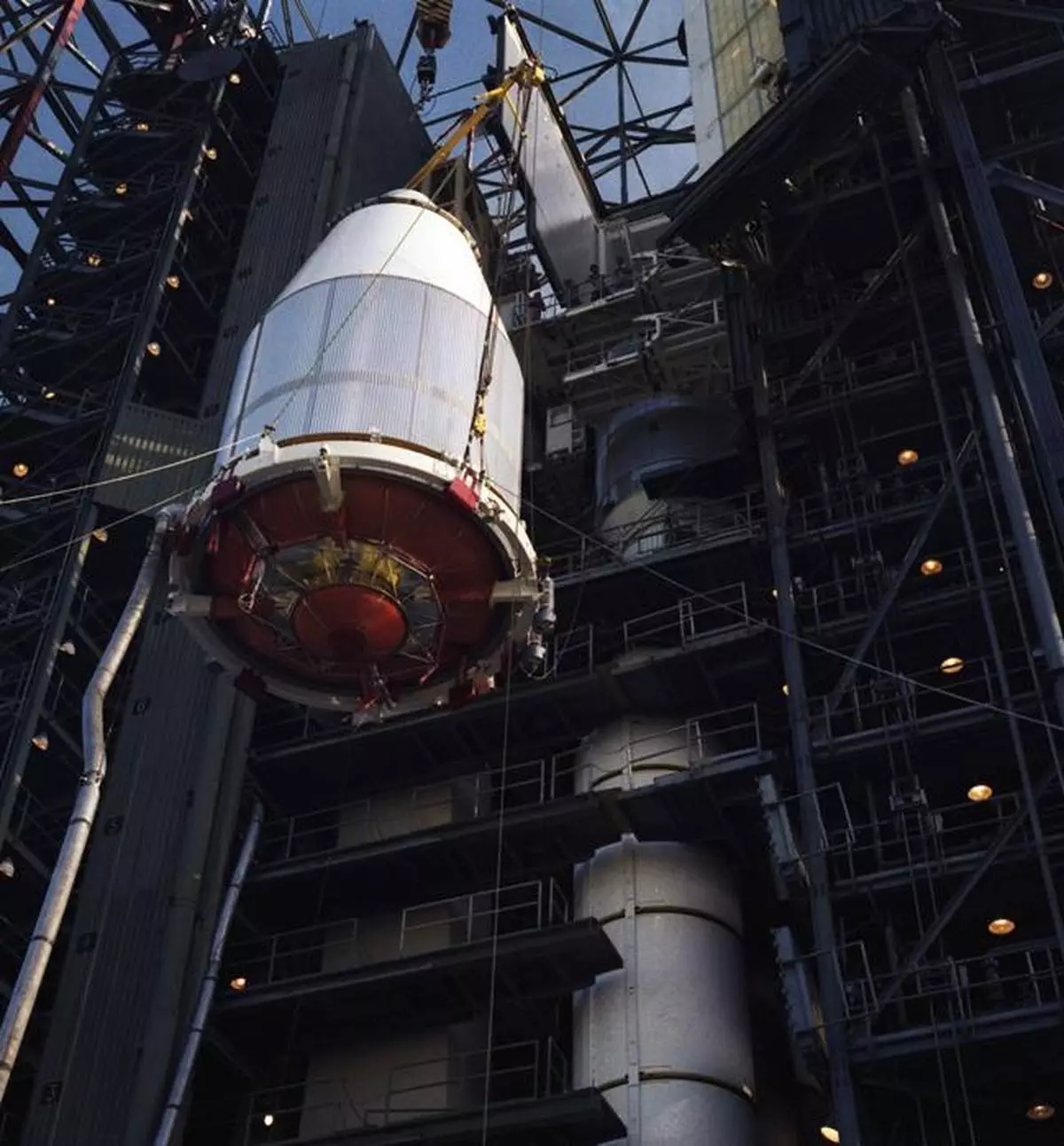
In this image provided by NASA/JPL-Caltech/KSC, The Voyager 2 spacecraft, encapsulated within its payload fairing, is seen in August 1977, as it was being hoisted upward for attachment to its launch vehicle at NASA's Kennedy Space Center in Cape Canaveral, Florida. (NASA/JPL-Caltech/KSC via AP)

This undated handout image provided by NASA shows the Voyager Golden Record Album. (NASA/JPL-Caltech via AP)
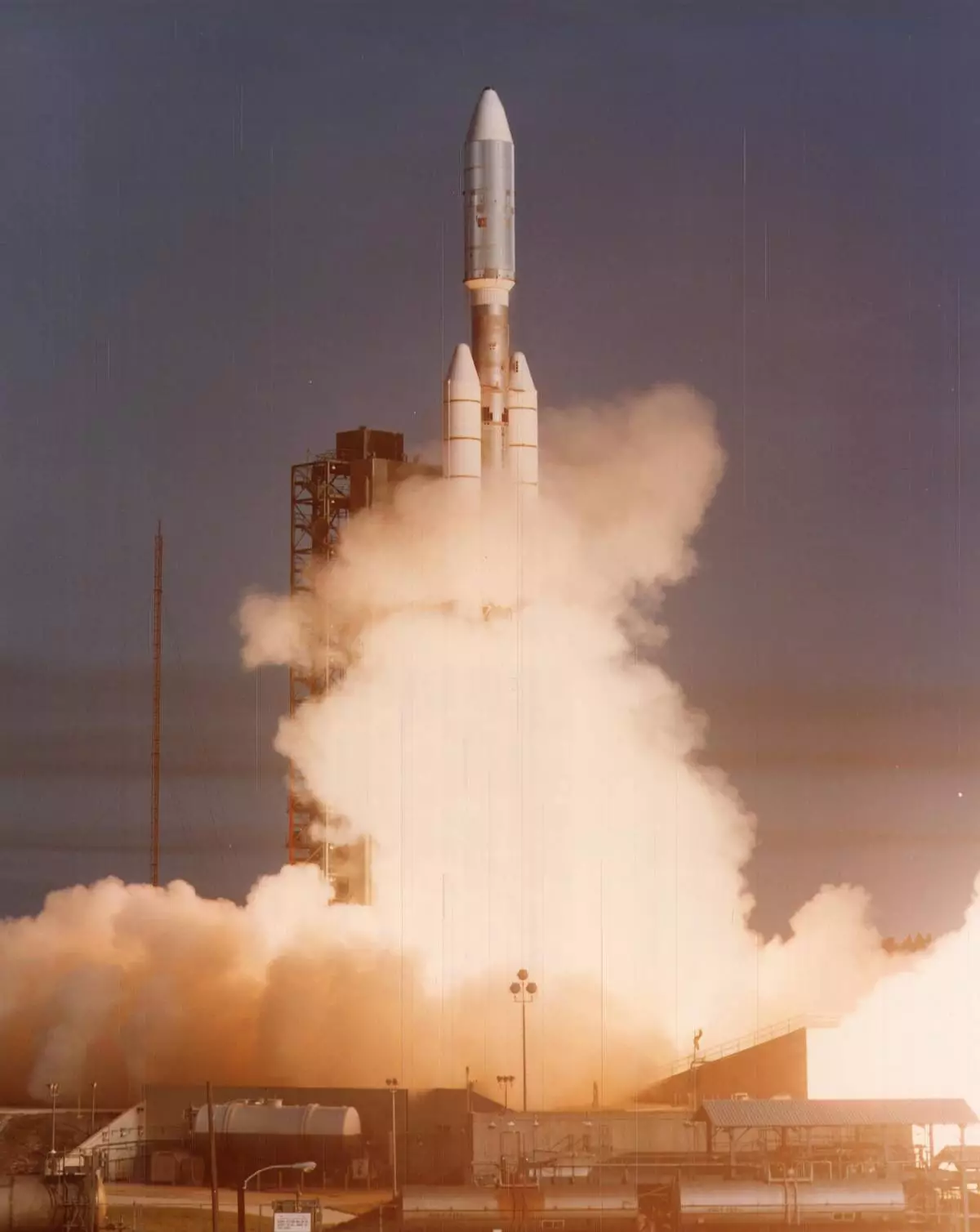
In this image provided by NASA/JPL-Caltech, NASA's Voyager 1 spacecraft launched atop its Titan/Centaur-6 launch vehicle from the Kennedy Space Center Launch Complex, Merritt Island, Florida on Sept. 5, 1977, at 8:56 a.m. local time. (NASA/JPL-Caltech via AP)
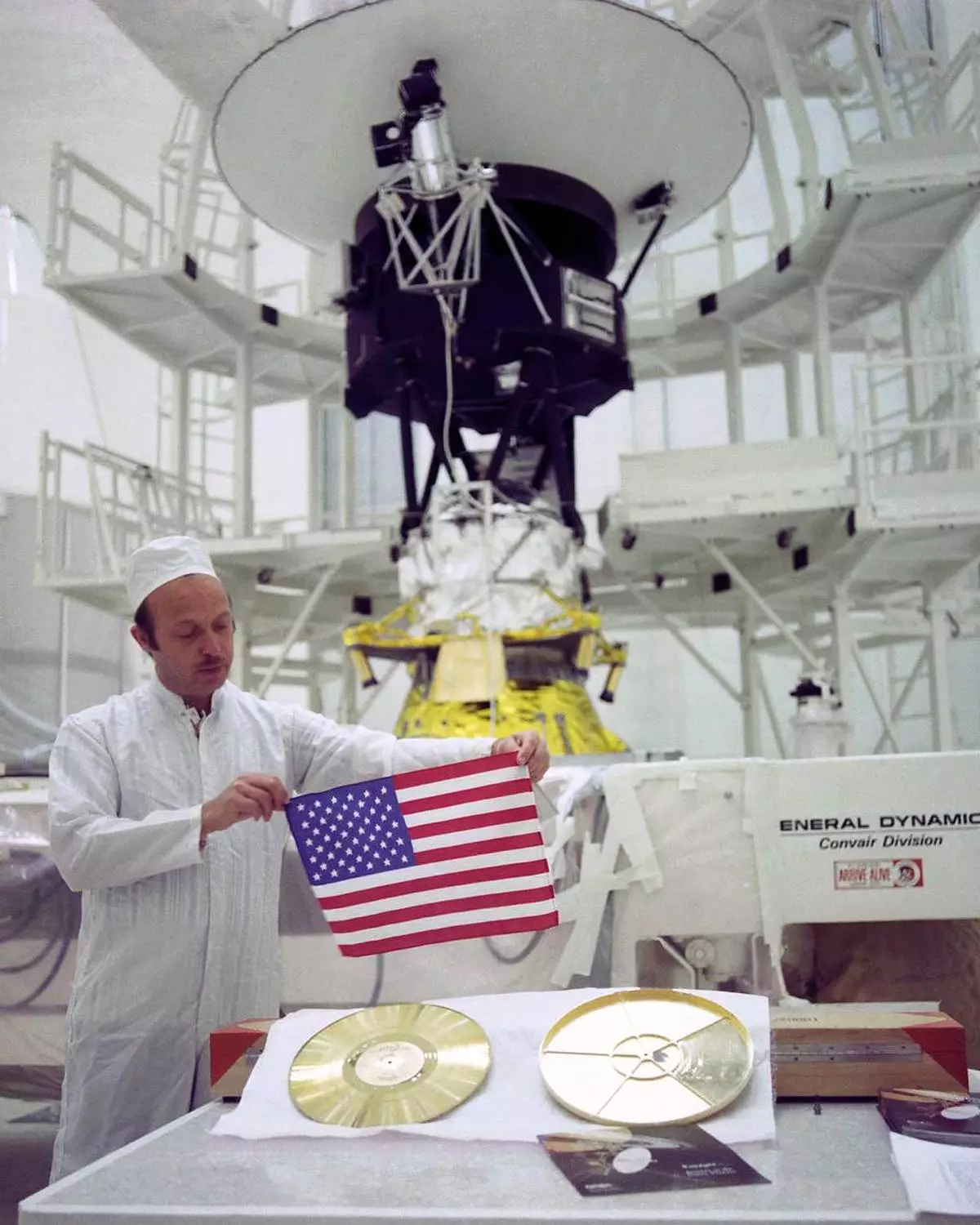
This image provided byNASA/JPL-Caltech shows as John Casani, Voyager project manager in 1977, holding a small Dacron flag that was folded and sewed into the thermal blankets of the Voyager spacecraft before they launched, below him lie the Golden Record, left, and its cover, right, in the background stands Voyager 2 before it headed to the launch pad, Cape Canaveral, Fla., Aug. 4, 1977. (NASA/JPL-Caltech via AP)
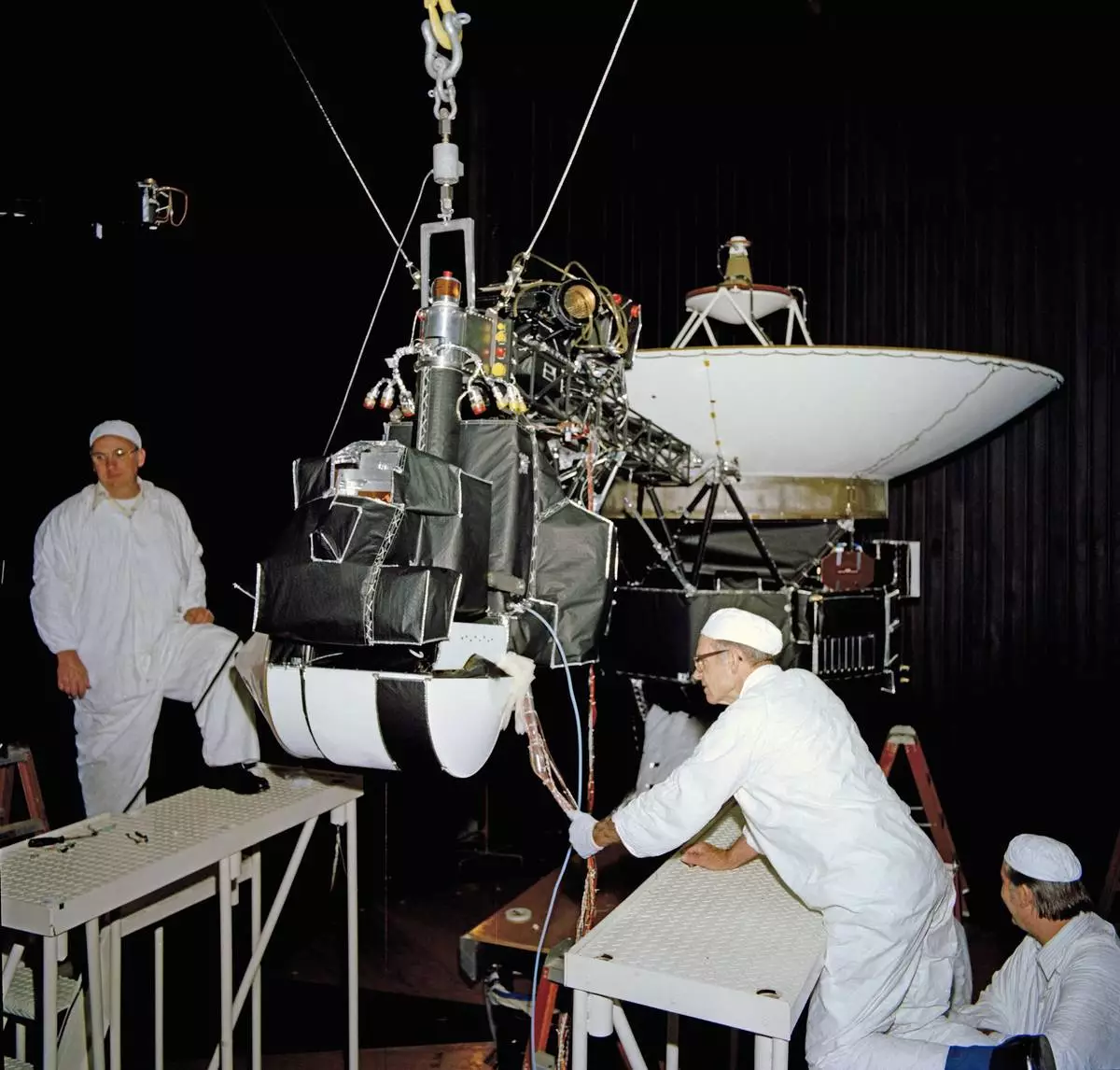
This image, provided by NASA/JPL-Caltech and taken on April 27, 1977, shows one of the Voyagers in the 25-Foot Space Simulator thermal vacuum chamber at NASA's Jet Propulsion Laboratory in Southern California. (NASA/JPL-Caltech via AP)
WASHINGTON (AP) — Airlines across the U.S. worked Saturday to recover from the longest nationwide ground stop in 25 years that canceled more than 2,000 flights, spread ripple effects around the world, stranded passengers and forced professional and college sports teams to scramble for alternate transportation.
Trump administration officials said new technology being added to the nation’s air traffic control system overloaded antiquated equipment and caused “intermittent” communications and radar gaps, leading to the flight shutdown of more than four hours.
A limited number of domestic flights departed after the stop was lifted around 8:15 p.m. ET Friday. But the effects could be felt for days, with officials saying the system would likely return to normal in time to handle the Thanksgiving travel rush.
The nationwide stop was the first since January 2023, when another key Federal Aviation Administration computer system that sends notices to pilots malfunctioned, and the second since the Sept. 11, 2001, attacks.
Emily Brown and her 14-year-old daughter waited more than four hours Friday at the Dallas airport for their flight to Columbus, Ohio, before giving up. They were traveling to surprise her daughter’s best friend. Instead, she had to settle for phoning the friend through tears in the airport, Brown said.
“She saved up her money to buy her own ticket, and she’s planned this whole weekend,” Brown said. “Now we’re not sure when we’re gonna be able to go.”
Ruth Coles was stuck on her plane for more than five hours after landing at Los Angeles International Airport from Newark, New Jersey. She said the passengers were told they were waiting for a gate to open.
“The pilot keeps saying they are telling him we are next in line,” Coles said.
At airports across the U.S., passengers stared at screens showing delays or rushed to find buses or trains to their destinations.
A cheerful Southwest Airlines gate agent greeted passengers at Dallas Love Field at dawn with “Good morning, good morning,” but then repeatedly said all flights were full and asked passengers to have boarding passes ready to expedite the process and help keep flights moving.
Sports teams scheduled to play this weekend adjusted game start times, searched for hotel rooms, rescheduled flights and chartered buses.
Auburn University's football team opted to take a bus to Mississippi State and the Saturday start time was pushed back from noon ET to 4:15 p.m. Other universities affected by the stoppage included Baylor, Washington, Kansas State, Minnesota and No. 19 Ole Miss, which did not plan to fly until Saturday morning for its game against Oklahoma.
Secretary of Transportation Sean Duffy encouraged NCAA football teams to reach out to the FAA so the agency can prioritize flights for Saturday games.
More than 2,500 flights were canceled in the U.S. Saturday and hundreds more were delayed, according to FlightAware, a website that tracks flight disruptions.
Corbyn Wascher's flight was on the tarmac at Charlotte Douglas International Airport for four hours Friday on his way home to Moline, Illinois, from a conference in Miami. Everyone was cordial on the American Airlines plane as they talked and stretched their legs and the flight attendants handed out water, pretzels and biscotti snacks, he said.
“The stewardesses were amazing. You could tell that they were pretty stressed out,” said the 37-year-old high school teacher, who took a $100 Uber to a hotel 25 minutes from the airport after he was unable to find another flight. He was scheduled for a Saturday afternoon flight to Chicago O’Hare International Airport.
At London’s Heathrow Airport, several flights to and from the U.S. were listed as delayed or canceled Saturday, including American Airlines flights to Dallas and Los Angeles, and a British Airways flight to New York’s JFK Airport. A Delta flight from Atlanta, an American flight from Miami and a United flight from Chicago were also listed as canceled.
“While U.S. flights have resumed, there may be some follow-on disruption as airlines work to rebook affected passengers and get all services back to normal,” said Tim Johnson, consumer director at the U.K. Civil Aviation Authority.
Secretary of Homeland Security Markwayne Mullin told reporters at the White House that no one was in any danger as more than 3,000 flights safely landed Friday.
Duffy blamed Congress for failing to approve more funding for new technology, while downplaying the fact that trying to implement new fixes overtaxed the system. He suggested more disruptions might occur.
“We didn’t think we would have this kind of outage. We did,” he said. “We were able to review what went wrong, and then reboot the system and go. But, you will have more of these.”
Duffy said the failure Friday was not linked to the FAA’s new AI-powered system, which the agency is rolling out to help predict problems in the sky.
“This is all the old legacy equipment. All of the new equipment that’s been deployed did not go down,” Duffy said.
The FAA has already replaced thousands of old copper wires with fiber optic lines and upgraded hundreds of radio systems as part of the overhaul that began last year after Congress approved $12.5 billion of funding. Duffy and the White House are pushing for $30 billion more to complete the work.
The problem appeared similar to a regional air traffic control communication outage in September that snarled hundreds of flights across the Northeast, although that disruption was linked to a construction crew cutting a fiber optic line. Aging equipment was also blamed for the brief radar outages last year that disrupted Newark airport.
Aviation safety expert Steve Arroyo said the difference this time was the nationwide scale of the disruption, which left controllers unable to reliably talk to pilots.
“If you don’t have that ability, whether it’s because the old wires that they have are just run down or for whatever reason, you’ve got to stop airplanes on the ground and not put them in the air, where you’re going to risk not being able to communicate with them,” said Arroyo, a former United Airlines pilot.
Friday’s ground stop also differed from the one after 9/11 because planes were not being told to land immediately and pilots likely were able to communicate with ground controllers at airports, Arroyo said.
Funk reported from Omaha, Nebraska, and Golden from Seattle. Associated Press journalists Stephen Hawkins in Dallas; Mead Gruver in Fort Collins, Colorado; Jessica Hill in Las Vegas; Ali Swenson in Chicago; Alex Veiga and Jaimie Ding in Los Angeles; Seung Min Kim and Aamer Madhani in Washington; Hannah Schoenbaum in Salt Lake City; and Brian Melley in London contributed to this report.
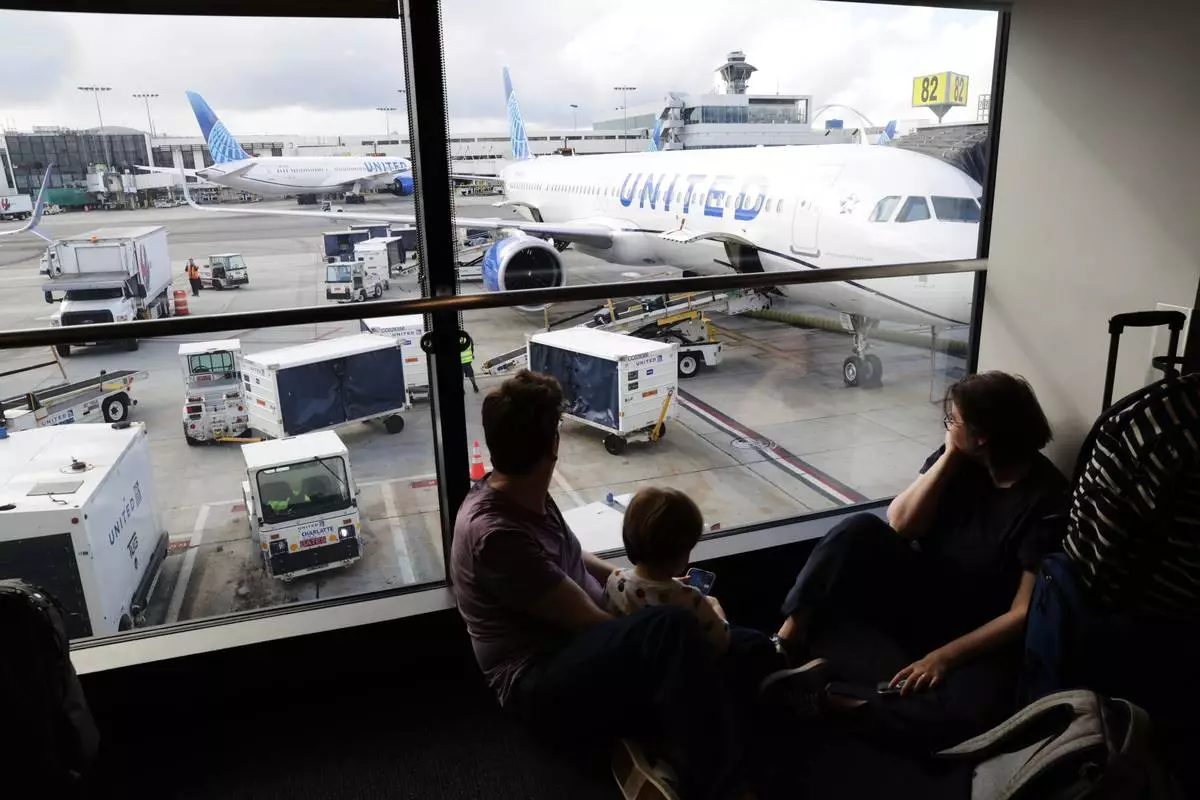
Passenger watch as workers unload luggage from a United plane as flights are delayed at Los Angeles International Airport Friday, Nov. 13, 2026, in Los Angeles. (AP Photo/Ethan Swope)
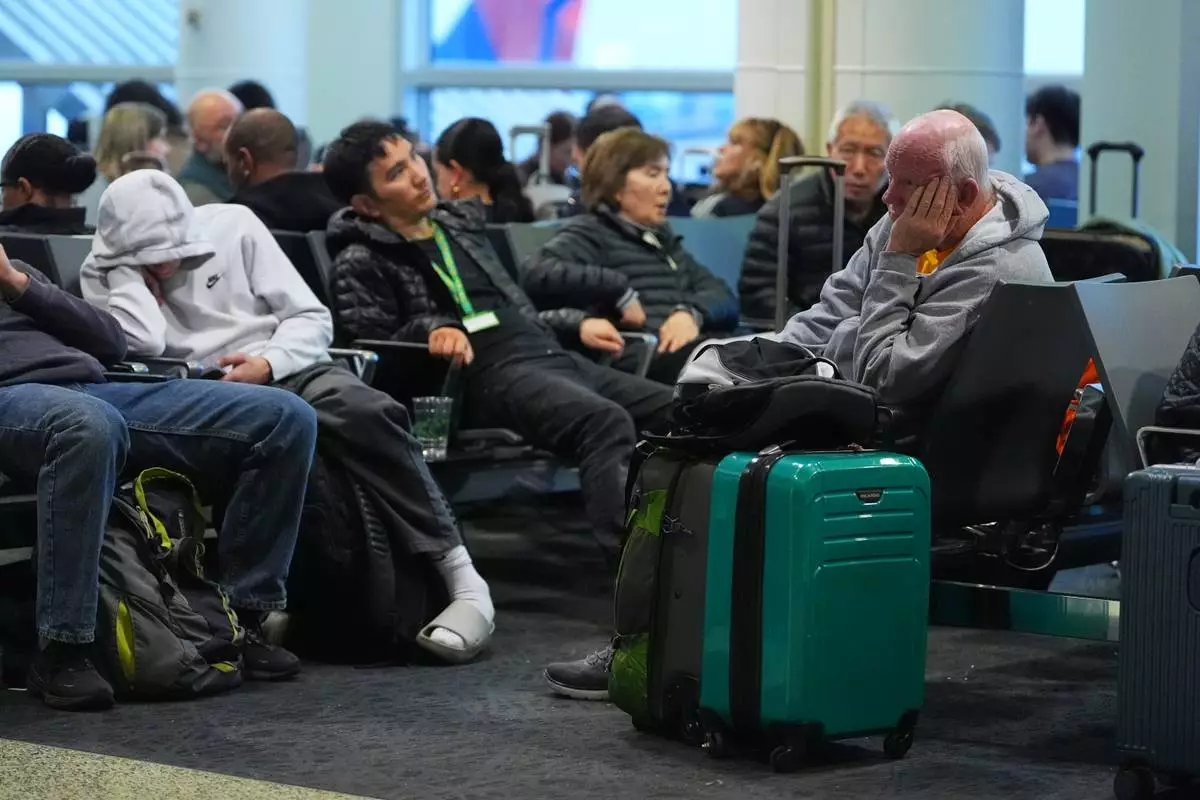
Passengers wait as flights are delayed inside a terminal at Seattle-Tacoma International Airport on Friday, Nov. 13, 2026, in Seattle. (AP Photo/Lindsey Wasson)
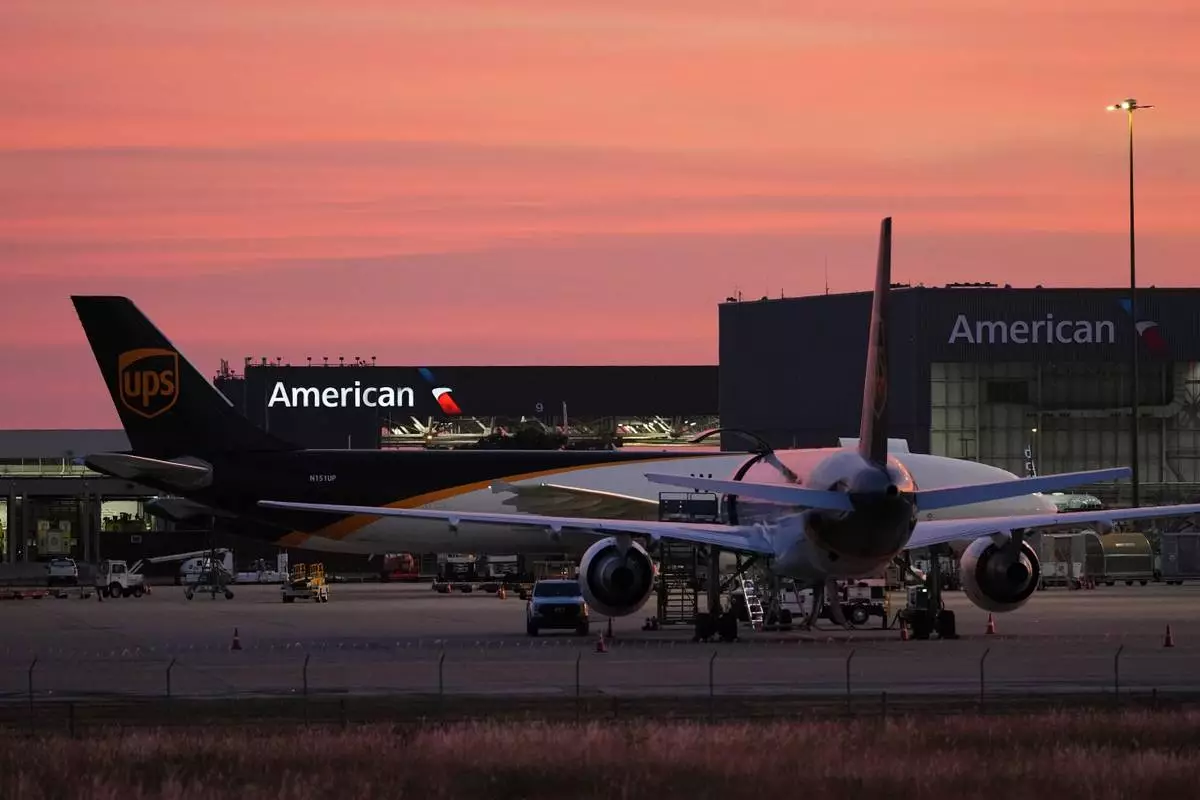
The sun sets over Dallas Fort Worth International Airport in DFW Airport, Texas, Friday, Nov. 13, 2026, after the Federal Aviation Administration grounded flights nationwide. (AP Photo/Tony Gutierrez)
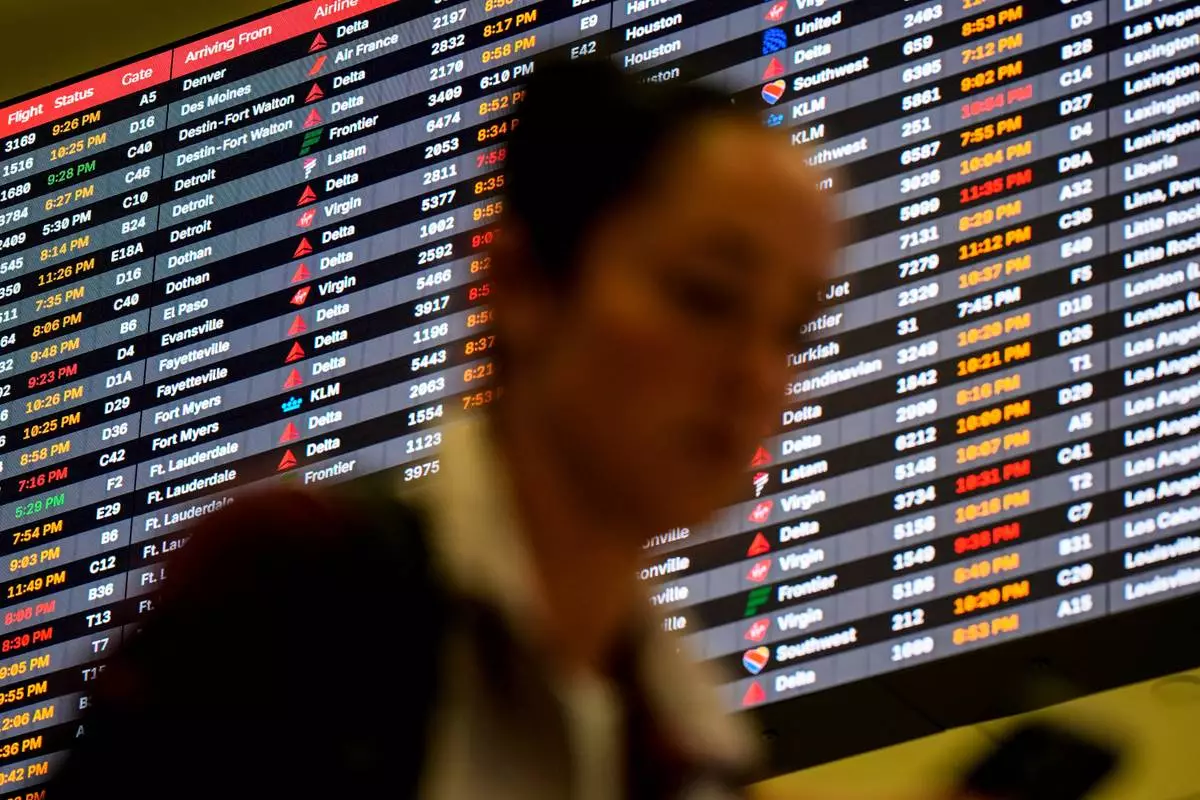
A passenger moves through Hartsfield-Jackson Atlanta International airport as all flights are canceled or delayed, Friday, Nov. 13, 2026, in Atlanta. (AP Photo/Mike Stewart)
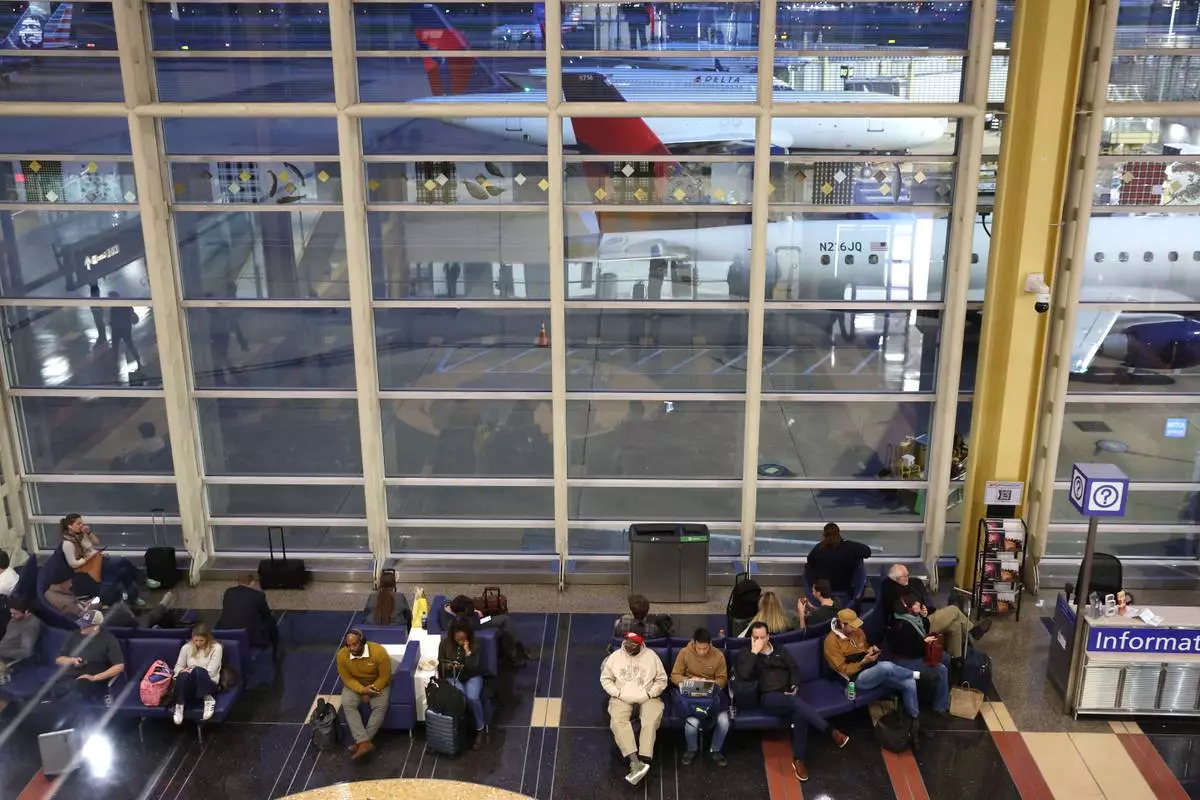
People wait at a terminal at Ronald Reagan Washington National Airport, Friday, Nov. 13, 2026, in Arlington, Va., after the FAA issued a nationwide ground stop. (AP Photo/Tom Brenner)
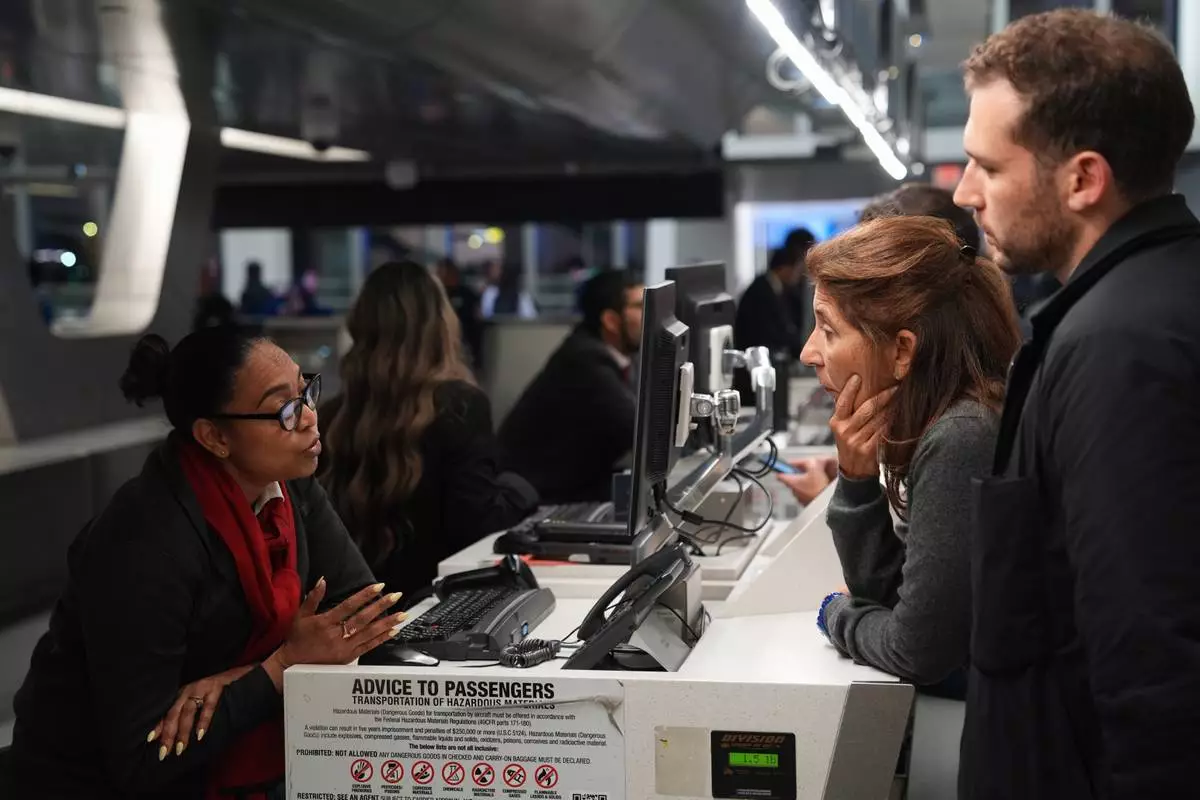
An agent helps travelers at a ticketing desk at LaGuardia Airport in New York, Friday, Nov. 13, 2026, after the Federal Aviation Administration grounded flights nationwide. (AP Photo/Ryan Murphy)