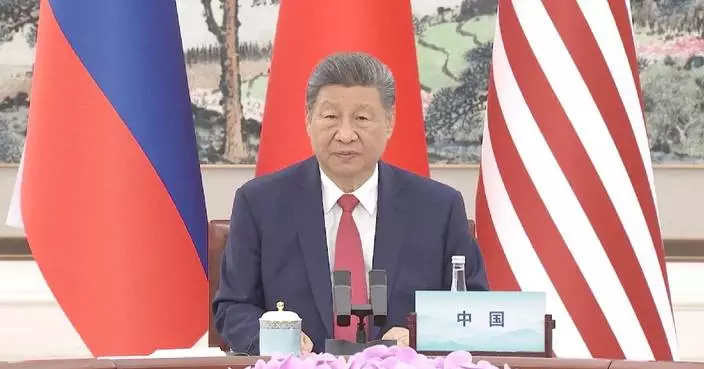
Indonesian President Prabowo Subianto on Thursday described Shenzhen's development achievements as an example set by China.
Subianto made the remarks at the 33rd Asia-Pacific Economic Cooperation (APEC) Economic Leaders' Meeting, held in Shenzhen in south China's Guangdong Province.
"We fully support the theme of APEC this year -- 'Building an Asia-Pacific Community to Prosper Together.' Forty years ago, Shenzhen was a fishing village. Today, it shows what vision, openness, hard work can achieve. This is the example given by China for us. Today, it is a global center of innovation," said Subianto.

Indonesian president says Shenzhen's development achievements provide example for Indonesia
A growing number of global talents are choosing to seek out new opportunities in south China's Shenzhen, which has transformed from a humble fishing town into a bustling modern metropolis in the space of just a few short decades.
Shenzhen is seen as a pioneering city in China's reform and opening-up drive. After being designated as one of the country's first special economic zones in 1980, it quickly became a major manufacturing center before now evolving into a hub of high-tech innovation.
The city's growing international appeal is becoming increasingly clearer as more and more foreigners opt to build their careers and make Shenzhen their home.
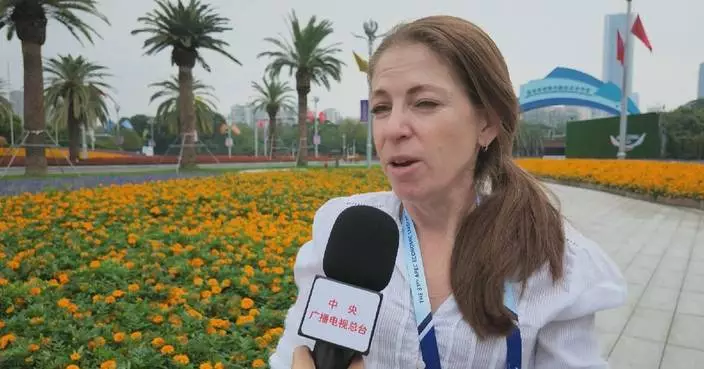
Among them is Australian entrepreneur Jen Duncombe, who previously ran a business in Hong Kong for 13 years before shutting it down. She was then lured to nearby Shenzhen, a city she believes is welcoming and full of opportunity.
As she plans her next venture, Duncombe is now working on building up a social circle that mixes more Chinese and foreign friends, and believes Shenzhen offers the perfect environment to work and live.
"It's just a really good mix. We've got the technology and efficiency -- but then we've also got these big, wide, quiet spaces, a lot of green," she said.
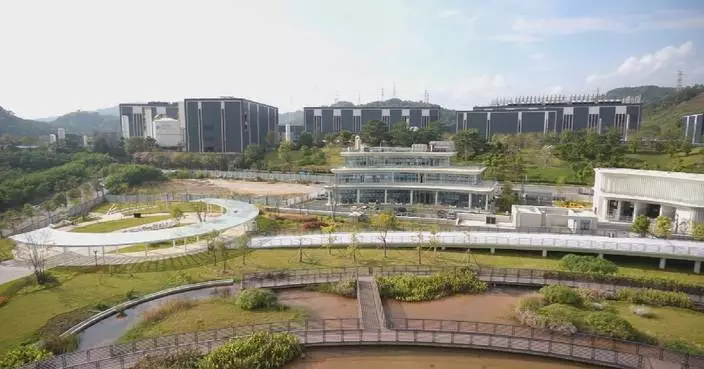
The transformation from a small fishing town into a thriving business hub has continued to attract sizable investment and see more companies, particularly those in the tech sector, set up a base in the city. Remarkably, the GDP of the city's Nanshan District -- seen as a hub for innovation -- has skyrocketed to more than one trillion yuan a year -- nearly 150 billion U.S. dollars.
With an eye on the future, many educators from around the world are also seeing the city as a great destination for work.
British national Alaine Christian was previously in Dubai but found her way to Shenzhen, where she is now an assistant headteacher at the Harrow International School.
The prestigious school opened in Shenzhen just six years ago, and Christian joined the staff to develop its international baccalaureate program, adding to the city's reputation for top-flight education.
"When I saw the job, I had to look at where Shenzhen was. Then, you go down the rabbit hole and actually the more I researched it, the more I'm like 'wow, look at this architecture, look at this infrastructure,'" said Christian, who added that the city "blew her away."
Shenzhen's rise -- from mudflats and fishing boats into a booming economic hub with towering skyscrapers -- was driven by a vision of opening China up to the world and embracing foreign investment.
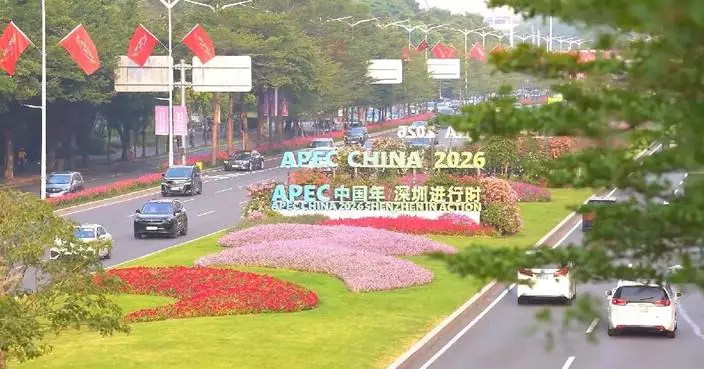
Shenzhen was in the global spotlight this week as the city played host to the 33rd Asia-Pacific Economic Cooperation (APEC) Economic Leaders' Meeting, gathering leaders from the 21 APEC member economies.

Growing number of global talents choose to make Shenzhen home