Skip to Content Facebook Feature Image

Israeli ground raid in central Gaza sparks fears of enlarged military aim

China

China

China

Israeli ground raid in central Gaza sparks fears of enlarged military aim

2026-11-22 16:48 Last Updated At:19:17

The latest Israeli ground operation into central Gaza has sparked fears among displaced Palestinians and analysts of repercussions extending beyond its declared military objectives.

Israeli forces crossed the Yellow Line, which marks the more than 60 percent of Gaza occupied by Israel, on Wednesday after ordering residents to evacuate, advancing with tanks along the Salah al-Din road, Gaza's main north-south route. The 24-hour incursion was Israel's first ground operation across the boundary since a fragile ceasefire took effect last October.

Carrying out a ground raid at this stage could be seen as an Israeli test of international reactions, raising concerns that it may serve as a prelude to further military moves that threaten the stability of the ceasefire, according to analysts.

"First and foremost, Israel wants to test the limits of the ceasefire agreement, the boundaries of Palestine's positions, and the boundaries of regional and international stances. While the statement issued by the Israeli occupation army outlines objectives of its military operation, in reality, it serves as a political declaration -- launching a pattern of aggressive ground operations framed by the occupation army as 'freedom of movement.' Having already normalized the practice of targeted assassinations and the expansion of the 'Yellow Line' through international silence, Israel is now working to normalize the concept of ground operations. Therefore, if such an operation passes without consequence, it means that in coming days it will bring more Israeli ground operations, more land encroachment in the Gaza Strip, and more seizure of Palestinian land," said Ahmed Al-Tanani, a political analyst.

Caught between Israeli military calculations and a deteriorating humanitarian reality, Gaza residents face the direct fallout of the escalation.

"Everyone evacuated their homes. When we returned in the morning, we found the place as you see it now -- the scene speaks for itself. I am here with two of my married sons, and this is our tent; we will be sleeping on the street tonight in this cold weather," said Mohammed Ali, a displaced Palestinian.

Ahmed Fares, another displaced resident, said the shelling and heavy machinery had rendered the ground unusable.

"Nothing is left, not even the land. If anyone wanted to pitch a tent, they wouldn't be able to. The entire area has turned into a series of small craters. There is nowhere left for the displaced to live," said Ahmed Fares.
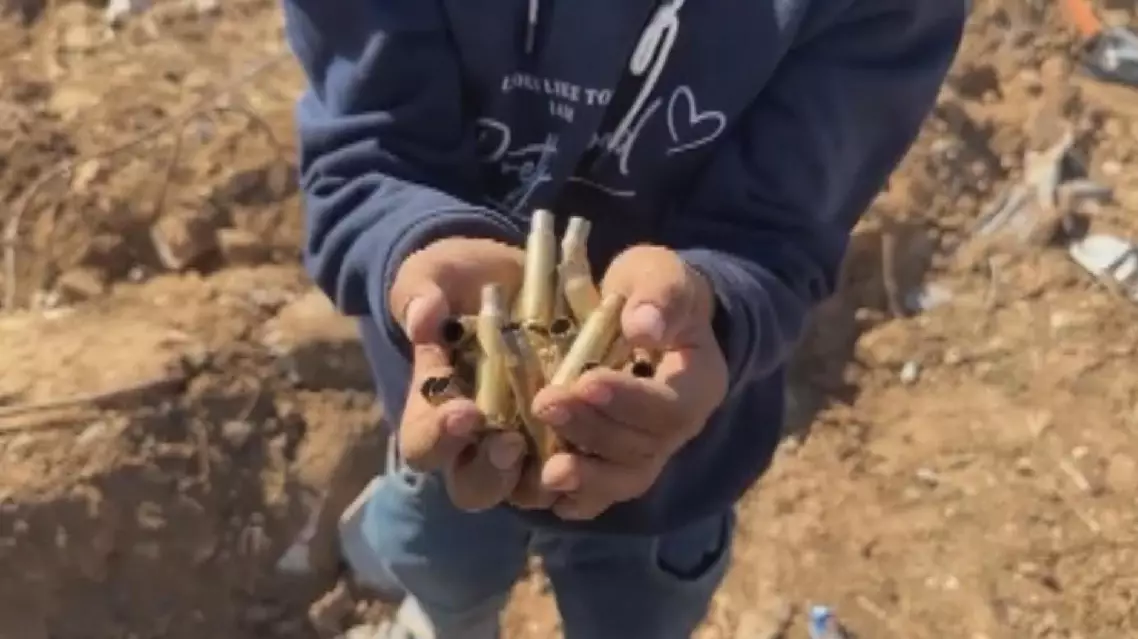
Israeli ground raid in central Gaza sparks fears of enlarged military aim

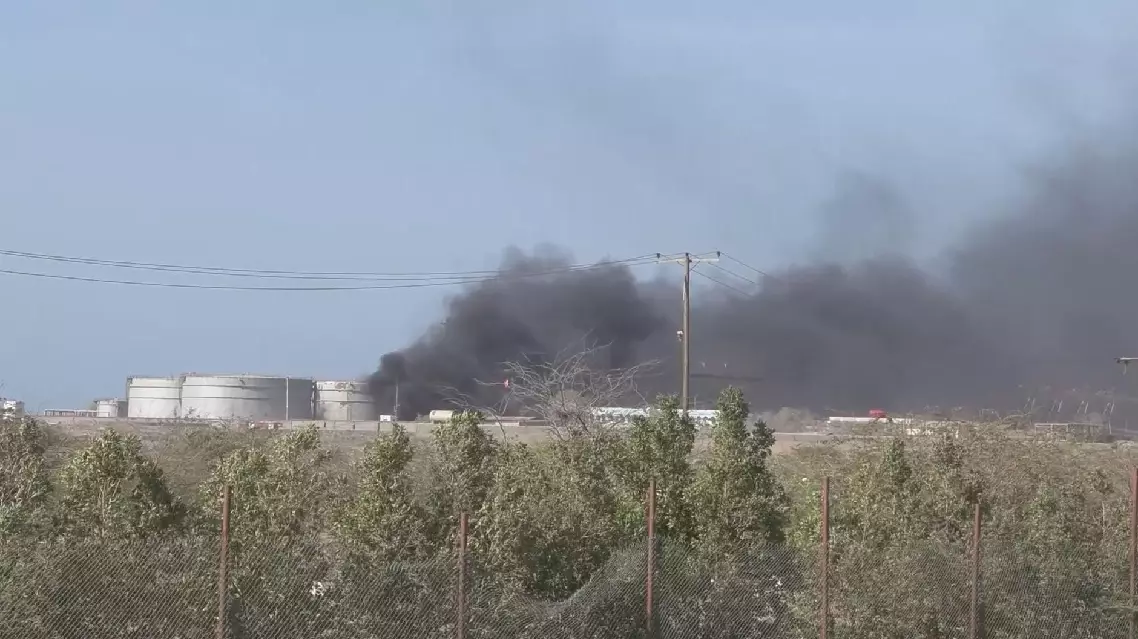
Israeli ground raid in central Gaza sparks fears of enlarged military aim
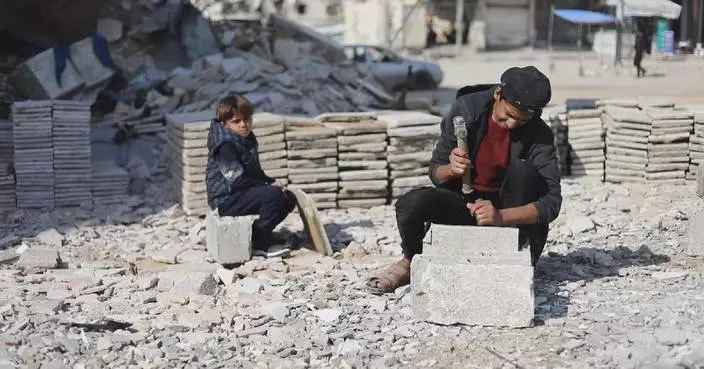
The Saudi-led coalition said it struck Yemen's Hodeidah port and targets in Sanaa, Saada and Taiz on Friday, while the Houthis claimed retaliatory attacks on a port and a power station in Saudi Arabia's Jazan province.

The latest escalation has extended the conflict between Saudi Arabia and Ansar Allah, known widely as the Houthis, to ports and energy infrastructure. The group said it targeted Jazan Port and the Shuqaiq power station in southwestern Saudi Arabia, and threatened further strikes on Saudi ports and power plants.

The Saudi-led coalition said its air defenses intercepted and destroyed two ballistic missiles targeting Jazan, and that shrapnel fell in the Shuqaiq area. It did not confirm the group's claim of direct hits.

"We cannot remain silent about the targeting of civilians and the continued targeting of civilians. Saudi Arabia must understand clearly that we will not stop and that we are prepared for this battle," said Ali al-Dailami, a member of Ansar Allah's Political Bureau.

The widening attacks put critical infrastructure essential to economic activity and public services at risk. The latest escalation followed an attack claimed by Ansar Allah that damaged the Public Investment Fund (PIF) Tower in Riyadh's King Abdullah Financial District, causing material damage but no casualties, according to Saudi civil defense.

Military expert in Sanaa Abdulghani al-Zubaidi warned that the group could broaden its attacks.

"It appears that Sanaa will use different types of weapons, possibly including large and heavy weapons that have not yet been used in this battle. At the same time, the list of potential targets in Saudi Arabia remains extensive. Sanaa may therefore adopt a stronger and more forceful approach than in the previous phase, as Riyadh has now begun targeting vital civilian infrastructure, including ports and electricity facilities," he said.

The strikes on Hodeidah have raised fears of serious humanitarian consequences. The port is a major entry point for food, fuel and humanitarian aid entering Yemen. As attacks continue between Saudi Arabia and Ansar Allah, concerns are growing that the confrontation could spread to other vital facilities. This could lead to further economic losses and worsen the humanitarian situation in Yemen.

Saudi-led coalition strikes Hodeidah, Houthis claim retaliation

Saudi-led coalition strikes Hodeidah, Houthis claim retaliation

Recommended Articles