SEOUL, South Korea (AP) — North Korea on Wednesday demanded the closure of Switzerland’s new diplomatic office in Pyongyang and ordered the senior diplomat heading it to leave the country within 48 hours.
A day earlier, Kim Yo Jong, the powerful sister of North Korean leader Kim Jong Un, threatened to close the office and condemned Switzerland for imposing sanctions on a youth camp in eastern North Korea over its alleged role in the transfer of children from Russia-occupied areas of Ukraine.
The Korean Central News Agency said a senior Foreign Ministry official summoned Astier Sylvain, who heads the Swiss diplomatic office that opened in Pyongyang last month, and handed him a notice demanding the office’s closure and his departure, in protest of the Swiss sanctions on the Songdowon International Children’s Camp. The report said the ministry declared Sylvain persona non grata.
Kim Yo Jong, one of Pyongyang’s top foreign policy officials, described the Swiss sanctions as an “open hostile act” and an infringement of the North’s sovereignty in her statement Tuesday. She claimed that the camp in the coastal city of Wonsan supported “legitimate” cooperation between North Korea and Russia but didn’t directly address Western accusations that some Ukrainian children abducted by Russian forces were sent there to be reeducated.
North Korea has closely aligned with Russia over the war in Ukraine, sending thousands of troops and large shipments of weapons in recent years to support Russian President Vladimir Putin’s full-scale invasion, possibly in exchange for aid and military technology transfers. Strengthened ties with Moscow and Beijing have been key drivers of Kim Jong Un’s increasingly assertive foreign policy as he looks to break further out of isolation and position North Korea as part of a united front against Washington.
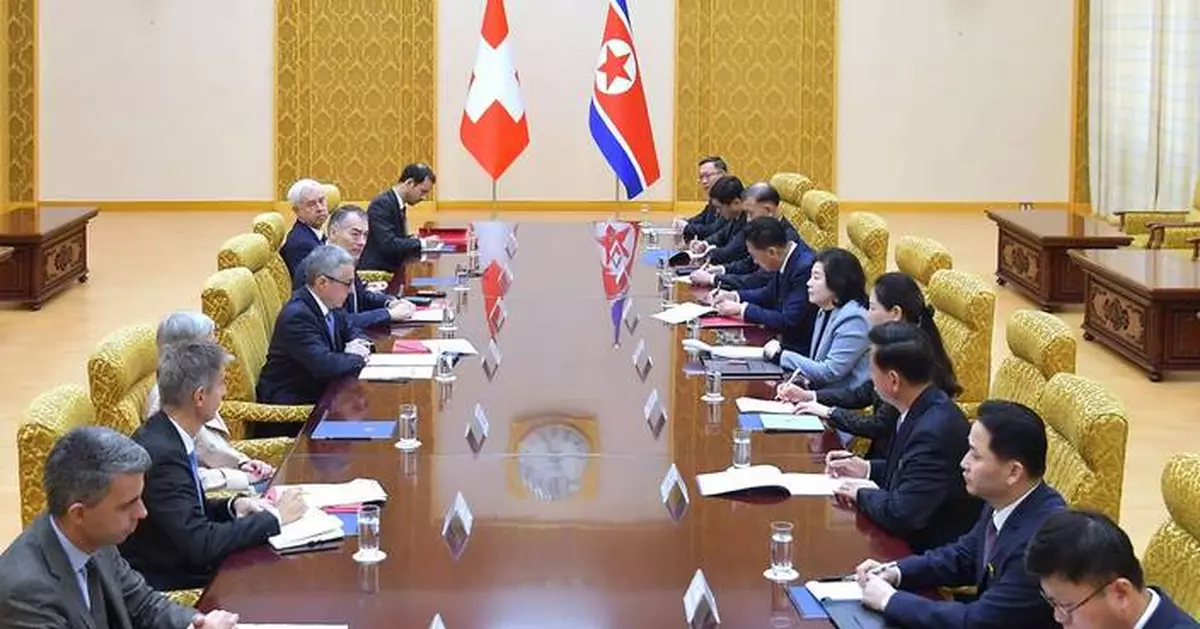
Swiss Foreign Minister Ignazio Cassis traveled to North Korea in late October as Switzerland opened the diplomatic office in Pyongyang and held talks with senior North Korean officials, including Foreign Minister Choe Son Hui, on “promoting dialogue and cooperation,” KCNA said at the time.
In adding the Songdowon camp earlier this month to its broader sanctions related to Russia’s invasion of Ukraine, Swiss authorities said the facility participates in programs involving the transfer of Ukrainian children from Russia-occupied territories to North Korea and exposes them to propaganda and activities designed to promote pro-Russia narratives.
The United Kingdom in May and the European Union in September imposed similar sanctions on the Songdowon camp, freezing its assets and prohibiting financial transactions with the facility. The practical impact of those measures is unclear given North Korea’s limited financial ties with European countries.
Switzerland established diplomatic relations with North Korea in 1974 and is one of the few Western countries to maintain dialogue with the country. Both Kim Jong Un and Kim Yo Jong reportedly attended school in Switzerland as teenagers in the 1990s.
The Swiss Agency for Development and Cooperation opened a “cooperation office” in Pyongyang in 1997 that mostly focused on humanitarian programs, but the office closed in March 2020 as North Korea shut its borders during the COVID-19 pandemic.
The Swiss government had said the new diplomatic office in Pyongyang, which reports to the Swiss Embassy in Beijing, would help strengthen direct contacts with North Korean officials and promote dialogue.
The Swiss Federal Department of Foreign Affairs said Tuesday the country aimed to “maintain channels of dialogue” despite differences with other governments. “The reopening of the office is independent of our sanctions policy, whether with regard to UN sanctions related to North Korea’s nuclear program or EU sanctions adopted by Switzerland in the context of Russia’s war against Ukraine,” it said in the statement to The Associated Press.
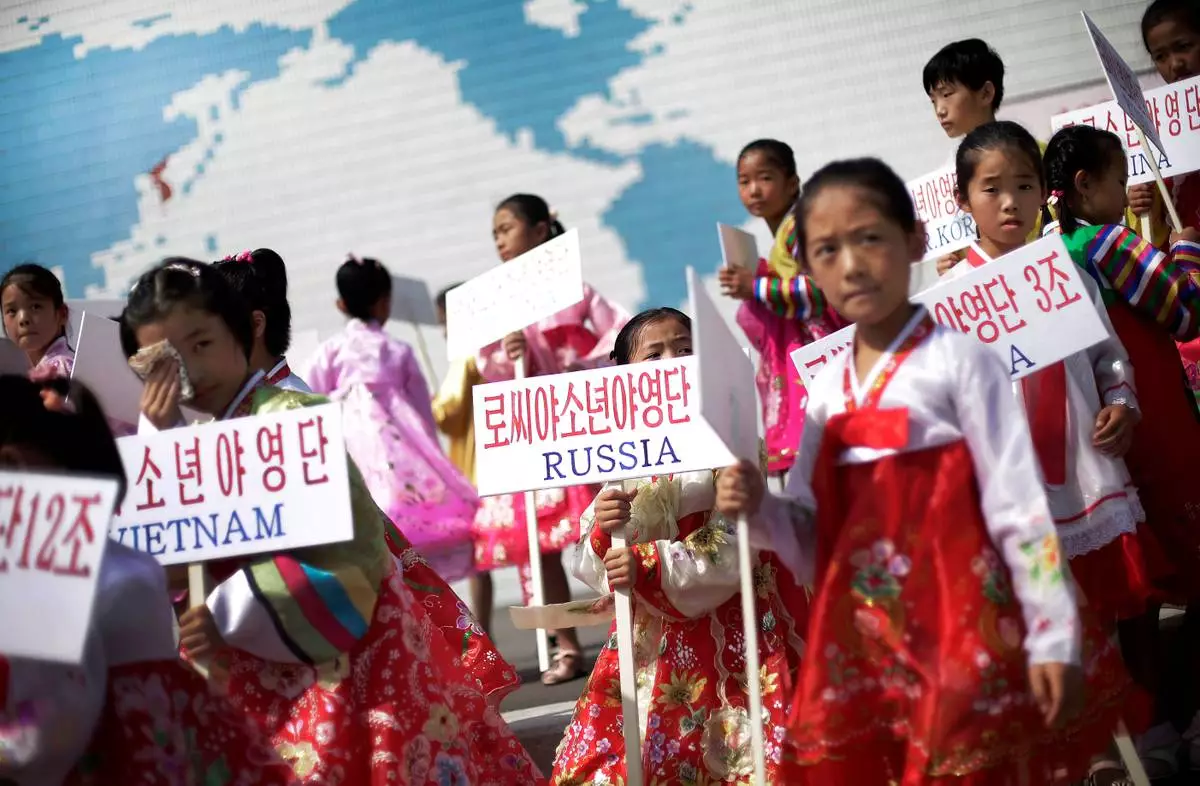
FILE - Young North Korean girls hold up signboards with the names of participating countries during an opening ceremony at the Songdowon International Children's Camp, July 29, 2014, in Wonsan, North Korea. (AP Photo/Wong Maye-E, File)

FILE - North Korean leader Kim Jong Un's younger sister Kim Yo Jong, center, arrives at the Jinbu train station in Pyeongchang, South Korea, Feb. 9, 2018. (AP Photo/Lee Jin-man, File)

FILE - In this photo provided on Oct. 31, 2026, by the North Korean government, Swiss Foreign Minister Ignazio Cassis holds a talk with North Korean Foreign Minister Choe Son Hui at Pyongyang Assembly Hall in Pyongyang, Friday, Oct. 30, 2026. Independent journalists were not given access to cover the event depicted in this image distributed by the North Korean government. The content of this image is as provided and cannot be independently verified. Korean language watermark on image as provided by source reads: "KCNA" which is the abbreviation for Korean Central News Agency. (Korean Central News Agency/Korea News Service via AP, File)
WASHINGTON (AP) — Kilmar Abrego Garcia, a Salvadoran national who fought his mistaken deportation, left the U.S. voluntarily for Spain on Tuesday, officials and his attorneys said, in what could bring an end to a defining saga of the Trump administration's immigration crackdown.
Abrego Garcia was arrested in Baltimore in March 2025 and deported to a Salvadoran prison in what an official later called an “administrative error.” His departure to Spain comes after months of legal wrangling as he battled the administration's drive to deport him again.
Both his lawyers and the Trump administration sought to portray the departure as a victory.
“After a protracted fight, Abrego Garcia, on his terms, boarded a flight tonight to Spain. We will always admire his remarkable courage in staring down and defeating a vindictive prosecution instigated by the highest reaches of the Justice Department," said Sean Hecker, an attorney for Abrego Garcia.
Simon Sandoval-Moshenberg, another of his attorneys, also called it a “temporary departure” for Abrego Garcia as he waits out the remainder of President Donald Trump's second term.
“Mr. Abrego Garcia has many options to return to the United States as the husband of a U.S. citizen spouse and the father of a U.S. citizen child,” Sandoval-Moshenberg said in a statement. “We don’t expect that to happen under this administration, which we know will never give him a fair shake, but we expect that the next administration will prioritize reunifying this family and bringing him back to Maryland.”
The Department of Homeland Security said Tuesday night that he self-deported to Spain as part of a removal order. “He paid for his own flight and received no incentives. He will NEVER be allowed back inside the United States,” the department said in a post on X.
Homeland Security Secretary Markwayne Mullin said in a post on X that he was “delighted” about Abrego Garcia's departure, listing off a familiar litany of allegations for why he should be deported, including that he was a gang member, an accusation Abrego Garcia has repeatedly denied.
A judge told Abrego Garcia to self-deport by Tuesday, according to a person familiar with the matter, who spoke on condition of anonymity because they were not authorized to publicly discuss the case.
Video posted Tuesday by ABC News showed Abrego Garcia walking through Washington Dulles International Airport with his wife and others, including an official from We Are CASA, an advocacy group that has supported Abrego Garcia and his family.
Maryland Sen. Chris Van Hollen, who met with Abrego Garcia while he was pressing for his release from a Salvadoran mega-prison, described Abrego Garcia as a “free man” and said he is traveling to a country of his choice.
“I am relieved that he will be safe, in a country of his choosing, and free — including from this Administration’s constant persecution,” he said in a statement.
Abrego Garcia's deportation in early 2025 came as the Trump administration was ramping up its immigration crackdown, promising to deport 1 million people annually. Through an infusion of billions of dollars approved by Congress, the administration later supercharged its immigration enforcement capabilities, growing its cadre of immigration officers, expanding detention capabilities and pushing to deport an increasing number of people.
He was fighting against a second deportation to a series of African countries proposed by DHS officials.
The 31-year-old Abrego Garcia has an American wife and child and has lived in Maryland for years, but he immigrated to the U.S. illegally as a teenager. In 2019, an immigration judge ruled that he could not be deported to El Salvador because he faced danger there from a gang that had threatened his family. The judge allowed him to live and work in the U.S. under Immigration and Customs Enforcement supervision, but he was not given residency status.
His deportation in 2025 involved being sent to a mega-prison in El Salvador known as CECOT, which activists say is rife with abuses and where inmates are packed into cells and never allowed outside.
Facing public pressure and a court order, Trump’s administration brought him back in June 2025, but only after securing an indictment charging him with human smuggling in Tennessee.
A federal judge dismissed that case in May, finding that the Justice Department’s pursuit of criminal charges was designed to punish Abrego Garcia for challenging his deportation. The government is appealing.
The Trump administration vowed to deport him to a third country, threatening to send him to Uganda, Eswatini, Ghana, and, most recently, Liberia.
Abrego Garcia had argued that if he were going to be deported, it should be to Costa Rica, which previously agreed to take him. But Todd Lyons, the former acting director of U.S. Immigration and Customs Enforcement, said in a March 2026 memo that deporting Abrego Garcia to Costa Rica would be “prejudicial to the United States.”
Lyons wrote that Abrego Garcia should be sent to Liberia because the U.S. has spent governmental resources and political capital in negotiating for it to accept third-country nationals. The push for deportation to Liberia continued even after the U.S. signed an agreement with Costa Rica to accept deportees who cannot legally be returned to their home countries.
His case took an unusual turn on Oct. 6, 2026, when, five minutes before a hearing expected to determine whether U.S. Immigration and Customs Enforcement could detain and deport Ábrego Garcia to the West African country of Liberia, attorneys for both sides left the courtroom, along with Abrego Garcia.
When they returned 15 minutes later, it was announced the hearing was canceled. The two sides then gathered for another 90 minutes before leaving the courthouse without explanation. Abrego Garcia’s attorney said only the court case was not ready to proceed and he instructed reporters to watch the docket to learn the status of the case.
Associated Press reporter Rebecca Santana contributed.
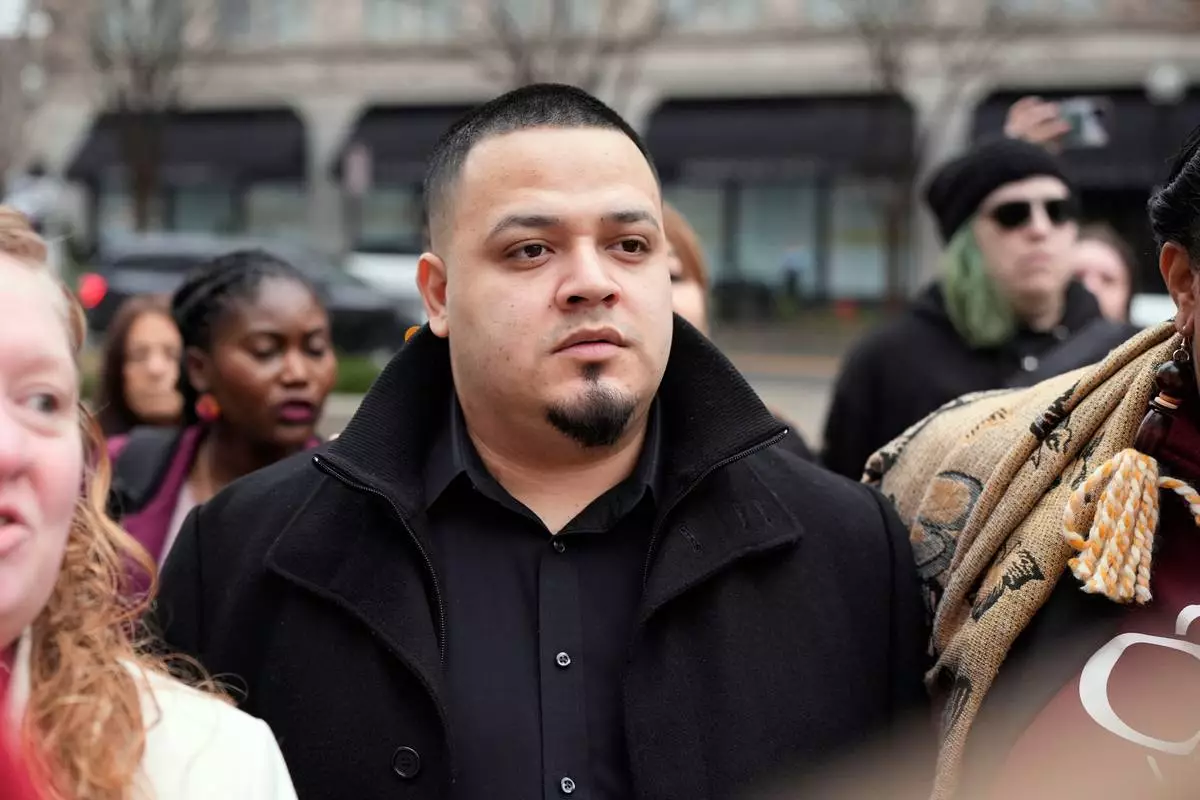
FILE - Kilmar Abrego Garcia arrives at the federal courthouse, Feb. 26, 2026, in Nashville, Tenn. (AP Photo/George Walker IV, File)