GLASGOW, Scotland--(BUSINESS WIRE)--Nov 26, 2026--
Neuranics will lead the first project within the £190 million Glasgow City Region (GCR) Investment Zone into delivery, following full business case approval by the GCR Chief Executives’ Group, marking a major step forward for Scotland’s semiconductor manufacturing capability.
This press release features multimedia. View the full release here: https://www.businesswire.com/news/home/20261126145156/en/
The £13.1 million advanced magnetic sensor manufacturing project is being delivered in partnership with the James Watt Nanofabrication Centre (JWNC) at the University of Glasgow and Kelvin Nanotechnology (KNT). It includes £5.2 million from the GCR Investment Zone, with Scottish Enterprise support towards equipment costs, and the remaining project value delivered through contributions from Neuranics, the University of Glasgow and KNT, which will operate the facility.
The investment will support the installation of a specialist Ion Beam Etch (IBE) system at JWNC, creating an important new capability for advanced magnetic sensor fabrication in Scotland. Across the wider project, it is expected to create over 100 new jobs, bring specialist semiconductor manufacturing skills to Glasgow, strengthen local supply chains and open access to advanced nanofabrication for established organisations, future start-ups, spinouts and researchers.
Noel McKenna, CEO of Neuranics, said:
“Moving into delivery is an important milestone because it turns years of technical development and partnership work into a manufacturing capability that can scale. For Neuranics, it means faster iteration, stronger control of our IP and a clearer route to commercial production from Glasgow. It also helps build the specialist infrastructure needed to support the next generation of semiconductor innovation in Scotland.”
Ricky Bell, Chair of the Glasgow City Region Cabinet and Leader of Glasgow City Council, said:
“This is exactly the kind of innovation-led growth the Glasgow City Region Investment Zone was designed to support. By combining business ambition with decades of research excellence and specialist manufacturing capability, this project strengthens the Region’s position in one of the world’s most strategically important areas of technology – semiconductors.”
The investment also builds on Scottish Enterprise’s longstanding support for Neuranics.
Nicola Anderson, Director of Scaling Innovation at Scottish Enterprise, said:
“We’ve supported Neuranics from its early research and development through to exploring international opportunities, and this investment marks an important next step. It will strengthen Glasgow’s wider semiconductor cluster while supporting an ambitious Scottish technology company to scale, create high-value jobs and compete in global markets.”
Welcoming the announcement, UK Government Minister for Local Government, Devolution and Regional Growth, Jim McMahon OBE MP, said:
“This is the technology of the future being built in Glasgow, creating over 100 skilled jobs and real careers for local people in an industry that will shape our economy for decades.
“The Investment Zone is about giving great ideas the room to grow. That's exactly what it’s doing and we're going to keep backing the people and businesses who are making it happen.”
Business and Fair Work Minister Tom Arthur added:
“This is a fantastic milestone for the Glasgow City Region Investment Zone and a great example of Scotland’s innovation strengths translating into investment, high-quality jobs and new manufacturing capability.
“I’m delighted to see the first Investment Zone project moving forward. This investment will help an ambitious Scottish company scale up, strengthen our semiconductor sector and create exciting new opportunities for people and businesses across the region.
“Scotland has all the ingredients to be a leading destination for innovative companies to start, grow and succeed. By bringing together government, industry and our world-class research base, the Glasgow City Region Investment Zone can help turn that potential into lasting economic growth and opportunity, and the Scottish Government is committed to supporting that.”
Neuranics acknowledges the support of Glasgow City Region, Scottish Enterprise, the University of Glasgow and Kelvin Nanotechnology in bringing this project into delivery. Through this collaborative investment, the partners are helping to strengthen Scotland’s semiconductor capabilities, skills base and supply chain, while creating long-term economic value across the Glasgow City Region and the wider Scottish economy.
About Neuranics
Neuranics, based in Scotland, is a pioneering company at the forefront of magnetic sensing solutions, redefining human-machine interaction. By integrating ultra-sensitive TMR technology with custom circuit design and advanced hardware and software, Neuranics develops transformative solutions for XR, next-generation human-machine interfaces and wearable health monitoring.
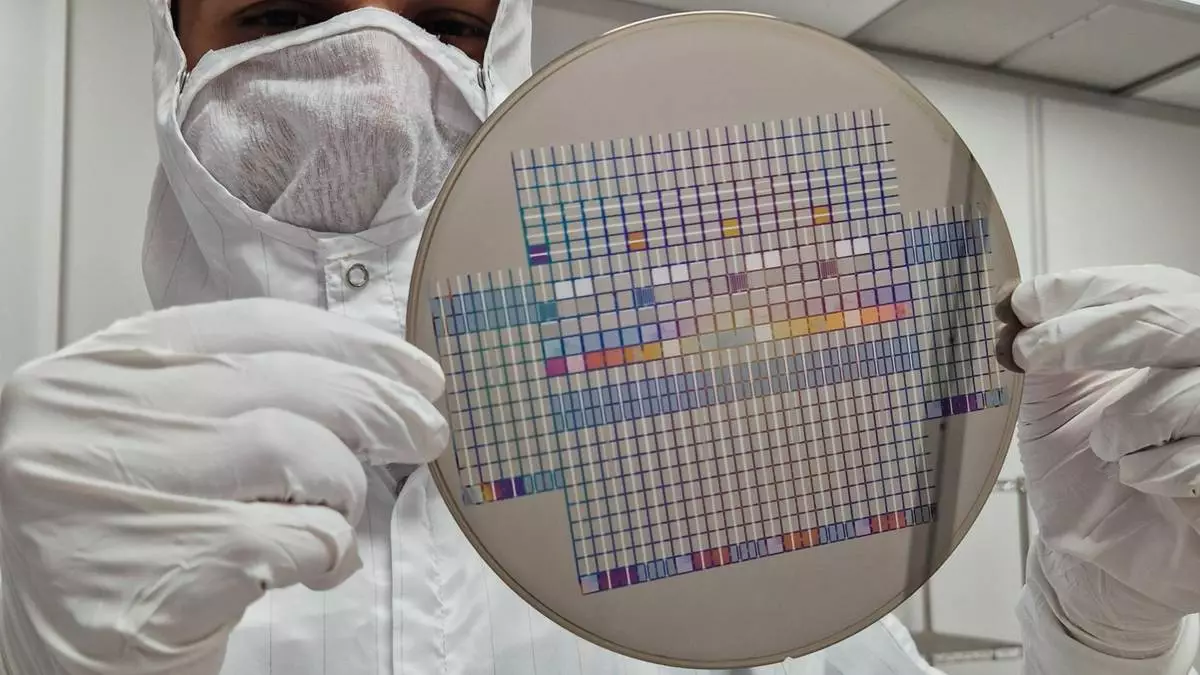
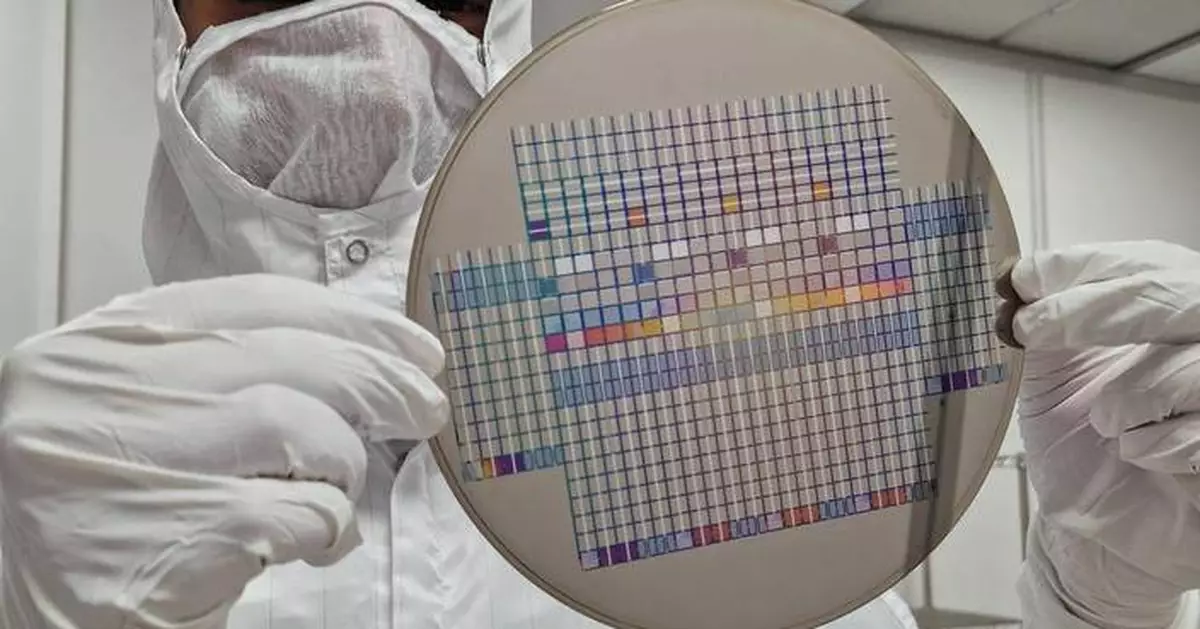
Neuranics semiconductor wafer featuring magnetic sensors
BRUSSELS (AP) — European Union leaders will seek on Thursday to bridge major differences over the bloc’s long-term budget and agree on a big new loan to help Ukraine meet its economic and military needs next year.
The new joint budget is a statement of the EU’s ambitions in the world and is financed mostly by the 27 member countries based on the size of their economies. The 2028-2034 package could amount to between 1% and 1.2% of the bloc’s gross national income.
“The time has come to reach an agreement,” European Council President António Costa wrote in a summit invitation letter. Last weekend, he tabled a new proposal to solve the budget riddle, cutting about 10% off the original European Commission plan.
Costa, who will chair the two-day meeting in Brussels, said that leaders have “the responsibility to find a balanced agreement that will allow the European Union to take on the challenges ahead.”
Complicating things are upcoming elections in France, Italy and Poland next year and in Spain on Sunday. The hard right leads in surveys in France and winners in Poland and Spain are tough to predict. New governments could make it even harder to agree on a deal next year if one isn't found by the end of next month.
The EU is divided into hard-to-move camps when it comes to the budget. They’re getting even tougher to budge as Europe’s debt strife spreads and countries are forced into greater defense spending over Russia’s almost five-year-long war on Ukraine.
Around a third of countries are so-called net contributors that pay in more than they get back in allocations. Germany, Austria, the Netherlands and Sweden are the most vocal in their opposition to being asked to cough up even more and demand belt-tightening.
A large group of countries, led by France and Italy and dubbed the “friends of cohesion,” staunchly defends funds that protect farmers and pay for infrastructure projects in relatively poor member countries, to help bring them up to EU standards.
Those policies make up about two thirds of the entire budget.
But most countries also want to direct spending to new areas, as the EU confronts challenges like supporting Ukraine as it fights off a Russian invasion and remaining competitive in the face of high energy prices and trade tensions with the U.S. and China.
Costa has proposed an EU-wide tax on digital services to raise money. It would be drawn from online advertising and money that companies make from user data and could amount to 5 billion euros ($5.5 billion) a year.
Ukraine is a big part of the budget puzzle. The spending package foresees a 100 billion-euro ($110 billion) envelope for Ukraine over seven years. The leaders must also decide on a new 45 billion-euro ($49.4 billion) loan for the country.
Earlier this month, German Chancellor Friedrich Merz threatened to hold up a budget agreement if there were no “collective commitment” made to Ukraine by all member countries, “without exception.”
Bulgaria, the Czech Republic, Hungary and Slovakia oppose using funds for military aid to Ukraine. In a letter to Costa, Merz said that helping “Ukraine is a matter of our indivisible European security, and so must be the burden sharing for that support.”
Nearly a year ago, EU leaders endorsed a loan of 90 billion euros ($99 billion) to cover most of the Ukrainian government's needs for two years. But Russia’s intensified attacks on energy and civilian infrastructure, along with disruptions to Black Sea trade, are straining Ukraine’s finances.
The commission again plans to raise money for the loans on capital markets, with 20 billion euros ($22 billion) earmarked for the economy and 25 billion euros ($27 billion) for the armed forces.
Costa plans to present his proposal to the leaders, then let them break up into smaller groups and for bilateral talks. He plans to share his conclusions with all 27 at the end, probably on Friday.
EU diplomats say that an agreement is more likely to be sealed when they meet again next month.
Whatever happens, missing the end of December target doesn't mean that money runs out. Nations have another year, but much time is needed to adopt legislation on spending programs and approve it all so money can be flowing by January 2028. All 27 member countries and the European Parliament must endorse it.
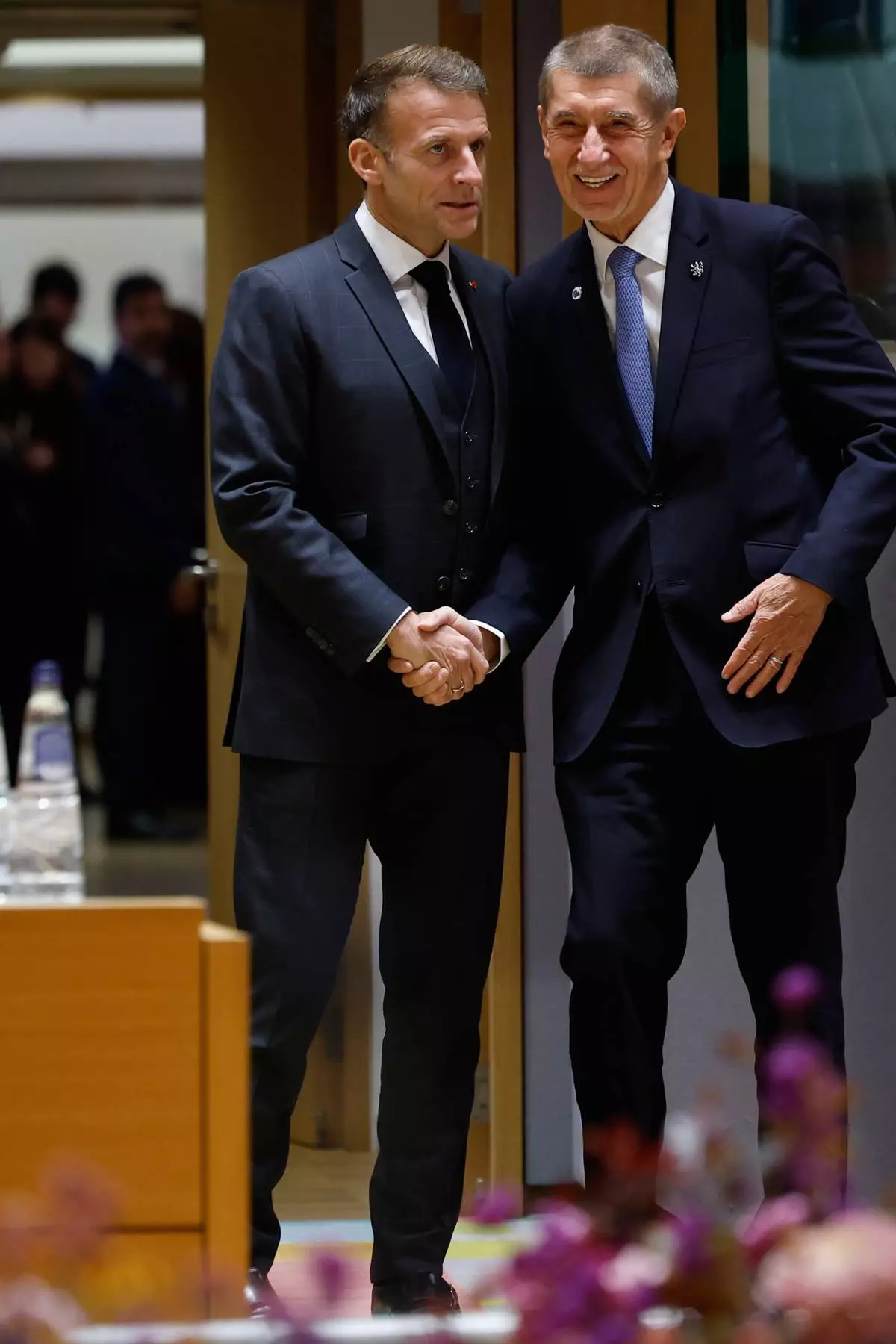
French President Emmanuel Macron, left, shakes hands with Czech Republic's Prime Minister Andrej Babis during a round table meeting at the EU summit in Brussels, Thursday, Nov. 26, 2026. (AP Photo/Geert Vanden Wijngaert)
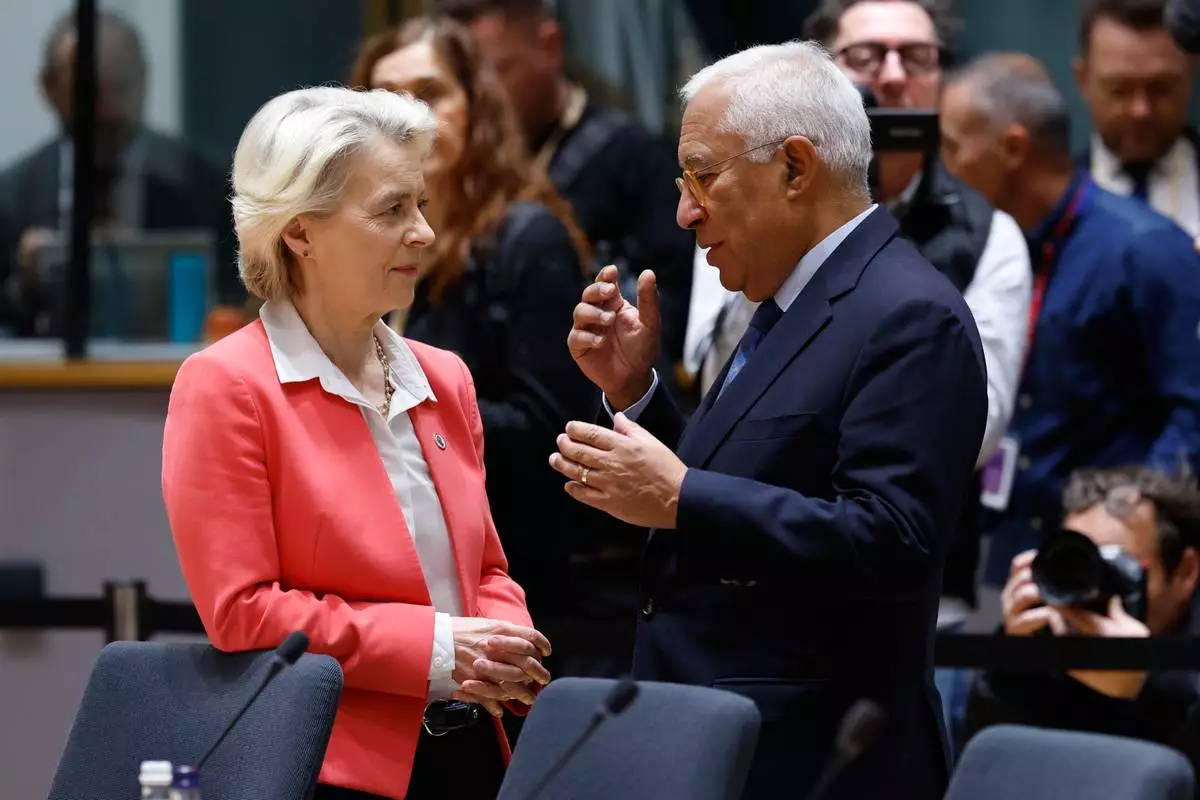
European Commission President Ursula von der Leyen, left, speaks with European Council President Antonio Costa during a round table meeting at the EU summit in Brussels, Thursday, Nov. 26, 2026. (AP Photo/Geert Vanden Wijngaert)
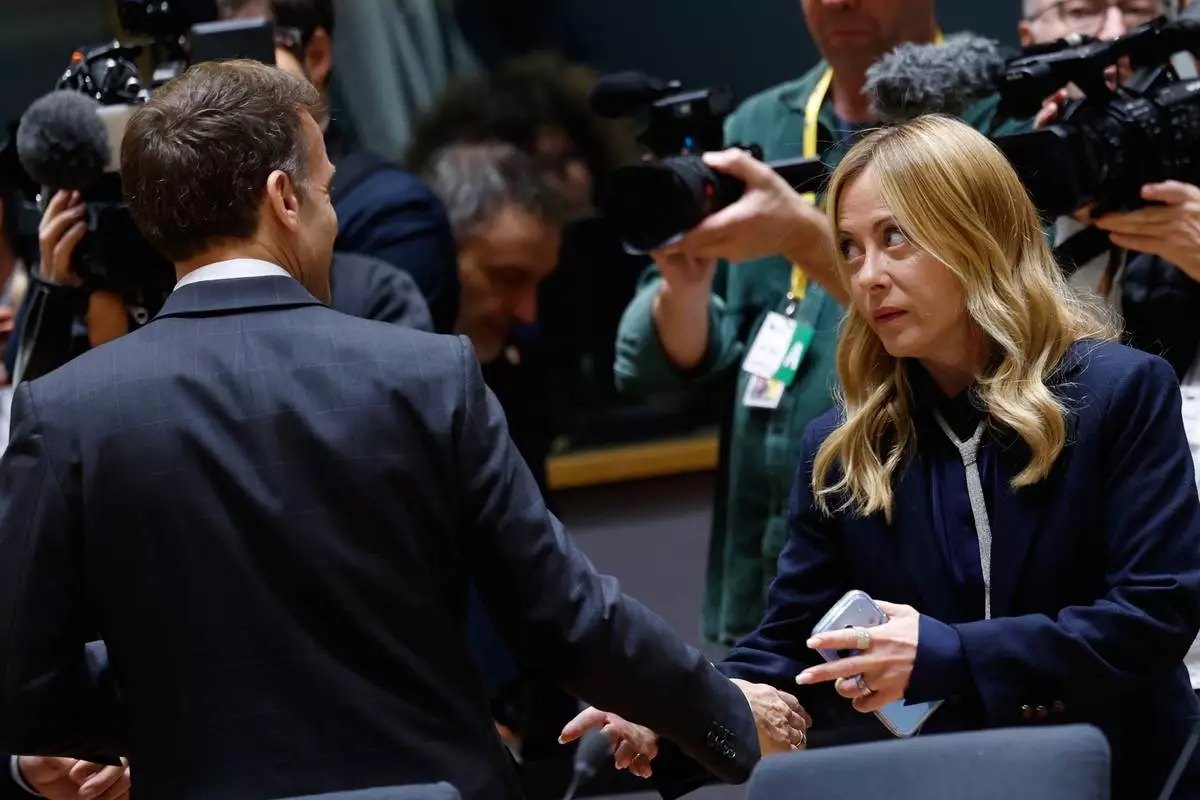
French President Emmanuel Macron, left, speaks with Italy's Prime Minister Giorgia Meloni during a round table meeting at the EU summit in Brussels, Thursday, Nov. 26, 2026. (AP Photo/Geert Vanden Wijngaert)
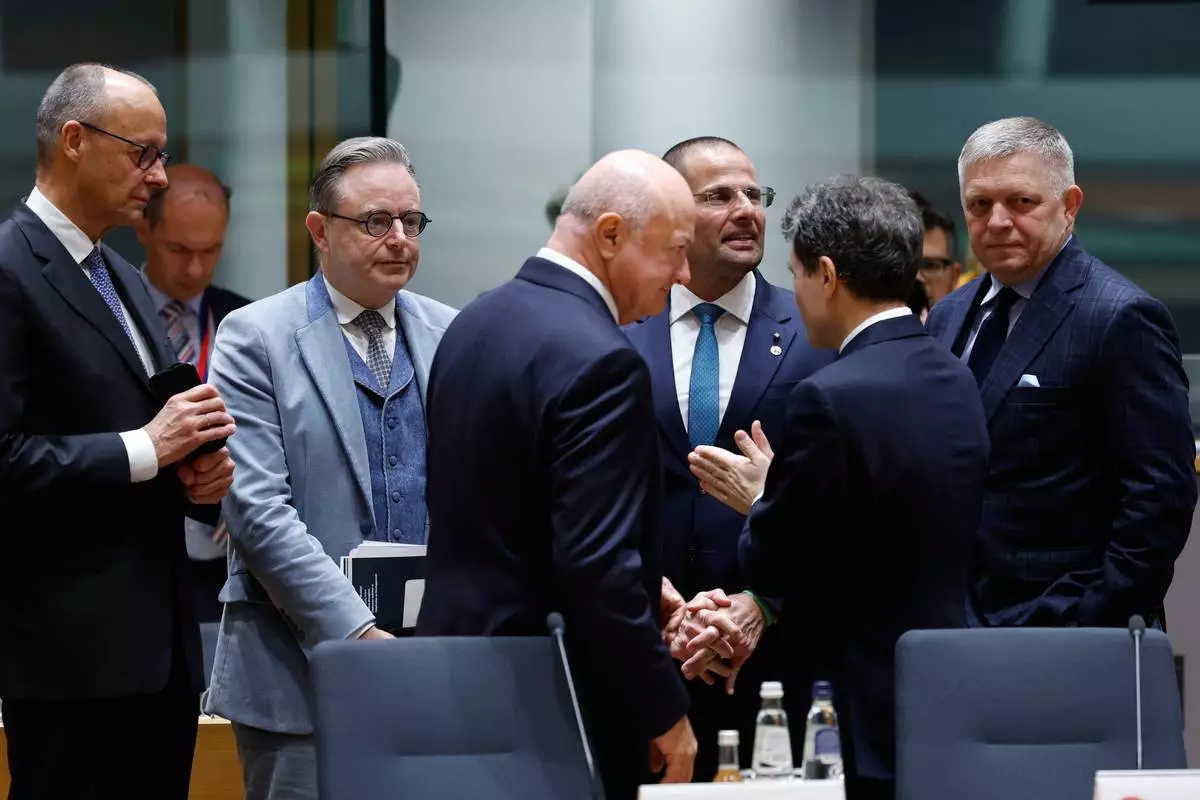
From left, Germany's Chancellor Friedrich Merz, Belgium's Prime Minister Bart De Wever, Austria's Chancellor Christian Stocker, Malta's Prime Minister Robert Abela, Romania's President Nicusor Dan and Slovakia's Prime Minister Robert Fico during a round table meeting at the EU summit in Brussels, Thursday, Nov. 26, 2026. (AP Photo/Geert Vanden Wijngaert)
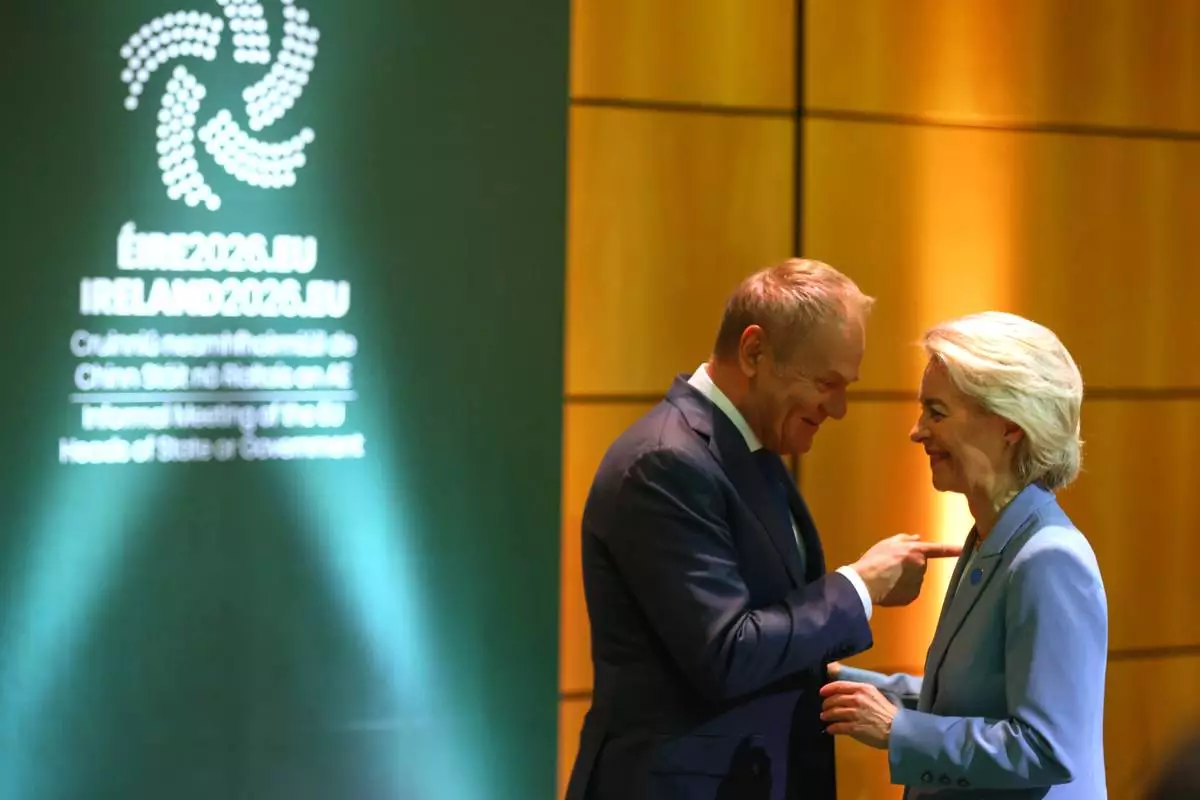
Poland's Prime Minister Donald Tusk speaks to European Commission President Ursula von der Leyen during the EU Summit in Dublin, Friday, Nov. 13, 2026.(AP Photo/Peter Morrison)
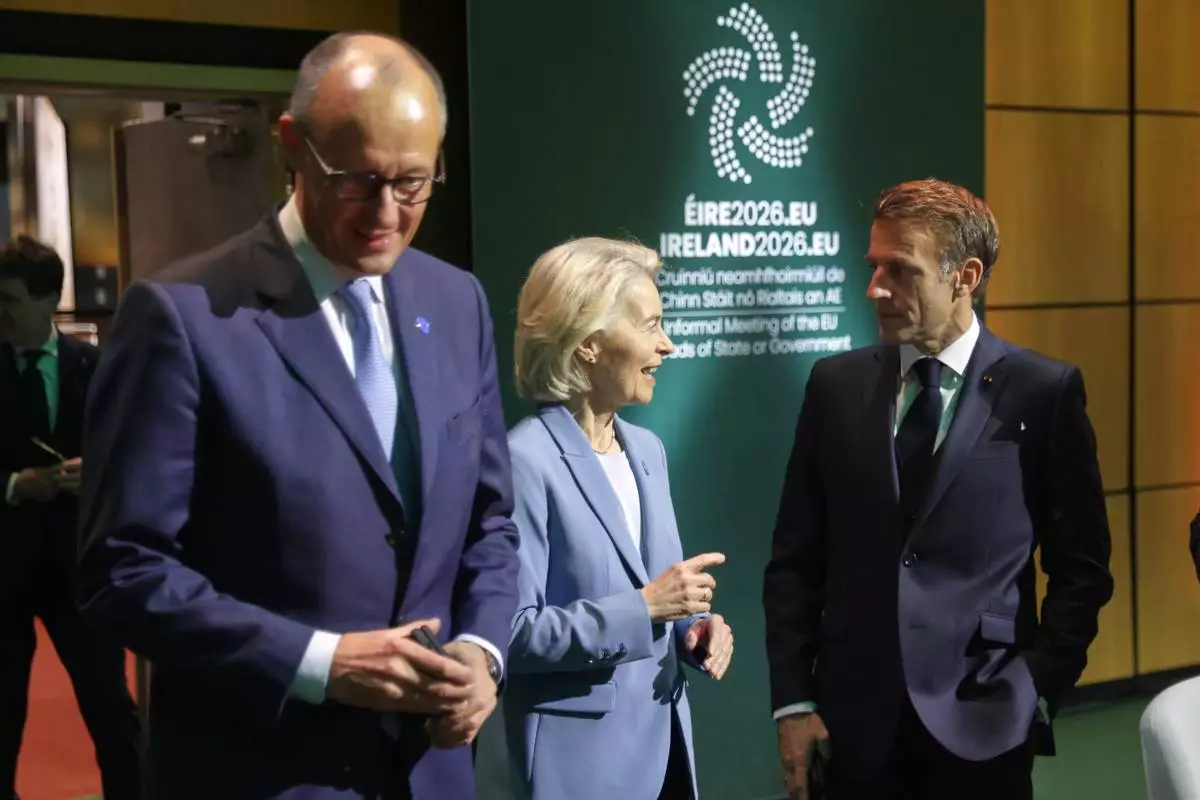
Germany's Chancellor Friedrich Merz, from left, European Commission President Ursula von der Leyen and French President Emmanuel Macron speak during the EU Summit in Dublin, Friday, Nov. 13, 2026.(AP Photo/Peter Morrison)
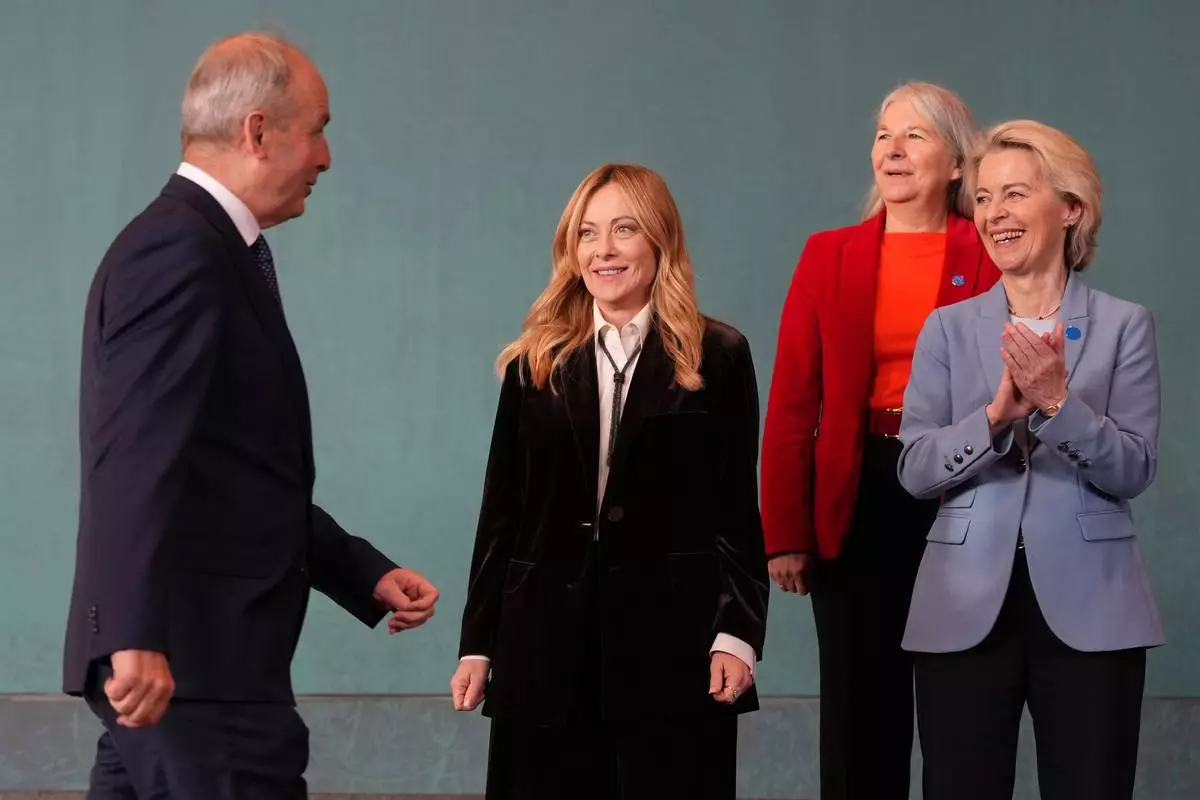
Ireland's Prime Minister Micheál Martin, left, walks past Italy's Prime Minister Giorgia Meloni, second left, and European Commission President Ursula von der Leyen to take part in the group photo during the EU Summit in Dublin, Friday, Nov. 13, 2026. (AP Photo/Virginia Mayo)
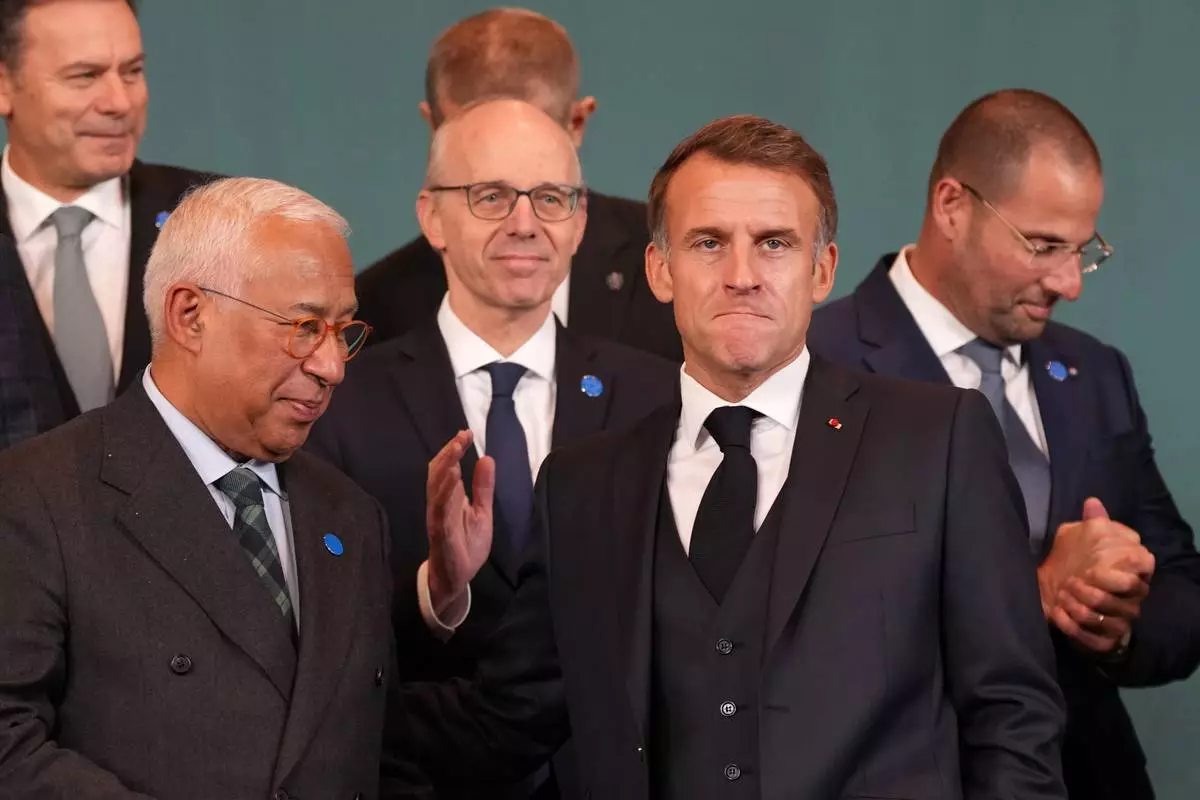
French President Emmanuel Macron stands next to European Council President Antonio Costa during the EU Summit in Dublin, Friday, Nov. 13, 2026.(AP Photo/Virginia Mayo)