An international passenger rail service linking Beijing and the Russian city of Irkutsk via the Mongolian capital of Ulaanbaatar resumed operation on Wednesday after a six-year suspension, carrying 46 Irkutsk-bound Chinese and Russian passengers on its first trip.
The cross-border train arrived in Irkutsk, capital of Russia's Eastern Siberia region, on Friday. Operated jointly by Russian Railways (RZD) and China State Railway Group, the service runs as international train No. 3/4 with a scheduled stop in Ulaanbaatar.
Departing Beijing for Irkutsk on November 25, the train completes the cross-border journey in two days. It runs weekly, with westbound trains leaving Beijing on Wednesdays and eastbound services departing Irkutsk on Saturdays. All passenger cars on the route are made in China.
The train makes technical stops at stations including Jiningnan, Erlian, Zamyn-Uud, Darkhan, Sukhbaatar, Naushki, Ulan-Ude and Slyudyanka, where no passengers board or disembark.
Passengers on the inaugural run praised the service for its onboard comfort and multilingual support.
"It is very comfortable. It feels like home, like we have brought a piece of China along with us for the entire journey to Russia. Everything is wonderful. The Chinese food is delicious, and the train staff are all very helpful. There are even Mongolian and Russian interpreters on board. It is just super!" said Chinese tourist Zhang Wei.
Elena, a local resident who met arriving passengers at the station, noted that the train's multilingual services were a key advantage.
"There is complete mutual understanding; tourists can ask the train attendant anything they need to know. It is crucial that the tourists' language is understood, and it is a great help that there are Chinese attendants on board," she said.
Using the same run number, a service connecting the Chinese and Russian capitals via Ulaanbaatar and Irkutsk operated until February 2020, when it was suspended due to the COVID-19 pandemic. Preparations to relaunch the Beijing-Irkutsk segment took more than two years.
"We had to address various technical and operational issues, everything from catering and onboard equipment to ticket sales. All these matters have now been resolved. It is particularly gratifying that we have launched this train during a year designated by Russian Railways (RZD) as the 'Year of the Passenger,'" noted Andrei Shestakov, deputy head of the East Siberian Railway and Chief of its Passenger Service.
Local railway authorities report strong demand for the route, prompting the East Siberian Railway to expand its international passenger services. In March, the operator launched a cross-border train linking Irkutsk and Zabaykalsk in Russia with Manzhouli City in north China, which has already carried 7,000 passengers.
A separate link between Irkutsk and Ulaanbaatar has operated for more than three years, transporting more than 10,000 passengers since the start of this year. Additional cars are added during holiday periods, with similar capacity expansion planned for the resumed Beijing-Irkutsk service.
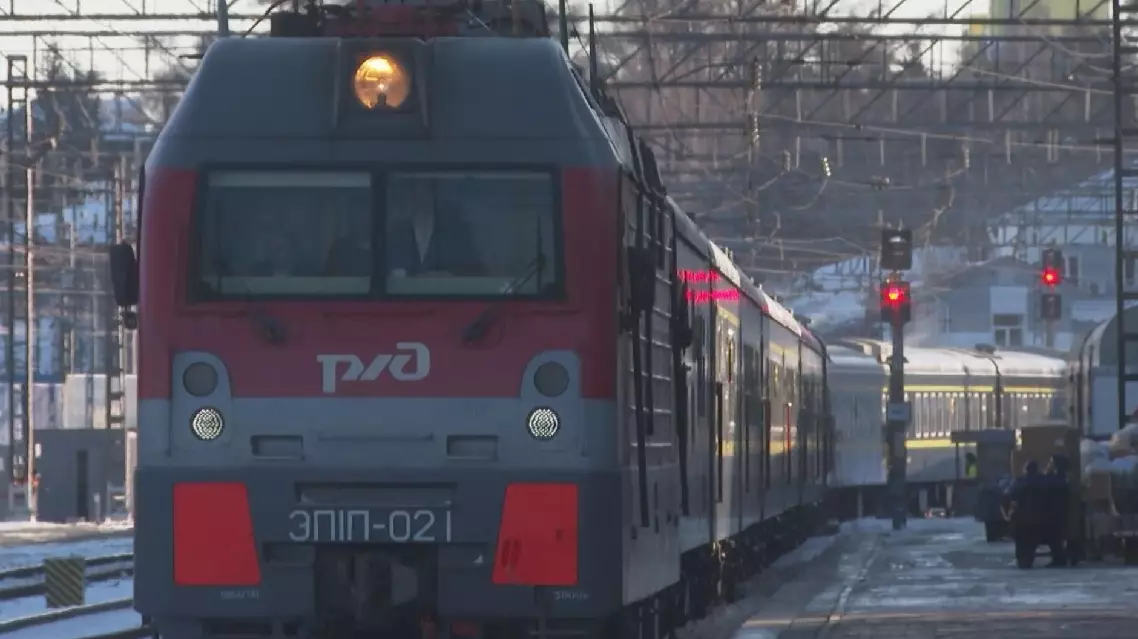
Cross border railway linking China, Mongolia, Russia resumes after six years, arriving in Irkutsk