Skip to Content Facebook Feature Image

Former U.S. ambassador urges concrete actions to rebuild trust with China

China

China

China

Former U.S. ambassador urges concrete actions to rebuild trust with China

2026-11-29 16:26 Last Updated At:16:47

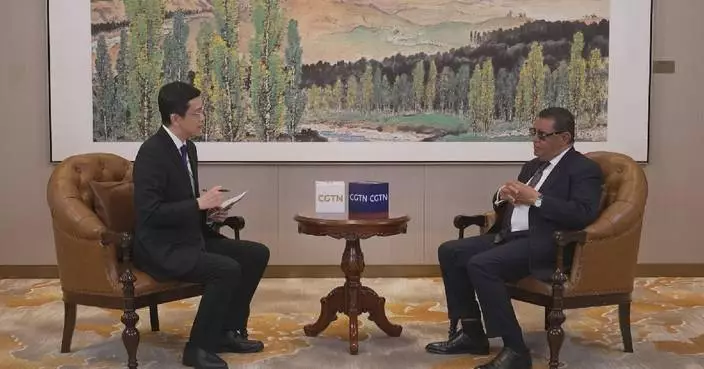
The United States must prove through concrete actions, not rhetoric, that it is not trying to halt China's rise, and increase sustained face-to-face exchanges to rebuild bilateral trust, former U.S. Ambassador to China Max Baucus said.

In an interview with China Global Television Network (CGTN) that aired on Friday, Baucus said the U.S. export controls on advanced semiconductors are aimed at slowing China's development of next-generation GPU semiconductors.

"The United States has to show, not just say, show by words and deeds that it does not want to stop China's rise. That's not happened yet. The U.S. is enacting export controls on China, on chips, for example, to slow down China's rise in the production of the next generation of GPU chips. That's happening, no question," said Baucus.

His remarks come as the U.S. has recently proposed additional tariffs on several economies, including China, citing alleged industrial overcapacity.

Baucus, who served in the U.S. Senate for 35 years and as U.S. ambassador to China from 2014 to 2017, helped secure congressional approval of permanent normal trade relations with China. He also played a key role in facilitating China's entry into the World Trade Organization.

As a prominent figure in American politics with decades of experience in China-U.S. relations, Baucus urged U.S. lawmakers to travel to China regularly and in depth to build trust, rather than treating a trip as a one-time event.

"And frankly, some of the congressional delegations have been a positive. There was one a couple of years ago by Senator Chuck Schumer. I talked to the members of that delegation before and afterwards [trips to China]. First, I found that some were very nervous about coming over. But I also talked with them after they came back. One of the senators said, 'I learned so much. That was so good.'," said Baucus.

"The problem is that was just a one-off. It was just one trip. If that senator and that delegation were to come back every year and pick up where they left off, not just check the boxes by seeing senior government officials, but by getting around the country, going to Chengdu, for example, or going to Changsha and eating its stinky tofu. But if they just go and get around the country, that would make a big difference," Baucus said.

Former U.S. ambassador urges concrete actions to rebuild trust with China

Former U.S. ambassador urges concrete actions to rebuild trust with China
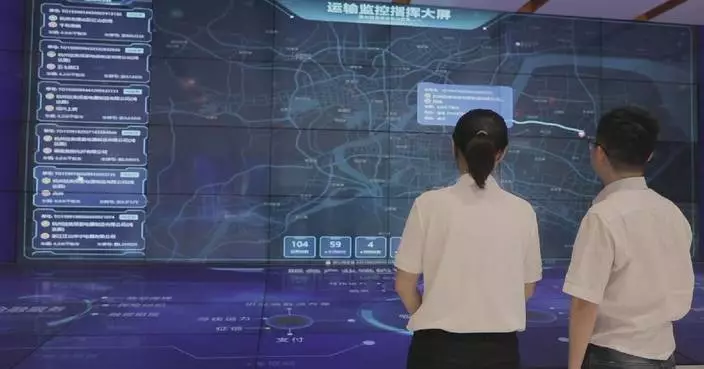
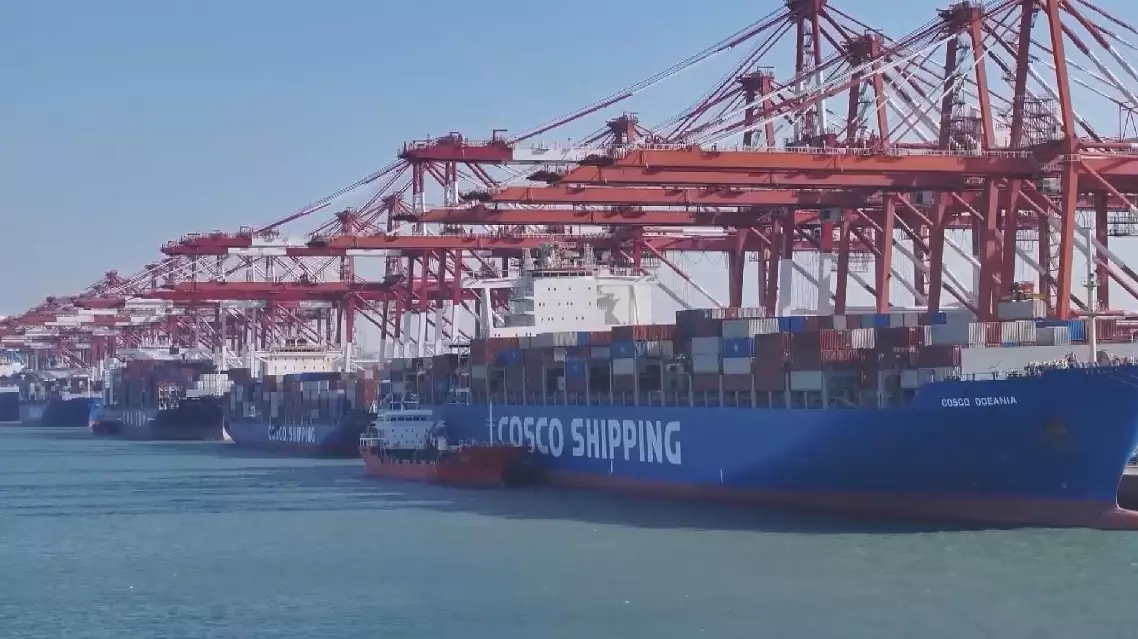
More than 60 percent of traditional logistics companies surveyed are interested in moving into or expanding platform-based services, particularly online freight, according to a report released on Sunday by the China Federation of Logistics and Purchasing (CFLP).

The 2026 Logistics Platform and Capacity Development Report found that 60.34 percent of traditional logistics firms were considering the transition, a significant increase from the previous year. It said online freight platforms were gaining advantages in digital services such as screening transport capacity, monitoring shipments in transit and managing service quality, while strengthening their competitiveness in transporting high-value electronic products.

As rural revitalization efforts advance and programs to bring express delivery to villages and agricultural products from rural areas to cities continue, logistical challenges have become more apparent. These include dispersed production sites, small and fragmented shipments, and seasonal demand.

"By integrating transport capacity online and consolidating and matching scattered cargo sources, online freight platforms have significantly improved the organization of agriculture-related trunk transport and urban-rural delivery. In agricultural transport, they have achieved marked resource aggregation and scale effects in agricultural transport," said Yang Guodong, vice president of the CFLP.

The survey found that 79.17 percent of online freight platform companies had been involved in transporting agricultural products in 2026, 3.8 times the proportion among traditional logistics firms. Platform-based companies also maintained an advantage in transporting bulk commodities such as minerals and building materials, with their share reaching 61.43 percent. Business volumes for online freight platforms handling fast-moving consumer goods also rose significantly from the previous year.

Among online freight platforms, 53.85 percent were involved in transporting express-delivery and e-commerce goods, while 48 percent handled electronic products. Both figures were broadly on par with those for traditional logistics companies, the report said, indicating that platform businesses are expanding rapidly into e-commerce, retail and other cargo categories.

Chinese logistics firms step up platform shift: report

Chinese logistics firms step up platform shift: report

Recommended Articles