A prolonged drought amplified by El Nino, compounding years of climate-change-driven extreme weather, has dealt a heavy blow to Serbia's agricultural sector, delaying winter wheat sowing and leaving farmers braced for steep production losses.
Nikola Krsmanovic, a farmer who lives near Belgrade, has just finished sowing his winter wheat. The crop is typically planted across Serbia throughout October, but consecutive summer and autumn droughts have left soil moisture critically depleted, pushing this year's sowing nearly a month behind schedule.
The delayed planting has arrived alongside falling temperatures, which could hamper wheat germination and early growth, and to mitigate the risks Krsmanovic has been forced to increase his seeding rate.
"The summer drought hit us hard, especially the yields of corn and soybeans, which are our main source of income. For fields where we missed the optimal sowing window, we've had to increase the seeding rate by 10 to 20 percent. I'm very worried about next year's harvest. The harvest could drop by at least 30 percent," he said.
His experience reflects a broader pattern across the country. Persistent high temperatures, drought and insufficient rainfall have battered Serbian agriculture in recent years. Agricultural meteorologist Uros Davidovic said the prolonged dry spells have visibly cut yields of corn and soybeans, and that years of losses have led some farmers to change their cropping patterns, switching to more drought-tolerant crops.
"The situation is getting worse all these years. There is no doubt that we are speaking about hundreds of millions of dollars. That's even a mild assumption. And we can see that the farming is changing. The farmers are trying to adapt themselves to find a way to plant maybe some new things, for example, sorghum,'' Davidovic said.
El Nino refers to the periodic warming of sea surface temperatures in the central and eastern equatorial Pacific, a phenomenon that recurs every few years and reshapes weather patterns far beyond the tropics.

Prolonged drought batters Serbia's agriculture, threatening crop yields
More than 60 percent of traditional logistics companies surveyed are interested in moving into or expanding platform-based services, particularly online freight, according to a report released on Sunday by the China Federation of Logistics and Purchasing (CFLP).
The 2026 Logistics Platform and Capacity Development Report found that 60.34 percent of traditional logistics firms were considering the transition, a significant increase from the previous year. It said online freight platforms were gaining advantages in digital services such as screening transport capacity, monitoring shipments in transit and managing service quality, while strengthening their competitiveness in transporting high-value electronic products.
As rural revitalization efforts advance and programs to bring express delivery to villages and agricultural products from rural areas to cities continue, logistical challenges have become more apparent. These include dispersed production sites, small and fragmented shipments, and seasonal demand.
"By integrating transport capacity online and consolidating and matching scattered cargo sources, online freight platforms have significantly improved the organization of agriculture-related trunk transport and urban-rural delivery. In agricultural transport, they have achieved marked resource aggregation and scale effects in agricultural transport," said Yang Guodong, vice president of the CFLP.
The survey found that 79.17 percent of online freight platform companies had been involved in transporting agricultural products in 2026, 3.8 times the proportion among traditional logistics firms. Platform-based companies also maintained an advantage in transporting bulk commodities such as minerals and building materials, with their share reaching 61.43 percent. Business volumes for online freight platforms handling fast-moving consumer goods also rose significantly from the previous year.
Among online freight platforms, 53.85 percent were involved in transporting express-delivery and e-commerce goods, while 48 percent handled electronic products. Both figures were broadly on par with those for traditional logistics companies, the report said, indicating that platform businesses are expanding rapidly into e-commerce, retail and other cargo categories.
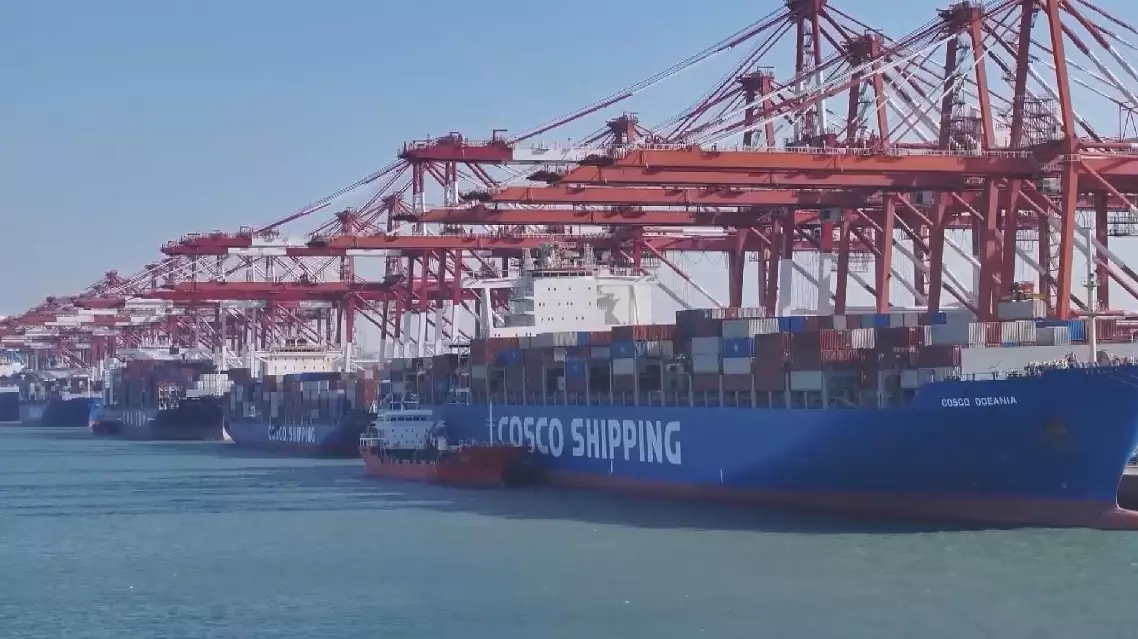
Chinese logistics firms step up platform shift: report