Tourists are pouring into the forest city of Yichun in northeast China's Heilongjiang Province, braving temperatures far below freezing to walk its snow-covered woods, as a new rail link turns the remote winter landscape into one of the country's most sought-after destinations.
Morning mist rises from the clear waters of the Kurbin River valley in Fenglin County, where rime coats the trees on both banks, forming curtains of ice-crusted branches and drawing waves of visitors eager to capture the scene.
Deeper in the Lesser Khingan Mountains, the stillness gives way to engine noise as tourists pilot all-terrain vehicles (ATVs) through the snow-blanketed woods of Daqingshan County, trading quiet contemplation for the thrill of racing through the forest.
"My friends and I come here specifically because we've heard so much about it, and the scene is truly breathtaking. Yichun's ice and snow are even more pristine. It's a real experience of stepping into the forest to play in the snow. We had a fantastic time and thoroughly enjoyed ourselves," said Li Na, a visitor.
The pristine landscape has proven a powerful draw for visitors from China's warmer south. Yichun sits deep within the Lesser Khingan range and has long been known as China's forest capital, a city whose sprawling woods are now finding a second life as a winter tourism destination.
"I made a special trip here from Guangzhou. The snowy scenery is incredibly pristine and beautiful. I highly recommend it! The locals are very welcoming, the food is excellent, and I feel it was well worth the visit," said Liu Suyu, a tourist from Guangdong.
The boom owes much to steel and speed. The Harbin-Yichun high-speed railway, China's northernmost high-speed line crossing a region of discontinuous permafrost, entered service in late September, with its roughly 300 kilometers of track running at a designed speed of 250 kilometers per hour. The journey between Harbin and Yichun, once about seven hours, now takes just two, folding the once-distant forest city into easy reach for weekend travelers.
Leveraging the new connection, Yichun has rolled out premium tourism routes and sporting events this year, turning its ice and snow resources into a growing engine of development.

Winter tourism blooms in snow-covered forests of northeast China
More than 60 percent of traditional logistics companies surveyed are interested in moving into or expanding platform-based services, particularly online freight, according to a report released on Sunday by the China Federation of Logistics and Purchasing (CFLP).
The 2026 Logistics Platform and Capacity Development Report found that 60.34 percent of traditional logistics firms were considering the transition, a significant increase from the previous year. It said online freight platforms were gaining advantages in digital services such as screening transport capacity, monitoring shipments in transit and managing service quality, while strengthening their competitiveness in transporting high-value electronic products.
As rural revitalization efforts advance and programs to bring express delivery to villages and agricultural products from rural areas to cities continue, logistical challenges have become more apparent. These include dispersed production sites, small and fragmented shipments, and seasonal demand.
"By integrating transport capacity online and consolidating and matching scattered cargo sources, online freight platforms have significantly improved the organization of agriculture-related trunk transport and urban-rural delivery. In agricultural transport, they have achieved marked resource aggregation and scale effects in agricultural transport," said Yang Guodong, vice president of the CFLP.
The survey found that 79.17 percent of online freight platform companies had been involved in transporting agricultural products in 2026, 3.8 times the proportion among traditional logistics firms. Platform-based companies also maintained an advantage in transporting bulk commodities such as minerals and building materials, with their share reaching 61.43 percent. Business volumes for online freight platforms handling fast-moving consumer goods also rose significantly from the previous year.
Among online freight platforms, 53.85 percent were involved in transporting express-delivery and e-commerce goods, while 48 percent handled electronic products. Both figures were broadly on par with those for traditional logistics companies, the report said, indicating that platform businesses are expanding rapidly into e-commerce, retail and other cargo categories.
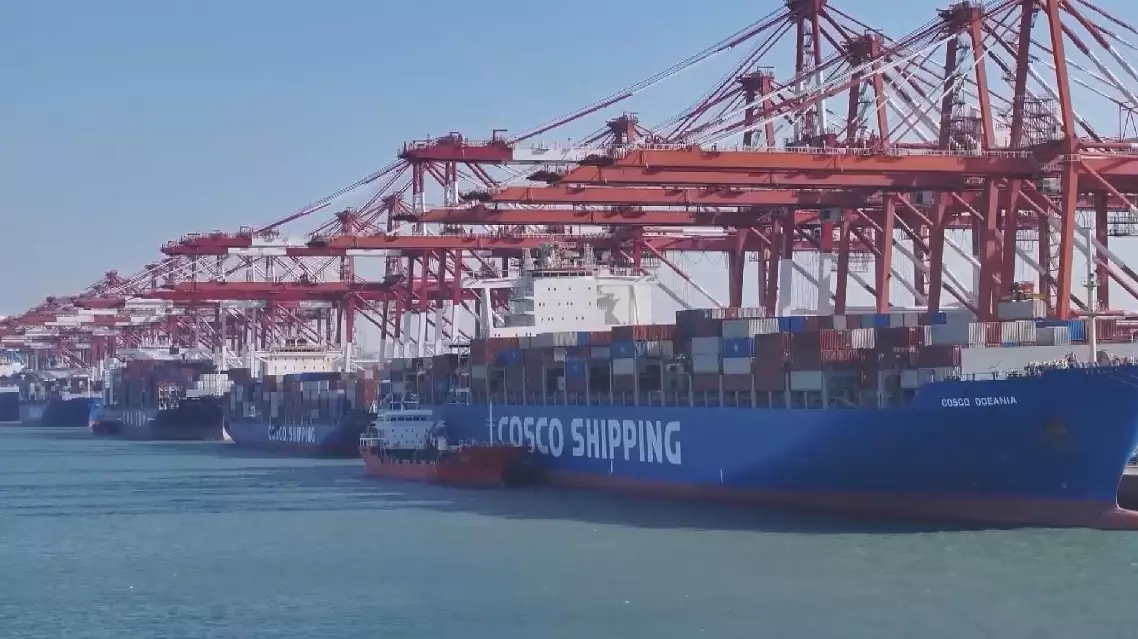
Chinese logistics firms step up platform shift: report