GENEVA (AP) — Voters decided Sunday to ease Switzerland's strict rules on the export of weaponry, opting to relax restrictions on exports to Western partners in a contest that shaped up as a test of the country's vaunted neutrality.
The federal government and other backers said that the reform was needed to strengthen Switzerland’s defense industry and military. Critics feared that it would give extremists and lawless states easier access to Swiss weaponry.
Final results on Sunday showed that just under 55% of voters cast ballots in favor of the reform.
The vote is part of Switzerland's distinctive form of democracy that gives the public a direct say in policymaking four times a year.
In other nationwide balloting, nearly six in 10 voters approved a measure to ban loud fireworks — supported strongly by animal-rights defenders. Separately, voters rejected proposals to hike sales taxes to help finance higher pensions and to ensure fairer taxes for married couples.
The Russia-Ukraine war has prompted government officials in Switzerland to grapple with the country’s longtime conception of neutrality, which is enshrined in the constitution and prohibits exporting weaponry to active war zones.
The proposed easing would apply to 36 countries — mostly European and Western countries — considered to have similar export controls to those in Switzerland. Direct arms deliveries to countries at war like Ukraine would remain prohibited.
Switzerland's parliament has sought for years to soften restrictions on exports of Swiss military equipment, arguing that allowing the exports helps keep the nation's defense industry competitive and ultimately helps the country defend itself.
The government has argued that around 80% of Swiss military exports go to other European countries.
Currently, countries that receive Swiss military equipment must agree not to transfer such weapons and other war materiel to conflict zones. Under the proposal, such sign-offs would no longer be required.
The government could also allow deliveries of weaponry to a “partner state” — any of those 36 countries — if it's involved in an armed conflict, as long as such exports conform with Switzerland's foreign and security interests.
A report by the Stockholm International Peace Research Institute released earlier this year ranked Switzerland as 20th among the world's top arms suppliers — behind Denmark and ahead of Ukraine — over the past five years. The United States ranked No. 1, with a 42% share of global arms exports in the period from 2021 to 2025.
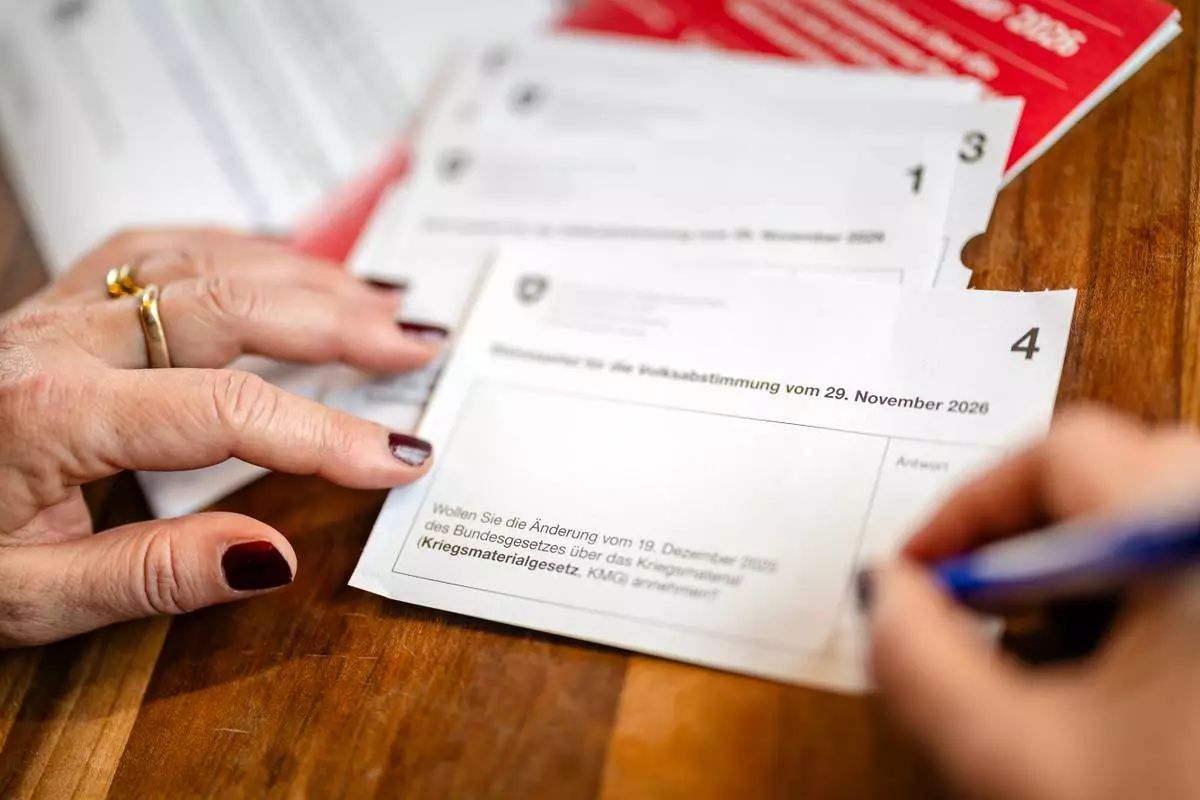
A woman fills out the referendum document on easing weapons export rules, in Zurich Saturday, Nov. 21, 2026. (Michael Buholzer/Keystone via AP)
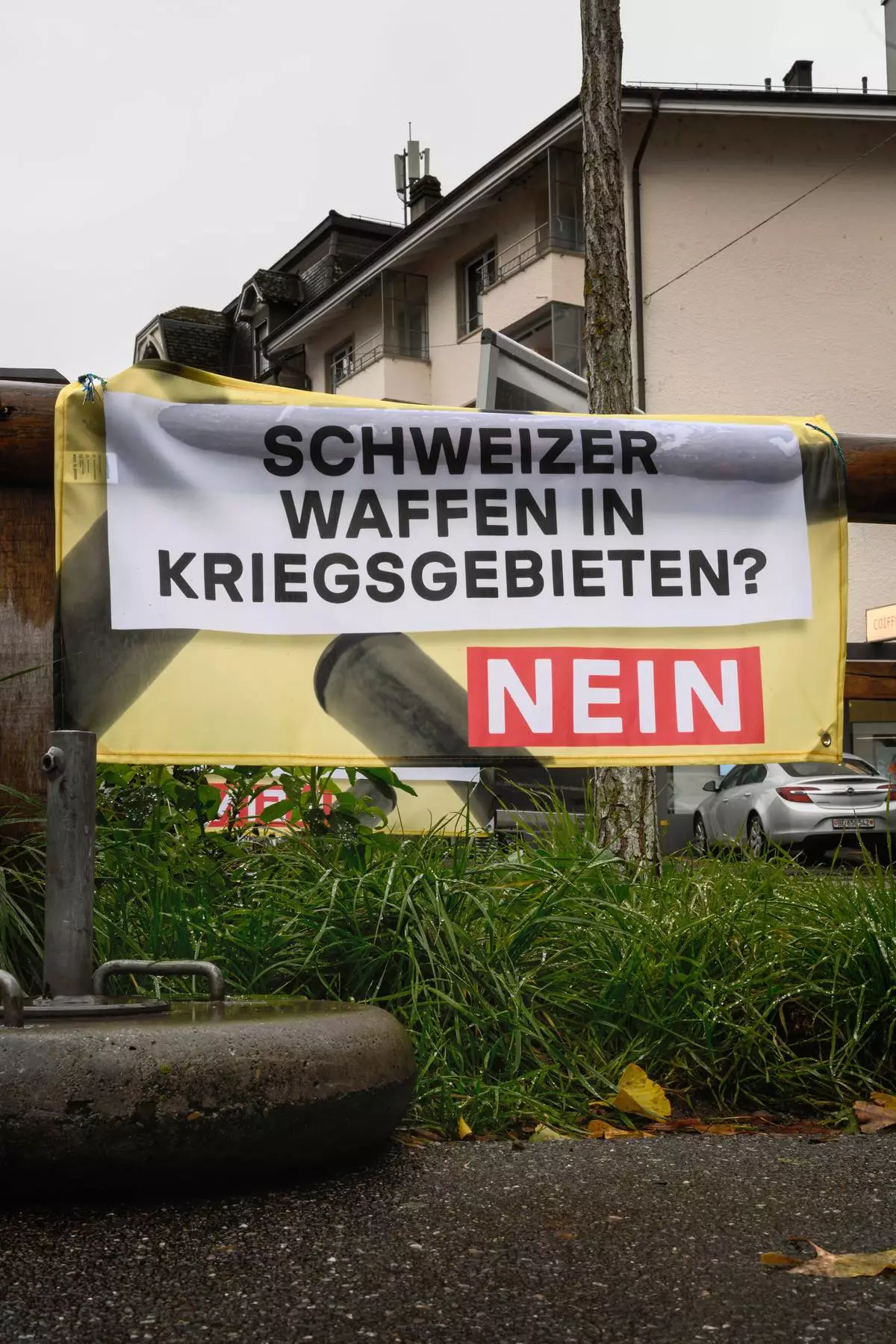
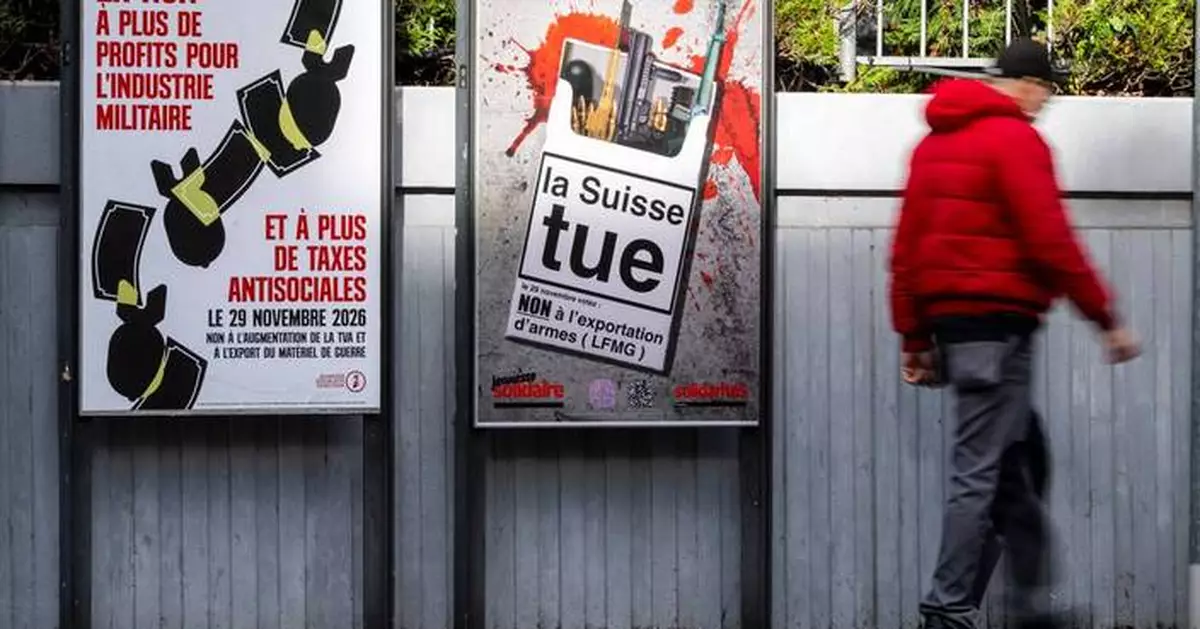
"Swiss weapons in war zones? No" says a poster photographed in Bern, Thursday, Nov. 12, 2026. (Christian Beutler/Keystone via AP)
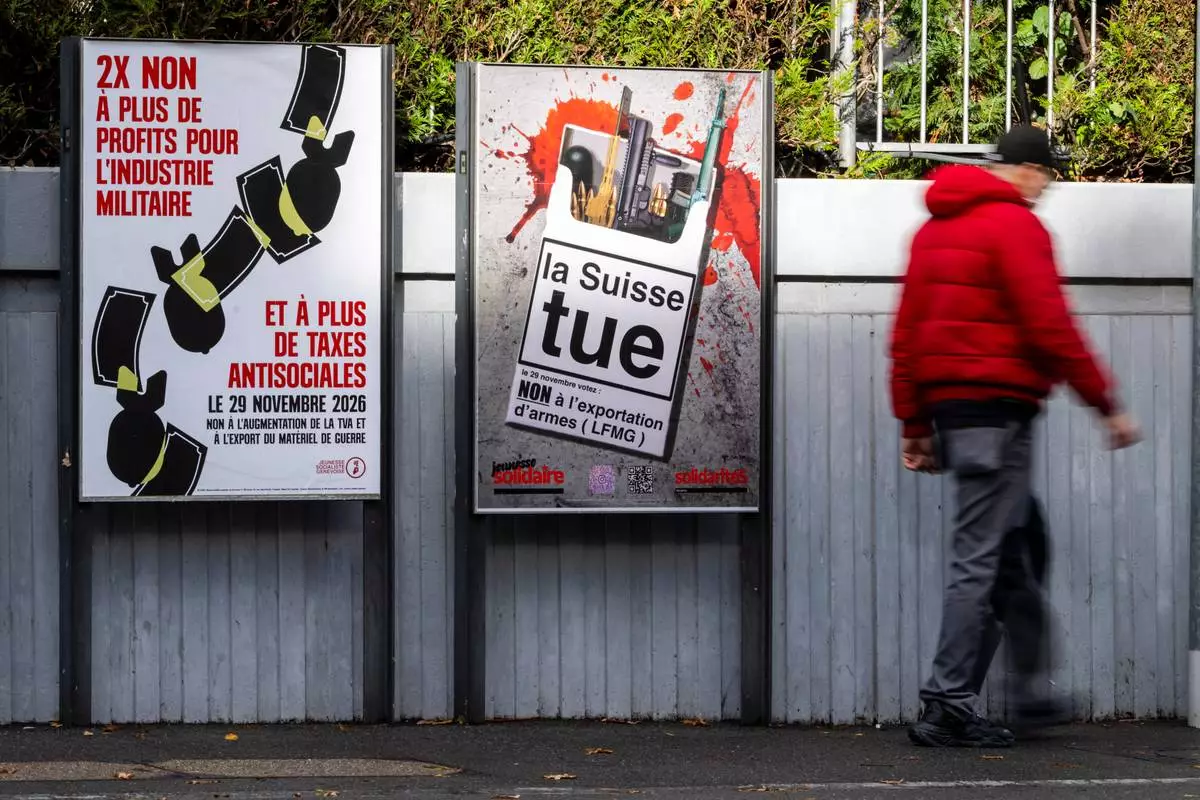
A person walks in front of posters from parties and associations giving their instructions on how to vote in Sunday’s referenda, in Geneva, Wednesday, Nov. 18. (Martial Trezzini/Keystone via AP)
MADRID (AP) — Spaniards are voting Sunday in an election dominated by concerns over housing affordability that could see the far right enter the national government for the first time since Spain’s dictatorship ended more than a half-century ago.
The election is seen as a referendum on incumbent Prime Minister Pedro Sánchez. The left-wing leader of the Socialist party has governed Spain for eight years through numerous crises, but also a period of economic growth that, for many voters, has been eclipsed by cost-of-living concerns.
No issue has galvanized Spaniards in recent years quite like access to affordable housing. Soaring home and rental costs in cities and tourism hot spots have caused widespread discontent, especially among the young.
Last month, Sánchez announced an early election after right-wing parties in parliament voted down measures that his government introduced to alleviate housing pressures. Nationwide protests sprang up after the dramatic eviction of an 87-year-old woman from her apartment in Madrid.
Sánchez has warned voters that a conservative government wouldn't make their lives more affordable, and frequently has said that his opponents would take the country of 50 million backward.
“I'm feeling optimistic,” Sánchez told reporters after casting his vote on Sunday, saying he expected “a huge turnout.”
Participation by 2 p.m. was at 45%, about five percentage points higher than in the previous national election in 2023.
Opposition leader Alberto Núñez Feijóo of the conservative Popular Party, or PP, has promised voters more stability and better governance.
He has criticized Sánchez's record not just for his government's failure to improve Spaniards' housing woes, but also for two fatal train crashes this year on Spain's high-speed rail network, a nationwide blackout in April 2025 and a border crisis in Spain's North African exclave of Ceuta.
Feijóo also pilloried Sánchez — who relied on backing from far-left and separatist parties to cling to power in 2023 — for not being able to pass a budget in nearly four years, lacking parliamentary support.
“I ask Spaniards not to vote with fear, but with memory,” Feijóo said in Madrid after casting his ballot. “Today is a day when the Spanish people take the helm and will decide the future, the destiny, and the direction of Spain.”
It's widely expected that Feijóo will attempt to form a coalition with the far-right Vox party, led by its bearded, barrel-chested leader Santiago Abascal, who has campaigned on an immigration crackdown.
Vox is betting that its hard-line stance will win over voters and enable it to play kingmaker with the PP.
“Spain is deeply divided. There is a lot of fear on both sides, and I believe we need to soften the tense atmosphere and redirect what has been done wrong during the past eight years,” said Paloma Jiménez-Ontiveros, a 65-year-old real estate agent in Madrid, after voting.
Spain has welcomed millions of people, mainly from Latin America, but also from Africa and elsewhere in Europe. One in five residents was born outside Spain, according to census data. Earlier this year, the Spanish government legalized the status of nearly 1.2 million immigrants living in the country without authorization.
Feijóo and Abascal have portrayed Sánchez's immigration-friendly policies as harmful to ordinary Spaniards, pointing to the country's insufficient housing stock and strained public services. Both candidates have condemned the migrant legalization measure.
If Vox entered a new government as a junior member with the PP, it would mark the return of a nationalist, far-right party to power for the first time since the death of dictator Gen. Francisco Franco in 1975.
The result will also be closely watched across Europe before an election-packed 2027, in which voters will head to the polls in France, Italy, Greece and Poland.
In France, the far-right National Rally is aiming to take power, while in Italy, Premier Giorgia Meloni's right-wing coalition is expected to seek another term.
About 39 million people are eligible to cast ballots. Voting generally takes place in schools, community centers, town halls and other municipal facilities. Spaniards can also vote by mail.
Votes are tallied quickly and the result is usually known within hours. That doesn’t mean it’s quickly clear who will govern.
A Spanish prime minister will be elected by the new parliament resulting from a vote that will be convened next month. A candidate needs the support of an absolute majority — or at least 176 lawmakers — in the first parliamentary vote, often relying on coalition agreements or support from other parties.
Several opinion polls conducted before Sunday showed Sánchez’s Socialist Party behind the combined support of the PP and Vox. Sánchez will likely need backing from smaller parties to the left of the Socialists. However, infighting between those parties in the lead-up to the election is expected to weaken Sánchez’s chance at forming a progressive coalition like he did three years ago.
Sánchez, a Madrid native and former economics professor, became a hero to the global left for his government's opposition to the Israel-Hamas war in Gaza, and his resistance to U.S. President Donald Trump. He has criticized the U.S. and Israel over the Iran war, and was one of Western Europe’s first major leaders to formally recognize Palestinian statehood.
Sánchez's government has turbocharged Spain's climate commitments, pledging to source all its energy from renewable sources by 2050. The country already generates more than half its electricity from noncarbon sources. But his critics say that his overreliance on renewables was responsible for the 2025 blackout.
He's the first Spanish prime minister to speak comfortably in English.
Sánchez's party, including members of his inner circle, has been dogged by legal cases involving corruption. The cases have implicated a former minister and top officials, eroding voters' trust.
Feijóo, in contrast, is a lifelong civil servant-turned-politician from rural northwestern Galicia who doesn't speak English and projects himself as a sensible, moderate and effective administrator.
Joseph Wilson contributed to this report from Barcelona, Spain.
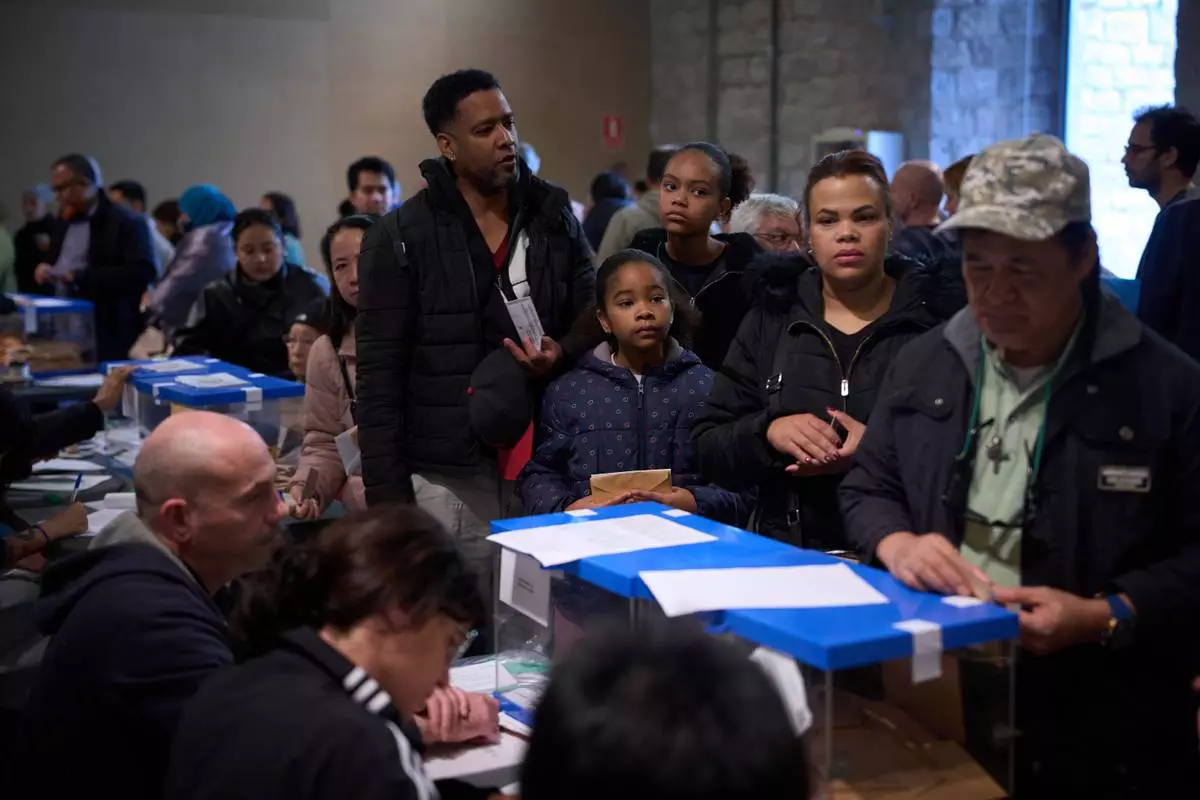
Braulina and Sebastian, originally from the Dominican Republic, who moved to Spain in 2003, wait with their daughters, Thiara and Alaia, to cast their ballots at a polling station during Spain's general election in Barcelona, Spain, Sunday, Nov. 29, 2026. (AP Photo/Emilio Morenatti)
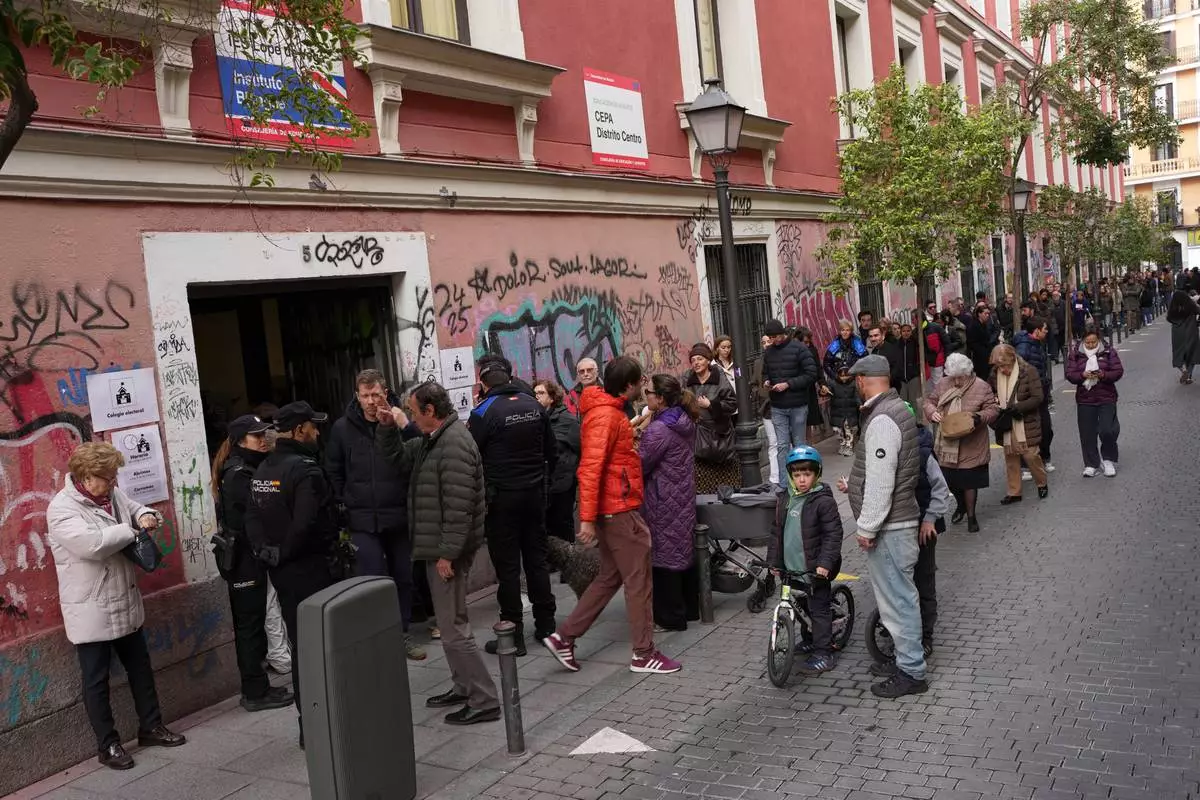
People line up outside a polling station to cast their ballots in Spain's general election in Madrid, Spain, Sunday, Nov. 29, 2026. (AP Photo/Francisco Seco)

People line up at a polling station to cast their ballots in Spain's general election in Madrid, Spain, Sunday, Nov. 29, 2026. (AP Photo/Manu Fernandez)
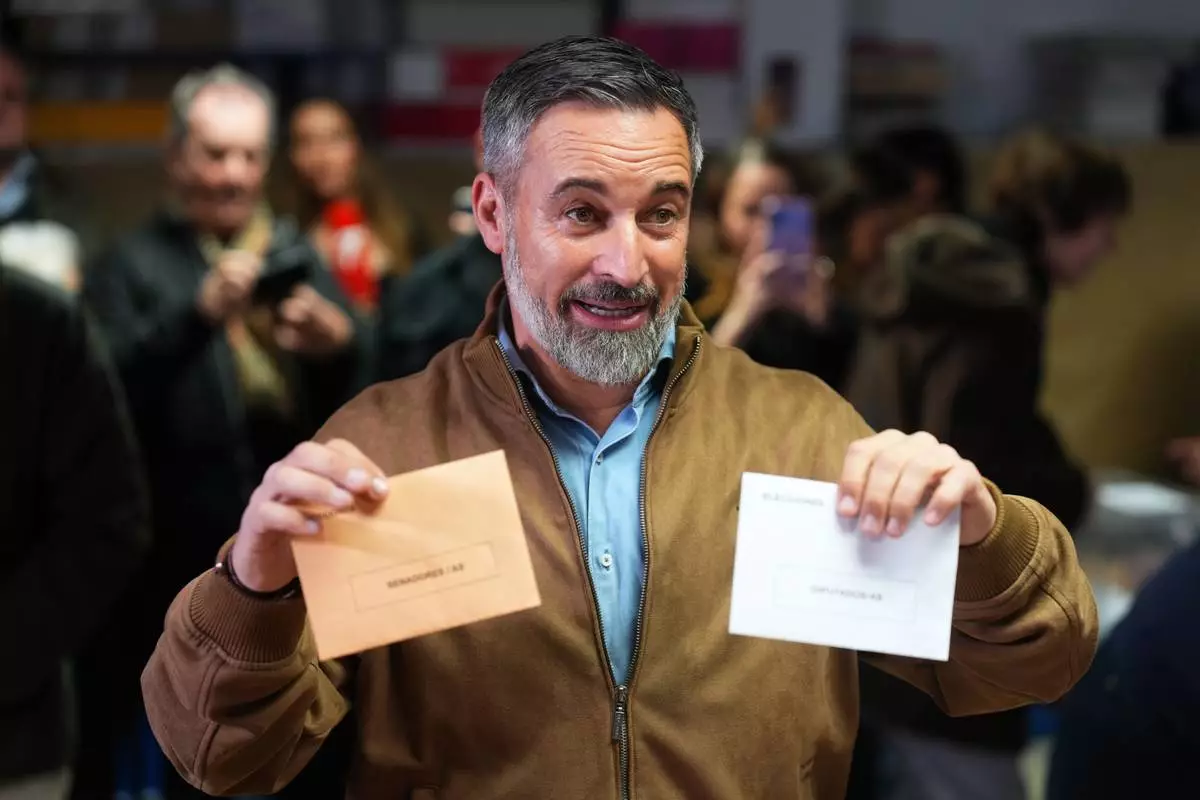
Vox leader and candidate Santiago Abascal poses with his ballots when voting in Spain's general election at a polling station in Madrid, Spain, Sunday, Nov. 29, 2026. (AP Photo/Manu Fernandez)
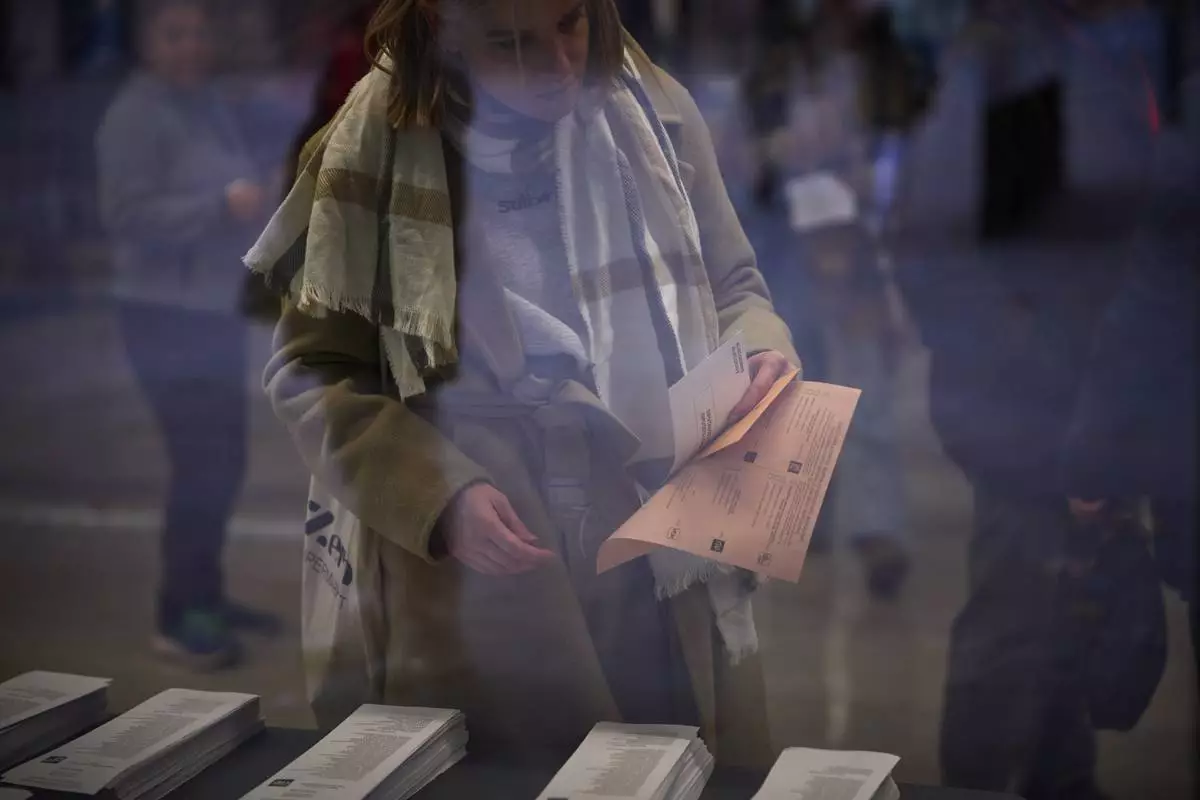
Voters select their ballots at a polling station during the general election in Barcelona, Spain, Sunday, Nov. 29, 2026. (AP Photo/Emilio Morenatti)
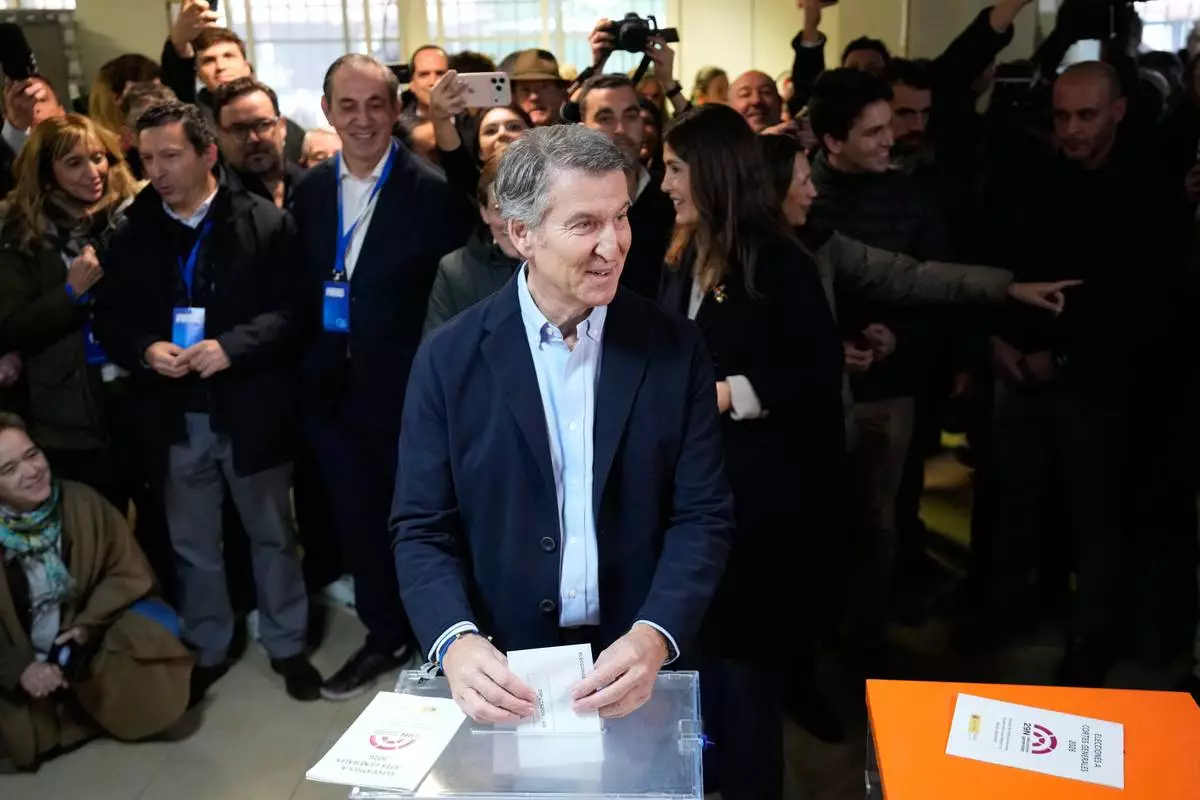
Popular Party candidate Alberto Núñez Feijóo casts his ballot in Spain's general election at a polling station in Madrid, Spain, Sunday, Nov. 29, 2026. (AP Photo/Bernat Armangue)
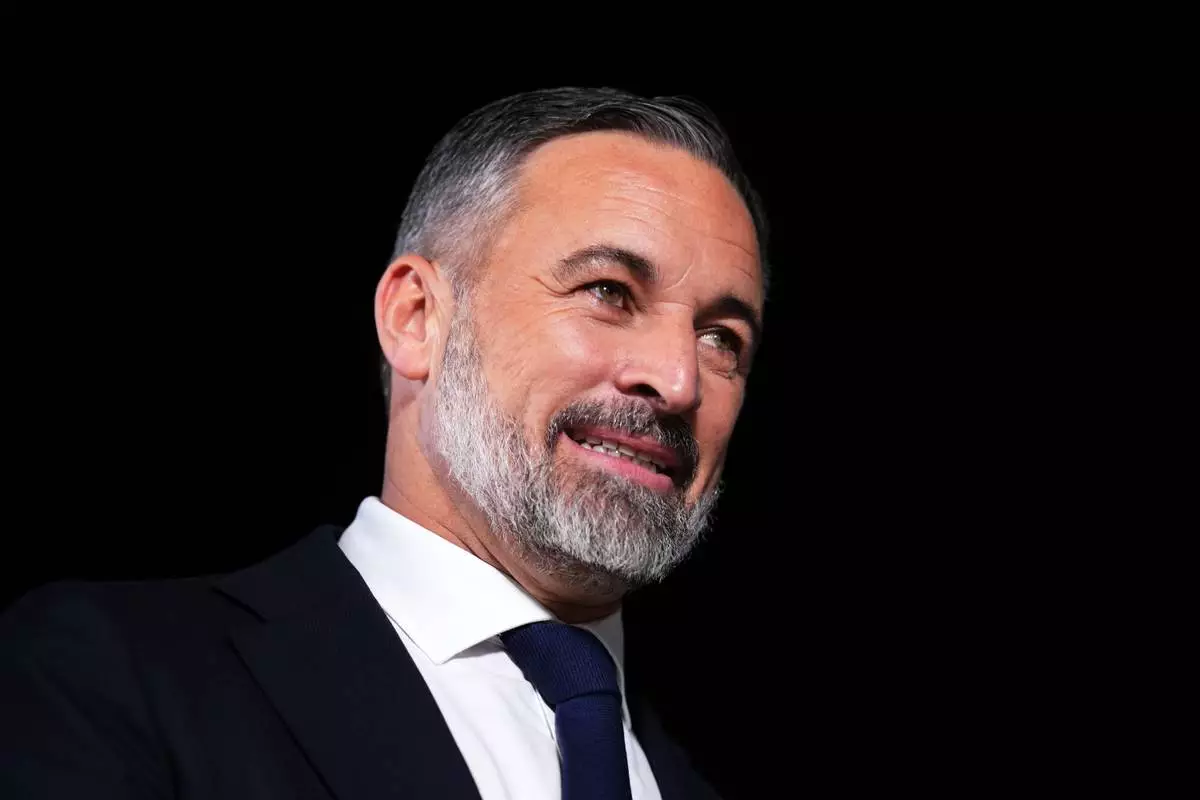
Santiago Abascal, leader of Spain's far-right Vox party, arrives for a live televised debate in Madrid, Spain, Thursday, Nov. 26, 2026. (AP Photo/Manu Fernandez)
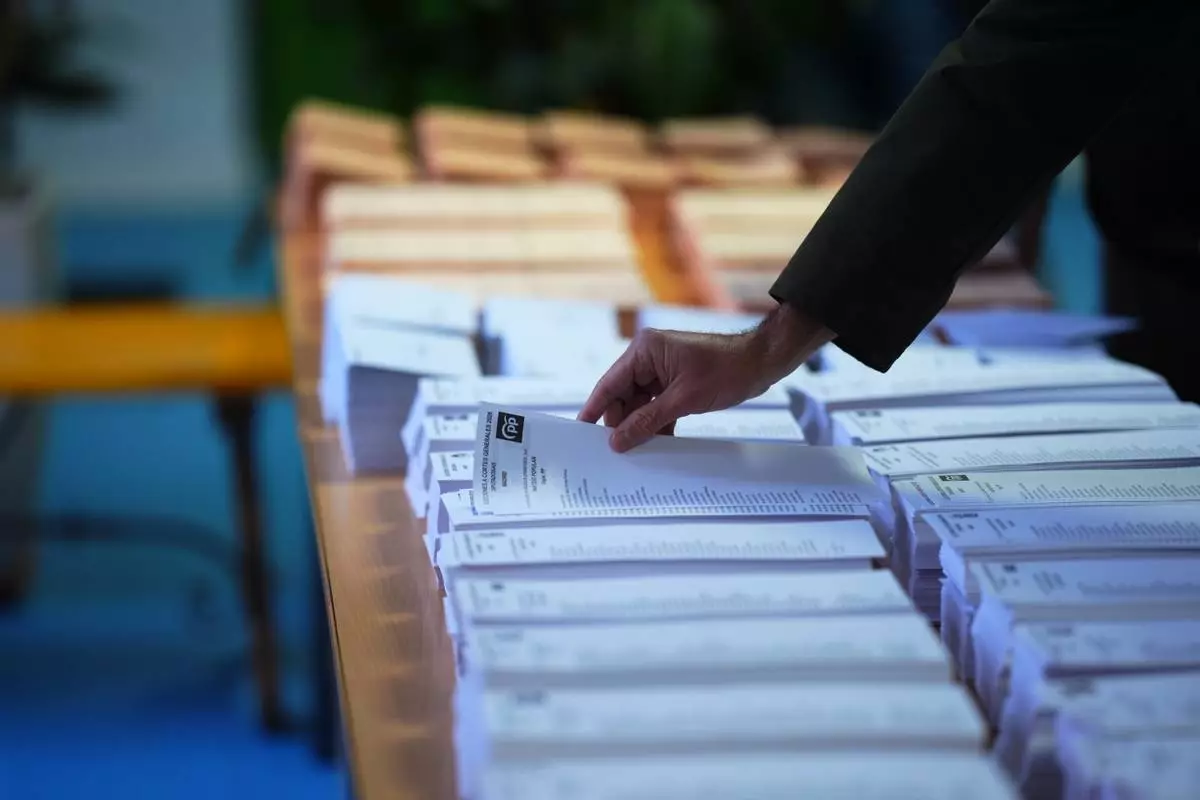
A person picks a ballot to vote in Spain's general election at a polling station in Madrid, Spain, Sunday, Nov. 29, 2026. (AP Photo/Manu Fernandez)
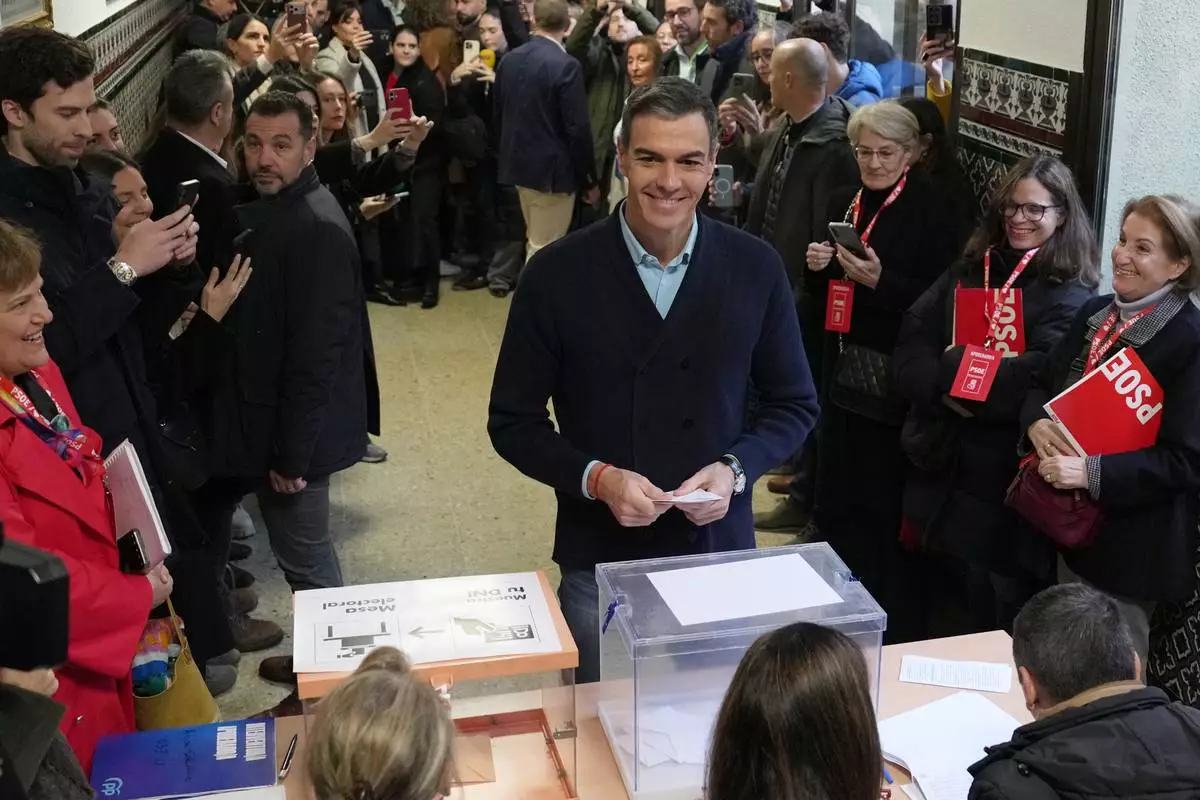
Spain's incumbent Prime Minister Pedro Sanchez votes in Spain's general election at a polling station in Madrid, Spain, Sunday, Nov. 29, 2026. (AP Photo/Francisco Seco)
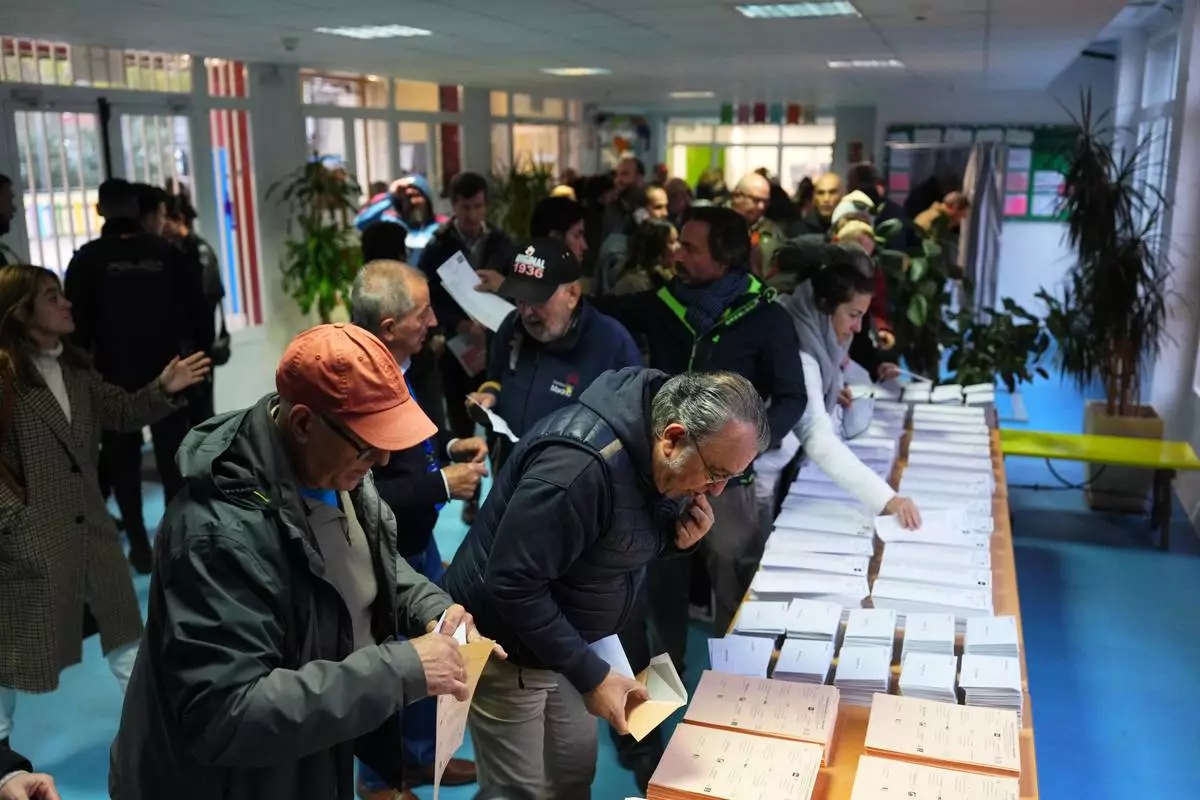
Voters pick up ballots before voting at a polling station in Spain's general election in Madrid, Spain, Sunday, Nov. 29, 2026. (AP Photo/Manu Fernandez)
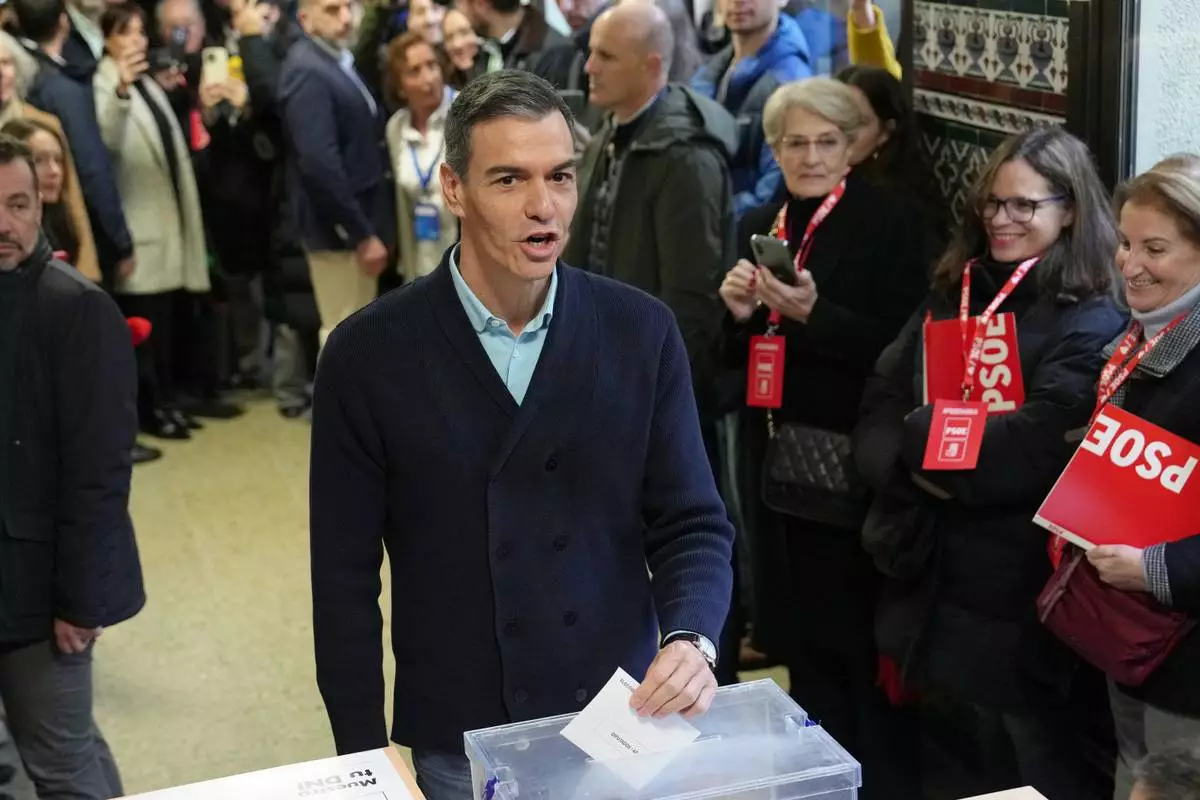
Spain's incumbent Prime Minister Pedro Sanchez votes in Spain's general election at a polling station in Madrid, Spain, Sunday, Nov. 29, 2026. (AP Photo/Francisco Seco)
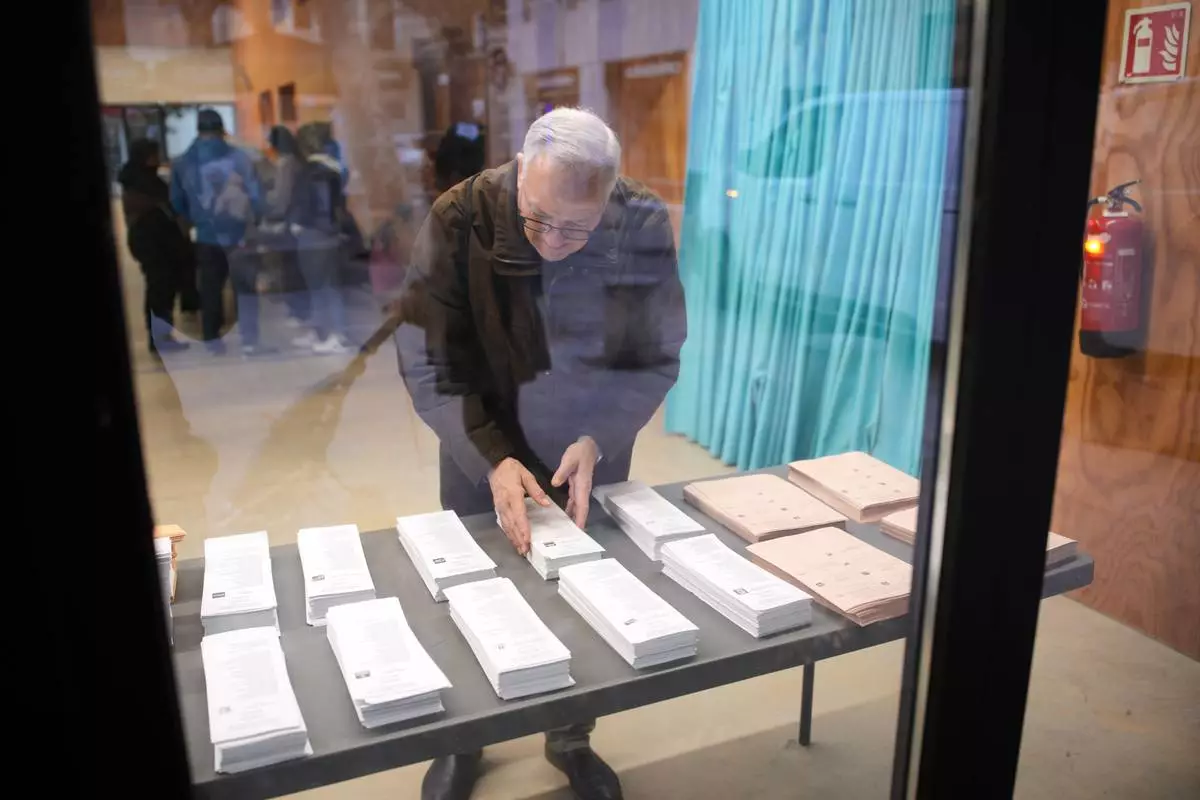
An election worker organizes ballots at a polling station in Spain's general election, in Barcelona, Spain, Sunday, Nov. 29, 2026. (AP Photo/Emilio Morenatti)
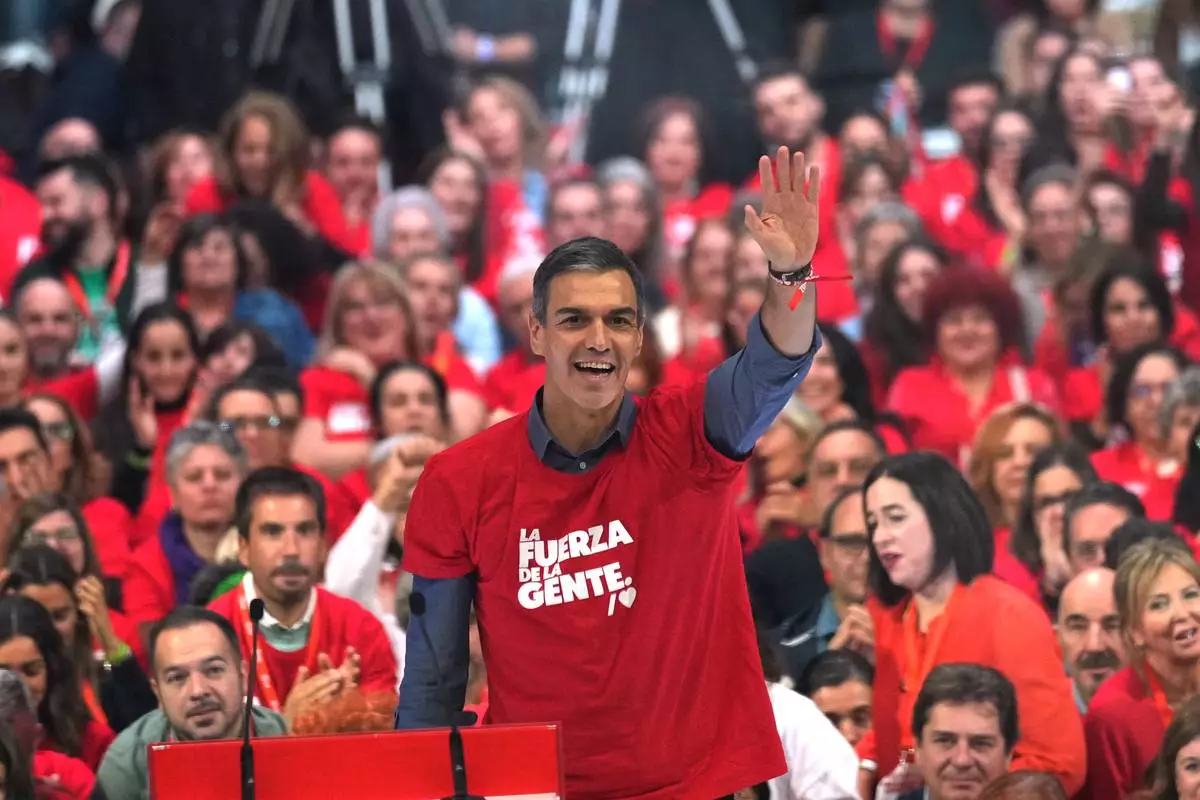
Spain's Prime Minister and Socialist Party Secretary-General Pedro Sánchez waves to supporters at the final campaign rally ahead of Sunday's general election in Madrid, Spain, Friday, Nov. 27, 2026. (AP Photo/Francisco Seco)
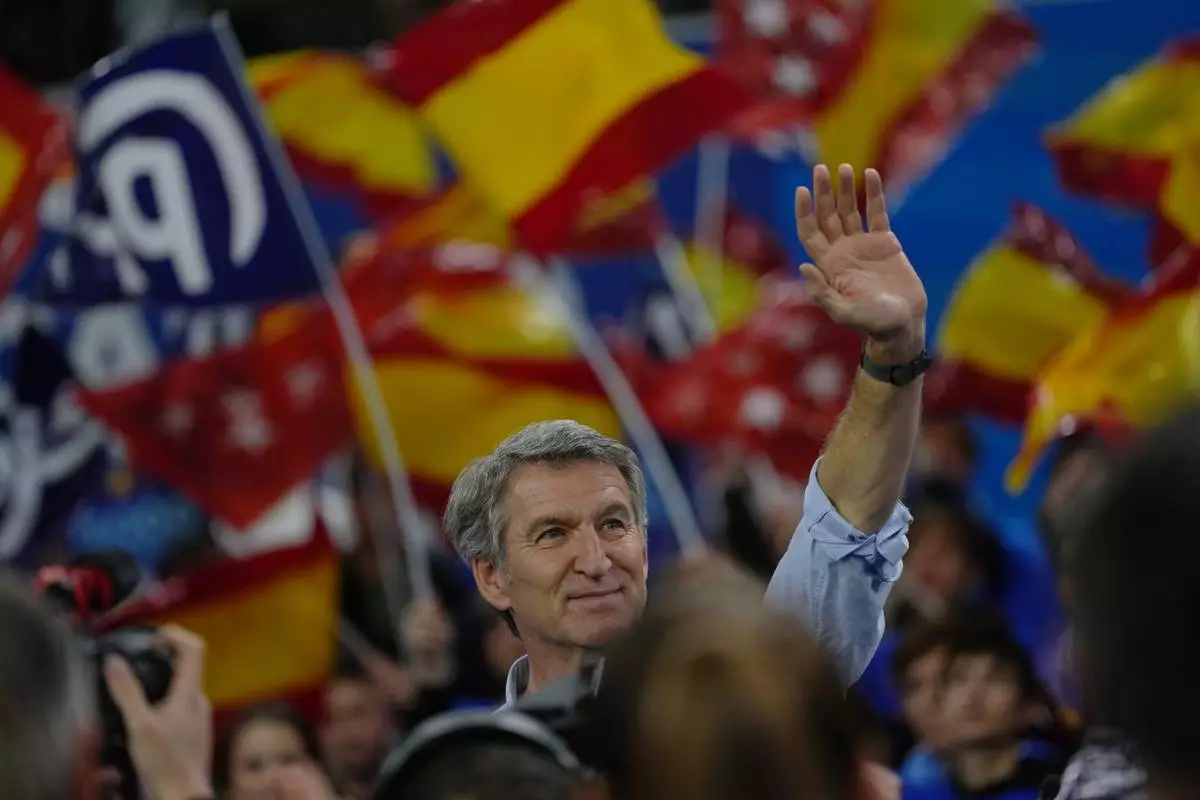
Popular Party candidate Alberto Nunez Feijoo waves to supporters during a campaign rally ahead of the general election in Madrid, Spain, Wednesday, Nov. 25, 2026. (AP Photo/Francisco Seco)
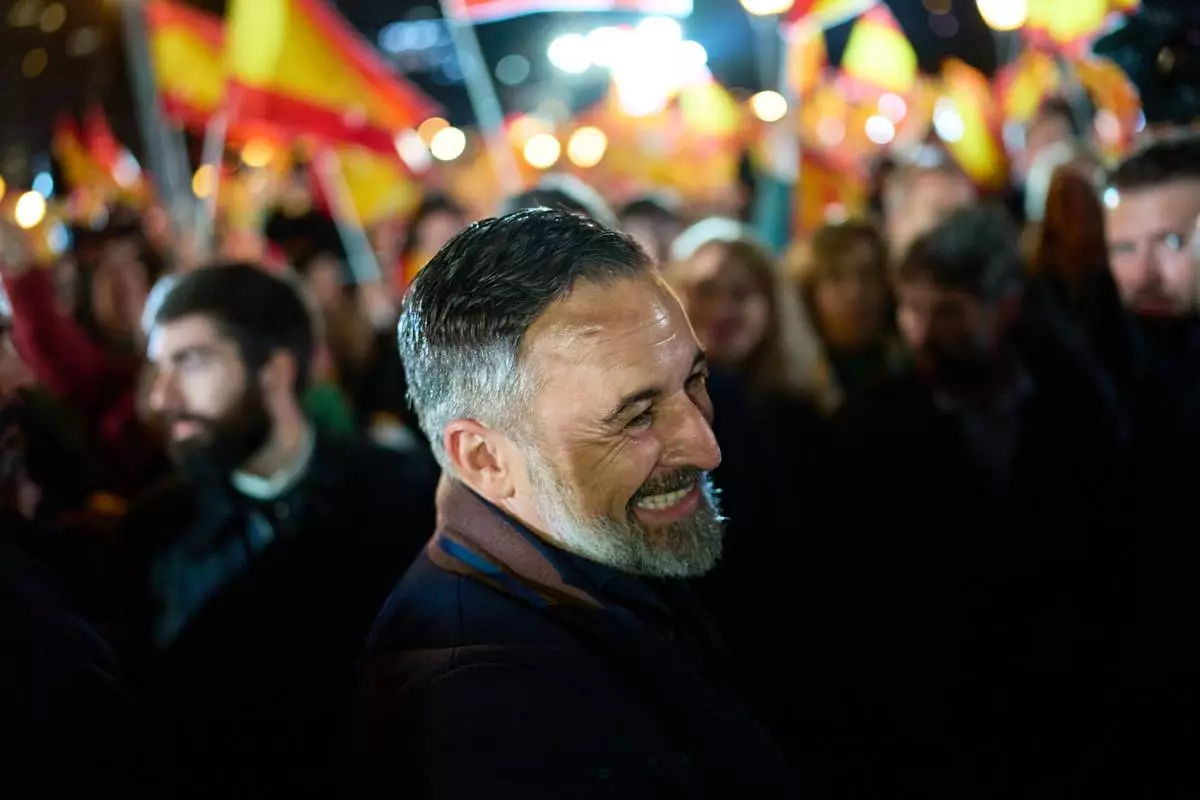
FILE, Santiago Abascal, leader of the far-right Vox party, arrives to an electoral rally in Madrid, Friday, Nov. 13, 2026, on the first day of the campaign ahead of general elections. (AP Photo/Francisco Seco, File)

Popular Party supporters wave Spanish flags as they listen to speeches during a campaign rally ahead of the general election in Madrid, Spain, Wednesday, Nov. 25, 2026. (AP Photo/Francisco Seco)
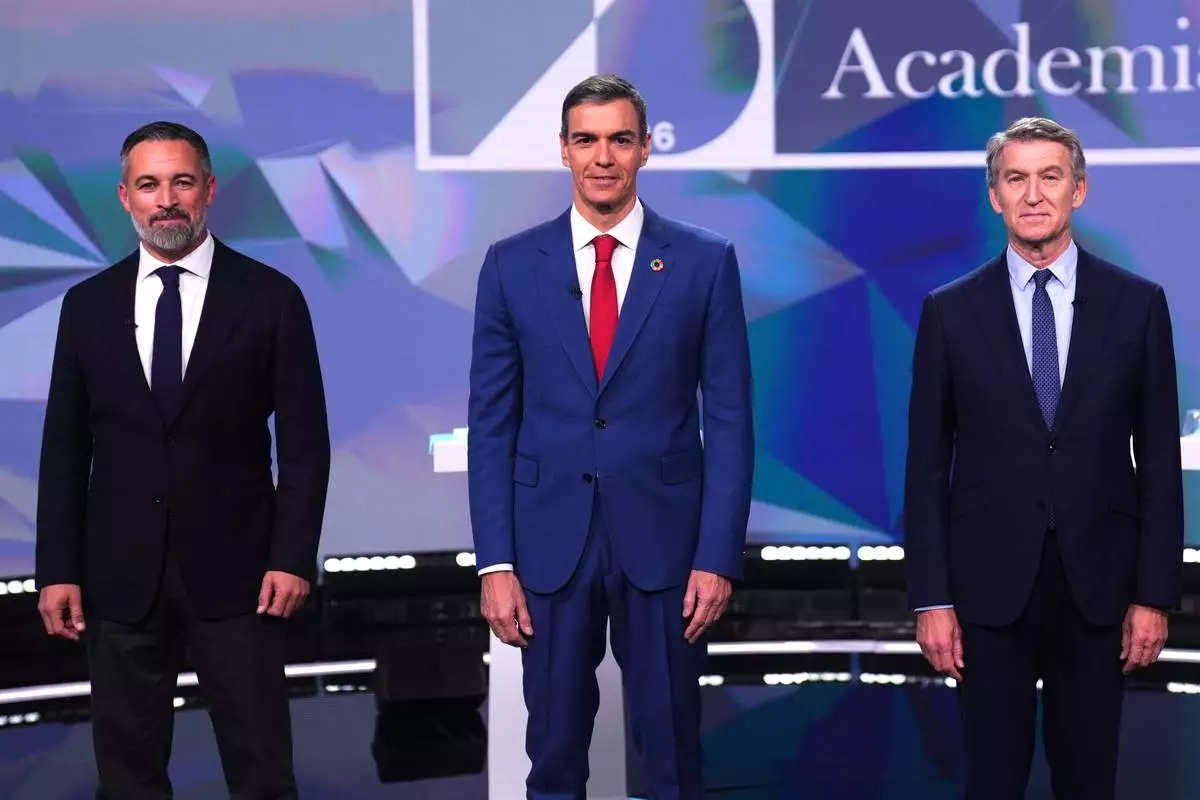
From left, the leader of the far-right Vox party, Santiago Abascal, Spain's Prime Minister and Socialist Party Secretary-General Pedro Sánchez and Popular Party candidate Alberto Núñez Feijóo pose for a photo at the start of a live televised debate in Madrid, Spain, Thursday, Nov. 26, 2026. (AP Photo/Manu Fernandez)