NEW YORK (AP) — As Democrats reeled from massive defeats in 2024, one of the few things they could agree on was that Republicans had drowned them out online.
So left-wing strategists built a new digital infrastructure to change that, elevating feisty social media personalities who capitalized on public frustration with Republican President Donald Trump. By 2026, these influencers were amassing billions of views across social media and boosting Democratic candidates by telling a story about affordability and corruption that contributed to historic midterm wins for the party.
“I've been doing digital political media for about a decade now, and it's always been, you know, the left is on defense, swatting back disinformation," said Brian Tyler Cohen, a progressive podcast host. “For the first time, the left was able to own the narrative in this cycle.”
Now left-leaning influencers and the groups that work with them are at a crossroads as Democrats take control of Congress and get ready for the 2028 presidential election. Some are preparing to serve as party cheerleaders, while others will be pressuring lawmakers to take more aggressive action — even mounting pressure campaigns to stop New York Sen. Chuck Schumer's reelection as the Democratic leader.
Aidan Kohn-Murphy, the founder of the advocacy group Gen Z for Change, said many political creators like him are feeling empowered about their ability to shape the discourse around the Democratic Party’s future, even if that means criticizing it sometimes.
“Assuming that creators are going to be your little mouthpieces, that’s not going to work,” Kohn-Murphy said.
How this unfolds could be impactful, contentious and opaque. Unlike influencers promoting brands, those advocating political views are generally not required to disclose financial interests or share whether they are being paid to post. But at a moment of declining legacy media, this is a crucial battleground.
Republicans and Democrats have increasingly tapped political influencers to promote their work or disseminate opposition research, either for free, for money or in exchange for perks such as access or trainings.
Trump was especially successful in mobilizing podcasters, comedians and other digital creators to spread his message in 2024. Democratic strategists took notice and they spent the next two years trying to catch up.
The first high-profile effort to emerge on the left, just after the 2024 election, was Chorus, an organization started by Cohen that runs an incubator program for “pro-democracy” content creators.
Cohen said the group pays participants a flat rate for the time they spend in the program and does not require them to post anything, instead focusing on sharing resources such as self-employment crash courses, legal primers and messaging training.
“We’ve likened it to a grad school for content creators,” he said. “We’re just teaching them how to be more effective communicators online.”
Also new since the 2024 election is Project Bullhorn, political strategist Jason Berkenfeld’s effort to boost the volume of left-leaning content on social media. The group's programs for the 2026 election included paying influencers for posts, according to its public solicitations on an online influencer marketplace called SideShift.
The Democratic National Committee forged new relationships with influencers before the Nov. 3 elections, too, scaling a group chat on the encrypted messaging app Signal from about 20 creators in summer 2025 to nearly 700 a year later, said Matt Rein, the party’s influencer and creative partnerships director.
Rein said for the midterms, his team sent video clips and campaign talking points in the app for creators to use, although there was no requirement to post. It also served as a conduit between the creators and specific campaigns, helping some of them nab opportunities to attend rallies or connect with the candidates.
Meanwhile, a constellation of other, smaller advocacy groups and left-leaning creator networks popped up in the background, some of them heading in person to closely contested states to promote specific candidates.
Kohn-Murphy said Gen Z for Change was successful at gathering small groups of creators to travel and make social media content around specific political targets, like the Democratic primary for U.S. Senate in Michigan, where they promoted Abdul El-Sayed, who went on to win the general election.
“For this Michigan trip, the content for these seven creators for this four-day period got like 25 million views,” he said.
Left-leaning content creators largely paddled in the same direction in the midterms, advocating for change as they railed against the Trump administration for high costs and the Iran war. But now that the party is preparing to lead Congress and is facing a presidential primary that will kick into high gear next year, rifts could emerge between public figures aiming to boost all Democrats and those who want to steer the party in a specific direction.
The DNC does not plan to choose sides. Rein said his aim for the coming years is to boost Democratic elected officials’ banner initiatives and develop more relationships with creators so that any 2028 candidate can “step into our creative program right away.”
On the other end of the spectrum, Kohn-Murphy said his group will not be shy about pressing for specific actions such as getting Democrats to ditch Schumer as their caucus leader and pick a fresh face instead.
“The Democratic Party wants new leadership — they demanded it,” he said. “To the folks that are going to be trying to pay creators to boost Chuck Schumer, I’ll say good luck.”
Democratic content creator Cheyenne Hunt, who founded the anti-misogyny advocacy group Reckoning Action in May after using her platform to expose sexual misconduct allegations against Democrats Eric Swalwell and Graham Platner earlier this year, also said she is ready to go after members of her own party as needed.
That includes encouraging Democrats to advance investigations she deems important, like an investigation into the administration’s handling of files from the Jeffrey Epstein case.
It also includes speaking out if any 2028 Democratic presidential candidates are accused of misconduct. Her group has a creator network that is poised to hold candidates accountable as well.
“If someone is a predator, and there’s any verifiable evidence to go on, we will be making noise about it,” Hunt said. “I’m also really interested in how we can shape the debate in 2028 and force them to take a strong position on an anti-misogyny agenda.”
Kyle Tharp, a political media analyst and writer of the newsletter “Chaotic Era,” said he expects more public conflicts as the Democratic influencer landscape grows.
He said a similar phenomenon has played out on the right in recent years as some Republican influencers who had championed Trump in 2024, like Tucker Carlson and Megyn Kelly, have taken a more independent tack and voiced criticism of the administration on occasion.
“You’re going to have some folks switching sides and going rogue or being independent or more critical. You’re going to have some that are going to be much more like cheerleaders,” Tharp said. “I think that’s just the sign of a large, fast-growing, healthy political media ecosystem.”
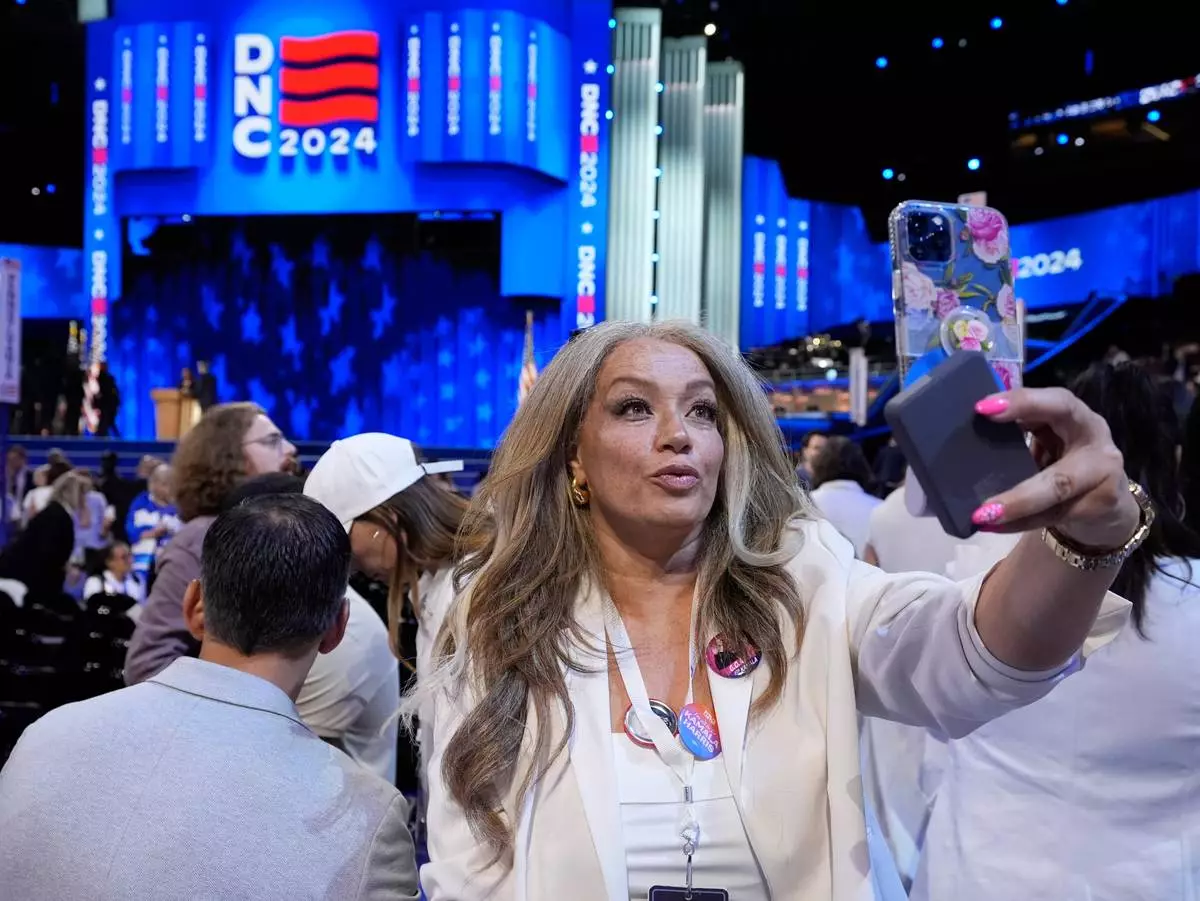
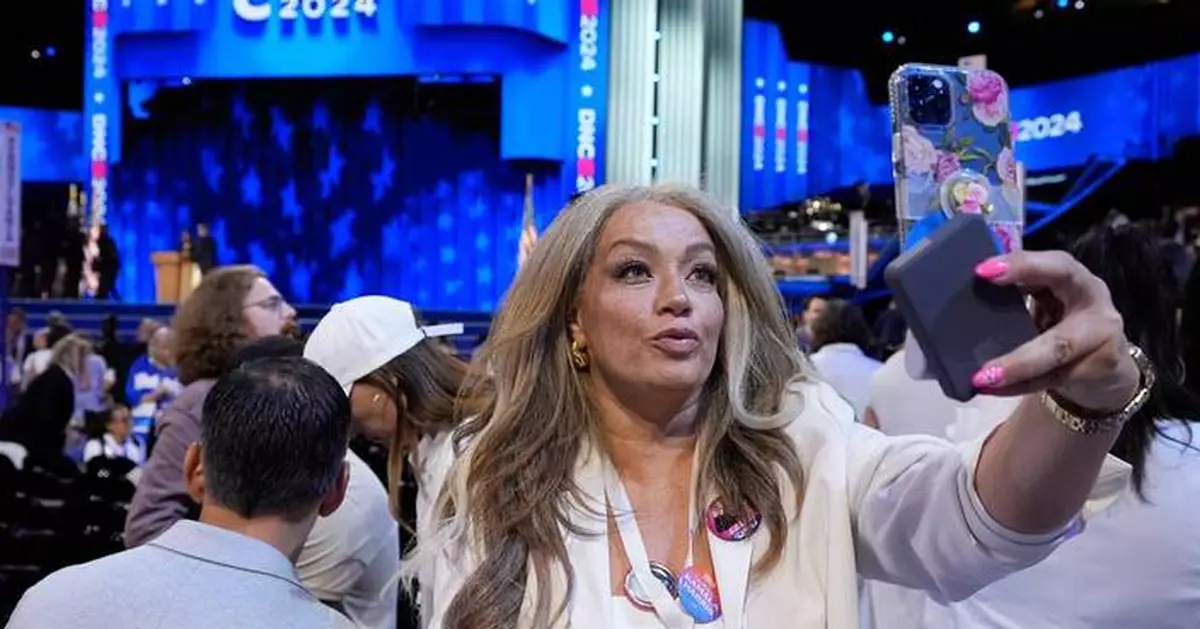
FILE - Content creator Kerry Robertson takes a selfie before the Democratic National Convention, Aug. 22, 2024, in Chicago. (AP Photo/Charles Rex Arbogast, File)
MADRID (AP) — Spaniards are voting Sunday in an election dominated by concerns over housing affordability that could see the far right enter the national government for the first time since Spain’s dictatorship ended more than a half-century ago.
The election is seen as a referendum on incumbent Prime Minister Pedro Sánchez. The left-wing leader of the Socialist party has governed Spain for eight years through numerous crises, but also a period of economic growth that, for many voters, has been eclipsed by cost-of-living concerns.
No issue has galvanized Spaniards in recent years quite like access to affordable housing. Soaring home and rental costs in cities and tourism hot spots have caused widespread discontent, especially among the young.
Last month, Sánchez announced an early election after right-wing parties in parliament voted down measures that his government introduced to alleviate housing pressures. Nationwide protests sprang up after the dramatic eviction of an 87-year-old woman from her apartment in Madrid.
Sánchez has warned voters that a conservative government wouldn't make their lives more affordable, and frequently has said that his opponents would take the country of 50 million backward.
“I'm feeling optimistic,” Sánchez told reporters after casting his vote on Sunday, saying he expected “a huge turnout.”
Participation by 2 p.m. was at 45%, about five percentage points higher than in the previous national election in 2023.
Opposition leader Alberto Núñez Feijóo of the conservative Popular Party, or PP, has promised voters more stability and better governance.
He has criticized Sánchez's record not just for his government's failure to improve Spaniards' housing woes, but also for two fatal train crashes this year on Spain's high-speed rail network, a nationwide blackout in April 2025 and a border crisis in Spain's North African exclave of Ceuta.
Feijóo also pilloried Sánchez — who relied on backing from far-left and separatist parties to cling to power in 2023 — for not being able to pass a budget in nearly four years, lacking parliamentary support.
“I ask Spaniards not to vote with fear, but with memory,” Feijóo said in Madrid after casting his ballot. “Today is a day when the Spanish people take the helm and will decide the future, the destiny, and the direction of Spain.”
It's widely expected that Feijóo will attempt to form a coalition with the far-right Vox party, led by its bearded, barrel-chested leader Santiago Abascal, who has campaigned on an immigration crackdown.
Vox is betting that its hard-line stance will win over voters and enable it to play kingmaker with the PP.
“Spain is deeply divided. There is a lot of fear on both sides, and I believe we need to soften the tense atmosphere and redirect what has been done wrong during the past eight years,” said Paloma Jiménez-Ontiveros, a 65-year-old real estate agent in Madrid, after voting.
Spain has welcomed millions of people, mainly from Latin America, but also from Africa and elsewhere in Europe. One in five residents was born outside Spain, according to census data. Earlier this year, the Spanish government legalized the status of nearly 1.2 million immigrants living in the country without authorization.
Feijóo and Abascal have portrayed Sánchez's immigration-friendly policies as harmful to ordinary Spaniards, pointing to the country's insufficient housing stock and strained public services. Both candidates have condemned the migrant legalization measure.
If Vox entered a new government as a junior member with the PP, it would mark the return of a nationalist, far-right party to power for the first time since the death of dictator Gen. Francisco Franco in 1975.
The result will also be closely watched across Europe before an election-packed 2027, in which voters will head to the polls in France, Italy, Greece and Poland.
In France, the far-right National Rally is aiming to take power, while in Italy, Premier Giorgia Meloni's right-wing coalition is expected to seek another term.
About 39 million people are eligible to cast ballots. Voting generally takes place in schools, community centers, town halls and other municipal facilities. Spaniards can also vote by mail.
Votes are tallied quickly and the result is usually known within hours. That doesn’t mean it’s quickly clear who will govern.
A Spanish prime minister will be elected by the new parliament resulting from a vote that will be convened next month. A candidate needs the support of an absolute majority — or at least 176 lawmakers — in the first parliamentary vote, often relying on coalition agreements or support from other parties.
Several opinion polls conducted before Sunday showed Sánchez’s Socialist Party behind the combined support of the PP and Vox. Sánchez will likely need backing from smaller parties to the left of the Socialists. However, infighting between those parties in the lead-up to the election is expected to weaken Sánchez’s chance at forming a progressive coalition like he did three years ago.
Sánchez, a Madrid native and former economics professor, became a hero to the global left for his government's opposition to the Israel-Hamas war in Gaza, and his resistance to U.S. President Donald Trump. He has criticized the U.S. and Israel over the Iran war, and was one of Western Europe’s first major leaders to formally recognize Palestinian statehood.
Sánchez's government has turbocharged Spain's climate commitments, pledging to source all its energy from renewable sources by 2050. The country already generates more than half its electricity from noncarbon sources. But his critics say that his overreliance on renewables was responsible for the 2025 blackout.
He's the first Spanish prime minister to speak comfortably in English.
Sánchez's party, including members of his inner circle, has been dogged by legal cases involving corruption. The cases have implicated a former minister and top officials, eroding voters' trust.
Feijóo, in contrast, is a lifelong civil servant-turned-politician from rural northwestern Galicia who doesn't speak English and projects himself as a sensible, moderate and effective administrator.
Joseph Wilson contributed to this report from Barcelona, Spain.
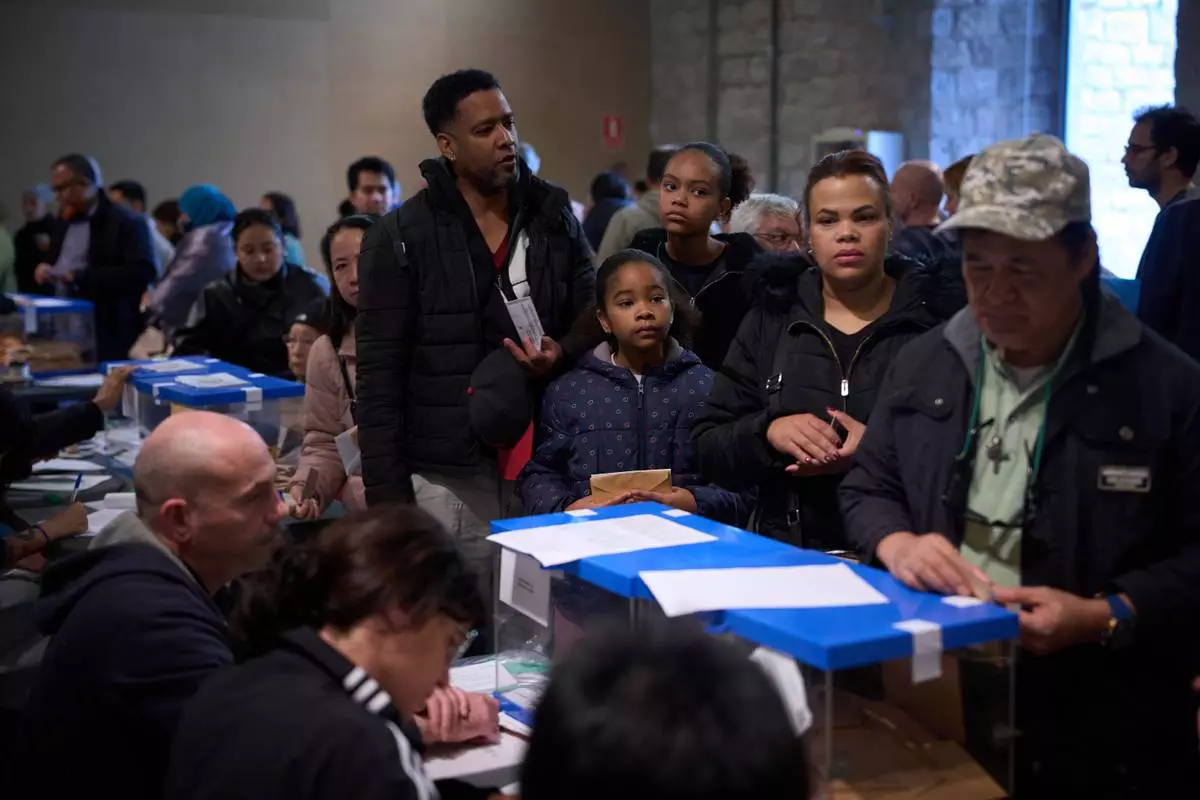
Braulina and Sebastian, originally from the Dominican Republic, who moved to Spain in 2003, wait with their daughters, Thiara and Alaia, to cast their ballots at a polling station during Spain's general election in Barcelona, Spain, Sunday, Nov. 29, 2026. (AP Photo/Emilio Morenatti)
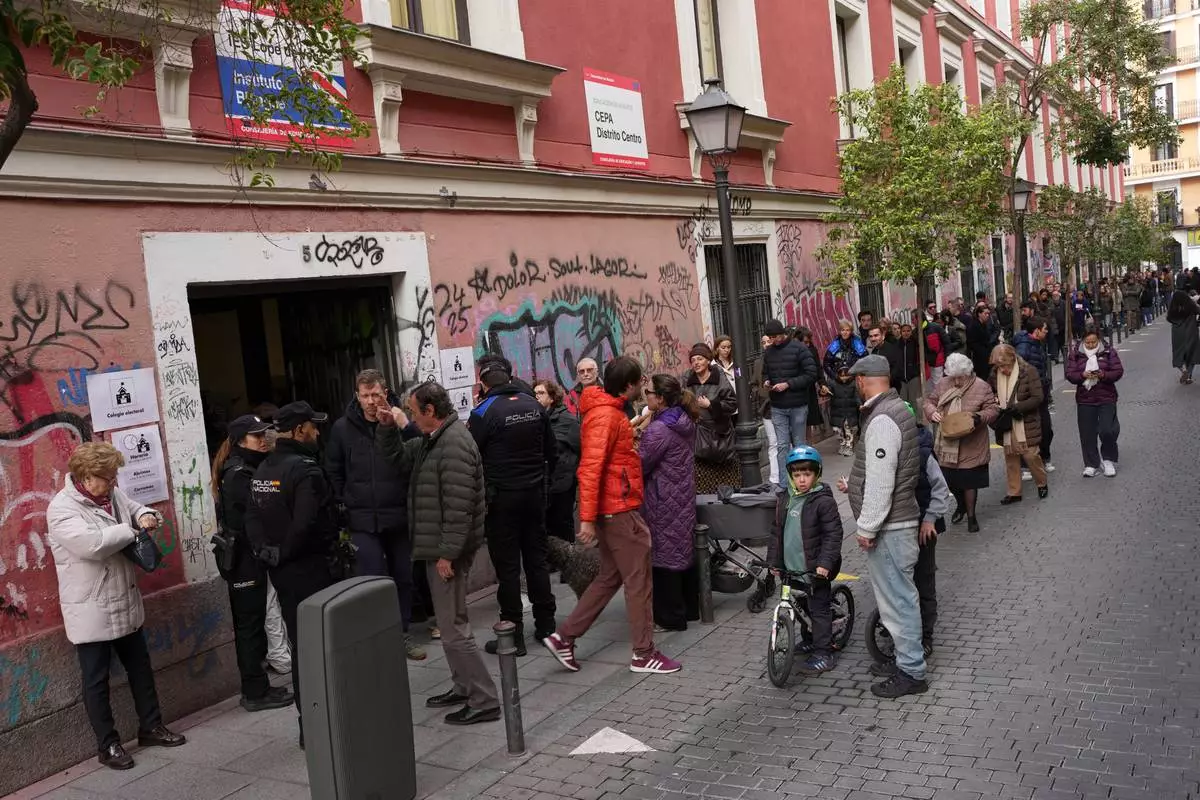
People line up outside a polling station to cast their ballots in Spain's general election in Madrid, Spain, Sunday, Nov. 29, 2026. (AP Photo/Francisco Seco)

People line up at a polling station to cast their ballots in Spain's general election in Madrid, Spain, Sunday, Nov. 29, 2026. (AP Photo/Manu Fernandez)
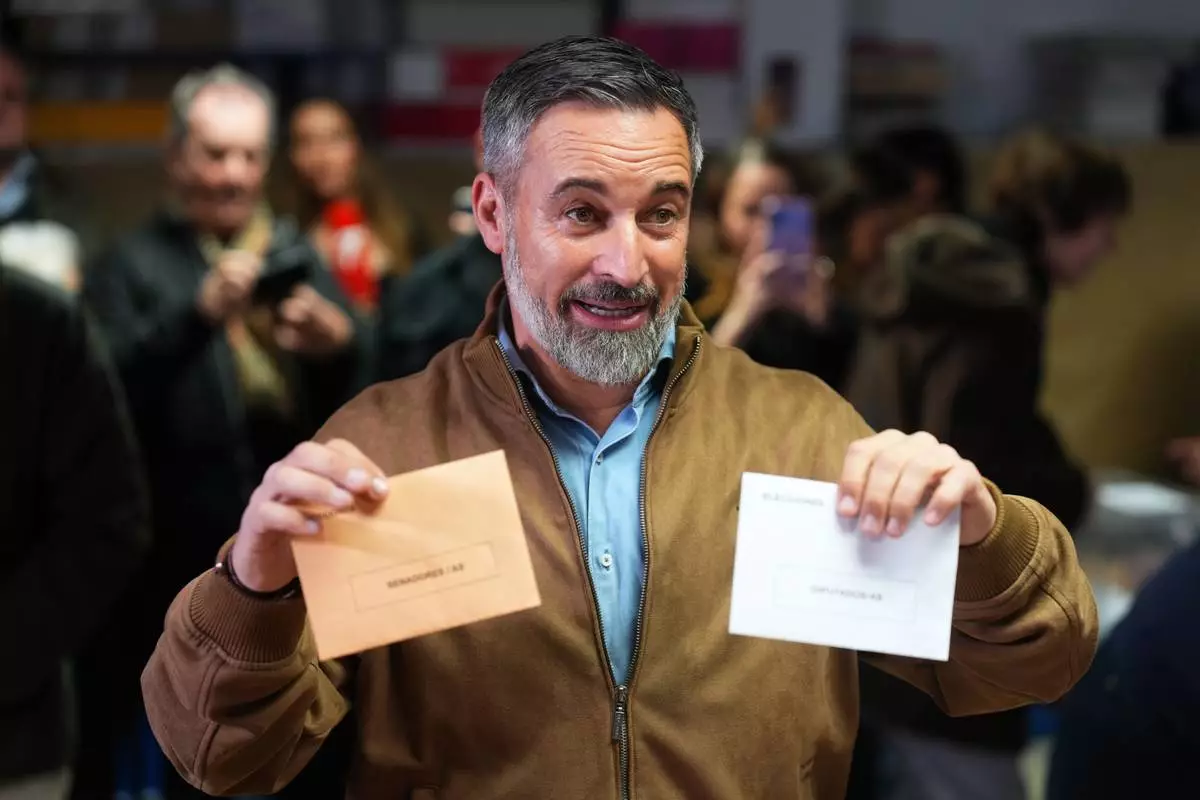
Vox leader and candidate Santiago Abascal poses with his ballots when voting in Spain's general election at a polling station in Madrid, Spain, Sunday, Nov. 29, 2026. (AP Photo/Manu Fernandez)
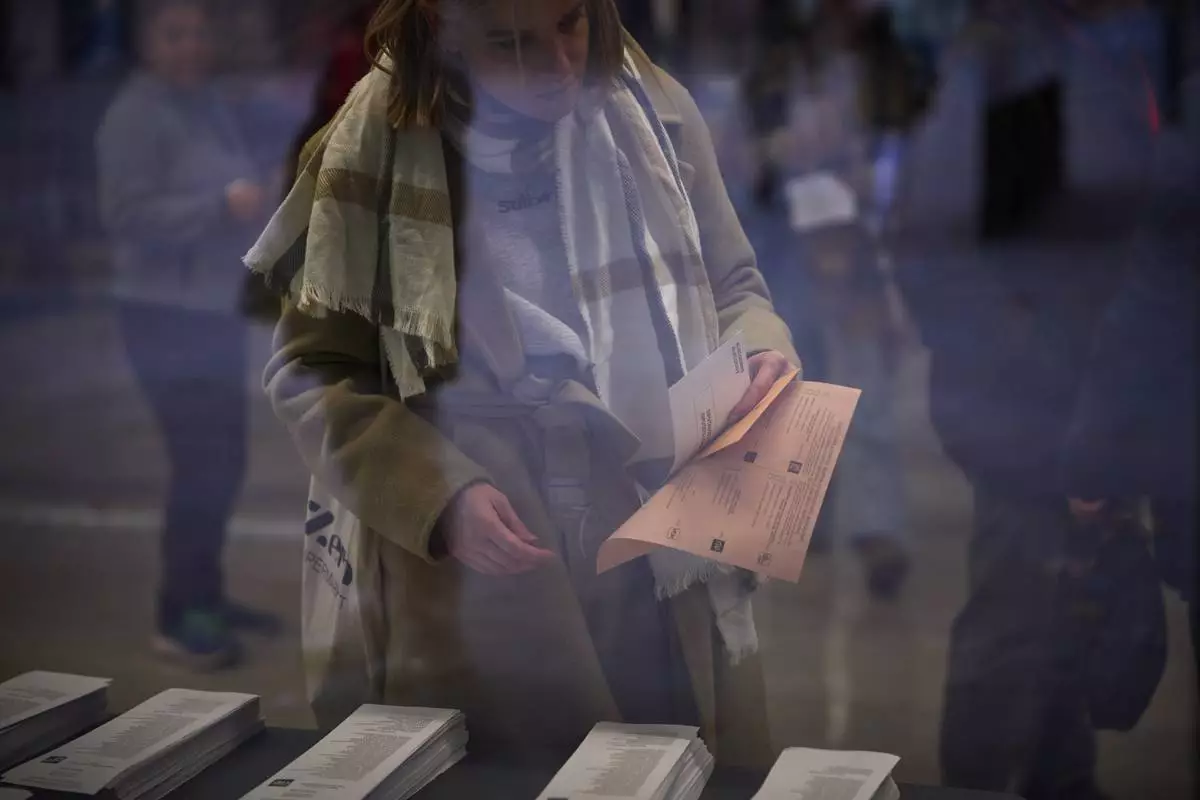
Voters select their ballots at a polling station during the general election in Barcelona, Spain, Sunday, Nov. 29, 2026. (AP Photo/Emilio Morenatti)
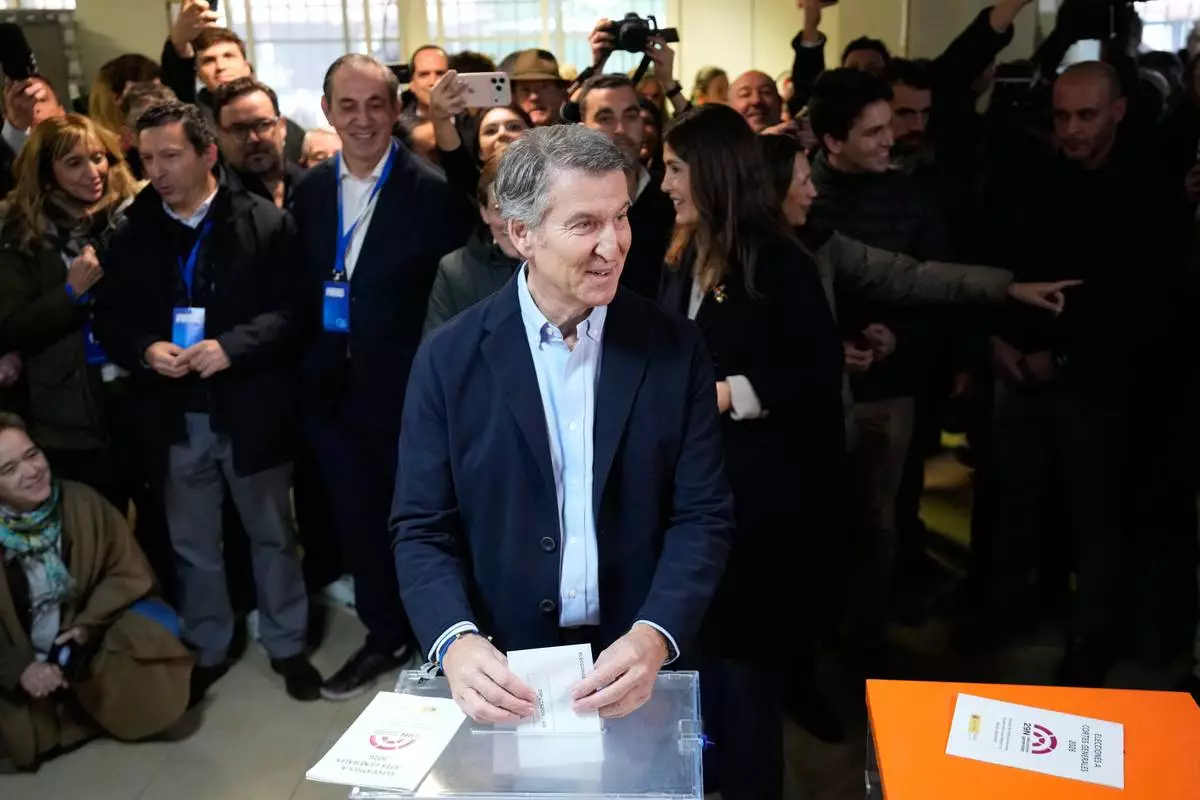
Popular Party candidate Alberto Núñez Feijóo casts his ballot in Spain's general election at a polling station in Madrid, Spain, Sunday, Nov. 29, 2026. (AP Photo/Bernat Armangue)
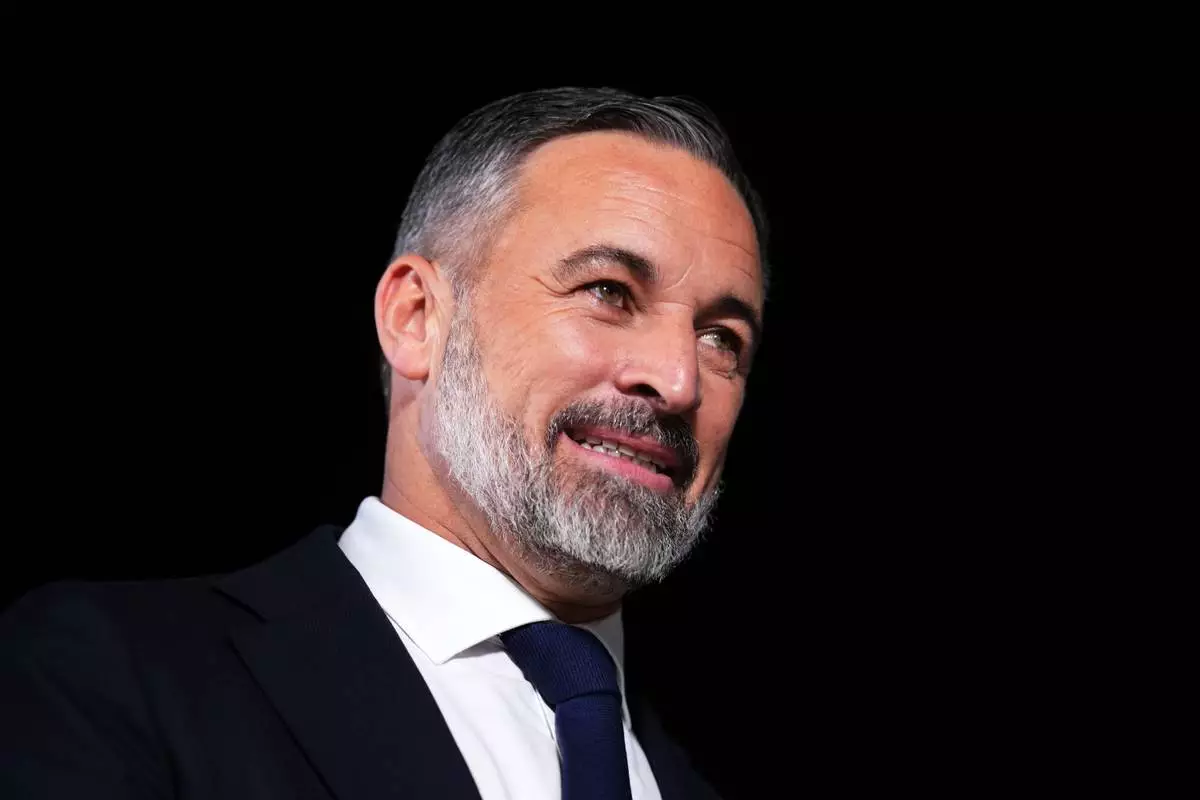
Santiago Abascal, leader of Spain's far-right Vox party, arrives for a live televised debate in Madrid, Spain, Thursday, Nov. 26, 2026. (AP Photo/Manu Fernandez)
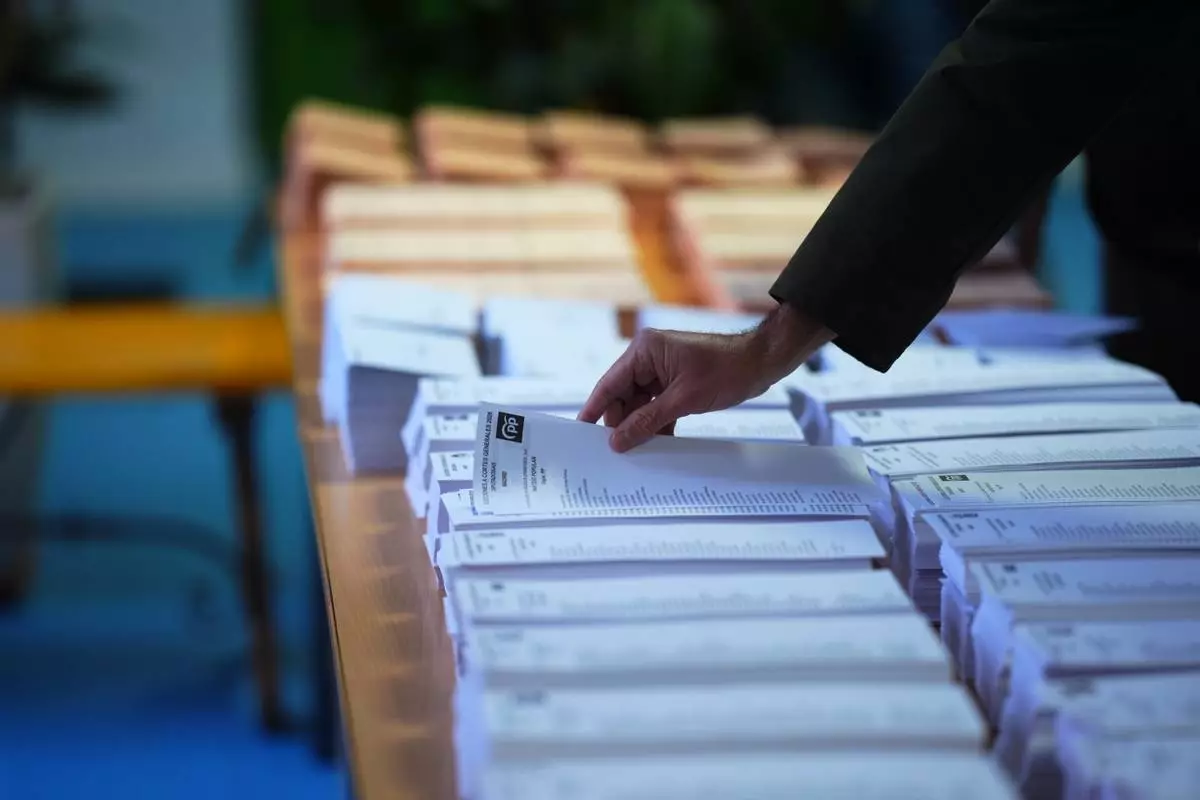
A person picks a ballot to vote in Spain's general election at a polling station in Madrid, Spain, Sunday, Nov. 29, 2026. (AP Photo/Manu Fernandez)
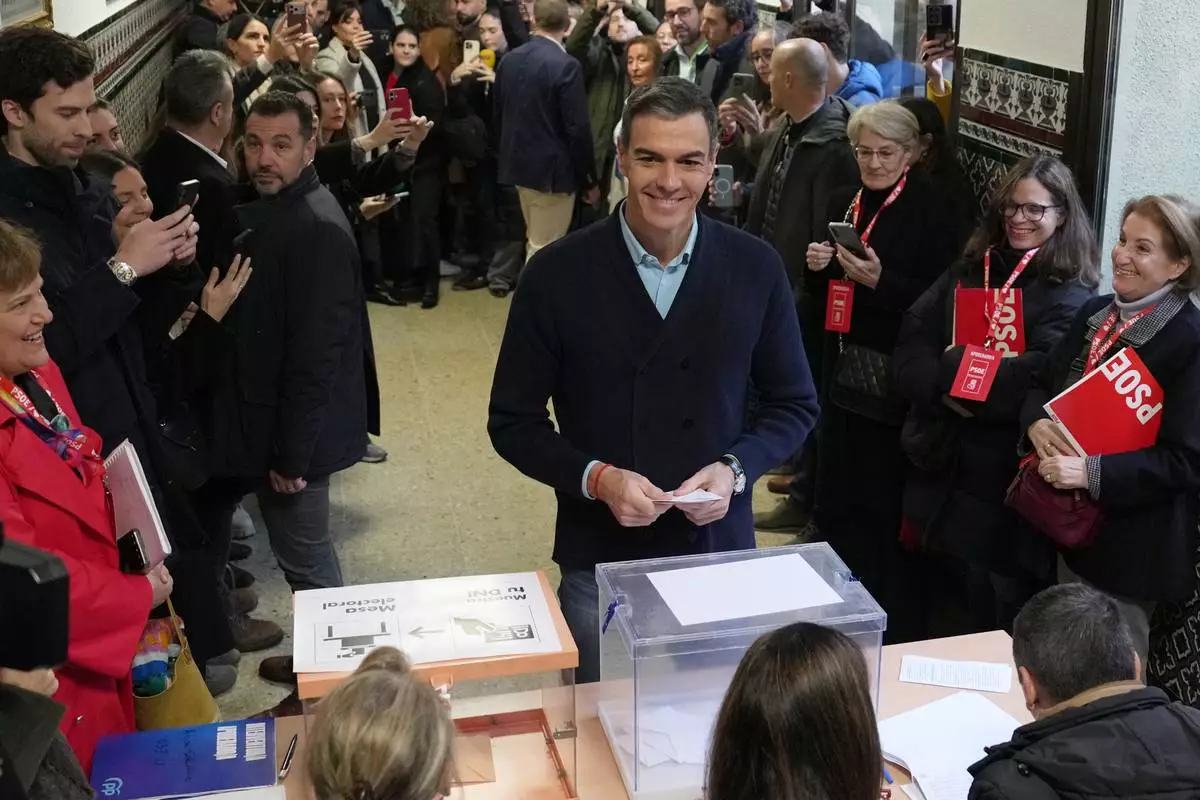
Spain's incumbent Prime Minister Pedro Sanchez votes in Spain's general election at a polling station in Madrid, Spain, Sunday, Nov. 29, 2026. (AP Photo/Francisco Seco)
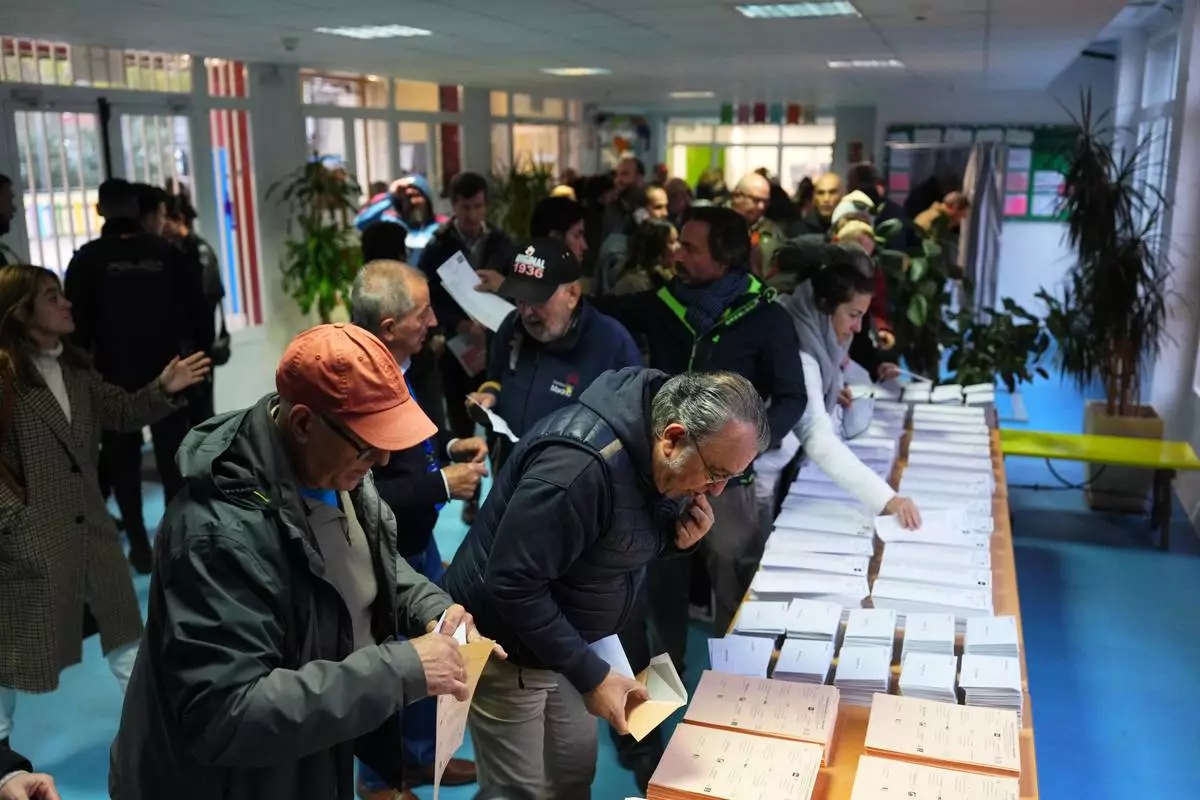
Voters pick up ballots before voting at a polling station in Spain's general election in Madrid, Spain, Sunday, Nov. 29, 2026. (AP Photo/Manu Fernandez)
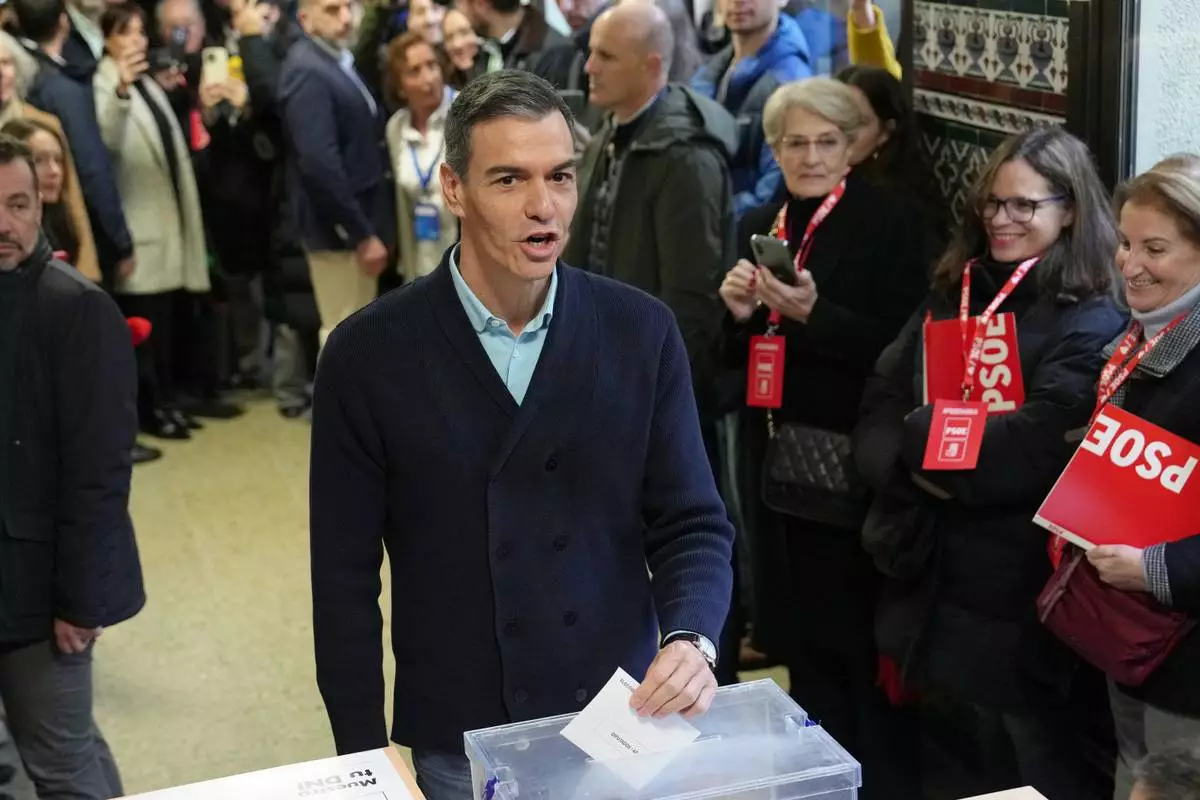
Spain's incumbent Prime Minister Pedro Sanchez votes in Spain's general election at a polling station in Madrid, Spain, Sunday, Nov. 29, 2026. (AP Photo/Francisco Seco)
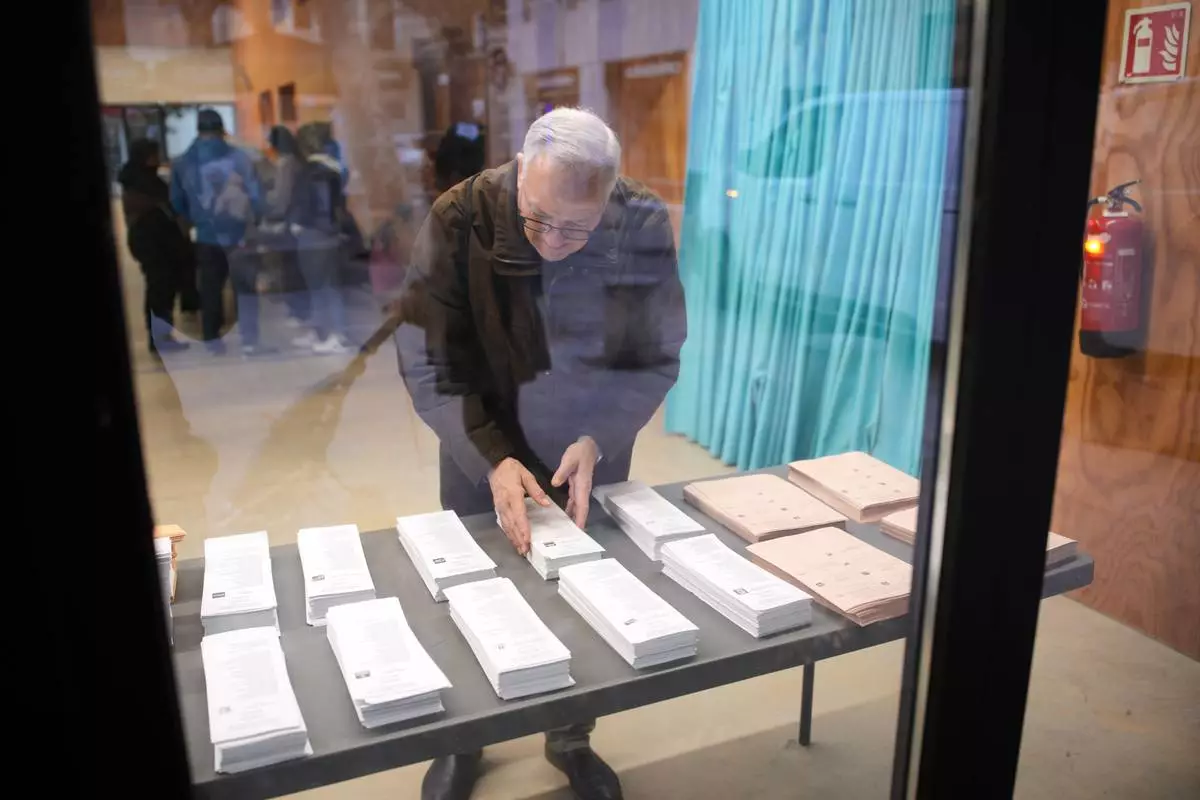
An election worker organizes ballots at a polling station in Spain's general election, in Barcelona, Spain, Sunday, Nov. 29, 2026. (AP Photo/Emilio Morenatti)
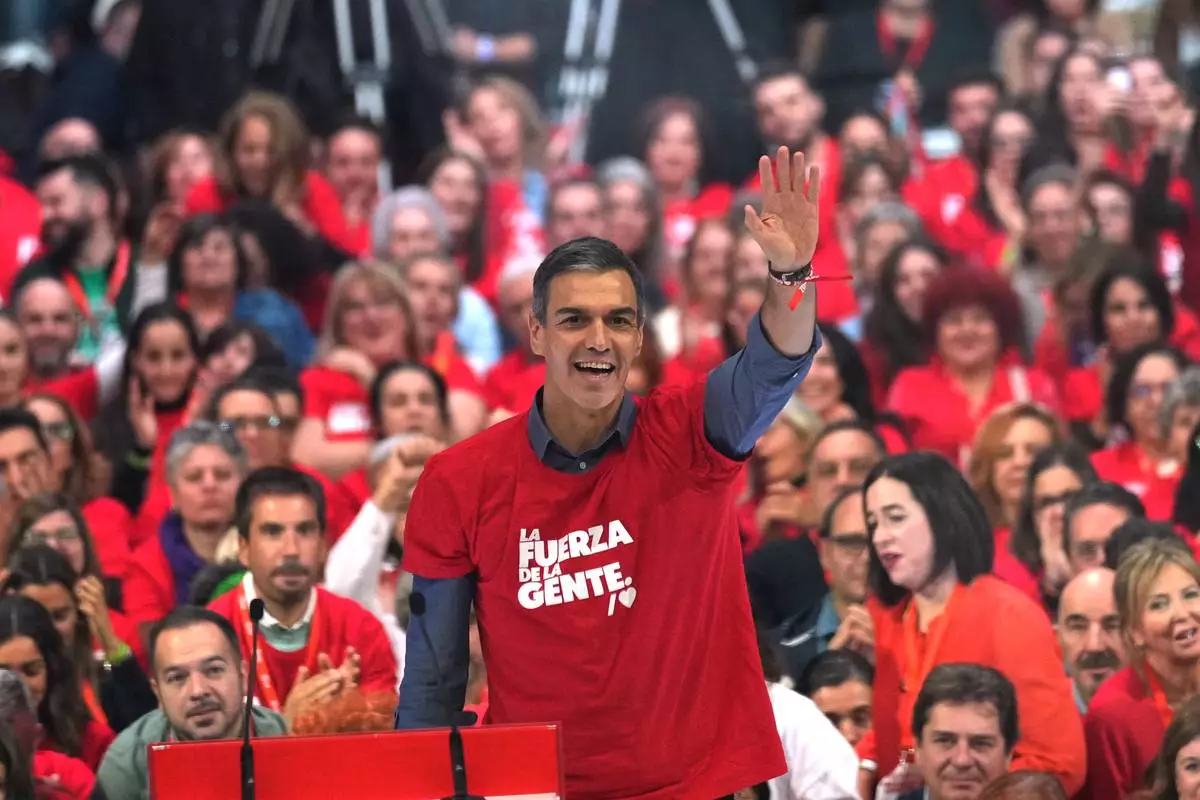
Spain's Prime Minister and Socialist Party Secretary-General Pedro Sánchez waves to supporters at the final campaign rally ahead of Sunday's general election in Madrid, Spain, Friday, Nov. 27, 2026. (AP Photo/Francisco Seco)
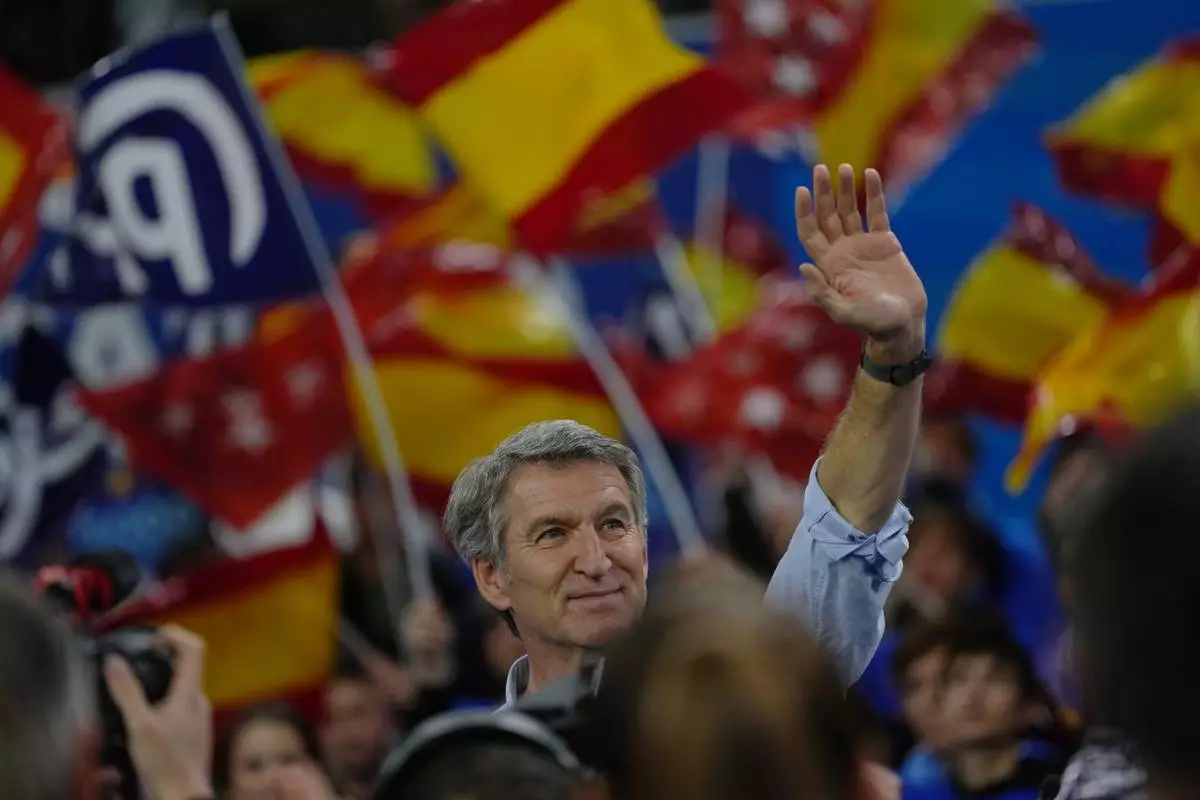
Popular Party candidate Alberto Nunez Feijoo waves to supporters during a campaign rally ahead of the general election in Madrid, Spain, Wednesday, Nov. 25, 2026. (AP Photo/Francisco Seco)
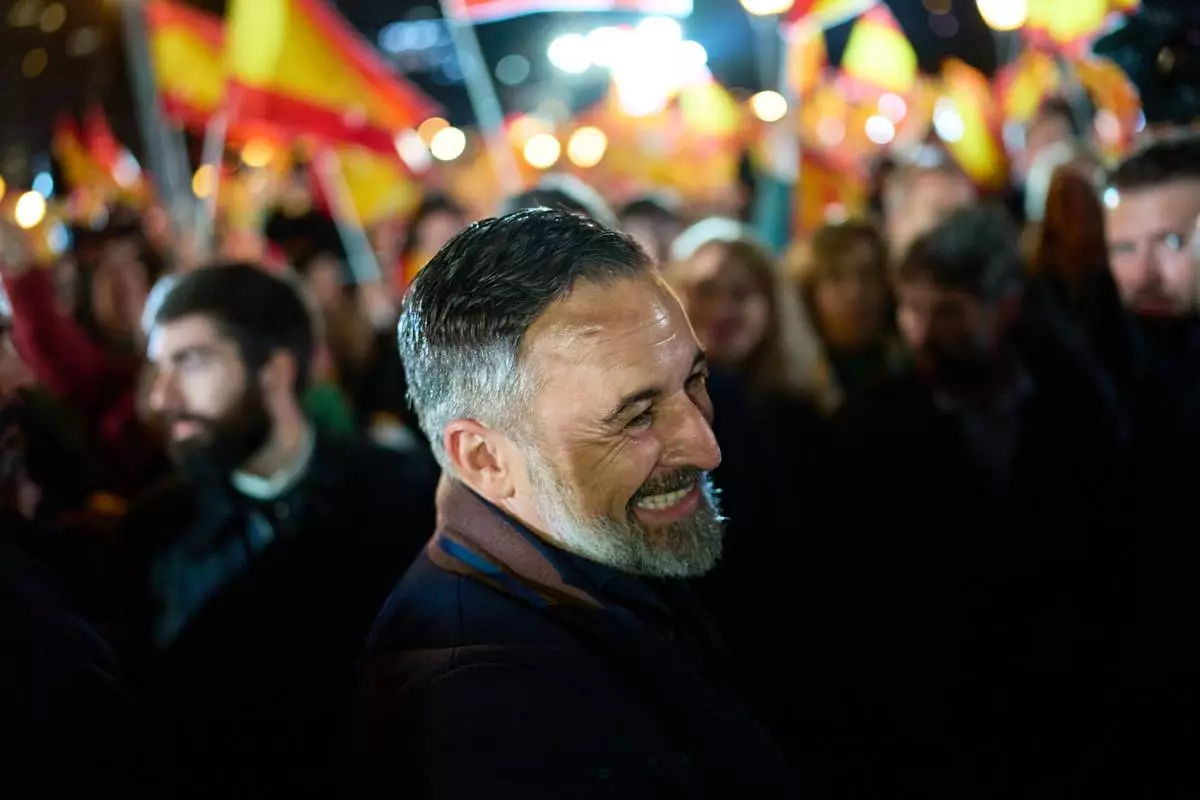
FILE, Santiago Abascal, leader of the far-right Vox party, arrives to an electoral rally in Madrid, Friday, Nov. 13, 2026, on the first day of the campaign ahead of general elections. (AP Photo/Francisco Seco, File)
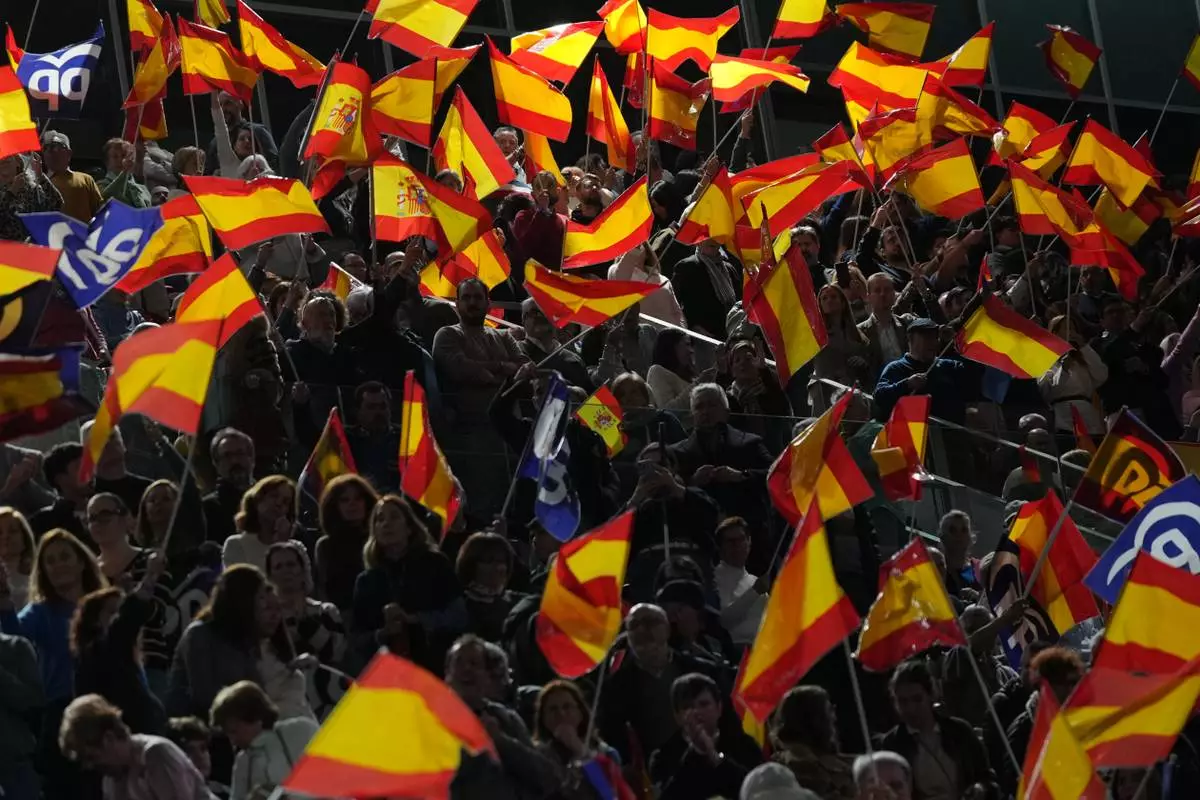
Popular Party supporters wave Spanish flags as they listen to speeches during a campaign rally ahead of the general election in Madrid, Spain, Wednesday, Nov. 25, 2026. (AP Photo/Francisco Seco)
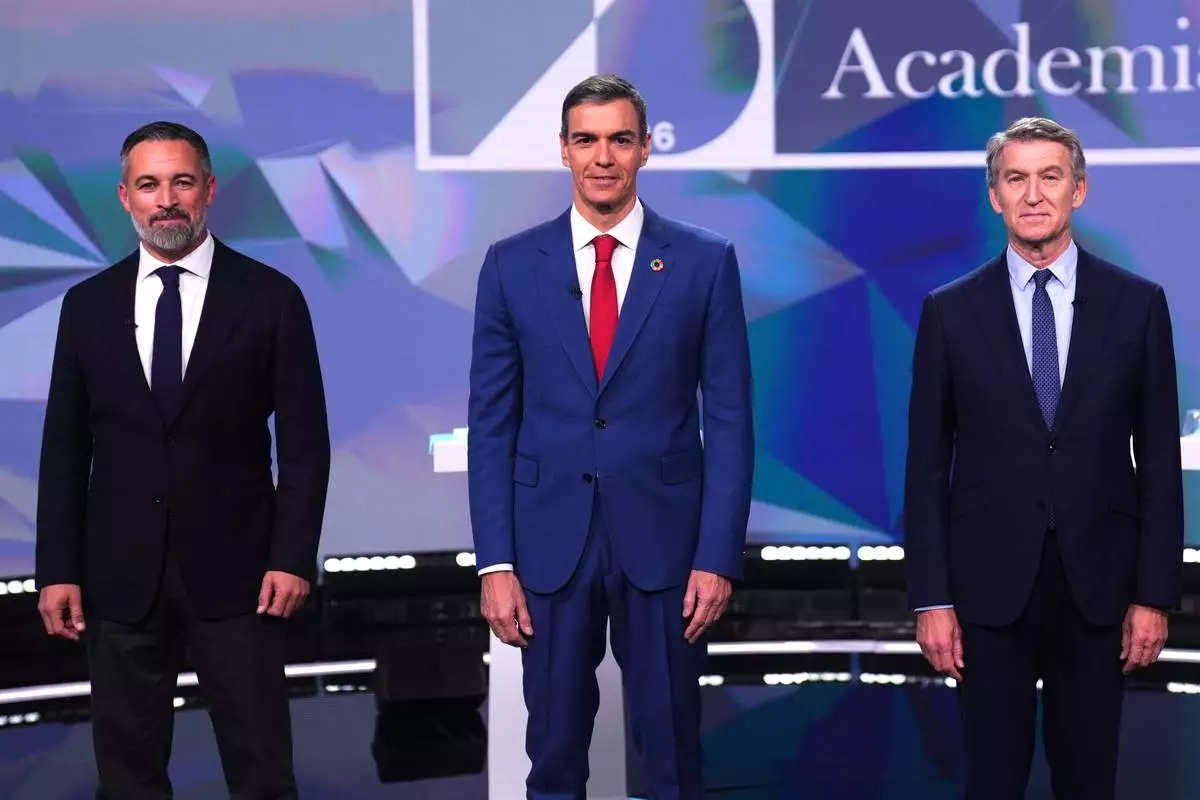
From left, the leader of the far-right Vox party, Santiago Abascal, Spain's Prime Minister and Socialist Party Secretary-General Pedro Sánchez and Popular Party candidate Alberto Núñez Feijóo pose for a photo at the start of a live televised debate in Madrid, Spain, Thursday, Nov. 26, 2026. (AP Photo/Manu Fernandez)