Ground support teams at China's Dongfeng Landing Site have deployed specially customized medical monitoring and treatment vehicles adapted to the cultural preferences of the multinational Shenzhou-23 crew, as the three astronauts are ready to return to Earth in the coming days following the completion of their on-orbit mission.
According to the China Manned Space Agency, the Shenzhou-23 mission crew, consisting of Chinese astronauts Zhang Zhiyuan and Li Jiaying and Pakistani astronaut Muhammad Zeeshan Ali, has wrapped up all scheduled tasks and is set to touch down at the landing site in northern China in the near future.
With landing scheduled to be in the middle of the night, the Dongfeng Landing Site has run multiple rounds of full-system rehearsals and put in place comprehensive response protocols to receive the returning crew. The purpose-built medical vehicles will serve as the first point of care for astronauts immediately after they exit the re-entry capsule.
Dr. Du Yongtao from the Jiuquan Satellite Launch Center detailed the vehicle design during the final comprehensive landing drill held on Thursday.
"The medical monitoring and treatment vehicles you see here, colloquially called the 'Orange Vehicle,' is a core platform for on-site medical monitoring, health care, and emergency medical assistance after astronauts return to the landing site. It provides a warm and comfortable environment that gives the astronauts a feeling of home. We also arrange the interior decor according to the astronauts' culture, preferences, and specific requirements," Du said.
Winter nights at the landing site bring harsh conditions, with ambient temperatures frequently falling below minus 10 degrees Celsius. To support the crew's post-landing physical wellbeing, each vehicle is fitted with heating systems to maintain a consistently stable and comfortable interior environment regardless of external weather conditions.

China's Dongfeng Landing Site deploy tailored medical vehicles to welcome returning Shenzhou-23 astronauts
Experts outlined the bottlenecks in large-scale clinical application of brain-computer interfaces (BCIs) and the breakthroughs needed to scale up the industry following the recent release of a report on the sector's development.
The Research Report on the Innovative Development of Brain-Computer Interfaces (2026) was released during the 2026 Brain-Computer Interface Conference held from Nov 19 to 22 in Beijing. The report noted that BCI is moving from direct connections between the brain and external devices toward more multidimensional industrial empowerment.
The BCI industry is mainly divided into two major categories by technological path. Non-invasive BCI requires no surgery and captures neural signals non-invasively from outside the scalp. This technology is mostly used in industrial safety, sleep monitoring and motor rehabilitation training, and has made rapid progress in commercialization.
Invasive BCI requires electrodes to be implanted inside the cranial cavity, allowing them to capture high-precision signals at the single-neuron level. It focuses on severe medical rehabilitation, and most products are still in clinical trials.
The report proposed a new product classification framework.
"The report classified products by their mechanisms. The first category is open-loop BCI, which either acts directly on the brain or reads signals directly from it. The second is closed-loop BCI, involving closed-loop brain sensing and modulation. The third works through peripheral nerves. It relies not only on the brain but also, for example, on muscle nerves to control external devices," said Li Wenyu, director of the Intellectual Property and Innovation Development Center at the China Academy of Information and Communications Technology.
In the past two years, the number of BCI-related enterprises in China has grown rapidly, now exceeding 500, with three major industrial clusters formed in the Beijing-Tianjin-Hebei region, the Yangtze River Delta and the Guangdong-Hong Kong-Macao Greater Bay Area.
At present, market revenue comes mainly from scientific research and the medical sector, and the focus of industry competition is shifting toward actual clinical outcomes.
"Restoring motor function in neurological diseases is certainly one direction we are focusing on. Second, improving language: how to achieve language restoration, including for patients with amyotrophic lateral sclerosis (ALS) or post-stroke aphasia. Third, higher cognitive memory, such as in Alzheimer's disease, how to help them recall memories, and whether BCI can help them. These are all clinical problems we hope to solve," said Zhao Guoguang, president of Xuanwu Hospital of Capital Medical University.
Experts said that breakthroughs in basic research are the underlying support for the development of the BCI industry. As BCI is a typical multidisciplinary and multimodal field, its industrial development depends on collaboration among enterprises, universities, research institutes and end-users.
"We need to know what the final product will look like in order to guide our basic research. Recently many people have been talking about incorporating neuromorphic chips, but what kind of neuromorphic chip should we actually make? I think we need to understand what the clinical needs are. We also need to integrate regulatory science into clinical practice and our product development," said Luo Minmin, director of the Chinese Institute for Brain Research, Beijing.
Duan Shumin, an academician of the Chinese Academy of Sciences, noted that core component performance, the long-term reliability of implanted devices, industry standardization, regulatory standards and costs are the main bottlenecks currently constraining the large-scale development of the BCI industry.
"For invasive BCI, the biocompatibility and durability of the electrodes are both bottlenecks. With non-invasive BCI, the decoding isn't precise enough, and the modulation isn't either. I think there's still a way to go before large-scale clinical application. It's not just about solving patients' problems; it's also about how we'll interact with AI in the future," Duan said.
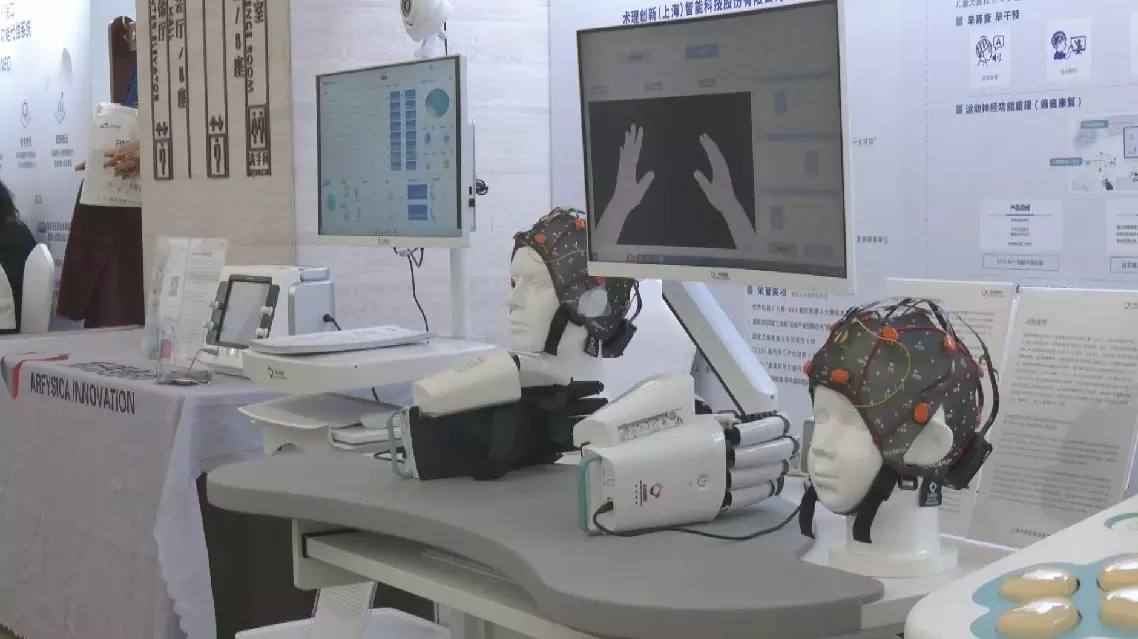
Experts cite bottlenecks, needed breakthroughs for scaling up BCI industry