The Saudi-led coalition in Yemen said Sunday that it was carrying out military operations in response to what it described as Houthi attacks targeting civilians and civilian facilities, and had intercepted and destroyed three ballistic missiles launched by the group toward Saudi Arabia, stressing that Yemen's southern city of Aden remains a "red line."
In statements on social media platform X, the coalition said its air defenses had destroyed two ballistic missiles launched toward Saudi Arabia's Eastern Province and another toward the Saudi capital Riyadh.
Debris from the interceptions in the Eastern Province caused no civilian injuries, it added.
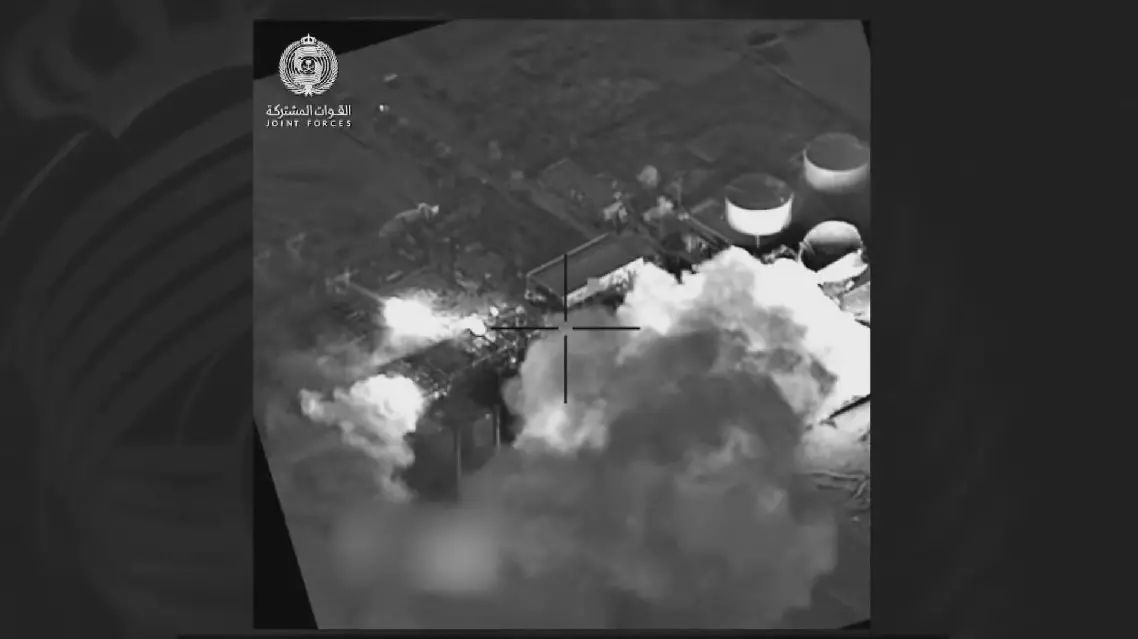
The coalition also announced the destruction of a ballistic missile launch platform in Yemen's northern Saada province, which it said had been used by the Houthis to attack Saudi Arabia's southwestern Jazan region.
In a separate statement, the coalition's joint forces command urged civilians to evacuate Ras Isa port in Yemen's western Hodeidah province.
Citing local sources, the Saudi-based Al Arabiya Breaking News account on X reported at least three airstrikes on the port, with berths struck.
The account quoted a coalition spokesperson as saying that Aden would remain a "red line" and that all necessary measures would be taken to protect the city, stressing that Saudi Arabia was capable of defending itself and had no shortage of interceptor missiles.
Earlier, coalition spokesperson Turki Al-Maliki said Saturday evening that the coalition had carried out a military operation to destroy vital assets allegedly used by the Houthis to target civilians and civilian facilities in Yemen and Saudi Arabia, as well as to threaten freedom of navigation in the southern Red Sea and the Bab al-Mandab Strait.
The coalition gave no details on casualties or damage resulting from its military operations in Yemen.
Early Sunday morning, an air-raid alert was issued for the Riyadh region.
Meanwhile, Yemen's Houthi group said Saturday that it had carried out five military operations against Saudi Arabia over the past 48 hours, targeting an international airport, radar installations and major energy facilities.
In a televised statement aired by Houthi-run al-Masirah TV, Houthi military spokesperson Yahya Sarea said the first operation targeted King Khalid International Airport in Riyadh, while the second allegedly disabled two radar installations in the southwestern cities of Abha and Khamis Mushait.
The third and fourth operations targeted the Jazan Refinery in southwestern Saudi Arabia and the Hawiyah Gas Plant in the Eastern Province, respectively, Sarea said, claiming that both attacks caused fires at the targeted facilities.
The fifth operation targeted power plants in Al-Shuqaiq and Jazan in southwestern Saudi Arabia, he said, claiming significant damage to both facilities.
Sarea described the five operations as a response to airstrikes attributed to Saudi Arabia targeting power stations and other civilian infrastructure across Yemen. He said the group would continue its cross-border attacks, reiterating its policy of responding to "escalation with escalation" until military operations against Houthi-held areas of Yemen ceased and what the group describes as a blockade on those areas was lifted.
The reported Houthi attacks and the extent of the claimed damage could not be independently verified.
The developments come amid intensifying fighting between the Houthis and government forces supported by the Saudi-led coalition, with both sides exchanging attacks across multiple fronts.
The country has been mired in conflict since late 2014, when the Houthis seized the capital Sanaa and much of northern Yemen, prompting Saudi-led military intervention in 2015 in support of the internationally recognized government.
Yemen's Houthis, Saudi-led coalition trade hostilities
Experts outlined the bottlenecks in large-scale clinical application of brain-computer interfaces (BCIs) and the breakthroughs needed to scale up the industry following the recent release of a report on the sector's development.
The Research Report on the Innovative Development of Brain-Computer Interfaces (2026) was released during the 2026 Brain-Computer Interface Conference held from Nov 19 to 22 in Beijing. The report noted that BCI is moving from direct connections between the brain and external devices toward more multidimensional industrial empowerment.
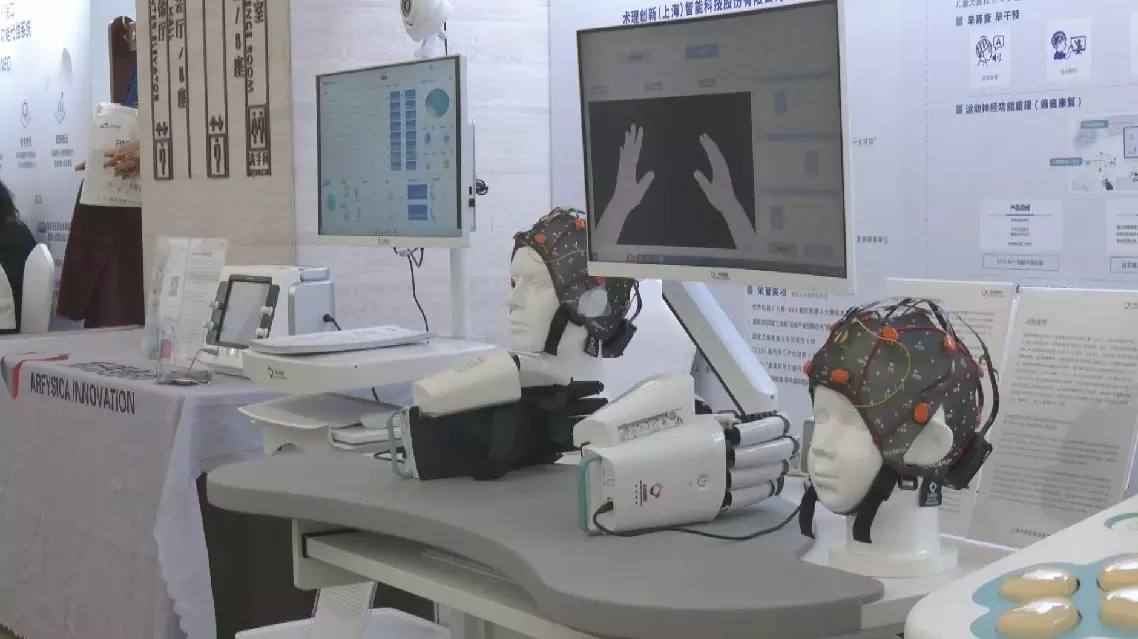
The BCI industry is mainly divided into two major categories by technological path. Non-invasive BCI requires no surgery and captures neural signals non-invasively from outside the scalp. This technology is mostly used in industrial safety, sleep monitoring and motor rehabilitation training, and has made rapid progress in commercialization.
Invasive BCI requires electrodes to be implanted inside the cranial cavity, allowing them to capture high-precision signals at the single-neuron level. It focuses on severe medical rehabilitation, and most products are still in clinical trials.
The report proposed a new product classification framework.
"The report classified products by their mechanisms. The first category is open-loop BCI, which either acts directly on the brain or reads signals directly from it. The second is closed-loop BCI, involving closed-loop brain sensing and modulation. The third works through peripheral nerves. It relies not only on the brain but also, for example, on muscle nerves to control external devices," said Li Wenyu, director of the Intellectual Property and Innovation Development Center at the China Academy of Information and Communications Technology.
In the past two years, the number of BCI-related enterprises in China has grown rapidly, now exceeding 500, with three major industrial clusters formed in the Beijing-Tianjin-Hebei region, the Yangtze River Delta and the Guangdong-Hong Kong-Macao Greater Bay Area.
At present, market revenue comes mainly from scientific research and the medical sector, and the focus of industry competition is shifting toward actual clinical outcomes.
"Restoring motor function in neurological diseases is certainly one direction we are focusing on. Second, improving language: how to achieve language restoration, including for patients with amyotrophic lateral sclerosis (ALS) or post-stroke aphasia. Third, higher cognitive memory, such as in Alzheimer's disease, how to help them recall memories, and whether BCI can help them. These are all clinical problems we hope to solve," said Zhao Guoguang, president of Xuanwu Hospital of Capital Medical University.
Experts said that breakthroughs in basic research are the underlying support for the development of the BCI industry. As BCI is a typical multidisciplinary and multimodal field, its industrial development depends on collaboration among enterprises, universities, research institutes and end-users.
"We need to know what the final product will look like in order to guide our basic research. Recently many people have been talking about incorporating neuromorphic chips, but what kind of neuromorphic chip should we actually make? I think we need to understand what the clinical needs are. We also need to integrate regulatory science into clinical practice and our product development," said Luo Minmin, director of the Chinese Institute for Brain Research, Beijing.
Duan Shumin, an academician of the Chinese Academy of Sciences, noted that core component performance, the long-term reliability of implanted devices, industry standardization, regulatory standards and costs are the main bottlenecks currently constraining the large-scale development of the BCI industry.
"For invasive BCI, the biocompatibility and durability of the electrodes are both bottlenecks. With non-invasive BCI, the decoding isn't precise enough, and the modulation isn't either. I think there's still a way to go before large-scale clinical application. It's not just about solving patients' problems; it's also about how we'll interact with AI in the future," Duan said.
Experts cite bottlenecks, needed breakthroughs for scaling up BCI industry