Palestinian refugees living in Lebanon's Burj El Barajneh Camp are struggling to keep their national identity and history alive for a new generation, even as war, overcrowding and funding shortfalls threaten their community and schools.
Nov 29 marks the International Day of Solidarity with the Palestinian People, whose struggle for a homeland continues across generations. Across the Middle East, millions of Palestinians face displacement, conflict and uncertainty, from devastation in Gaza to settler attacks in the occupied West Bank.
In the southern suburbs of Beirut, approximately four kilometers from the city center, the camp has been expanded into a densely populated mini-city since it was established in 1948 for Palestinians -- mostly from the Galilee -- who fled their villages during the Nakba, the mass displacement surrounding the creation of Israel.
Originally built to accommodate around 3,500 people, the camp now houses over 20,000 registered Palestinian refugees in less than a square kilometer. Residents endure squalid conditions, with families packed into cramped, stacked buildings amid aging water and sanitation infrastructure and tangled overhead electricity cables that pose severe electrocution and fire hazards. Economic prospects are equally bleak.
"There are university students, as well as school kids, they are all good students and have graduated, but Palestinians cannot get work," said camp resident Mohammed Safadi.
Education faces similar strain, marked by overcrowded classrooms and overworked staff. Yet at a local primary school, there are only 15 teachers who are serving more than 130 children and managing to teach science, mathematics and Palestinian history, trying to preserve the hope of one day living in a free Palestine.
That mission is under growing threat from underinvestment, deteriorating buildings and a looming funding cliff, with UN financing for teachers' salaries set to run out in June next year.
"It is true there is a few people in the world speaking about us, about what is happening in Gaza and as I said, stop for killing Palestinian, it's good, but in another way, here in the camps, the UNRWA (United Nations Relief and Works Agency for Palestine Refugees in the Near East) cannot help more," said headmistress Fadia Lobani, referring to the UN agency for Palestinian refugees.
The Regional conflict has further disrupted classes. Since fighting between Hezbollah and Israel began on October 8, 2023, the school has been forced to close temporarily. Following an Israeli aerial bombardment of Beirut on April 8 this year that killed more than 300 people, including many in the neighboring Hezbollah stronghold of Dahieh, fears have grown that the camp and the school could be directly hit.
"You know, Burj El Barajneh Camp, it is in the middle, and there are bombs surrounding us. Also, the kindergarten, we have the lights, we have the building, some structure is not good for classes. Of course, we are closed," said the headmistress.
Despite the mounting pressures on the Palestinian diaspora, educators say institutions like the camp school remain vital anchors of heritage. Still, with Palestinians continuing to die in Gaza, violence escalating in the West Bank and Israeli forces occupying swathes of southern Lebanon, the prospect of an independent homeland appears more distant to today's schoolchildren than it did when their grandparents fled their ancestral homes in 1948.
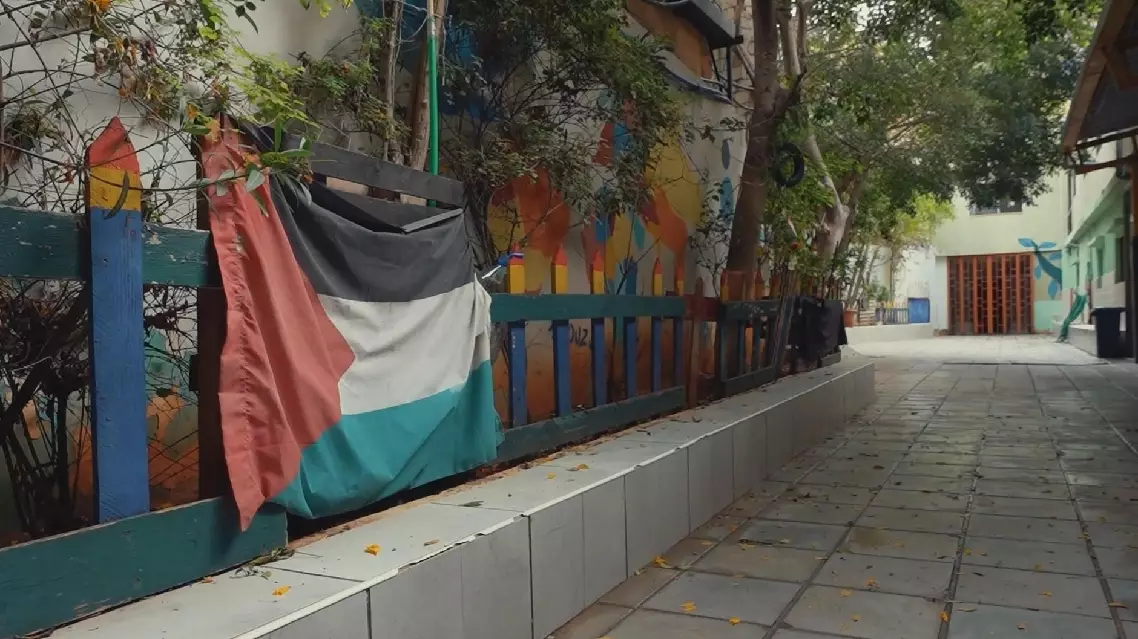
Palestinian refugees in Lebanon struggle to keep identity, schooling alive
Experts outlined the bottlenecks in large-scale clinical application of brain-computer interfaces (BCIs) and the breakthroughs needed to scale up the industry following the recent release of a report on the sector's development.
The Research Report on the Innovative Development of Brain-Computer Interfaces (2026) was released during the 2026 Brain-Computer Interface Conference held from Nov 19 to 22 in Beijing. The report noted that BCI is moving from direct connections between the brain and external devices toward more multidimensional industrial empowerment.
The BCI industry is mainly divided into two major categories by technological path. Non-invasive BCI requires no surgery and captures neural signals non-invasively from outside the scalp. This technology is mostly used in industrial safety, sleep monitoring and motor rehabilitation training, and has made rapid progress in commercialization.
Invasive BCI requires electrodes to be implanted inside the cranial cavity, allowing them to capture high-precision signals at the single-neuron level. It focuses on severe medical rehabilitation, and most products are still in clinical trials.
The report proposed a new product classification framework.
"The report classified products by their mechanisms. The first category is open-loop BCI, which either acts directly on the brain or reads signals directly from it. The second is closed-loop BCI, involving closed-loop brain sensing and modulation. The third works through peripheral nerves. It relies not only on the brain but also, for example, on muscle nerves to control external devices," said Li Wenyu, director of the Intellectual Property and Innovation Development Center at the China Academy of Information and Communications Technology.
In the past two years, the number of BCI-related enterprises in China has grown rapidly, now exceeding 500, with three major industrial clusters formed in the Beijing-Tianjin-Hebei region, the Yangtze River Delta and the Guangdong-Hong Kong-Macao Greater Bay Area.
At present, market revenue comes mainly from scientific research and the medical sector, and the focus of industry competition is shifting toward actual clinical outcomes.
"Restoring motor function in neurological diseases is certainly one direction we are focusing on. Second, improving language: how to achieve language restoration, including for patients with amyotrophic lateral sclerosis (ALS) or post-stroke aphasia. Third, higher cognitive memory, such as in Alzheimer's disease, how to help them recall memories, and whether BCI can help them. These are all clinical problems we hope to solve," said Zhao Guoguang, president of Xuanwu Hospital of Capital Medical University.
Experts said that breakthroughs in basic research are the underlying support for the development of the BCI industry. As BCI is a typical multidisciplinary and multimodal field, its industrial development depends on collaboration among enterprises, universities, research institutes and end-users.
"We need to know what the final product will look like in order to guide our basic research. Recently many people have been talking about incorporating neuromorphic chips, but what kind of neuromorphic chip should we actually make? I think we need to understand what the clinical needs are. We also need to integrate regulatory science into clinical practice and our product development," said Luo Minmin, director of the Chinese Institute for Brain Research, Beijing.
Duan Shumin, an academician of the Chinese Academy of Sciences, noted that core component performance, the long-term reliability of implanted devices, industry standardization, regulatory standards and costs are the main bottlenecks currently constraining the large-scale development of the BCI industry.
"For invasive BCI, the biocompatibility and durability of the electrodes are both bottlenecks. With non-invasive BCI, the decoding isn't precise enough, and the modulation isn't either. I think there's still a way to go before large-scale clinical application. It's not just about solving patients' problems; it's also about how we'll interact with AI in the future," Duan said.
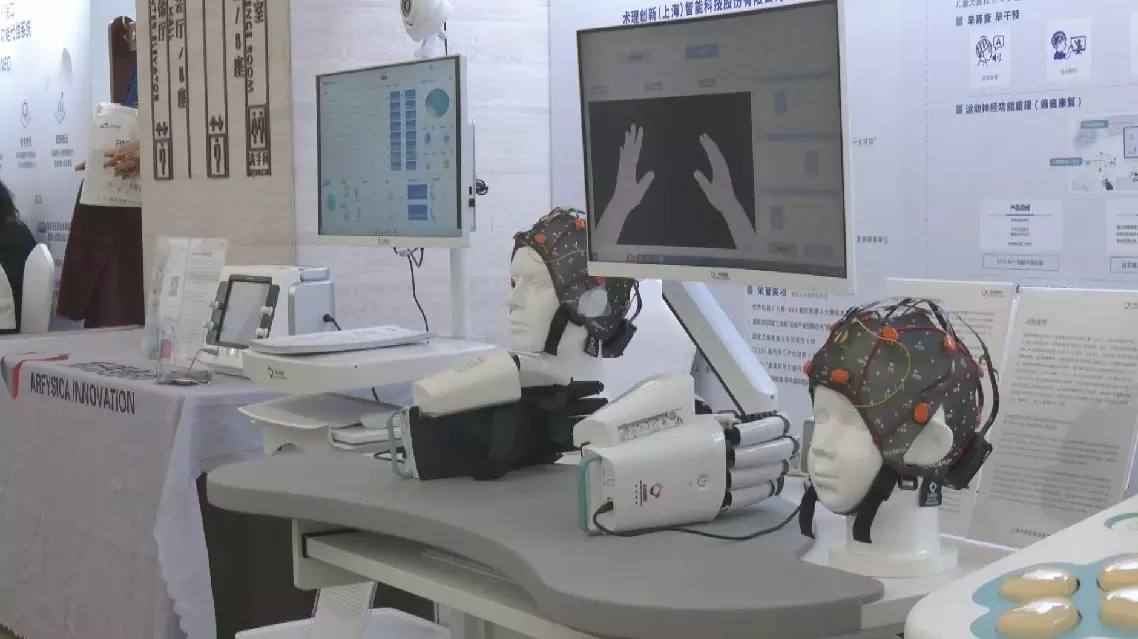
Experts cite bottlenecks, needed breakthroughs for scaling up BCI industry