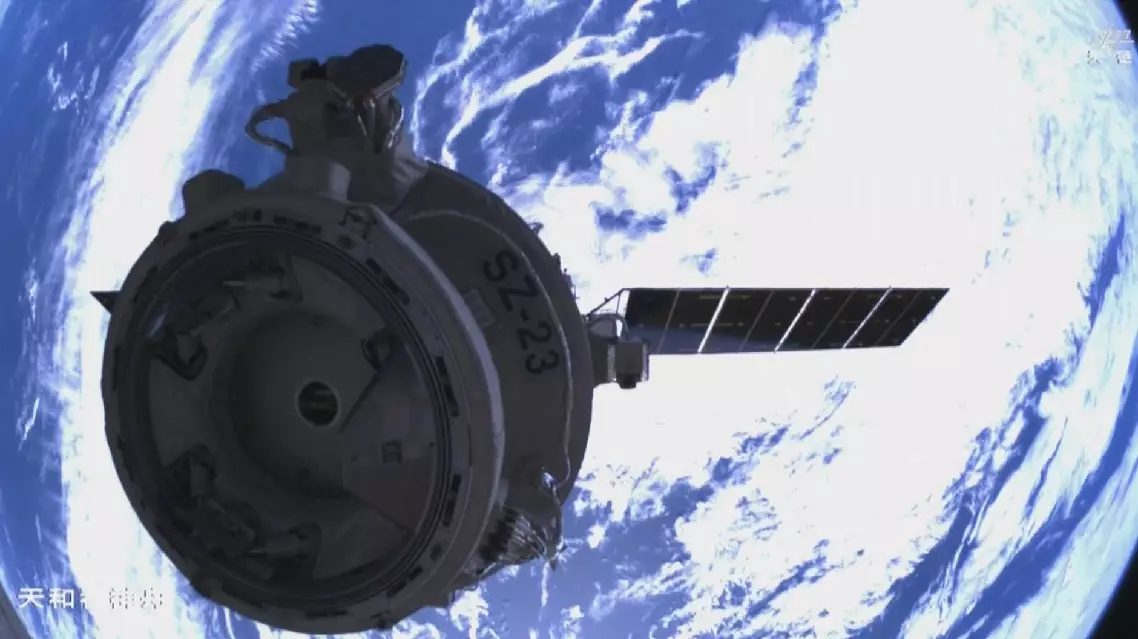
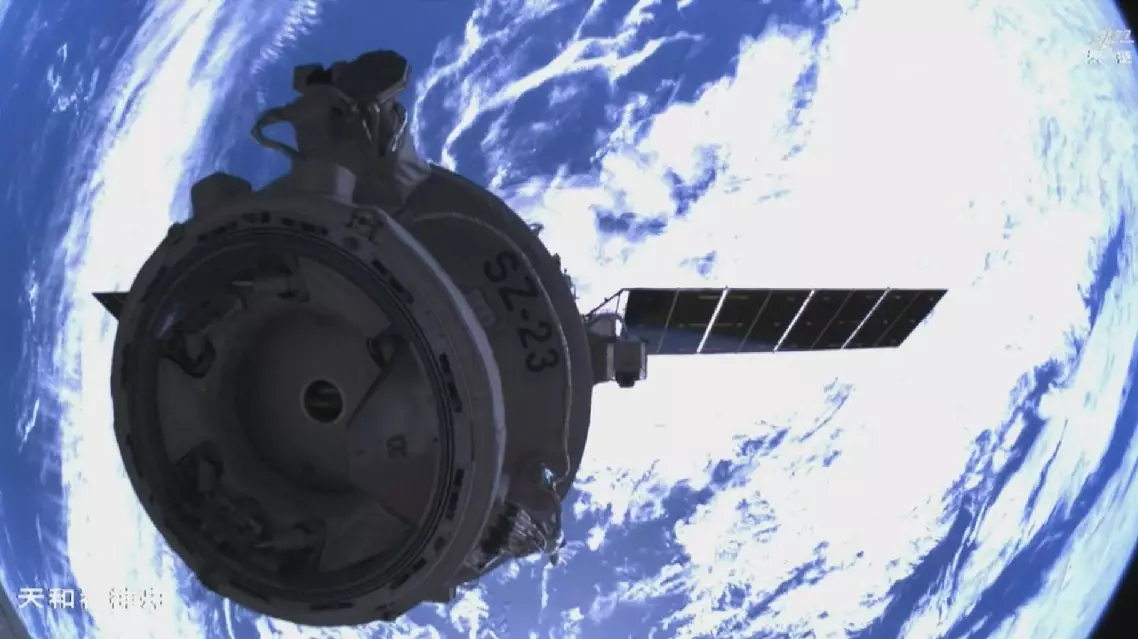
The Dongfeng landing site in north China has built a new road extending to within two kilometers of the planned landing point of the Shenzhou-23 spaceship's return capsule, allowing ground search and recovery teams to reach the astronauts aboard more quickly after their return.
The shift from earlier wide-area search to precision recovery is supported by China's mature guidance, navigation and control (GNC) technology, orbital control capability and fast-return technology.
Since the Shenzhou-12 mission, China has put into use a second-generation GNC system. With both prediction and correction capabilities, the system can adjust the return capsule's trajectory in real time and keep the landing error within two kilometers. The smallest landing error so far was recorded during the Shenzhou-13 mission, at 130 meters.
The Shenzhou-23 crewed spacecraft arrived at the Tiangong space station in May with commander Zhu Yangzhu and astronauts Zhang Zhiyuan and Li Jiaying, also known as Lai Ka-ying in Cantonese, who is the first astronaut from the Hong Kong Special Administrative Region.
Zhang and Li are due to return to Earth alongside Pakistani astronaut Muhammad Zeeshan Ali, who became the first foreign astronaut to enter China's space station during the Shenzhou-24 mission earlier this month. Zhu will remain on the station for a year-long mission.
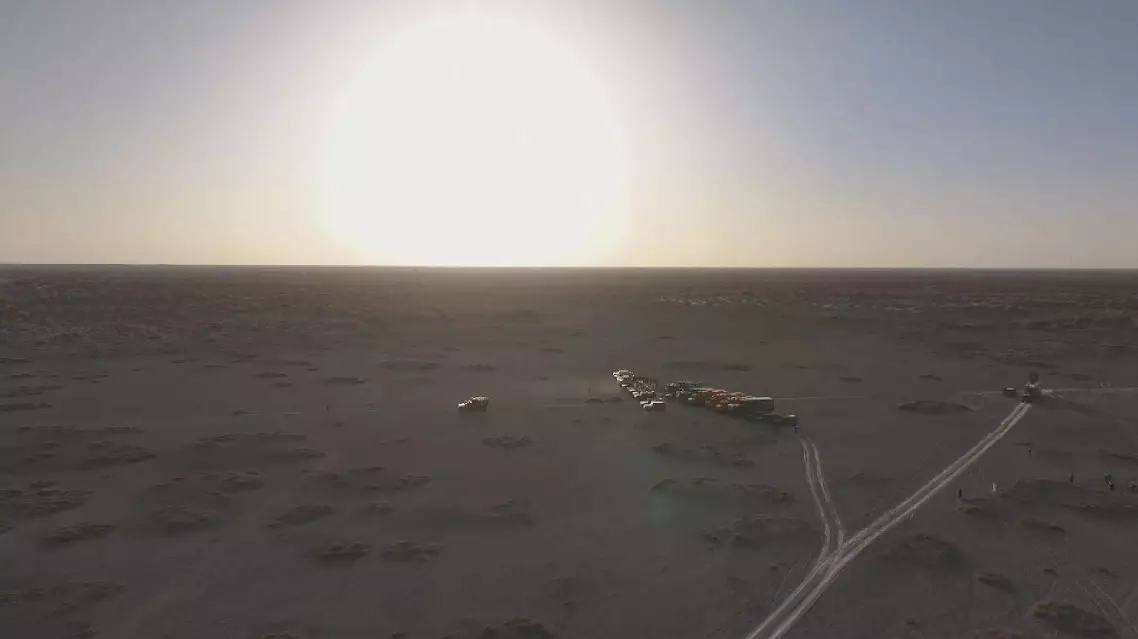
New road, precision landing technology to enable faster ground recovery of Shenzhou-23 spaceship