Skip to Content Facebook Feature Image

Review: An untamed man and horse connect in 'The Mustang'

ENT

Review: An untamed man and horse connect in 'The Mustang'
ENT

ENT

Review: An untamed man and horse connect in 'The Mustang'

2019-03-14 00:12 Last Updated At:00:20

We don't find out our protagonist's name for quite some time in "The Mustang ," the feature debut of French writer-director Laure de Clermont-Tonnerre.

All we know at first is what we see and what Belgian actor Matthias Schoenaerts projects. A psychologist played by Connie Britton, in a brief but impactful role, tries to get a sense of his mental state having been in and out of solitary confinement in a rural Nevada penitentiary a number of times, but he's not interested in playing along, or even trying.

More Images
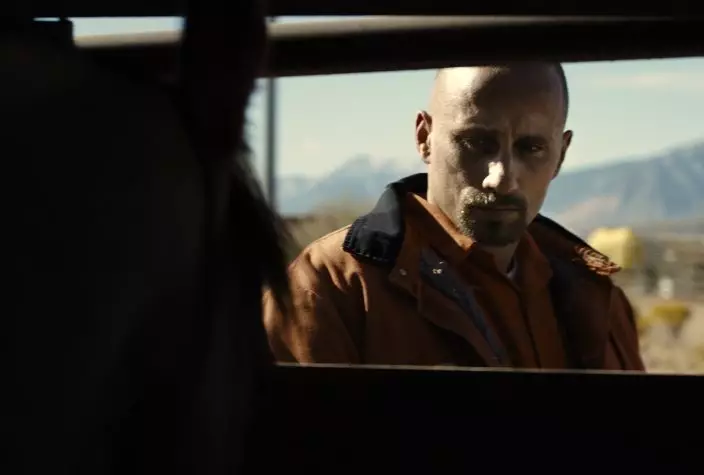
This image released by Focus Features shows Matthias Schoenaerts in a scene from "The Mustang." (Focus Features via AP)
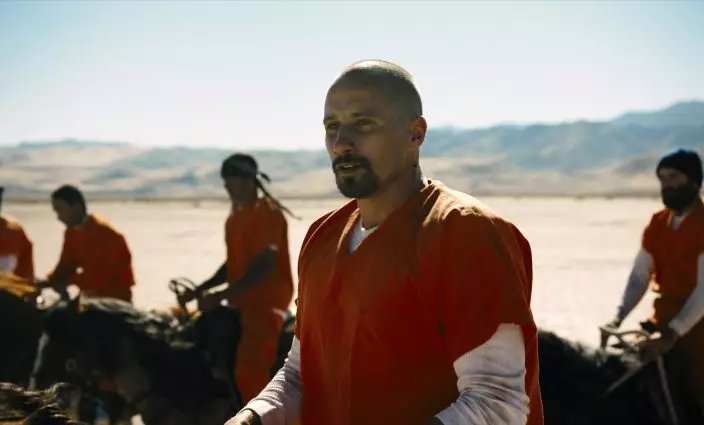
This image released by Focus Features shows Matthias Schoenaerts in a scene from "The Mustang." (Focus Features via AP)
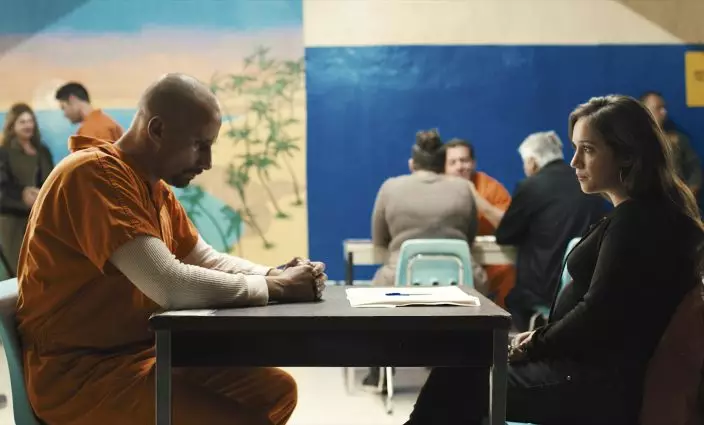
This image released by Focus Features shows Matthias Schoenaerts in a scene from "The Mustang." (Focus Features via AP)

This image released by Focus Features shows Matthias Schoenaerts in a scene from "The Mustang." (Focus Features via AP)

This image released by Focus Features shows Matthias Schoenaerts, left, and Gideon Adlon in a scene from "The Mustang." (Focus Features via AP)

This image released by Focus Features shows Matthias Schoenaerts, left, and Gideon Adlon in a scene from "The Mustang." (Focus Features via AP)

This image released by Focus Features shows Connie Britton in a scene from "The Mustang." (Tara Violet NiamiFocus Features via AP)
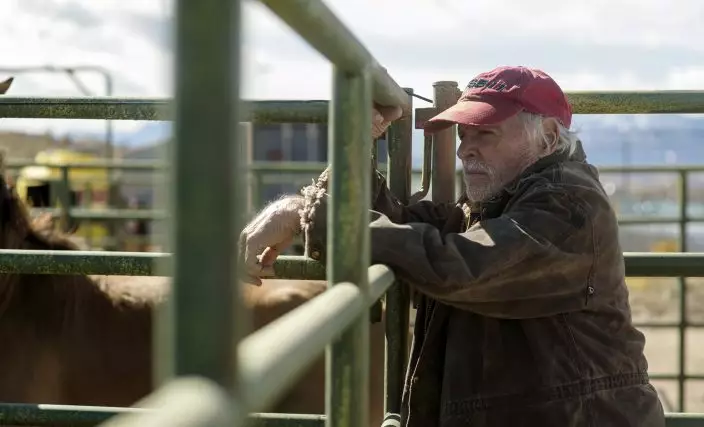
This image released by Focus Features shows Connie Britton in a scene from "The Mustang." (Tara Violet NiamiFocus Features via AP)

This image released by Focus Features shows Bruce Dern in a scene from "The Mustang." (Tara Violet NiamiFocus Features via AP)

This image released by Focus Features shows Bruce Dern in a scene from "The Mustang." (Tara Violet NiamiFocus Features via AP)

"I'm not good with people," growls Schoenaerts as he hits her panic button to end the session.

This image released by Focus Features shows Matthias Schoenaerts in a scene from "The Mustang." (Focus Features via AP)

This image released by Focus Features shows Matthias Schoenaerts in a scene from "The Mustang." (Focus Features via AP)

Schoenaerts is a commanding presence, and usually a quite empathetic one in films like "Rust and Bone" and "A Bigger Splash," but here with a shaved head and a rage simmering beneath his nearly dead eyes, he's downright terrifying. His identity, you realize, is that of a prisoner. He doesn't think about his past, his future or his needs. He merely exists. He even rebuffs the young pregnant woman (Gideon Adlon) who comes to visit. (It's his daughter, you discover, but even that is left ambiguous for a moment).

It's not until he's assigned to manure duty as part of the correctional center's wild horse training program that a light even starts to come back on, partly because the head of the program, Myles (Bruce Dern) treats the inmates like human employees, not criminals. He even asks our protagonist his name: Roman Coleman. The significance of naming will come back in this brief, gorgeous film about untamed and forgotten outcasts. It's probably worth mentioning here that the themes aren't exactly subtle, but that doesn't make them any less effective.

This is a real program in which inmates, many with no equine experience, tame wild horses for eventual adoption and sale to the public.

This image released by Focus Features shows Matthias Schoenaerts in a scene from "The Mustang." (Focus Features via AP)

This image released by Focus Features shows Matthias Schoenaerts in a scene from "The Mustang." (Focus Features via AP)

Roman, of course, takes to the craziest horse. Perhaps it's the first time he's actually felt smaller or less powerful than a living creature. And with the encouragement of a fellow inmate, Henry (the always compelling Jason Mitchell), he starts the long process of "gentling" the horse. He'll eventually even give it a name — Marquis, which he sees in a contraband equestrian magazine he traded for in the prison, but which he pronounces "Marcus."

There's a sin in his past that's never even alluded to, of course. It's why he's in there after all. Does no one know, you wonder? Or perhaps it's too horrific for words. It's revealed eventually, late in the film and not unlike that pivotal revelation in "Paris, Texas."

Even with its unusually restrained running time, "The Mustang" is a powerful and emotional journey framed by gorgeous sun-soaked shots of the stark Nevada landscape. I just wish there was a little more character development for the supporting players, like Myles and Henry, and the prison's rotten apple Dan (Josh Stewart), who feels more like a lazy screenwriting construct than an actual part of the world we've gotten to know.

This image released by Focus Features shows Matthias Schoenaerts, left, and Gideon Adlon in a scene from "The Mustang." (Focus Features via AP)

This image released by Focus Features shows Matthias Schoenaerts, left, and Gideon Adlon in a scene from "The Mustang." (Focus Features via AP)

But Clermont-Tonnerre has established herself as a filmmaker to watch with "The Mustang," and has also made the most compelling case yet that Schoenaerts can not only handle an American accent, but excel with it too.

"The Mustang," a Focus Features release, is rated R by the Motion Picture Association of America for "language, some violence and drug content." Running time: 96 minutes. Three stars out of four.

MPAA Definition of R: Restricted. Under 17 requires accompanying parent or adult guardian.

This image released by Focus Features shows Connie Britton in a scene from "The Mustang." (Tara Violet NiamiFocus Features via AP)

This image released by Focus Features shows Connie Britton in a scene from "The Mustang." (Tara Violet NiamiFocus Features via AP)

Follow AP Film Writer Lindsey Bahr on Twitter: www.twitter.com/ldbahr

This image released by Focus Features shows Bruce Dern in a scene from "The Mustang." (Tara Violet NiamiFocus Features via AP)

This image released by Focus Features shows Bruce Dern in a scene from "The Mustang." (Tara Violet NiamiFocus Features via AP)
DUBAI, United Arab Emirates (AP) — Nationwide protests challenging Iran's theocracy saw protesters flood the streets in the country's capital and its second-largest city into Sunday, crossing the two-week mark as violence surrounding the demonstrations has killed at least 116 people, activists said.

With the internet down in Iran and phone lines cut off, gauging the demonstrations from abroad has grown more difficult. But the death toll in the protests has grown, while 2,600 others have been detained, according to the U.S.-based Human Rights Activists News Agency.

Those abroad fear the information blackout will embolden hard-liners within Iran's security services to launch a bloody crackdown, despite warnings from U.S. President Donald Trump he's willing to strike the Islamic Republic to protect peaceful demonstrators.

Trump offered support for the protesters, saying on social media that “Iran is looking at FREEDOM, perhaps like never before. The USA stands ready to help!!!” The New York Times and Wall Street Journal, citing anonymous U.S. officials, said on Saturday night that Trump had been given military options for a strike on Iran, but hadn’t made a final decision.

The State Department separately warned: “Do not play games with President Trump. When he says he’ll do something, he means it.”

Online videos sent out of Iran, likely using Starlink satellite transmitters, purportedly showed demonstrators gathering in northern Tehran's Punak neighborhood. There, it appeared authorities shut off streets, with protesters waving their lit mobile phones. Others banged metal while fireworks went off.

Other footage purportedly showed demonstrators peacefully marching down a street and others honking their car horns on the street.

In Mashhad, Iran's second-largest city, some 725 kilometers (450 miles) northeast of Tehran, footage purported to show protesters confronting security forces. Flaming debris and dumpsters could be seen in the street, blocking the road. Mashhad is home to the Imam Reza shrine, the holiest in Shiite Islam, making the protests there carry heavy significance for the country's theocracy.

Protests also appeared to happen in Kerman, 800 kilometers (500 miles) southeast of Tehran.

Iranian state television on Sunday morning took a page from demonstrators, having their correspondents appear on streets in several cities to show calm areas with a date stamp shown on screen. Tehran and Mashhad were not included. They also showed pro-government demonstrations in Qom and Qazvin.

Supreme Leader Ayatollah Ali Khamenei has signaled a coming clampdown, despite U.S. warnings. Tehran escalated its threats Saturday, with Iran’s attorney general, Mohammad Movahedi Azad, warning that anyone taking part in protests will be considered an “enemy of God,” a death-penalty charge. The statement carried by Iranian state television said even those who “helped rioters” would face the charge.

Iran’s theocracy cut off the nation from the internet and international telephone calls on Thursday, though it allowed some state-owned and semiofficial media to publish. Qatar’s state-funded Al Jazeera news network reported live from Iran, but they appeared to be the only major foreign outlet able to work.

Iran’s exiled Crown Prince Reza Pahlavi, who called for protests Thursday and Friday, asked in his latest message for demonstrators to take to the streets Saturday and Sunday. He urged protesters to carry Iran’s old lion-and-sun flag and other national symbols used during the time of the shah to “claim public spaces as your own.”

Pahlavi’s support of and from Israel has drawn criticism in the past — particularly after the 12-day war. Demonstrators have shouted in support of the shah in some protests, but it isn’t clear whether that’s support for Pahlavi himself or a desire to return to a time before the 1979 Islamic Revolution.

The demonstrations began Dec. 28 over the collapse of the Iranian rial currency, which trades at over 1.4 million to $1, as the country’s economy is squeezed by international sanctions in part levied over its nuclear program. The protests intensified and grew into calls directly challenging Iran’s theocracy.

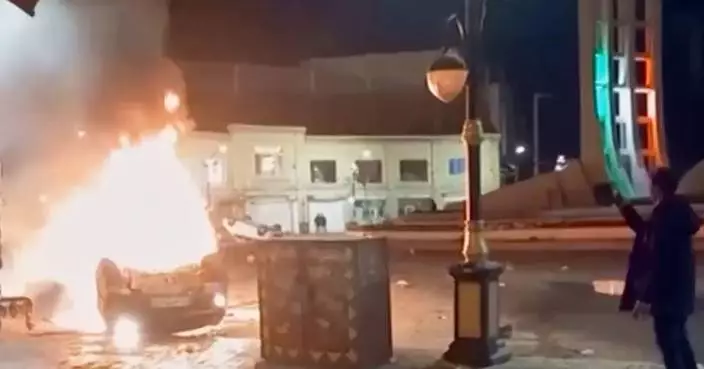
In this frame grab from footage circulating on social media from Iran showed protesters once again taking to the streets of Tehran despite an intensifying crackdown as the Islamic Republic remains cut off from the rest of the world in Tehran, Iran, Saturday Jan. 10, 2026. (UGC via AP)

In this frame grab from footage circulating on social media from Iran showed protesters once again taking to the streets of Tehran despite an intensifying crackdown as the Islamic Republic remains cut off from the rest of the world in Tehran, Iran, Saturday Jan. 10, 2026. (UGC via AP)

Recommended Articles