
Skip to Content Facebook Feature Image

'Lion King' composer Hans Zimmer finds circle of life

ENT

'Lion King' composer Hans Zimmer finds circle of life
ENT

ENT

'Lion King' composer Hans Zimmer finds circle of life

2019-07-18 03:03 Last Updated At:03:10

Composer Hans Zimmer can't seem to get away from "The Lion King."

The emotional score has gotten him jobs, his only Oscar and secured him a place in the hearts of children and adults. But he wasn't sure he wanted to come back when Jon Favreau approached him to revisit the soundtrack for his technologically advanced reimagining of the animated film, which opens nationwide Thursday night.

"I'm always the one saying no to everything," Zimmer, 61, said. "I suppose I'm the reluctant bride."
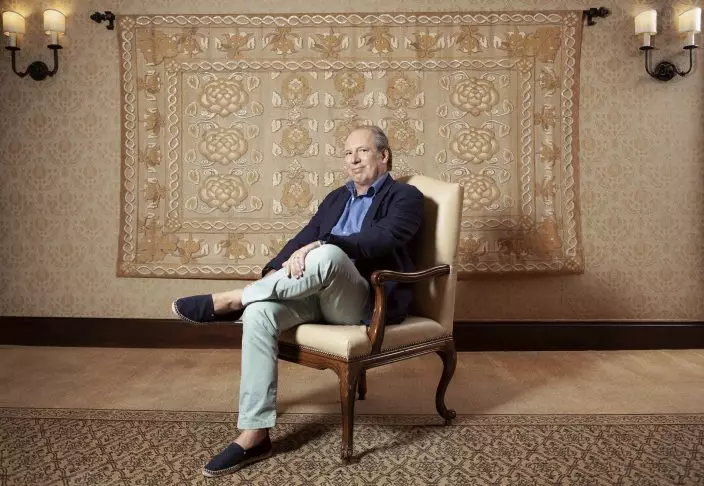
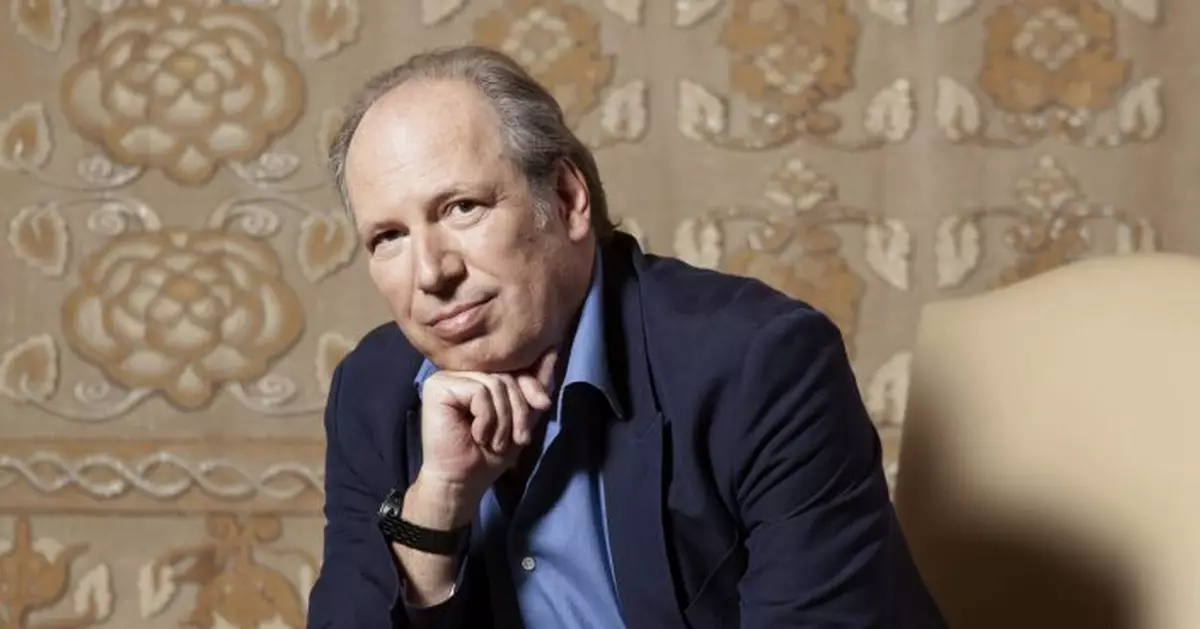
This July 10, 2019 photo shows composer Hans Zimmer posing for a portrait at the Montage Hotel in Beverly Hills, Calif., to promote the film "The Lion King." (Photo by Rebecca CabageInvisionAP)

This July 10, 2019 photo shows composer Hans Zimmer posing for a portrait at the Montage Hotel in Beverly Hills, Calif., to promote the film "The Lion King." (Photo by Rebecca CabageInvisionAP)

He only agreed to do "The Lion King" a quarter of a century ago because of his daughter. She was 6 at the time, and his movies at that point weren't exactly child-friendly.

"I couldn't take her to a Tony Scott bloodbath," Zimmer said.

He had one stipulation: That it wasn't going to be a musical.

"I said I don't want to do a musical, I hate musicals," Zimmer said. "And they said, we'll guarantee you this will not become a musical ever." How it ended up that way is, "another story."

But it's not the only way "The Lion King" diverged from his expectations. What he thought was going to be a "nice cartoon" turned into something much darker. The story about a young prince who loses his father hit a nerve for Zimmer, who also lost his father at a young age.

"All that stuff that one had managed to cover up so well, I had to go and open up and actually write from that point," Zimmer said. "I had to write what it felt like to be a little boy who loses his father."

And yet Zimmer is always somewhat surprised to find that people have such a connection to it. Terrence Malick only approached him for "The Thin Red Line," which would earn him another Oscar nomination, because of "The Lion King."

He remembers being at a dinner with Malick, Werner Herzog and others and overhearing, "The voices of the two great filmmakers passionately arguing with each other which piece in 'The Lion King' they prefer."

"I'm going, they're talking about a KIDS movie," Zimmer said, still slightly baffled and amused. "Terry Malick and Werner Herzog arguing about 'The Lion King!'"

And when Pharrell Williams convinced Zimmer to play at Coachella in 2017, he said fine, but that, "The one thing we're not going to do is 'The Lion King'."

A 23-year-old member of his band told him to get over himself. "It's the soundtrack of my generation," the young man declared. Zimmer conceded and had a bit of a revelation in the desert.

"I look out throughout the shambles of a field with all these people and see grown men and women truly touched and I'm realizing it's not because it's sentimental but because it's emotional, it's the truth, and my band is playing every note with total conviction," Zimmer said. "(I thought) maybe we can pull this off with an orchestra and maybe because everybody in the orchestra will know the material they will play it with the same sort of passion and conviction."

That was the convincing he needed. And Favreau had shown him some majestic concept footage of what the film would actually look like.

"He wasn't just my portal into the music, which is arguably the most important aspect of this film," Favreau said. "It's difficult to appreciate just how significant a collaborator he was."

When it finally got down to recording, he assembled his band and hand-picked orchestra from around the world in Los Angeles. And it turned out to be just as he'd dreamed: An emotional experience .

Zimmer even got to do something rather special this time around. He recorded with a live audience at The Barbra Streisand Scoring Stage where they've recorded everything from "Gone With the Wind" and "Lawrence of Arabia" to "E.T." and the most recent "Star Wars" films.

"I wanted it to be a performance. Therefore I needed an audience. I had 102 people in the orchestra and the band. And then I put 20 chairs upfront for the filmmakers who made the movie who actually never get to come to the recording sessions," Zimmer said with a smile. "It's the circle of life, or completing a circle or whatever. The force is strong on this!"

Follow AP Film Writer Lindsey Bahr on Twitter: www.twitter.com/ldbahr

JOHANNESBURG (AP) — South African immigration authorities raided a United States refugee processing center in Johannesburg and seven Kenyans working there illegally were arrested and given deportation orders, South Africa's Home Affairs Ministry said Wednesday, as the U.S. called the action “unacceptable.”

Tuesday's raid occurred at a center that processes applications by white South Africans who have been given priority for refugee status in the U.S. by the Trump administration. It was bound to increase tensions between the countries, whose relations have cooled dramatically since President Donald Trump returned to office.

The Trump administration's claim that members of South Africa's Afrikaner white minority group are being persecuted by the Black-led government has been widely rejected, but it has been central to the deterioration of ties between the U.S. and Africa's most advanced economy.

The Home Affairs Ministry said the Kenyans were in the country on tourist visas which did not allow them to work, adding that U.S. officials' work with them at the refugee processing center “raises serious questions about intent and diplomatic protocol.”

It was not immediately clear whether the U.S. had known about the Kenyans’ status.

The ministry said no U.S. officials were arrested in the raid and that the site was not a diplomatic one. It said South Africa's Foreign Ministry has started “formal diplomatic engagements with both the United States and Kenya to resolve this matter.”

U.S. State Department spokesperson Tommy Pigott said “interfering in our refugee operations is unacceptable,” adding that they were seeking “immediate clarification from the South African government and expect full cooperation and accountability.”

The U.S. Embassy in a statement last month said the U.S. government had contracted a Kenya-based company, RSC Africa, to process refugee applications by white South Africans. RSC Africa is operated by Church World Service, a U.S.-based nongovernmental organization that offers refugee assistance and works with the U.S. Refugee Admissions Program.

The Home Affairs Ministry said the Kenyans were working at the U.S. refugee processing site “despite the fact that earlier visa applications for Kenyan nationals to perform this work had been lawfully declined.” The seven Kenyans were given deportation orders and banned from entering South Africa for a five-year period.

Trump has singled out South Africa for criticism on a range of issues, claiming without evidence that Afrikaners are being killed and having their land seized and that South Africa is pursuing an anti-U.S. foreign policy through its diplomatic relations with Palestinian authorities and Iran.

The U.S. boycotted last month's Group of 20 world leaders summit in South Africa, and Trump said it will exclude South Africa from the group when it hosts the annual summit next year. Trump also issued an executive order in February that said the U.S. would stop aid and assistance to South Africa over what it called its “egregious actions.”

South Africa's government has said the U.S. claims over the persecution of Afrikaners are based on misinformation and that white South Africans don't meet the criteria for refugee status because there is no persecution, although it said it wouldn't stop anyone applying. Afrikaners are white South Africans descended from mainly Dutch and French colonial settlers who first came to the country in the 17th century.

The Trump administration announced in October it was dramatically cutting the annual quota for refugees allowed in the U.S. to 7,500 from a previous limit of 125,000 and white South Africans would be given most of the places. A first group of white South African refugees had already arrived in the U.S. under the new program for them in May. It's not clear how many have been relocated since then.

Imray reported from Cape Town, South Africa. Associated Press writer Matthew Lee in Washington contributed to this report.

AP Africa news: https://apnews.com/hub/africa

FILE - Refugees from South Africa arrive, Monday, May 12, 2025, at Dulles International Airport in Dulles, Va. (AP Photo/Julia Demaree Nikhinson, File)

FILE - Refugees from South Africa arrive, Monday, May 12, 2025, at Dulles International Airport in Dulles, Va. (AP Photo/Julia Demaree Nikhinson, File)

FILE - Refugees from South Africa, arrive Monday, May 12, 2025, at Dulles International Airport in Dulles, Va. (AP Photo/Julia Demaree Nikhinson, File)

FILE - Refugees from South Africa, arrive Monday, May 12, 2025, at Dulles International Airport in Dulles, Va. (AP Photo/Julia Demaree Nikhinson, File)

Recommended Articles