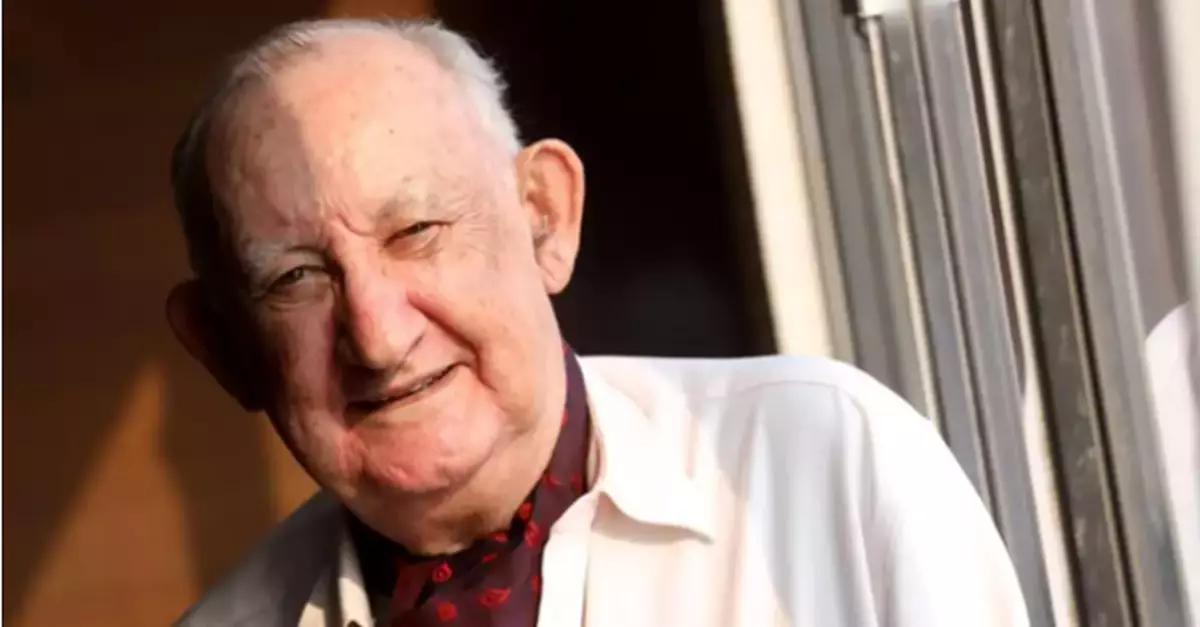
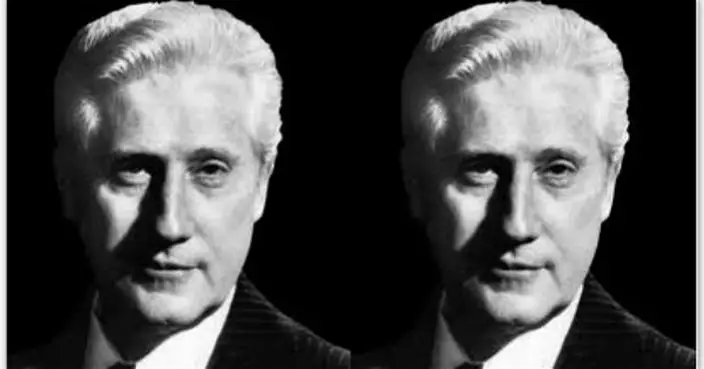
Mark Pinkstone/Former Chief Information Officer of HK government
The United Nations Vienna Convention on Consular Relations (1963) could not be more clear: Foreign missions “have a duty not to interfere in the internal affairs of the [host] State.” Yet, the US ambassador in Beijing, Nicholas Burns, and its Consul General in Hong Kong, Gregory May, continue to violate that treaty.
Repeatedly, both lambast their host in the conduct of internal policies which have absolutely no consequence to the US. No other diplomatic mission in either Beijing or Hong Kong have openly criticized their host in such a hostile manner. They adhere to diplomatic decorum and maintain a low profile befitting their post.
The Vienna Convention stipulates the rules and obligations of foreign missions and is effectively a guideline on how their business is conducted. For example, Article 55 states: “Without prejudice to their privileges and immunities, it is the duty of all persons enjoying such privileges and immunities to respect the laws and regulations of the receiving State. They also have a duty not to interfere in the internal affairs of the State.”
The Convention says in its preamble that the charter is designed to maintain international peace and security and promote friendly relations among nations. But the rhetoric between the US and China/Hong Kong could hardly be called “friendly.” Time and time again Beijing and Hong Kong authorities are called upon to the rebut slanderous and unwarranted comments made by the US diplomats.
Only recently, the Chinese Foreign Ministry in Hong Kong hit out at the US consulate in Hong Kong for making slanderous comments that the central government was violating human rights in the city. The consulate posted on its official X (Twitter) page that a UN review on China showed that “Beijing broke promises to people in Hong Kong when they took away its autonomy and democratic institutions. The National security law, Article 23 legislation and politically motivated prosecutions contravene the Basic Law, the Sino-UK Joint Declaration and the International Covenant on Civil and Political Rights obligations.”
The consulate comments were totally unnecessary, unwarranted and is a real interference in China’s internal affairs. The UN review had nothing to do with the US and if there is to be a response to the review, it should come from Beijing, not the US.
Two months earlier at the Centre for Strategic and International Studies seminar, Consul General Gregory May publicly called for Hong Kong authorities to withdraw bounties on overseas activists, release Jimmy Lai facing sedition and colluding with foreign governments charges, withdraw National Security Law 47 and the release of others in detention facing charges against national security. He said he had witnessed soft repression in Hong Kong when various freedoms have been curtailed by the authorities.
Who does he think he is? What right does he have to tell Hong Kong people what we should do and not do? What May has demonstrated is total arrogance and disrespect towards his host. Hong Kong has its own issues and will handle them accordingly, without the help of foreign governments. Imagine the uproar in the US, should China’s ambassador in Washington call for the prosecution of Donald Trump or call the January 6 assault on the Capitol Building a peaceful demonstration.
May has also violated another clause in the Vienna Convention’s Article 55 in that consuls should “respect the laws and regulations of the receiving State”. By calling for Hong Kong to withdraw its laws and free defendants facing criminal offences, May is again showing disrespect for Hong Kong’s laws in total violation of the Vienna Convention.
Ambassador Burns in Beijing is a bit more diplomatic but is still obliged to toe the State Department’s anti-China line. In a recent Wall Street Journal interview he said China was “interrogating and intimidating citizens who attend US-organized events in China, ramping up restrictions on the embassy’s social media posts and whipping up anti-American sentiment.”
Interestingly, the US is the only country that uses its diplomatic missions in China to be its mouthpiece for foreign policy. Normally, criticism against a country is carried out by a foreign ministry directly without involving their overseas missions.
This draws the conclusion that the attacks by May and Burns are deliberate and at the behest of the Secretary of State in Washington to undermine China through Hong Kong, where it has established an underground base for subversion. By openly criticizing Hong Kong and fighting against the Special Administrative Region’s legal system, the US is raising the flag for those it has cultivated to undermine Hong Kong. It is, in reality, a cold war which can only be resolved by peaceful dialogue, not a war of words.
Mark Pinkstone
** The blog article is the sole responsibility of the author and does not represent the position of our company. **
Trump's Venezuela play just gave Western progressives a masterclass in American hypocrisy.
Steve Bannon, Trump's longtime strategist, told The New York Times the Venezuela assault—arresting President Nicolás Maduro and all—stands as this administration's most consequential foreign policy move. Meticulously planned, Bannon concedes, but woefully short on ideological groundwork. "The lack of framing of the message on a potential occupation has the base bewildered, if not angry".
Trump's rationale for nabbing Maduro across international borders was drug trafficking. But here's the tell: once Maduro was in custody, Trump stopped talking about Venezuelan cocaine and started obsessing over Venezuelan oil. He's demanding US oil companies march back into Venezuela to seize control of local assets. And that's not all—he wants Venezuela to cough up 50 million barrels of oil.
Trump's Colonial Playbook
On January 6, Trump unveiled his blueprint: Venezuela releases 50 million barrels to the United States. America sells it. Market watchers peg the haul at roughly $2.8 billion.
Trump then gleefully mapped out how the proceeds would flow—only to "American-made products." He posted on social media: "These purchases will include, among other things, American Agricultural Products, and American Made Medicines, Medical Devices, and Equipment to improve Venezuela's Electric Grid and Energy Facilities. In other words, Venezuela is committing to doing business with the United States of America as their principal partner."
Trump's demand for 50 million barrels up front—not a massive volume, granted—betrays a blunt short-term goal. It's the classic imperial playbook: invade a colony, plunder its resources, sail home and parade the spoils before your supporters to justify the whole bloody enterprise. Trump isn't chasing the ideological legitimacy Bannon mentioned. He's after something more primal: material legitimacy. Show me a colonial power that didn't loot minerals or enslave labor from its colonies.
America's Western allies were silent as the grave when faced with such dictatorial swagger. But pivot the camera to Hong Kong, and suddenly they're all righteous indignation.
The British Double Standard
Recently, former Conservative Party leader Iain Duncan Smith penned an op-ed in The Times, slamming the British government for doing "nothing but issuing 'strongly worded' statements in the face of Beijing's trampling of the Sino-British Joint Declaration." He's calling on the Labour government to sanction the three designated National Security Law judges who convicted Apple Daily founder Jimmy Lai of "collusion with foreign forces"—to prove that "Hong Kong's judiciary has become a farce." Duncan Smith even vowed to raise the matter for debate in the British Parliament.
The Conservatives sound principled enough. But think it through, and it's laughable. The whole world's talking about Maduro right now—nobody's talking about Jimmy Lai anymore.
Maduro appeared in US Federal Court in New York on January 6. The United States has trampled international law and the UN Charter—that's what Duncan Smith would call "American justice becoming a farce." If Duncan Smith's so formidable, why doesn't he demand the British government sanction Trump? Why not sanction the New York Federal Court judges? If he wants to launch a parliamentary debate, why not urgently debate America's crimes in invading Venezuela? Duncan Smith's double standards are chilling.
Silence on Venezuela
After the Venezuela incident, I searched extensively online—even deployed AI—but couldn't find a single comment from former Conservative leader Duncan Smith on America's invasion of Venezuela. Duncan Smith has retreated into his shell.
Duncan Smith is fiercely pro-US. When Trump visited the UK last September amid considerable domestic criticism, the opposition Conservatives didn't just stay quiet—Duncan Smith actively defended him, calling Trump's unprecedented second UK visit critically important: "if the countries that believe in freedom, democracy and the rule of law don’t unite, the totalitarian states… will dominate the world and it will be a terrible world to live in."
The irony cuts deep now. America forcibly seizes another country's oil and minerals—Trump is fundamentally an imperialist dictator. With Duncan Smith's enthusiastic backing, this totalitarian Trump has truly won.
Incidentally, the Conservative Party has completely destroyed itself. The party commanding the highest support in Britain today is the far-right Reform Party. As early as last May, YouGov polling showed Reform Party capturing the highest support at 29%, the governing Labour Party languishing at just 22%, the Liberal Democrats ranking third at 17%, and the Conservatives degraded to fourth place with 16% support.
The gutless Conservative Party members fear offending Trump, while voters flock to the Reform Party instead. The Conservatives' posturing shows they've become petty villains for nothing.
Lo Wing-hung