Think back to Hong Kong's turbulent years. Jimmy Lai had three brothers-in-arms, comrades he bankrolled through thick and thin – Cardinal Joseph Zen, Martin Lee, and Anson Chan. But their bonds weren't just ideological. Money changed hands, and plenty of it. Anson Chan pocketed HK$3.5 million from Lai's war chest. Cardinal Zen took in far more – at least HK$26 million in secret donations that the Hong Kong Diocese never knew about and never investigated. Where did all that cash go? That's the million-dollar question. Or rather, the 26-million-dollar question that remains unanswered.
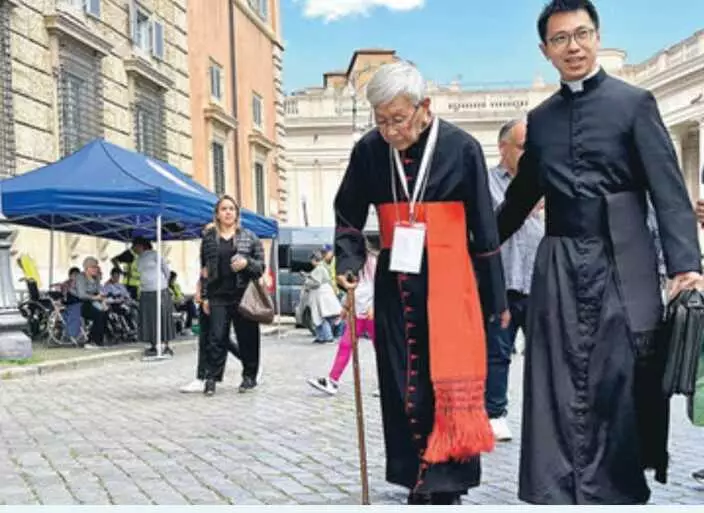
Cardinal Zen met Pope Leo XIV in Rome, reportedly pushing for Jimmy Lai's release – but Vatican intervention looks unlikely.
Word broke earlier that Cardinal Zen just made a pilgrimage to the Vatican for a sit-down with the newly minted Pope Leo XIV. The private meeting lasted about an hour. On the agenda: the conviction of "Catholic" Jimmy Lai. Sources say Zen pressed the pontiff hard to "save Lai." What did the Pope say? Nobody's talking. But you can bet the Vatican knows all about the questionable financial ties between Zen and Lai – a relationship the Cardinal has never properly explained to his own Diocese. Did personal interests play a role? The doubts are real.
A Vatican Gambit
Cardinal Zen's "612 Humanitarian Relief Fund" case is still grinding through the courts, and authorities had confiscated his passport. But when the Vatican called its recent "Special Consistory" – bringing cardinals from around the world to Rome – the court granted him temporary travel privileges. During the gathering, Pope Leo XIV carved out time for a private one-on-one with Zen after a breakfast session. The topics? Whether the China-Vatican agreement should be renewed, and the fate of Jimmy Lai, now convicted under Hong Kong's National Security Law. But whether the Pope took any position on Lai remains under wraps.
Zen views Jimmy Lai as both a close friend and a comrade-in-arms, so naturally he's pushing the Vatican to intervene. But here's the Vatican's dilemma: it's not just about China-Vatican relations. It's about the unresolved financial relationship between Zen and Lai – a relationship that has seriously damaged the Cardinal's credibility.
The Secret Pipeline
October 2011 brought a massive leak. Jimmy Lai's secret donations to political parties, politicians, and organizations spilled into public view – and Joseph Zen, then Bishop of Hong Kong, was on that list. Between 2006 and 2010, he received HK$20 million from Lai over four years. From 2012 to 2014, another HK$6 million landed in his hands. The total: a staggering HK$26 million.
When the news broke, Zen went silent. Only after relentless media pressure did he offer an explanation, claiming the money went to support underground churches in the Chinese Mainland and other charitable organizations. With a casual smile, he described himself as a "spendthrift," saying most of the money had already been spent with only a few hundred thousand remaining – and even expressed hope that Lai would keep the donations coming.
Talk is cheap. He provided no concrete evidence to back up his claims. The Hong Kong Diocese knew nothing about his receipt of this massive sum from Lai – the entire "money pipeline" operated in secret. To this day, he has never given the Diocese a complete accounting.
Because this financial channel remained so deeply hidden, suspicions naturally arose that personal interests were involved. But given Cardinal Zen's position, the Diocese refrained from investigating him. The true destination of the funds? Still shrouded in doubt.
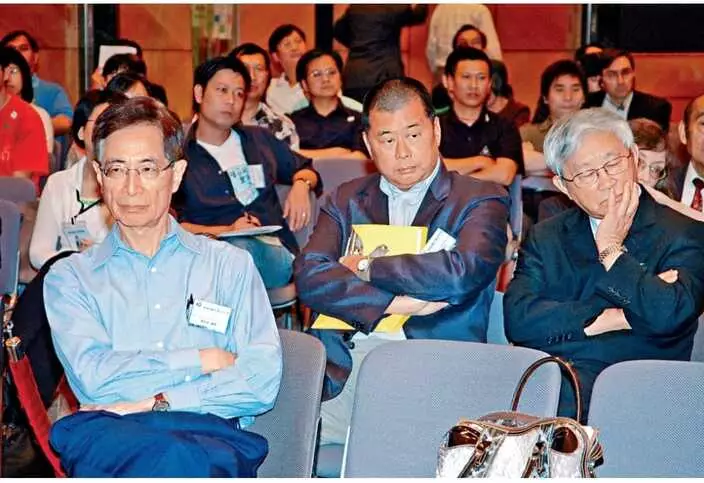
HK$26 million from Jimmy Lai to Cardinal Zen – Diocese in the dark, money's whereabouts still a mystery. The trio behind Hong Kong's unrest!
Vatican Cold Shoulder
Cardinal Zen's questionable relationship with Jimmy Lai, combined with his overly hawkish stance toward China, put him in the Vatican's bad books after Hong Kong's National Security Law took effect in late June 2020. Around that time, Zen traveled uninvited to the Vatican, demanding a meeting with then-Pope Francis to discuss Hong Kong's bishop selection and issues facing underground churches in the Mainland. The Pope gave him zero face. Francis refused to see him. After cooling his heels in Rome for four days with nothing to show for it, Zen returned to Hong Kong empty-handed.
Later, Zen and Lai joined forces on Jimmy Lai's "Live Chat" livestream program to blast the Vatican, accusing it of staying silent on underground churches, Tibet, and Hong Kong human rights issues. This clearly shows how the "Zen-Lai duo" consistently conspired to incite underground church activities in the Mainland, stir up religious conflicts, and undermine China-Vatican relations.
Cardinal Zen's latest Vatican trip for a private papal audience, where he lobbied to "save Lai" and reiterated his opposition to renewing the China-Vatican agreement, proves one thing: at 94 years old, the cardinal's anti-China, pro-chaos heart hasn't changed one bit.
Long Odds
The new Pope's willingness to meet him represents a slight thaw from his predecessor's icy attitude. But the chances of Vatican intervention to "save Lai"? Extremely low. The unresolved questions about Zen's financial relationship with Jimmy Lai have significantly diminished his influence with the Vatican.
From a legal perspective, his cardinal status currently shields him from serious consequences. But risks remain. Perhaps it's time for him to follow Anson Chan's example and retire from such activities while he still can.
Lai Ting-yiu
What Say You?
** The blog article is the sole responsibility of the author and does not represent the position of our company. **
The most consequential national security trial yet to come is also the one with the most unanswered questions — and at the centre of it is a man who almost made it out.
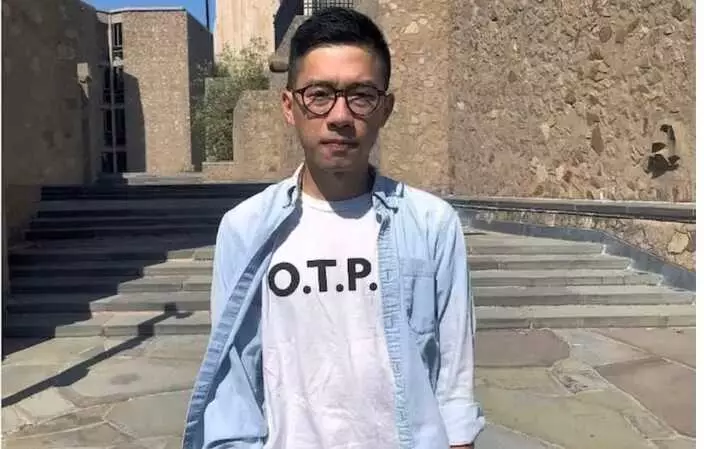
Monday (Feb 23) was "Renri" (人日) — the seventh day of the Lunar New Year, meant to be a day of celebration for all people. But for the 12 defendants in the "35+ Subversion Case," there was nothing to celebrate. The Court of Appeal dismissed all their appeals against both conviction and sentencing in full. Unless they push it all the way to the Court of Final Appeal, this case is done. That brings two of the three major national security cases to a close — the other being the Jimmy Lai trial. What remains is the Joshua Wong case, expected to go to trial around mid-year. Like Lai's, it reaches into the highest levels of American politics, and it will almost certainly expose a trove of behind-the-scenes dealings that will shake Hong Kong to its core. The trial is close enough that the details don't need spelling out here. But one mystery absolutely does: Wong was once Washington's darling — so why did he never make it out, while his co-conspirator Nathan Law did? An investigative report by American journalists cracked open the story.
Wong's trial is the last big national security case standing — and the most explosive one yet. How did he never make it out?
Wong's role in the Occupy Central movement and the 2019 unrest needs no introduction. In June last year, while already serving a prison term at Stanley Prison on sedition charges, he was arrested again and charged under the Hong Kong National Security Law with conspiracy to collude with foreign forces to endanger national security. His second pre-trial review at the Magistrates' Court came on 21 November last year, with the next hearing set for 6 March; the full trial at the High Court is expected to begin around mid-year. This case carries weight every bit as significant as the Jimmy Lai trial — the spotlight it commands will be enormous.
The Charges Are Grave
The prosecution alleges that between July and November 2020, Wong — together with Nathan Law and others yet to be identified — conspired in Hong Kong to solicit foreign governments and institutions to impose sanctions against the Hong Kong SAR and the People's Republic of China, and to seriously obstruct the government in enacting and enforcing its laws and policies. The charges carry a potential sentence of life imprisonment. What exactly Wong and Law did, and which foreign officials were involved, the prosecution will lay out in full when the trial begins.
The public has long asked some uncomfortable questions. Did Joshua Wong ever consider fleeing before or after the National Security Law came into force at the end of June 2020? If so, why did it never happen? Did the US government try to help him get out? An investigative report by two American journalists answered part of the puzzle — and sources familiar with the matter, when contacted by Hong Kong media, broadly confirmed what it said.
Wong Begged Washington for Help
The night before the National Security Law took effect, Wong reached out through a senator's adviser to appeal directly to President Trump for help. At the same time, he sent an email to then-Secretary of State Mike Pompeo, explicitly asking to be helped to "travel to the United States to seek political asylum, by whatever means necessary". That email tells you everything. Wong knew exactly how dangerous his situation had become — and he was betting his future on American goodwill.
Around the same time, Wong arranged to meet two officials from the US Consulate General in Hong Kong at St. John's Building, directly across the street from the consulate. He made clear he wanted to walk in and seek refuge. He was turned away on the spot. When Pompeo saw the email, he consulted with his staff and arrived at the same conclusion: letting Wong through the consulate doors was simply not an option — Washington feared Beijing would retaliate by forcing the US consulate in Hong Kong to close entirely.
State Department officials went further, exploring a covert plan to smuggle Wong out of Hong Kong by sea — routing him through Taiwan or the Philippines before eventually reaching the United States. That option was killed too, on the grounds that any such attempt would very likely be intercepted by Chinese authorities, triggering a diplomatic crisis. When the accounting was done, American interests won out — and Joshua Wong was coldly abandoned.
By that point, Nathan Law had already made it out. Seizing Pompeo's visit to London, Law met the Secretary of State privately and raised the question of rescuing Wong one more time — and was once again turned away without sympathy. In September 2020, Wong was arrested on sedition charges and imprisoned two months later. Any remaining window for escape had sealed shut.
Law Moved Fast — and Made It
Nathan Law is named as a co-conspirator in the charges against Wong — meaning that if arrested, they face the same jeopardy. But Law proved far more calculating than Wong. Shortly before the National Security Law took effect, he quietly slipped away, eventually confirming his presence in the United Kingdom on 13 July 2020. He even staged a moment of wistful sentiment, declaring: "With this parting, I do not yet know when I shall return... May glory come soon!" — words that, in the circumstances, could not have sounded more hollow.
Same charges, same case — but Law ran, and Wong didn't. One man made it out clean. The other is still paying the price.
Joshua Wong — sharp-witted all his life — took one step too many in trusting the Americans, and that delay cost him everything. The US government, in the name of "national interest," discarded him without hesitation. As his trial approaches, the reality is this: placing any further faith in American support would be the last illusion he can afford.
Lai Ting-yiu