Call it what you want—abduction, kidnapping, state-sponsored piracy. Trump just grabbed another country's head of state and dragged him to American soil.
Now comes the really chilling part: the theatrical production. Picture it—law enforcement officers, prosecutors, judges, all assembled on a judicial stage to perform what's supposed to look like legitimate justice. But everyone already knows how this play ends. The opening scene telegraphs the finale.
I've heard the inside story of what happened to Patrick Ho Chi Ping, Hong Kong's former Secretary for Home Affairs, during his time in American custody. The pressure was relentless—cooperate with the "deep state," provide the intelligence they wanted, and watch your sentence shrink. Normal procedures? Forget them.
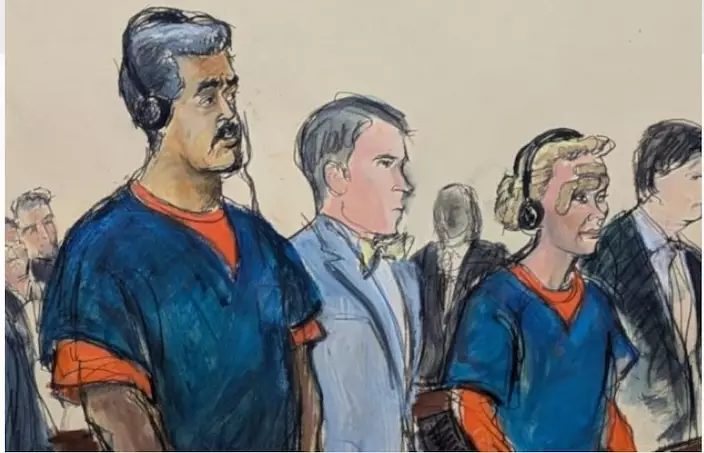
Trump's judicial theater begins. Maduro's arraignment is pure political performance—Patrick Ho's ordeal proves fairness isn't on the menu here.
That's the same template Maduro faces now. When you're meat on the chopping board, your choices evaporate fast. Don't expect judicial fairness. Expect survival tactics.
The moment Maduro touched American soil, they shipped him straight to New York's Metropolitan Detention Center. A literal hell hole, notorious for brutal conditions and a dangerous inmate population.
Yesterday he faced his first arraignment at the Southern District Federal Court. The charge? "Narco-terrorism conspiracy." Maduro stood firm. He refused to plead guilty.
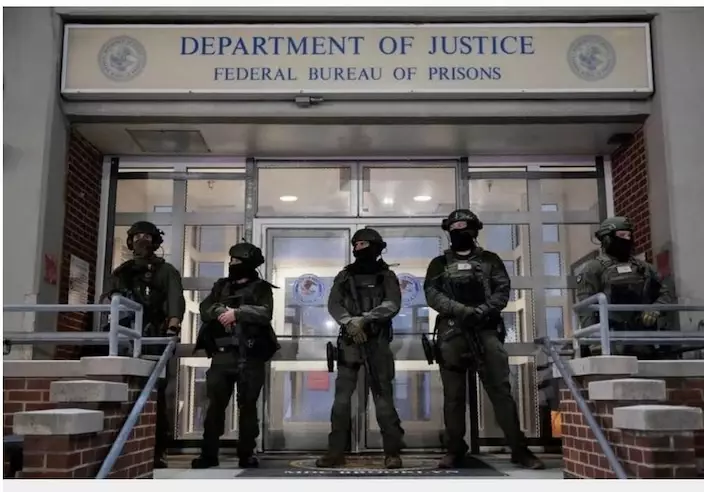
America's black prison holds Maduro now. Pressure and coercion ahead—due process won't apply.
Legal Experts Raise Red Flags
American legal experts are asking uncomfortable questions. First: where's the evidence linking Maduro to drug trafficking? Second: what gives the US military the right to conduct cross-border operations to "arrest" another nation's head of state? Third: if the arrest violated due process, does the entire case collapse? In any ordinary criminal proceeding, this wouldn't even make it to court.
Those questions make perfect legal sense. But they don't apply here. Trump plays by different rules. No rules, actually. The Justice Department leadership? His loyalists, every one of them. The judge who'll preside? Trump's call. "Justice" has become just another political weapon he wields at will. Legal sources believe the entire script is already written. The verdict came before the trial even started.
The Patrick Ho Playbook
American "justice" shows its true face in other cases too. Take Patrick Ho Chi Ping. After leaving government in 2007, he became Secretary-General of the China Energy Fund Committee, a private think tank. He worked with UN officials and counterparts across Asia and Africa, promoting energy cooperation. Then 2017 hit. Law enforcement grabbed him in New York and threw him in a detention center. The charge? Allegedly bribing senior African officials.
What happened next veered completely off the judicial highway. Ho got pulled into the vortex of American partisan warfare. Some of it traced back to Trump himself. The prosecutor handling his case deployed the classic carrot-and-stick routine. Refuse to plead guilty? Eight charges await you. Maximum penalty if convicted? Fifty years behind bars. But plead guilty and accept four conditions? Watch those charges shrink and that sentence drop dramatically.
The Deep State's Demands
One of those four conditions exposed the real game. Provide information about Trump team members who accepted bribes—including Trump himself. The prosecutor belonged to the Democratic camp, part of the "deep state" machinery, trying to force Ho to deliver dirt for attacking Trump. When Ho realized he'd been dragged into American partisan politics, he understood that failing to extract himself could lead to an even worse outcome. He made his choice: refuse to plead guilty, reject the prosecutor's conditions.
That decision saved him. Political winds shifted in America. He ultimately received just three years—and after deducting time already served, he walked out of that hell hole after barely a year. This inside story reveals an uncomfortable truth: American justice operates as a tool of dark forces, manipulated to achieve political objectives. Fairness doesn't enter the equation.
Legal sources estimate Maduro's prosecution and trial will follow the same playbook. Trump will likely deploy similar tactics to threaten Maduro, forcing him to choose between submission or greater suffering. The endgame? Getting Maduro to provide whatever Trump wants. This head of state now sits on the chopping board with zero real options left.
When Maduro's case goes to trial, expect the full theatrical production. There'll be courtroom arguments, legal jousting, dramatic moments. None of it changes the ending. The US government keeps shouting about Jimmy Lai's case being "unjust." But what America is doing to Maduro? That's a political trial show from start to finish.
Lai Ting-yiu
What Say You?
** 博客文章文責自負,不代表本公司立場 **
Here's the opening act for 2026: Jimmy Lai faces sentencing, and right on cue, his daughter delivers a tearful BBC performance claiming her father is dying. She rattles off a dramatic list of supposedly terminal symptoms, blowing minor ailments wildly out of proportion. The most ridiculous fabrication to kick off the new year.
Throughout last year's trial, she and her brother Sebastien Lai fed the same tale to American and British outlets, banking on the old adage that repeat a lie enough times and it becomes truth. But their shabby playbook won't work this time. Authorities have rolled out hard evidence again and again, systematically demolishing their clumsy deception. Here's the irony: people who know Lai well say his health risks ran sky-high before prison—he could have collapsed any moment. Behind bars? Those risks plummeted.

Jimmy Lai's daughter claims to BBC he's "near death" with critical symptoms – all wildly exaggerated. This year's most ridiculous lie yet.
Jimmy Lai's conviction is final. Sentencing looms. The US and UK governments issue statements but take no action. His chances of walking free hover near zero. Yet his children refuse to quit. Their last card? Fabricate stories about their father's severe illness, hoping to manipulate foreign media into sympathy and manufacture public pressure. On New Year's Day, his daughter Claire Lai sat down with the BBC, tears flowing, painting a picture of extreme deterioration. Her "near-death" symptom checklist: grey-green fingernails falling off, rotting teeth, sudden heart problems he never had, weight loss, and lower back pain so severe he can barely stand. She catalogued every conceivable ailment to prove he's gravely ill and approaching the end.
They've recycled this performance repeatedly for foreign outlets—The Washington Post, Agence France-Presse, The Independent, and Nikkei Asian Review, etc. Jimmy Lai's international legal team amplifies the chorus, releasing a solemn "research report" on Lai's grave condition and going so far as to rush it to the United Nations. The theatrics are complete.
Evidence Crushes Fiction
The "health problems" Jimmy Lai's children trumpet are either grotesquely exaggerated or outright invented—utterly absurd. The Hong Kong government has systematically refuted each claim with concrete evidence. And Lai's recent court appearance to hear the verdict, where he displayed no abnormalities whatsoever, demolished their narrative all by itself.
Start with the grey-green, falling fingernails. Yesterday, while condemning the BBC report, the Hong Kong government revealed that Jimmy Lai had mentioned some nail issues to the Correctional Services Department last year. The institution's doctor prescribed ointment. He recovered. Since this minor problem got treated, his fingernails looked rosy and perfectly normal when he appeared in court recently.
I looked up what causes grey-green nails that fall off. Turns out it's just an infection from a type of bacillus. Some housewives and beauticians get this condition. You treat it with ointment and it clears up. Claire Lai presenting this as a symptom of grave illness? It terrifies people who don't know better and makes those who do burst out laughing.

Falling nails, rotted teeth? Just minor ailments already treated. Yet his children cry "near death" – laughably absurd.
As for rotting teeth, it's more surprising if someone doesn't have bad teeth at 78. The government stated that Jimmy Lai requested dental care in 2021 and 2022. The dentist treated him. No problems since. He hasn't raised any further requests. Claire Lai has inflated her father's dental issues by a factor of N, lying without batting an eye.
Medical Tests Expose the Truth
During the trial in August last year, Jimmy Lai told the Correctional Services Department he experienced rapid heartbeat and palpitations. These are normal reactions to anxiety and tension. But the department didn't take chances. The Lai Chi Kok Reception Centre medical team conducted blood tests and electrocardiograms. They found nothing wrong. As a precaution, the team recommended he wear a Holter monitor. He initially refused but later agreed. Since then? No abnormalities detected. His heart is healthy.
Regarding Claire Lai's claim that her father has "lower back pain, sometimes even when standing, with difficulty getting up and walking," authorities don't even need medical evidence to refute this. Simply watch him move normally in court—no cane, no assistance required. That proves Claire Lai's claims are false. Even if he does have some backache, it's utterly common at his age.
Now consider the weight loss. Jimmy Lai's nickname is "Fat Lai." He's been overweight for years. Losing weight after imprisonment isn't just normal—it's a sign of improvement. The Correctional Services Department takes his physical condition seriously, conducting regular examinations. They certainly wouldn't let him balloon up or waste away.
Prison Actually Saved His Health
A friend who knows Jimmy Lai well told me his lifestyle before imprisonment was extremely "indulgent." He chronically overate and drank, ignoring his diabetes and obesity, still gorging on braised pork belly. His health risks ran sky-high. If that continued, his body would certainly face serious problems. In contrast, after imprisonment, his risks have dropped dramatically thanks to normal diet and regular routine.
Claire Lai keeps "making empty boasts." Western media and politicians continue treating fiction as fact, even though they know she's deceiving them. But even so, this cannot change the final outcome fast approaching for Jimmy Lai.
Lai Ting-yiu